 Vietnamnet.vn

 Podcast



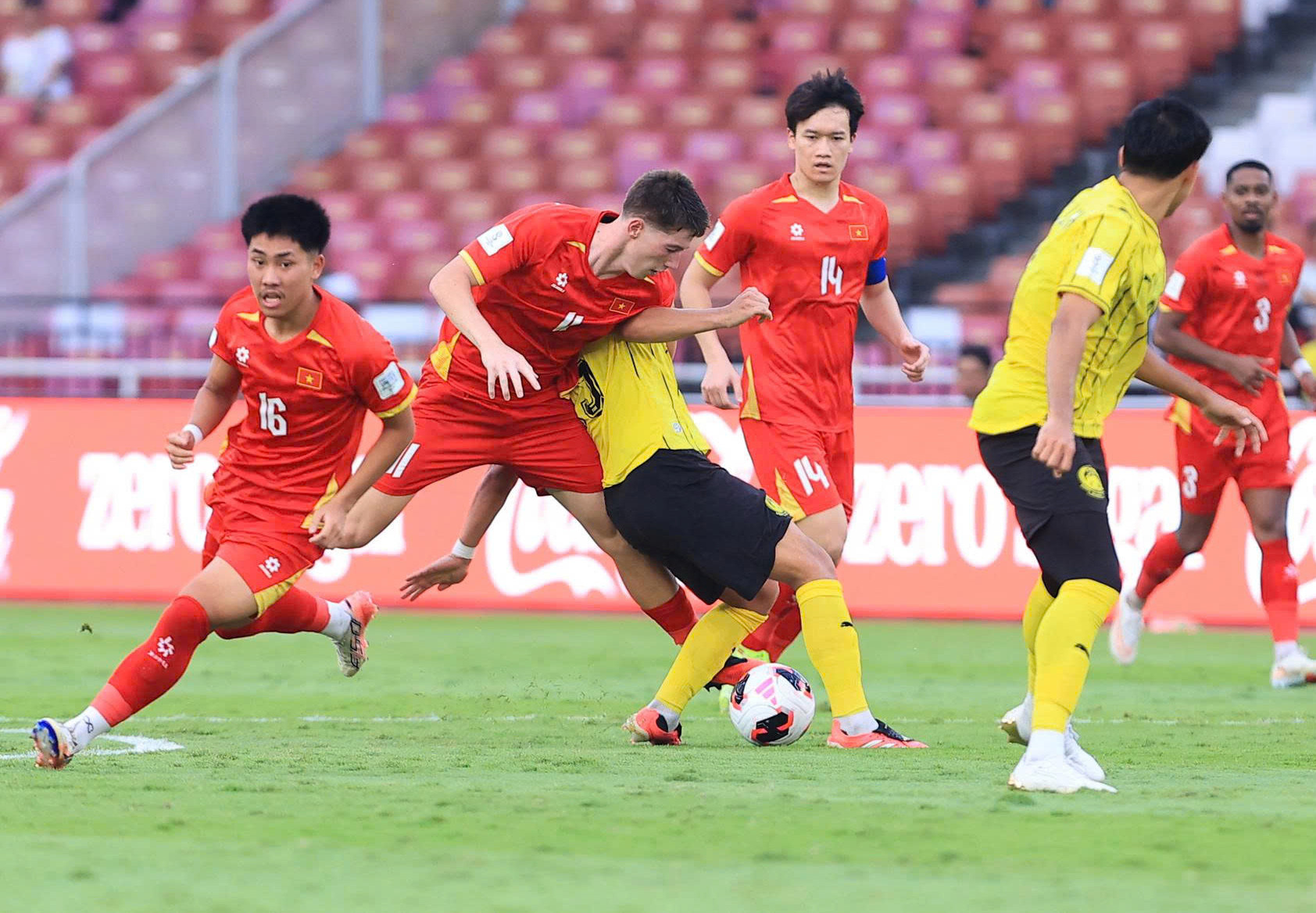
Injuries and a congested fixture schedule undoubtedly affected Vietnam’s performance at the recently concluded tournament in Indonesia. However, attributing the team’s failure primarily to these factors would be an oversimplification, as other participating teams faced similar personnel challenges.
Much of the responsibility arguably lies with head coach Kim Sang Sik, whose assessment of his players’ physical condition and squad management came under scrutiny.
Vietnam entered the tournament with several key players sidelined by injuries or struggling with fatigue and physical overload. A more flexible approach to squad selection could have prevented the South Korean coach from relying so heavily on players who were not fully fit.
Yet the most concerning aspect of Vietnam’s campaign was not their fourth-place finish but their inability to overcome opponents with strong tactical organization.
Against Thailand, Vietnam struggled to execute their attacking plans as their opponents effectively restricted passing options. A similar pattern emerged against Malaysia, where Vietnam enjoyed possession, pushed forward and launched repeated attacks but lacked the creativity and precision needed to break through the opposition defense.
Unable to penetrate through the middle, Vietnam frequently shifted play to the wings. When crosses proved ineffective, players resorted to long-range efforts that rarely posed a significant threat.
Although Vietnam appeared to dominate attacking passages, their pressure was insufficient to force well-organized opponents into mistakes.
Similar weaknesses were evident in matches against the Philippines and Pakistan. Vietnam still managed to secure victories, but those results arguably reflected the opponents’ limitations rather than convincing tactical performances.
The tournament highlighted a fundamental problem: Vietnam possess capable individual players but lack a sufficiently flexible attacking system to respond when opponents anticipate their approach.
If the FIFA ASEAN Cup 2026 was intended primarily as an experimental tournament, finishing fourth might not be considered disastrous. However, as preparation for the 2027 Asian Cup, the results raise serious concerns.
Kim Sang Sik has established a degree of stability within the national team, but stability does not necessarily translate into progress.
Vietnam continue to struggle against compact, well-organized defenses, while their finishing accuracy remains inconsistent. Addressing these tactical shortcomings falls primarily under the head coach’s responsibility.
The tournament also exposed Vietnam’s continued dependence on a small group of key players. The absence of Nguyen Xuan Son, Hoang Duc’s suboptimal fitness and injuries in defense immediately disrupted the team’s overall performance.
Such reliance makes Vietnam vulnerable whenever their established starting lineup is unavailable or below its best.
Examining the reasons behind Vietnam’s unsuccessful campaign is therefore not merely about assigning blame or dwelling on disappointing results.
The 2027 Asian Cup will present significantly tougher challenges than regional competitions. Unless Kim Sang Sik resolves the team’s recurring tactical weaknesses, Vietnam could face even greater difficulties against stronger continental opponents.
With limited time remaining before the tournament, the South Korean coach must demonstrate that his team can develop beyond stability and become more tactically adaptable and competitive.
Duy Nguyen
.svg)
