 Vietnamnet.vn

 Podcast


In Vietnam's national development strategy, culture is regarded not only as the spiritual foundation of society but also as an important objective and internal driving force for sustainable socioeconomic development.
The principle that culture should guide the nation's development is increasingly being translated into policies and initiatives designed to deliver meaningful change.
The introduction of Government Resolution No. 30/NQ-CP, which establishes an action program to implement the Politburo's Resolution No. 80-NQ/TW on Vietnamese cultural development, marks an important step in this process.
Beyond outlining a long-term vision, the resolution establishes a framework for action, identifying digital transformation and the development of cultural industries as two strategic priorities for advancing Vietnamese culture in a new era.
A golden opportunity for cultural industries
Vietnam's cultural industries are entering what many consider a golden period for growth.
The rapid expansion of information technology and digital transformation has fundamentally changed how cultural products are created, preserved, distributed and experienced.
The performing arts, traditionally associated with conventional theater stages, are among the sectors experiencing significant changes.
The transformation of the Vietnam Circus Federation provides a notable example.
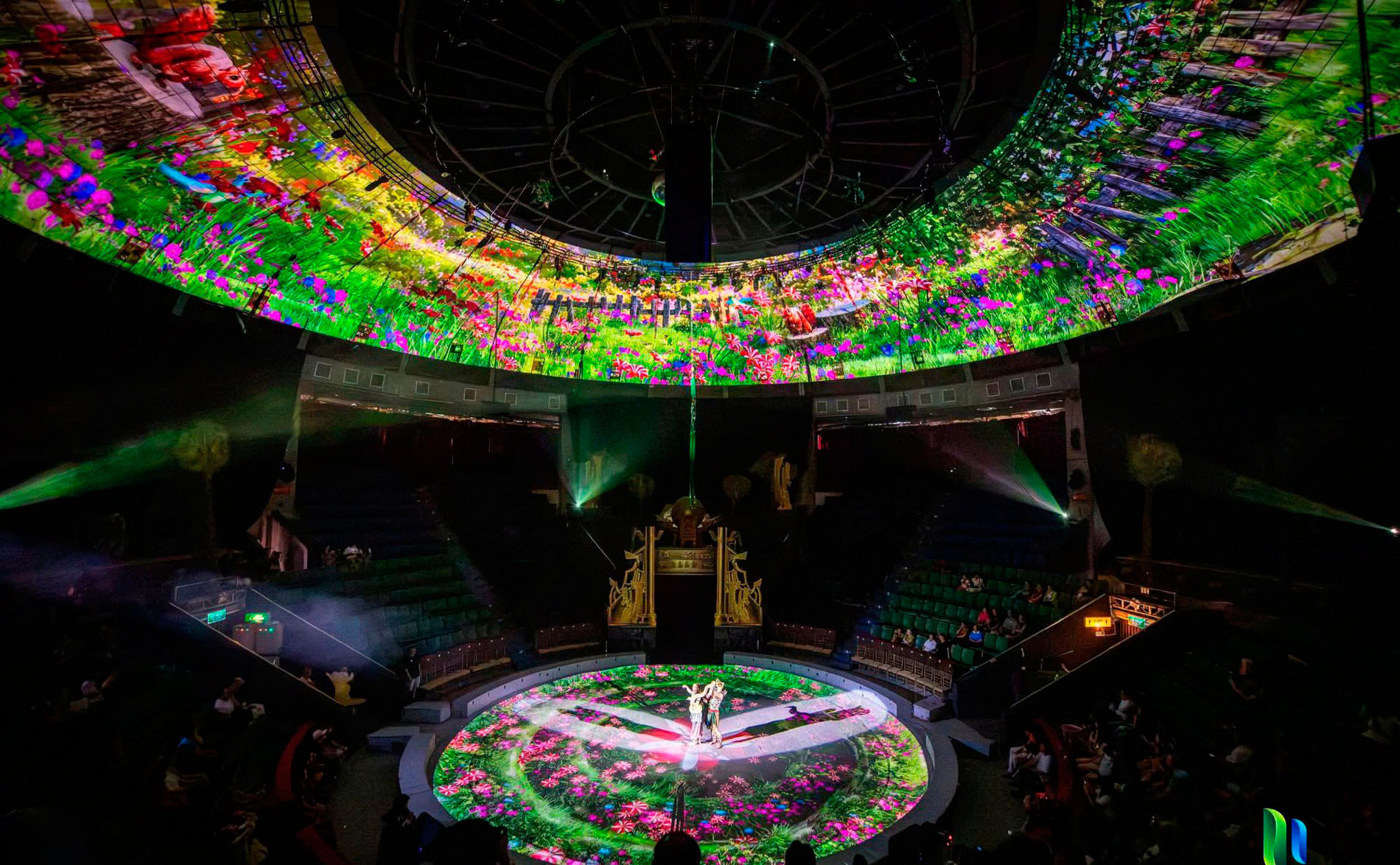
In the past, circus performances primarily emphasized physical skills and mechanical props. More recently, however, the federation has incorporated digital technology, advanced sound systems, 3D lighting and interactive LED screens into its productions.
Its artists have introduced elaborately staged performances, including Son Than Thuy Quai (Mountain God and Water Monster), a circus adaptation of the Vietnamese legend of Son Tinh and Thuy Tinh.
Digital visual effects transform the circular stage into a fantastical landscape featuring violent storms, surging waves and towering mountains.
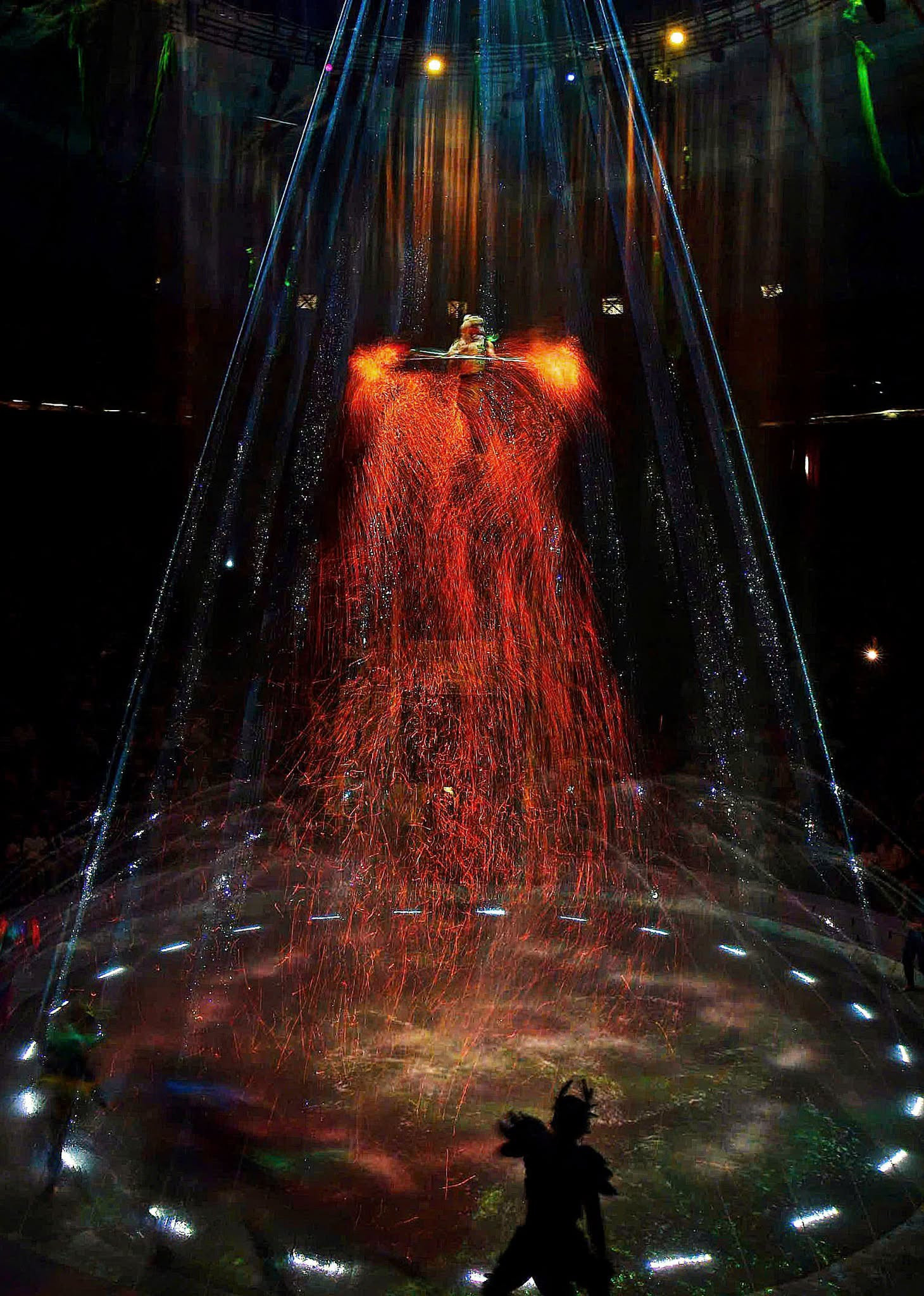
These effects are combined with water jets shooting upward from beneath the stage and streams of water cascading from above.
As performers move through the production, water splashes across their faces and occasionally reaches audience members.
Rather than reacting negatively, spectators embrace the unusual experience, which adds an immersive dimension rarely encountered in traditional circus performances.
The production demonstrates that digital technology does not necessarily diminish the authenticity or inherent risks of circus techniques.
Instead, technology can intensify emotional engagement, making cultural and historical themes more accessible and appealing, particularly to younger audiences.
The federation's experience illustrates how traditional performing arts can preserve their cultural identity while increasing their commercial appeal through technological innovation.
People's Artist Tong Toan Thang, Director of the Vietnam Circus Federation, told VietNamNet that the organization's goal is not simply to create visually impressive performances.
It also aims to develop productions capable of attracting diverse audience groups.
For that reason, technology is not incorporated merely for spectacle.
Behind the striking visual effects, however, the integration of technology into traditional performance spaces presents significant operational and technical challenges.
Lighting is a particularly sensitive issue.
The performance area must be dark enough for projected images to appear clearly, while still providing sufficient visibility for artists to execute complex movements accurately and safely.
Thang acknowledged that performers accustomed to conventional circus lighting have had to adapt to a different environment.
Excessive lighting can weaken projected visual effects, while insufficient illumination can put performers at risk during technically demanding routines.
Addressing these challenges has required close coordination among the federation's artistic, technical and production teams throughout rehearsals and staging.
Building on this approach, the federation introduced Ky Yen - Bua Tiec Dieu Ky (A Magical Feast) on October 20.
The production emphasizes the idea of wonder, combining the extraordinary abilities of circus performers with new experiences made possible by modern technology.
Its magic begins with the artists themselves, whose performances require exceptional skills, precision, agility and years of rigorous training.
Lighting, music and 3D projection mapping then transform the performance space, creating greater visual depth and enhancing storytelling.
The production also incorporates music and culinary experiences, bringing multiple forms of entertainment together in one setting.
Through this combination, the federation aims to develop a new performance model that responds to increasingly diverse audience expectations.
Despite the opportunities created by technology, the federation maintains that performers must remain at the center of artistic expression.
Thang emphasized that the fundamental value of circus arts lies in the artists themselves.
Technology should serve as a supporting tool that enhances audience experiences, showcases performers' talents, highlights their technical abilities and expands the possibilities for artistic creativity.
Public-private cooperation offers a strategic path forward
Beyond artistic innovation, productions such as Son Than Thuy Quai also point toward a broader development strategy for Vietnam's cultural industries.
According to Thang, cooperation with private-sector partners represents the beginning of a long-term investment relationship.
Such partnerships can provide the Vietnam Circus Federation with additional resources to develop new productions rather than relying solely on traditional sources of funding.
The federation's two recent productions illustrate the potential of cooperation between public cultural institutions and private enterprises.
When an established arts organization contributes experienced performers and production expertise, while a technology partner provides the capabilities to create modern immersive environments, the collaboration can generate results that would be difficult for either party to achieve independently.
The initial success of this model reflects the broader objectives of Resolution No. 30/NQ-CP, which seeks to improve institutional mechanisms, stimulate investment and encourage public-private partnerships (PPPs).
These mechanisms are intended to mobilize resources from society, encouraging technology companies and private investment funds to work alongside cultural institutions and artists.
The Vietnam Circus Federation's experience suggests that effective implementation of Resolution 30 could help unlock the potential of the country's cultural heritage and creative industries.
Digital transformation is no longer simply a matter of introducing new technical equipment.
It is increasingly becoming a new approach to cultural production, helping the sector expand its reach and strengthen its economic contribution.
Developing cultural industries on digital platforms is expected not only to contribute directly to GDP growth and create high-quality employment but also to enhance Vietnam's national soft power.
Resolution 30 sets a target for cultural industries to contribute 7% of the country's GDP.
The federation's evolving productions offer an example of how traditional art forms can participate in that ambition, combining artistic heritage, technological innovation and new investment models to reach wider audiences.
Tinh Le

