 Vietnamnet.vn

 Podcast



A strong finish
Vietnam’s GDP growth of 8.02% not only exceeded the cautious forecasts of many international organizations but also stood out in Southeast Asia, where most major economies hovered between 2% and 5%.
In a year when global growth, according to IMF and OECD, averaged just 3.1% to 3.2%, Vietnam’s robust, resilient trajectory demonstrated the economy’s ability to absorb shocks from geopolitics, global trade volatility, and extreme weather events.
From Q1 to Q4, growth steadily climbed-7.05%, 8.16%, 8.25%, and 8.46%-reflecting the gradual recovery of manufacturing, trade, services, tourism, consumption, and domestic investment.
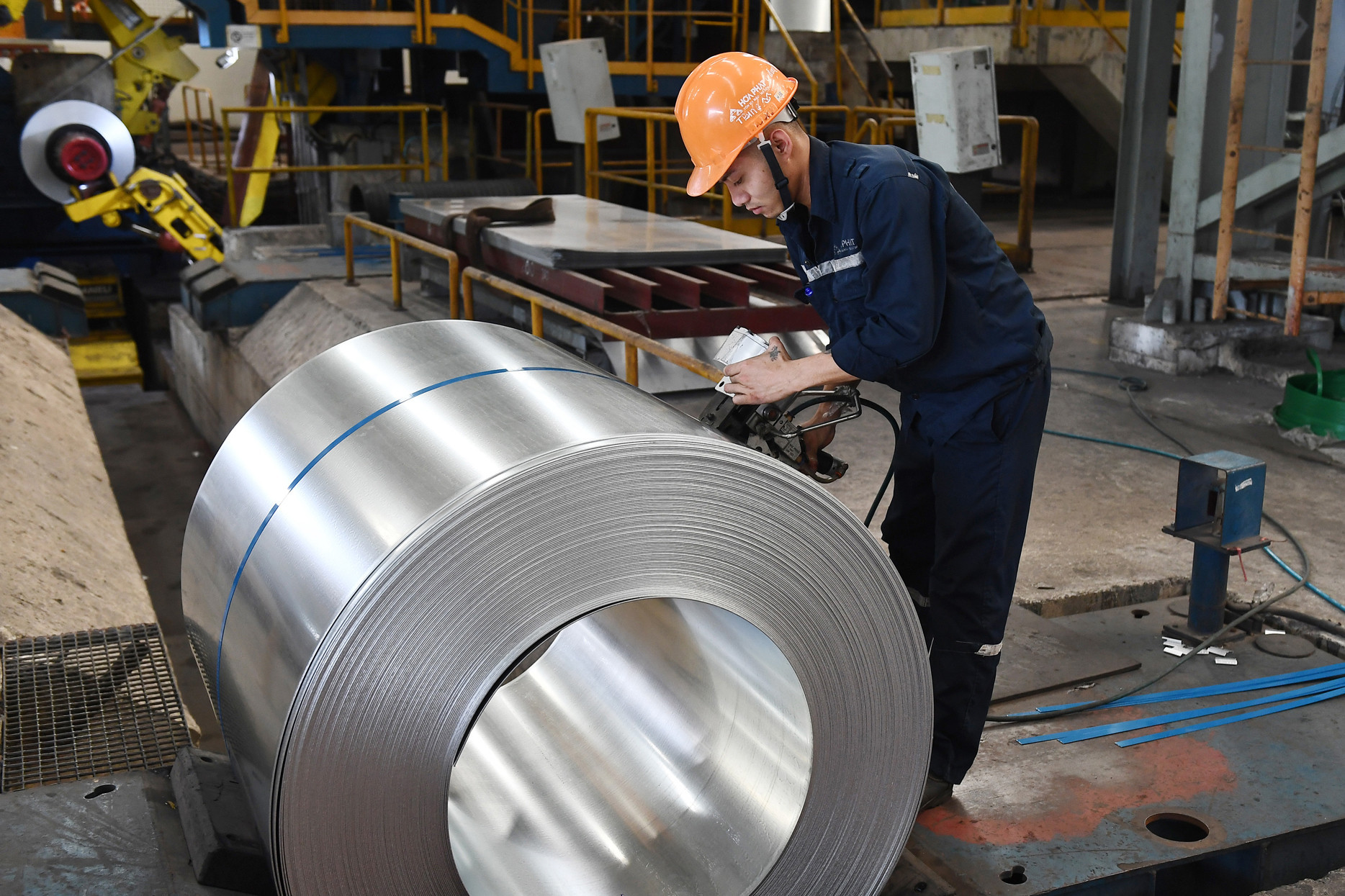
Industry and construction grew 8.8%, with manufacturing surging nearly 10%-its highest rate since 2019. Services expanded 8.62%, bolstered by a record influx of international visitors. Even agriculture, despite severe storms and landslides, maintained its role as a stabilizing force with nearly 3.8% growth.
Meanwhile, nominal GDP reached around USD 514 billion-up USD 38 billion from 2024. Per capita GDP climbed to USD 5,026. Labor productivity rose 6.83% (adjusted for inflation), and the proportion of workers with formal training rose to 29.2%.
Placing these figures within the broader context of a year marked by five-year planning reviews, administrative reorganization, legal reform, and global uncertainty, it's clear that Vietnam’s progress was not just rhetorical. It was tangible across production, business, and daily life.
Growth of 8.02% was more than just a “good result.” It marked a clear shift from recovery to acceleration.
But it also raised an unavoidable question: If Vietnam’s target for 2026–2030 is double-digit growth-10% or more-then what foundation and growth model will make the leap from 8% to 10% possible?
Two sides of development
Looking back at 2021–2025, the Vietnamese economy painted a picture of duality.
On one hand, macroeconomic stability was preserved amid turbulence; infrastructure investment was accelerated; space was opened for the private sector; and digital transformation, innovation, and long-delayed legal reforms were actively pursued.
On the other hand, key targets remained unmet. Productivity growth over the five-year cycle fell short of expectations. Structural shifts in industry and services toward higher value-added sectors were modest. Institutional reforms progressed slowly. Delegation of power expanded, but execution capacity remained uneven across government levels.
The 8% growth in 2025 was indeed a real achievement-driven by industrial recovery, trade openness, public investment, and renewed market confidence.
But it also relied heavily on cyclical drivers: disbursement of public investment, investment stimulus, and recovering tourism and trade. Meanwhile, total factor productivity (TFP)-reflecting institutional quality, governance, technology, and business competitiveness-did not show breakthrough gains.
Here, the boundary between high growth and sustainable growth begins to emerge.
Vietnam can reach 8% growth by increasing investment, easing credit, clearing infrastructure backlogs, and untangling legal bottlenecks.
But to sustain 10% growth over a multi-year cycle, the economy must shift to a model centered on productivity, human capital, and innovation-rather than scale expansion of capital and resources.
The need for a new growth model
This view was echoed by economists at a recent conference hosted by the Institute of Strategy and Policy on Finance and Economics.
They argued that while Vietnam’s capital- and resource-driven model was vital during its early industrialization, it is now reaching its limits. The next stage must emphasize TFP, science and technology, the digital economy, and the capacity of the private sector.
In this context, public investment can no longer merely serve as a safety net for growth. It must become a catalyst-attracting private capital into high-value sectors.
Large infrastructure projects only realize their potential when businesses are confident enough to invest, take risks, and enter real markets.
Fast credit growth may warm the economy in the short term. But without a stable, predictable business environment, firms hesitate to shift from short-term borrowing to long-term investment.
A fast-growing economy that also sustains macro stability cannot rely on the old “scale-first, productivity-later” mindset.
Therefore, the shift in growth model must go hand-in-hand with institutional quality.
When policy risks are predictable, procedures are genuinely simplified, property rights are clearly protected, and decentralization is coupled with accountability, then productivity will rise-reflected in long-term investment decisions by businesses.
This is especially true for the private sector, which has long been identified as a key driver of growth. That recognition is now embedded in resolutions, policy papers, and forums.
But for this role to be fully realized, businesses need a legal environment that is clear, stable, and equitable-so they can scale up, invest in technology, and integrate deeper into global value chains.
A 10% growth rate cannot be built on public investment or cheap credit alone. It requires private enterprises to feel secure, inspired, and optimistic about the future.
Developing to stabilize
The year 2025 represents an inflection point.
It demonstrated Vietnam’s resilience-outperforming gloomy forecasts during a turbulent period. Yet it also reminds us that room for extensive growth is narrowing.
We have passed the stage of “stabilizing for development.”
To move into the stage of “developing to stabilize”-where high growth underpins social welfare, global competitiveness, and long-term economic security-Vietnam must place institutional reform, productivity gains, and growth model transformation at the center.
The gap between 8% and 10% is a test of how decisively Vietnam can dismantle institutional bottlenecks, protect honest entrepreneurs, and embed science, technology, and innovation into every sector, enterprise, and project.
Ultimately, it’s about whether the economy has the courage to shift from effort-based growth to capacity-based growth-from willpower to real power-for faster and more sustainable development.
Tu Giang
.svg)
