 Vietnamnet.vn

 Podcast



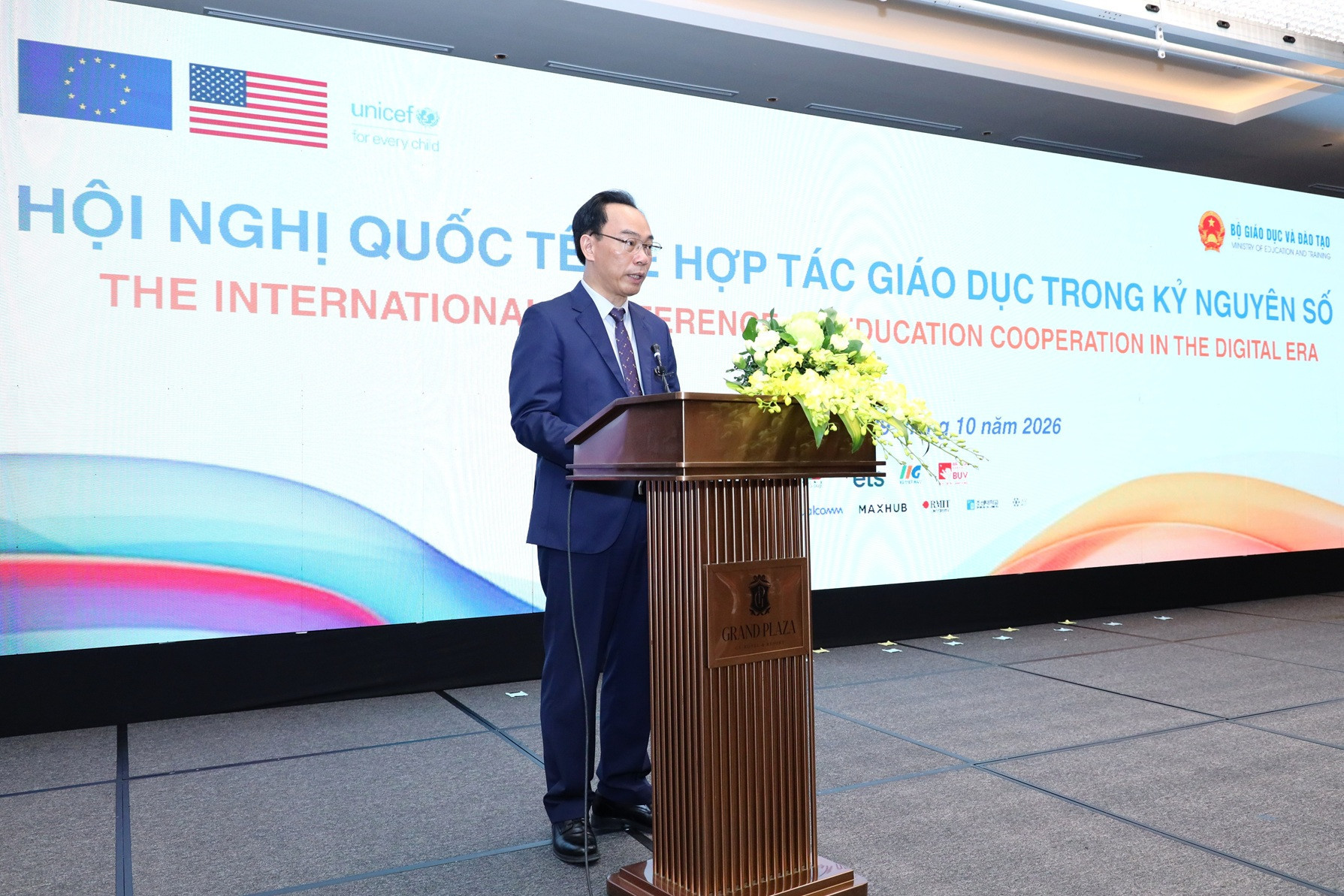
Speaking at the 2026 International Conference on Educational Cooperation in the Digital Age, Minister of Education and Training Hoang Minh Son said digital transformation and artificial intelligence are fundamentally changing how people learn, work and create.
While technology presents enormous opportunities for education, it also raises challenges involving information reliability, ethics, copyright, data security, academic integrity and the digital divide.
"Education can no longer simply ask what additional skills learners need. Teachers must change, and schools must change as well. The entire education system must transform, not only to adapt to AI but also to gradually master the technology and guide its use for human development," Son said.
According to the minister, learners need to develop independent learning skills, critical thinking, creativity and the ability to work effectively with AI.
Teachers, meanwhile, must move beyond delivering knowledge to become designers of learning activities, mentors and sources of inspiration who help students develop sound values. Schools and education authorities must also rethink how they organize, manage, assess and assure the quality of education.
Son emphasized that human development remains the central goal of Vietnam's education reform.
"The value of technology is not measured by how much or how little we use it, but by whether it helps students learn better, enables teachers to fulfill their roles more effectively, improves school operations and expands equitable access to learning opportunities," he said.
The minister outlined four priorities for Vietnam's education sector in adopting technology and advancing digital transformation.
First, Vietnam must develop a unified, secure and interconnected system of educational data and digital learning resources that can be shared across institutions. Data should become a resource serving learners, educators and education administrators, supporting the development of a national smart education platform.
Second, teaching and learning methods must be renewed to strengthen the ability of both students and teachers to understand and master technology.
"The goal is not to have AI think on behalf of humans, but to help people learn better, become more creative and generate greater value. Digital and AI competencies must become an integral part of teachers' continuous professional development," Son said.
Third, education governance must be modernized, with AI deployed safely, transparently and responsibly.
"We must understand both the capabilities and limitations of technology while safeguarding privacy, copyright, academic integrity, learners' rights and human accountability," he said.
Fourth, Vietnam should strengthen international cooperation to exchange knowledge, share experience and pursue joint development in digital technology and artificial intelligence.
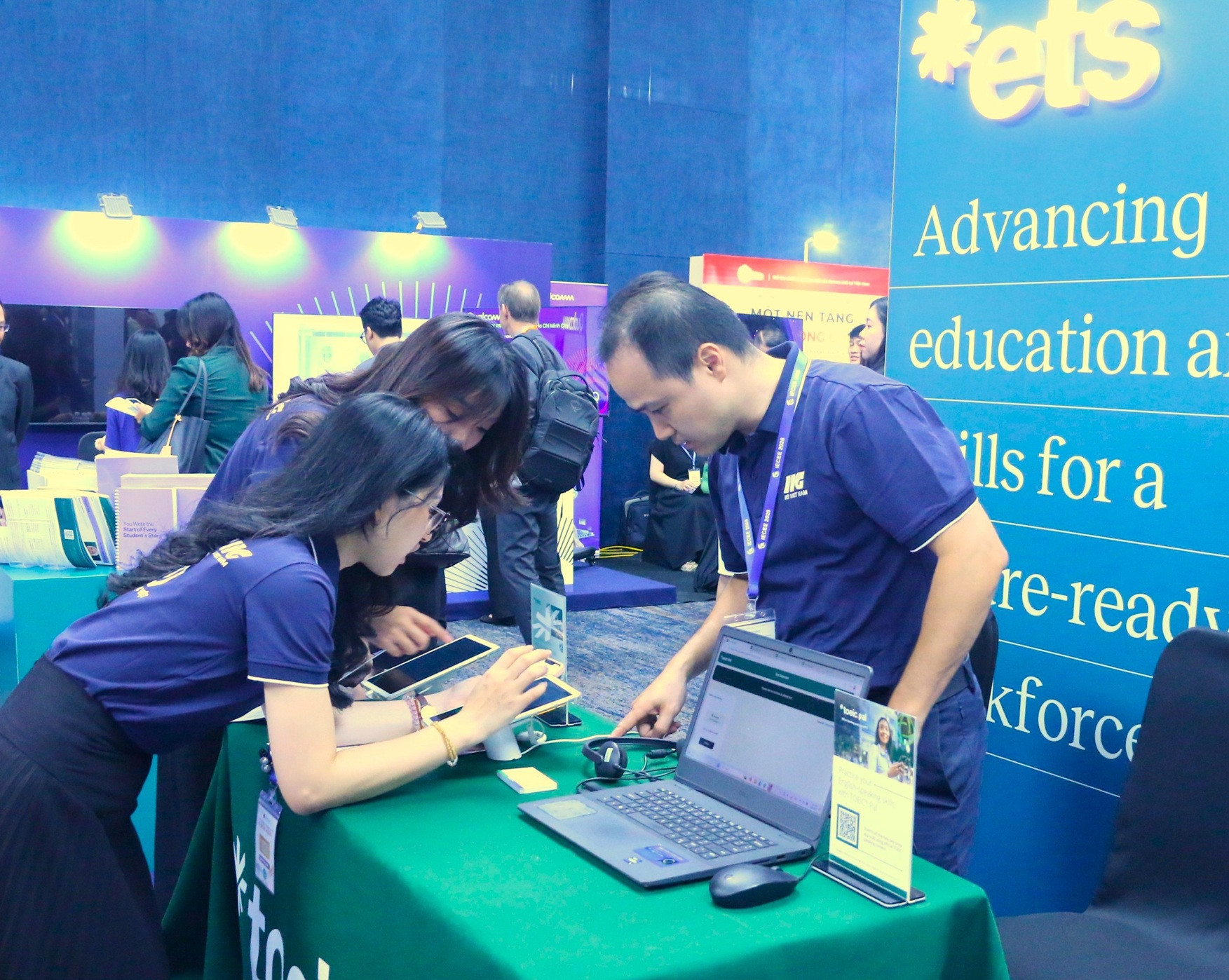
Speaking on the sidelines of the conference, Jonathan Schmidgall, a senior research scientist at the US-based Educational Testing Service (ETS), highlighted the changing role of assessment in an AI-driven education landscape.
He explained that assessments serve two essential purposes. For high-stakes decisions such as graduation, certification and admissions, they help ensure fairness, comparability and a reliable basis for decision-making.
At the same time, assessments support learning by providing feedback, identifying areas for improvement and helping learners understand which skills require further practice.
According to Schmidgall, the rapid development of AI is transforming both functions.
As AI becomes an increasingly common tool, he said, educators must clearly define what assessment scores actually represent: a student's ability to perform independently, their performance with AI assistance, or their capacity to collaborate effectively with AI.
He also warned that differences in access to AI tools and the ability to use them could undermine fairness and the comparability of assessment results.
To strike a balance between innovation and reliability, Schmidgall argued that the rigor of assessment validation should be proportionate to the significance of the decisions being made.
Assessments designed primarily to support learning can allow greater flexibility in experimenting with emerging technologies. High-stakes examinations, however, require rigorous validation of their quality and suitability before new approaches are introduced.
Thanh Hung
.svg)
