 Vietnamnet.vn

 Podcast



A paradox continues to define development policy for ethnic minority and mountainous regions in Vietnam: massive public investment, thousands of infrastructure projects, yet the development gap between regions is narrowing slowly and without lasting sustainability.
That paradox suggests the core issue no longer lies mainly in the scale of resources, but in the very mindset behind the development model.
Deep transformation instead of simply “more investment”
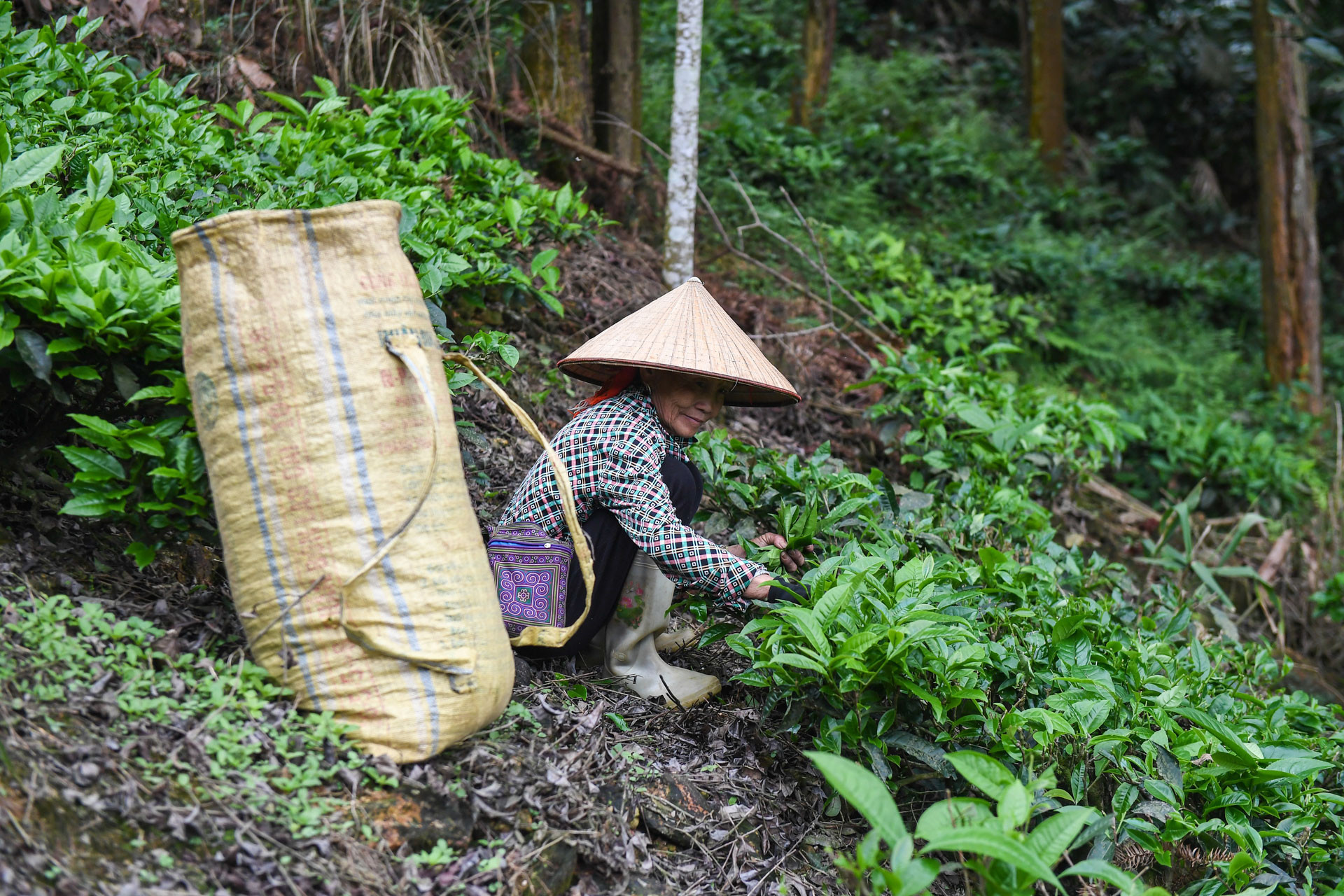
Ethnic minority and mountainous regions need not only more resources in the next phase, but an entirely new development model. Photo: Thach Thao
For many years, ethnic policy has largely been designed around a logic of “compensating for shortages”: no roads meant building roads, no electricity meant extending the grid, no housing meant providing housing support, no clean water meant funding water projects.
That approach was necessary in the early stages when basic infrastructure remained severely lacking.
But if it continues as the dominant framework for too long, policy can easily fall into a repetitive cycle: heavy investment while local self-development capacity grows only slowly.
And that is precisely the point that now requires reconsideration.
The real concern is not a lack of policy - it is an “addiction to support.”
After more than five years of implementing the National Target Program on socio-economic development for ethnic minority and mountainous areas, thousands of infrastructure projects have been completed.
According to Phase I review data, more than 6,000 rural transport projects have been built across these regions, alongside hundreds of electricity systems, schools, healthcare stations, and community centers.
Yet one major question remains unavoidable: Why have many localities, despite receiving extensive support policies, still failed to generate sustainable development momentum?
The answer lies in the fact that many current policies continue to operate under a “welfare distribution” mindset rather than creating long-term development capacity.
A household may receive support in the form of crop varieties or livestock.
But without production skills, market access, business organization capacity, logistics systems, or supply chains, such support can quickly return to square one.
A locality may receive better infrastructure investment.
But if education quality remains weak, skilled human resources remain scarce, and local governance capacity remains limited, that infrastructure will struggle to translate into real economic growth.
In other words, what ethnic minority and mountainous regions lack most today is not simply investment capital, but the capacity to participate in the modern economy.
Success cannot be measured by disbursement rates
One of the biggest limitations of the current model is that governance thinking remains heavily focused on inputs.
In many places, disbursement rates are still treated as the central indicator of policy success.
Yet high disbursement does not necessarily mean meaningful development outcomes.
A program may complete its spending targets on schedule while residents remain poor, young people continue leaving their hometowns, children still receive poor education, workers remain unskilled, and communities still cannot stand on their own internal strength.
This is the clear limitation of an “administrative management” model in developing ethnic minority and mountainous regions.
What matters now is not how much money has been spent, but how much people’s capabilities have improved after every unit of public investment.
Without changing the framework used to evaluate policy, even larger investments risk creating prolonged dependence on public support.
Integrating the three national target programs: A major opportunity and a major challenge
The integration of the three National Target Programs for the 2026-2035 period is organizationally the right move.
It can reduce fragmented resources, minimize overlapping institutions, and create conditions for more unified coordination.
But at the same time, this is also the biggest test facing ethnic policy.
Ethnic minority and mountainous regions are not simply “poor areas.”
They are highly distinctive development spaces in terms of population composition, geography, culture, access to public services, and development costs.
If integration is carried out mechanically, ethnic policy could easily be diluted within broader national priorities.
In that case, the most disadvantaged core regions may lose the strongest preferential mechanisms designed for them.
What deserves particular attention is that the three current programs operate according to entirely different logics.
The New Rural Development Program is based on standardized criteria.
The Sustainable Poverty Reduction Program is based on multidimensional poverty benchmarks.
Ethnic policy, meanwhile, is built around regional classifications, ethnic groups, and specific forms of deprivation.
Without an exceptionally well-designed institutional framework, integration could end up increasing administrative procedures instead of improving substantive effectiveness.
From “development relief” to “capacity creation”
What ethnic minority and mountainous regions need most in the next phase is not merely more resources, but an entirely new development model.
That model must focus on developing people rather than merely constructing projects; building capabilities instead of prolonging support; fostering market-based livelihoods instead of maintaining subsistence production; enhancing digital capacity instead of only providing material assistance; and strengthening local governance instead of simply increasing investment targets.
A modern ethnic policy must help people gain vocational skills, entrepreneurial capacity, market access, digital literacy, and community organization capability.
Most importantly, it must enable people to develop independently without long-term dependence on public support.
That is the true meaning of “empowerment.”
A strategic development space
For years, ethnic minority and mountainous regions have often been viewed primarily through the lens of “difficult areas.”
But under today’s conditions, they should instead be seen as a “strategic development space.”
These regions account for roughly three-quarters of Vietnam’s natural land area and play a particularly important role in national defense, security, ecological protection, cultural diversity, and border trade.
If policymakers continue treating these areas mainly as recipients of assistance, Vietnam risks overlooking one of its greatest long-term development drivers.
The issue, therefore, is not simply how much additional funding should be allocated to ethnic policy.
The real question is whether Vietnam is prepared to move from a mindset of “support for survival” to one of “empowerment for development.”
That is the true test for the 2026-2030 period.
Dr. Ha Viet Quan
.svg)
