 Vietnamnet.vn

 Podcast



According to statistics from the Customs Department, Vietnam imported nearly 1.11 million tonnes of crude oil worth USD 1.12 billion in May alone, up 46.4% in volume and 56.5% in value compared with the previous month.
Compared with May 2025, crude oil import volume increased only 6.7%, but import value surged 108%.
In the first five months of 2026, Vietnam spent more than USD 3.54 billion importing approximately 4.88 million tonnes of crude oil. Compared with the same period last year, import volume declined 18.2%, while import value still rose 4.1%.
In addition to crude oil, Vietnamese companies imported nearly 474,600 tonnes of refined petroleum products worth USD 653.6 million in May, down 38.5% in volume and 48% in value from April 2026.
Compared with May 2025, refined fuel imports fell 37.4% in volume but increased 50.1% in value.
Overall, during the first five months of the year, Vietnam imported nearly 4.59 million tonnes of petroleum products worth almost USD 4.89 billion, representing increases of 15.8% in volume and 81.6% in value compared with the same period in 2025.
Combined imports of crude oil and refined fuels reached 9.47 million tonnes valued at approximately USD 8.43 billion.
Compared with the first five months of 2025, total import volume declined 4.6%, but import value rose nearly 38.2%, equivalent to an increase of roughly USD 2.33 billion.
Fuel prices retreat from record highs
Domestic fuel supplies remain stable, while gasoline and diesel prices have fallen significantly from the record levels recorded in late March and early April 2026.
The retail price of E10 RON95-III gasoline has dropped from a historic high of VND31,420 per liter on March 24 to VND22,330 per liter, a decline of VND9,090 per liter.
E5 RON92-II gasoline has fallen from its peak of VND30,114 per liter on March 24 to VND21,784 per liter, down VND8,330 per liter.
Diesel prices have recorded an even steeper decline, dropping from a peak of VND44,788 per liter on April 3 to VND26,866 per liter, a reduction of VND17,922 per liter.
E10 rollout marks a new phase in Vietnam’s energy transition
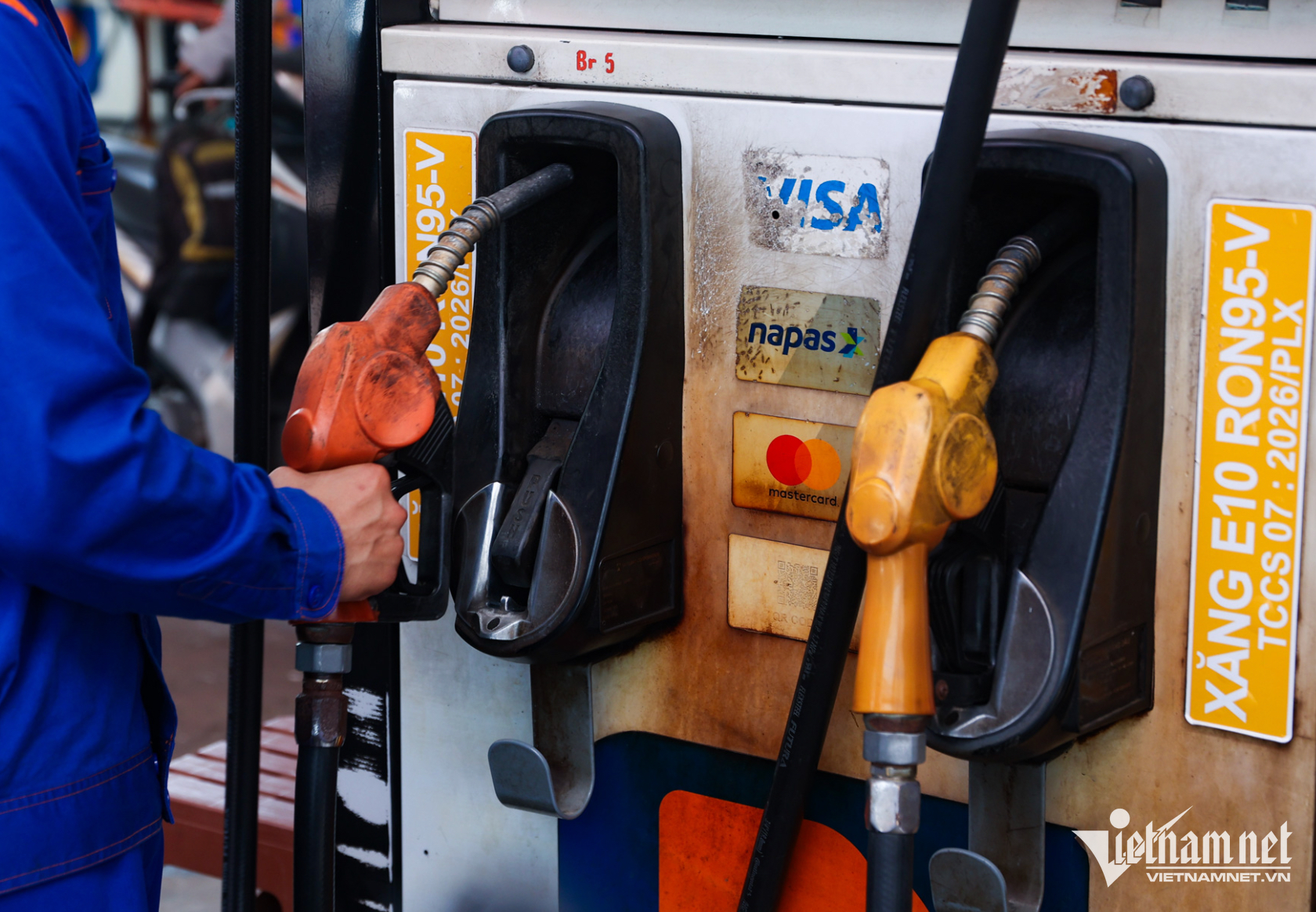
The fuel market has also undergone a major shift following the nationwide introduction of E10 gasoline on June 1, replacing conventional RON95 and RON97 mineral gasoline products.
Speaking at an energy transition conference on June 9, Dao Duy Anh, Deputy Director General of the Department of Innovation, Green Transition and Industrial Promotion under the Ministry of Industry and Trade, described the rollout of E10 biofuel as a concrete step in Vietnam’s green transition and energy transformation roadmap.
According to Dao Duy Anh, E10 gasoline is not the final destination but rather the beginning of a broader transformation.
Its significance extends beyond blending 10% ethanol into each liter of fuel. The policy is expected to create opportunities for developing a new fuel industry ecosystem, from feedstock production and manufacturing to distribution and consumption of green fuels, while generating additional economic value.
The ministry reported that during the first days of nationwide E10 deployment, market conditions remained stable, fuel supplies were adequate and consumer response was generally positive.
According to officials, the experience demonstrates that policies introduced through carefully planned roadmaps, thorough preparation and effective public communication can gain broad public support.
Looking ahead, alongside the continued implementation of E10 gasoline, the industry and trade sector plans to accelerate innovation within the energy sector, expand green energy sources, promote sustainable production and consumption models, increase localization rates in energy supply chains and foster new industries linked to the green transition.
Recently, the Department of Domestic Market Management and Development under the Ministry of Industry and Trade instructed petroleum wholesalers and distributors to strictly comply with regulations governing biofuel blending and distribution.
Companies have also been directed to ensure uninterrupted supplies of E10 gasoline throughout their distribution networks and maintain stable retail operations under all circumstances.
Tam An
.svg)
