 Vietnamnet.vn

 Podcast



With the participation of senior leaders, diplomats, experts and scholars from across the region and beyond, the ASEAN Future Forum became a platform for discussions on some of the most pressing issues shaping Southeast Asia and the wider world.
During the opening session on June 9, heads of state, government leaders and ministers from multiple countries delivered speeches in person or sent recorded messages to the forum.
Vietnam becomes an increasingly influential voice
Speaking on the sidelines of the forum, Julien Guerrier, Ambassador of the European Union to Vietnam, said he was particularly impressed to see Hanoi bringing together regional leaders, including the prime ministers of Vietnam, Laos, Cambodia, Thailand and Timor-Leste, to discuss peace and inclusive growth.
He described the gathering as a noteworthy achievement and an important opportunity to ensure that ASEAN continues to serve its people while contributing to shared prosperity.
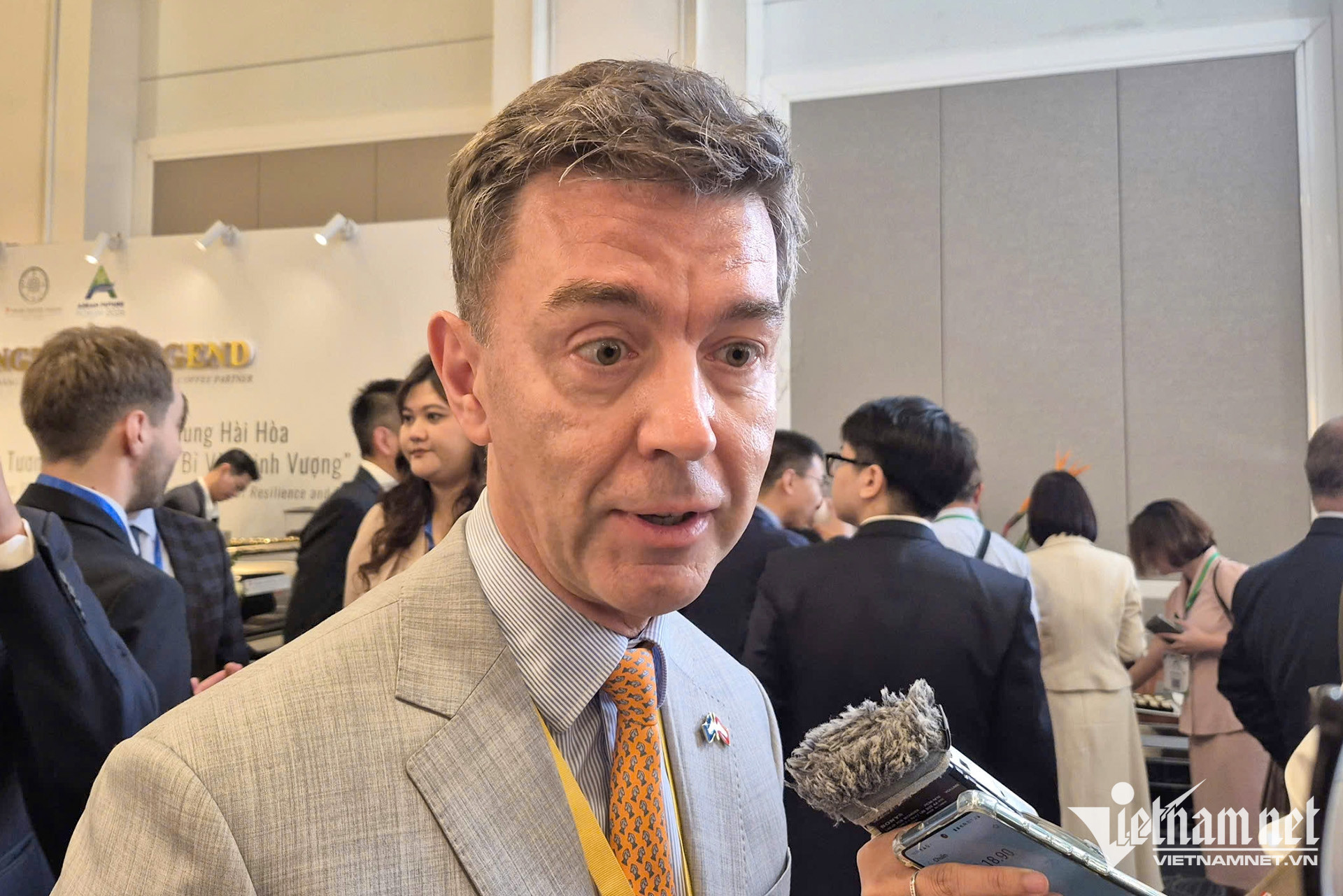
European Union Ambassador to Vietnam Julien Guerrier.
Referring to the keynote address delivered by General Secretary and President To Lam at the Shangri-La Dialogue in late May, Ambassador Guerrier said Vietnam has emerged as one of the most prominent and influential voices in regional discussions on peace and stability.
According to the ambassador, Vietnam's vision aligns closely with the priorities of both ASEAN and the European Union. In a rapidly changing world, the EU seeks to work with Vietnam and ASEAN to establish new standards for the future, prevent conflict and uphold a rules-based security order.
The EU also shares ASEAN's ambition of transforming the region into a global hub for innovation.
Ambassador Guerrier revealed that he had proposed a dedicated EU-ASEAN dialogue on the sidelines of the forum. The two sides have extensive experience to share, ranging from rules-based regional cooperation to sustainable development initiatives.
Strengthening partnerships in an uncertain world
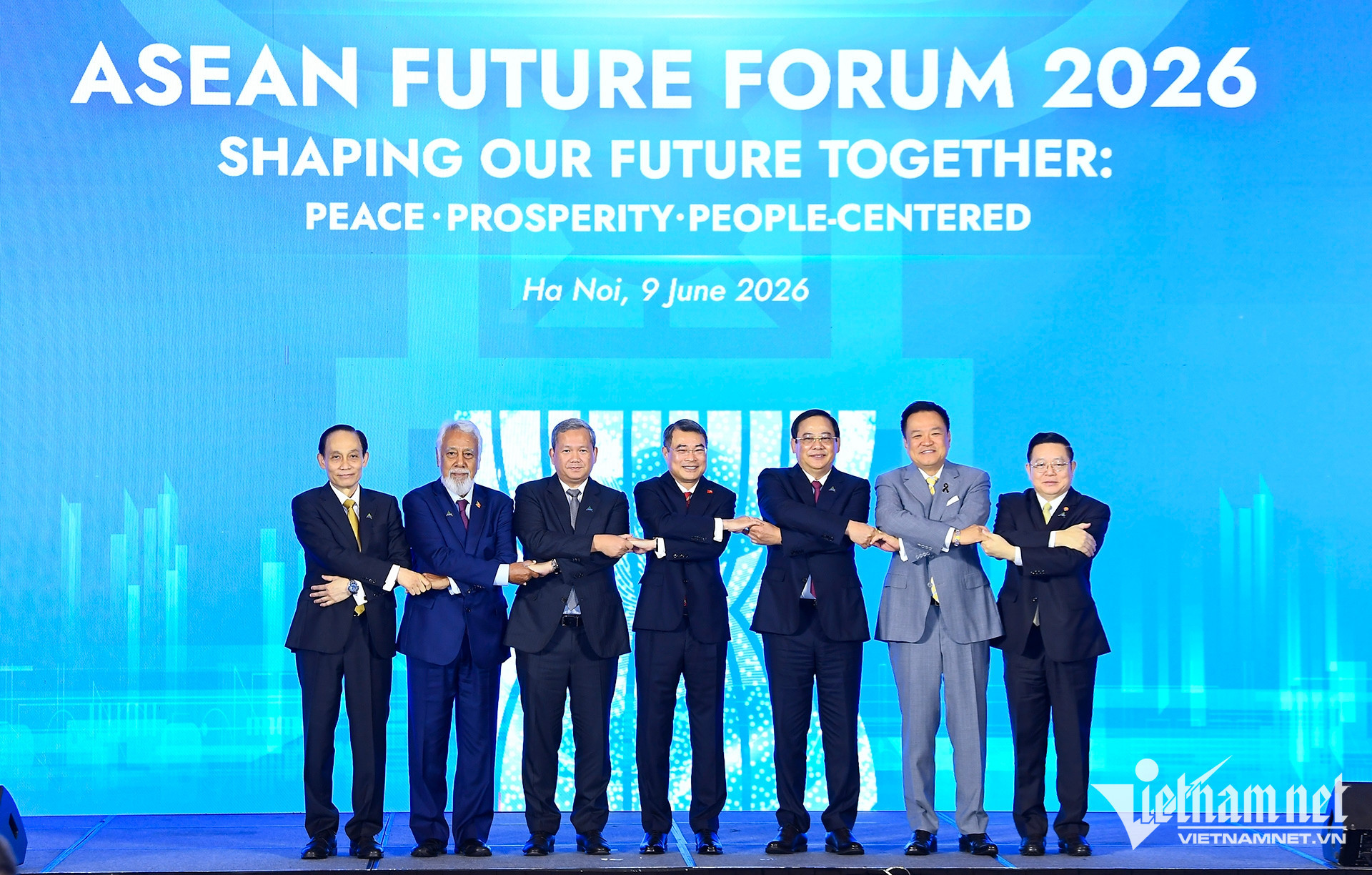
Prime Minister Le Minh Hung joins the prime ministers of Laos, Cambodia, Thailand and Timor-Leste, along with the ASEAN Secretary-General, at the forum.
Canadian Ambassador to Vietnam James Nickel said this was his third year attending the forum.
Impressed by the keynote speech delivered by Prime Minister Le Minh Hung during the opening session, Ambassador Nickel noted that Vietnam's message reaffirmed its commitment to international law and multilateral institutions.
In a world marked by uncertainty, middle powers with shared values such as Canada, Vietnam and ASEAN member states need to cooperate more closely to address common challenges for the benefit of their people, he said.
Vietnam is not only a bilateral partner but also a vital component of Canada's Indo-Pacific strategy.
The ambassador emphasized that Vietnam serves as a key partner in helping Canada deepen and expand its engagement with ASEAN. This year, as Chair of the Comprehensive and Progressive Agreement for Trans-Pacific Partnership (CPTPP), Vietnam is also playing an important role in strengthening connections between CPTPP and other economic blocs, including the EU.
Regarding ASEAN, Ambassador Nickel noted that Canada and ASEAN are currently negotiating a free trade agreement. He described the process as a significant step forward and expressed confidence that negotiations could be completed this year.
ASEAN is Canada's fourth-largest trading partner, with bilateral trade reaching US$42 billion. As a major producer of food and energy, Canada remains committed to contributing to ASEAN's food and energy security.
Resilience does not mean isolation
French Ambassador to Vietnam Olivier Brochet also highlighted the importance of Prime Minister Le Minh Hung's speech, describing it as compelling and highly significant.
He said the address continued themes introduced by To Lam during the Shangri-La Dialogue.
"What is particularly meaningful is witnessing Vietnam's strong commitment to supporting ASEAN's development, fostering peaceful relations and maintaining regional stability," Ambassador Brochet said.
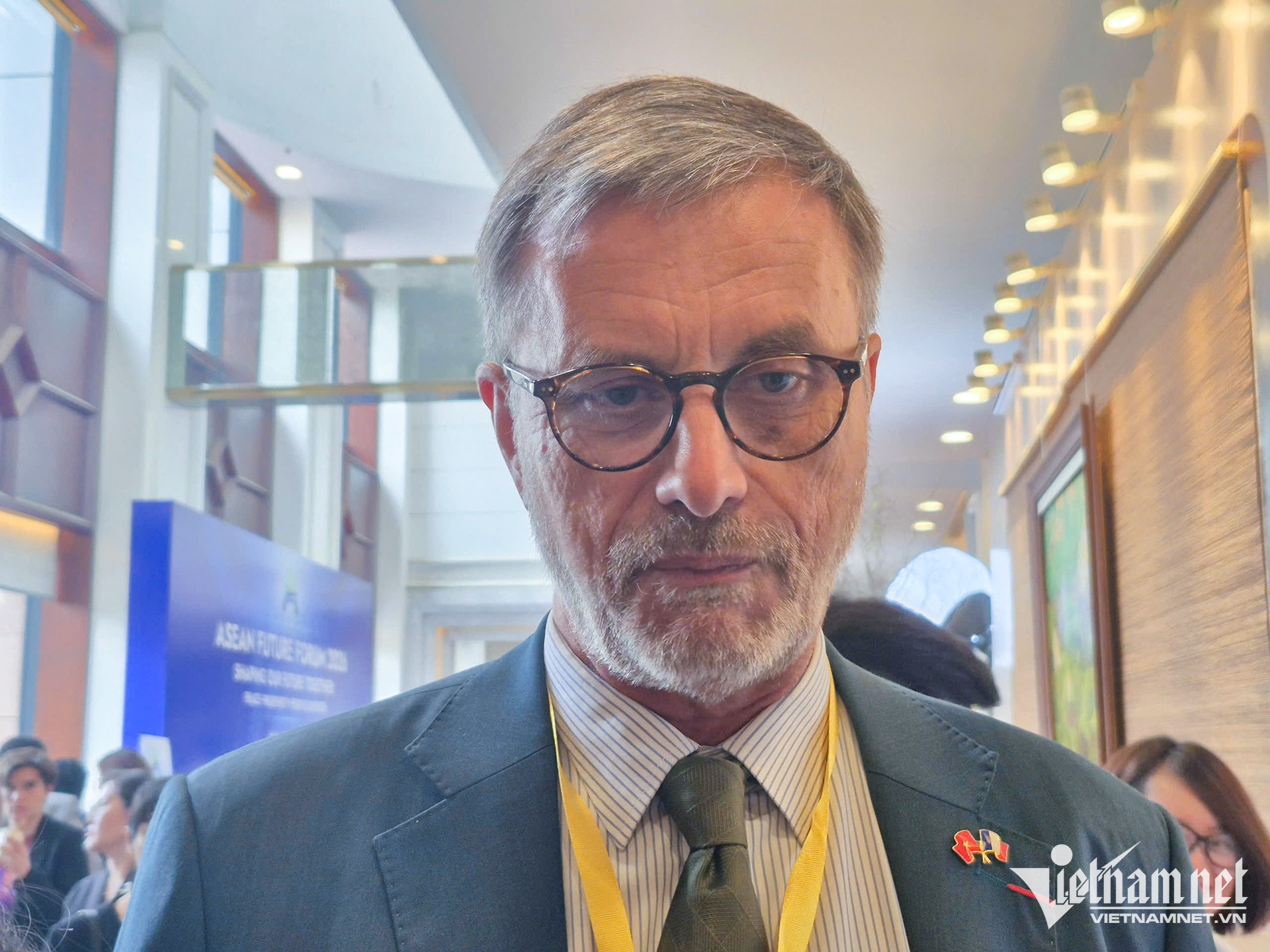
French Ambassador to Vietnam Olivier Brochet.
He observed that this year's forum carried a more optimistic atmosphere, providing confidence amid ongoing international crises.
The ambassador also praised Vietnam's increasingly prominent role within ASEAN. Vietnam's proactive efforts to promote dialogue initiatives and demonstrate leadership on regional issues, he said, are positive signals not only for ASEAN but also for the broader international community.
France hopes to continue strengthening cooperation with Vietnam and ASEAN countries in support of stability, dialogue and development throughout the region.
Speaking to the media after the opening session, Deputy Foreign Minister Nguyen Manh Cuong recalled a key observation made by Party Chief and President To Lam at the Shangri-La Dialogue.
According to the Deputy Foreign Minister, To Lam noted that today's world is experiencing a period in which "connections are broader but vulnerabilities are greater; technology is more advanced but risks of misuse are higher; interdependence is deeper but can more easily become a tool of coercion."
Against that backdrop, resilience has become an urgent requirement for countries across the region.
However, Nguyen Manh Cuong stressed that resilience does not mean closing off from the world, nor does it mean facing challenges alone.
For both small and medium-sized countries, and for ASEAN as a whole, genuine resilience can only be strengthened sustainably through cooperation.
A country that isolates itself does not become safer, he argued. On the contrary, it becomes easier to overlook and more vulnerable to pressure.
When nations connect, share resources, improve infrastructure links and coordinate policies, each country grows stronger and so does the wider community.
"A resilient ASEAN is an ASEAN that knows how to transform connectivity into its own source of strength," he said.
The Deputy Foreign Minister added that one of the most meaningful aspects of this year's forum was its recognition that resilience is not solely the responsibility of governments. Businesses, local authorities, young people and, for the first time this year, political parties also have an important role to play.
As a result, the forum expanded its dialogue spaces and welcomed a broader range of voices and perspectives than in previous editions.
Tran Thuong
.svg)
