 Vietnamnet.vn

 Podcast



The biggest challenge facing Vietnam's integrated National Target Program (NTP) for 2026-2030 is no longer policy design but implementation, officials from three provinces said at a government conference, calling for a second wave of reforms focused on execution rather than planning.
The message emerged during a conference on advancing the integrated National Target Program for new-style rural development, sustainable poverty reduction, and socio-economic development in ethnic minority and mountainous areas for the 2026-2030 period. The meeting was chaired by Deputy Prime Minister Ho Quoc Dung on July 6.
Officials from Dien Bien, Quang Ngai, and An Giang - representing Vietnam's northern mountains, central coast, and Mekong Delta respectively - identified the same systemic bottleneck: while the integrated program represents a major improvement in policy design, its implementation mechanisms require further reform.
From integrating programs to changing governance

The integrated National Target Program combines three previous national programs covering new-style rural development, sustainable poverty reduction, and socio-economic development in ethnic minority and mountainous areas.
Rather than simply merging three separate programs into one, the initiative introduces a new approach to development governance.
According to Deputy Minister of Agriculture and Environment Nguyen Hoang Hiep, the integrated framework addresses longstanding issues including overlapping policies, fragmented administration, and dispersed investment resources.
Central government funding will prioritize disadvantaged areas, ethnic minority and mountainous communities, former resistance bases, border regions and islands. Local governments are given greater authority to select projects and combine funding sources within a unified plan, helping prevent duplication and reducing unnecessary financial burdens on local communities.
"The management model has also shifted toward stronger decentralization," Hiep said. "The central government focuses on objectives, policy and supervision, while local authorities decide, implement and take responsibility."
The shift is already evident at the local level. Rather than waiting for every implementing regulation before taking action, many provinces have begun preparing organizational structures, implementation plans and operational mechanisms even as some detailed guidance remains under development.
As of July 6, 23 of Vietnam's 34 provinces and centrally governed cities had established or strengthened steering committees and developed implementation plans.
Quang Ngai, for example, has submitted provincial resolutions establishing budget allocation principles, funding ratios and beneficiary criteria to ensure it is ready to launch the program.
One shared obstacle across three regions
Despite differences in geography and development levels, all three provinces highlighted common implementation challenges centered on funding and institutional capacity.
Deputy Chairman of the An Giang People's Committee, Le Van Phuoc, said the province has yet to receive central government funding for the integrated program.
Deputy Minister of Finance Ta Anh Tuan said the central government has allocated VND79 trillion (US$3.0 billion) in the medium-term public investment plan for National Target Programs, including VND70 trillion (US$2.68 billion) for the integrated program.
However, medium-term funding plans for separate National Target Programs covering education, healthcare and culture have not yet been finalized, making it difficult for local governments to integrate resources.
"If funding is delayed, implementation in 2026 will come under considerable pressure," Phuoc said.
Quang Ngai identified another challenge: matching funds.
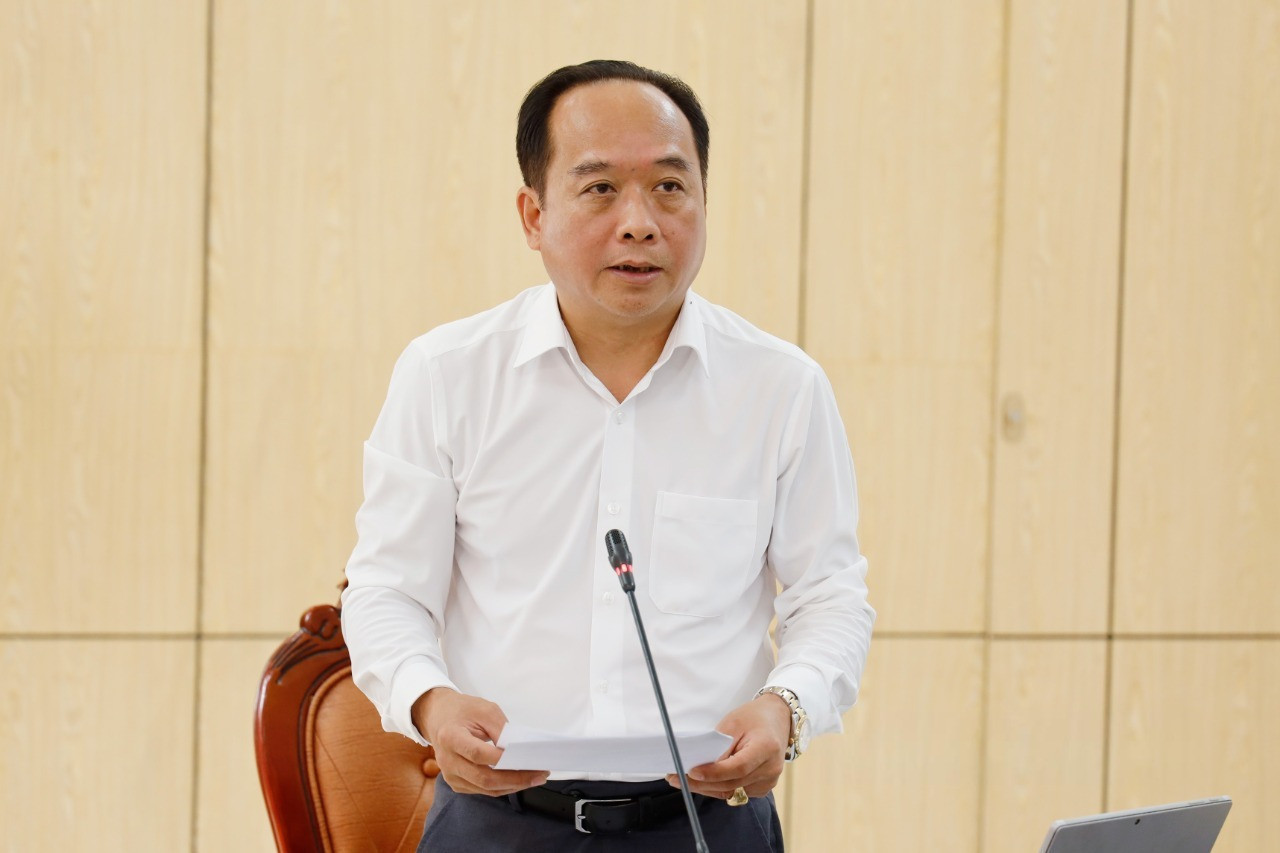
According to Standing Vice Chairman of the provincial People's Committee Y Ngoc, the requirement for provinces to contribute 15-20% counterpart funding places substantial pressure on financially constrained local governments.
The province has asked the central government to allocate 2026 funding as soon as possible while providing guidance on using remaining funds from the previous program period to avoid disruptions.
In Dien Bien, the scale of the funding gap is even greater.
Deputy Chairman of the provincial People's Committee Nguyen Minh Phu said the province requires more than VND28 trillion (US$1.07 billion) to achieve its 2026-2030 development targets. Yet projected central government funding is only about VND2.394 trillion (US$91 million).
"Meeting targets such as reducing multidimensional poverty by 3-3.5% annually, ensuring 65% of communes meet new-style rural standards and helping 65% of communes escape extremely disadvantaged status will be extremely challenging," Phu said.
The experiences of the three provinces suggest that the problem extends beyond limited funding to the timing of resource allocation. Even well-designed policies cannot achieve their objectives if financial resources arrive too late.
Calls for implementation reform
Local leaders argued that while the first round of reforms focused on designing an integrated program, the next stage should prioritize improving implementation mechanisms.
Y Ngoc said the program's success depends not only on investment levels but also on institutional quality, decentralization and local implementation capacity.
"When institutions function effectively and local governments have genuine autonomy, and when people become the true beneficiaries and participants, the goals of rural development, sustainable poverty reduction and ethnic minority development can be achieved in a meaningful and lasting way," she said.
An Giang's Le Van Phuoc proposed shifting from document-based administration to data-driven governance.
He called for a unified digital platform linking central and local governments, allowing real-time management of beneficiary information, funding allocation, disbursement and program outcomes.
Such a system would reduce administrative procedures and paper reporting while improving transparency, monitoring and overall program effectiveness.
The integration of Vietnam's three National Target Programs marks a significant shift toward a more coordinated approach to rural and regional development.
However, as reflected in feedback from local governments, redesigning the policy framework is only the first step.
For the integrated National Target Program to achieve its objectives, Vietnam will need what many officials describe as a second reform - one focused on implementation. Granting local governments greater operational autonomy, ensuring timely resource allocation and replacing paperwork with data-driven governance could help transform policy integration on paper into effective action on the ground.
Sy Hao
.svg)
