 Vietnamnet.vn

 Podcast


Nationwide disbursement reaches 41.18%, local governments lag at 38.49%
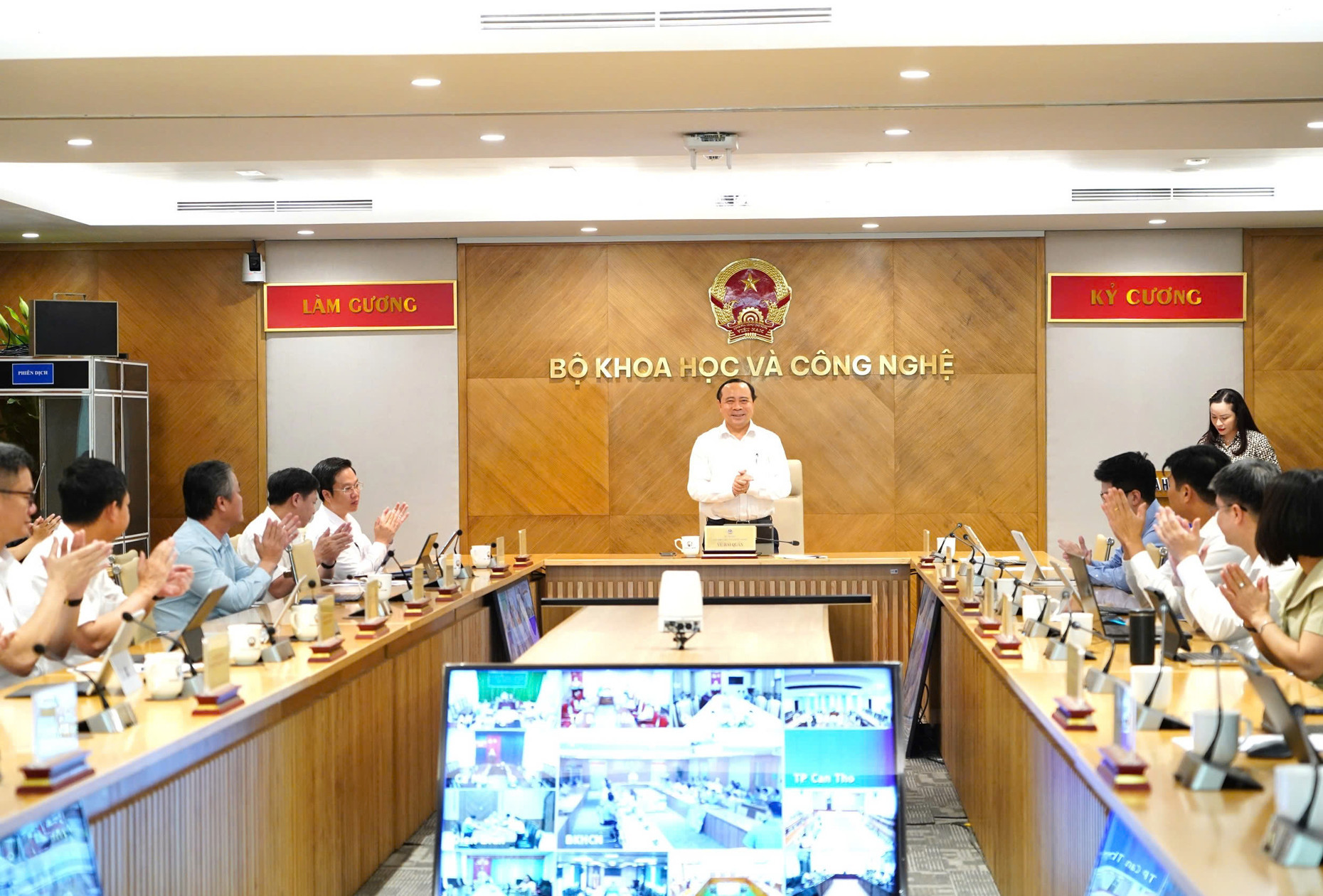
Vietnam's Ministry of Science and Technology held an online conference with provincial and municipal science and technology departments on October 27 to review budget disbursement, share experiences and address obstacles affecting science, technology, innovation and digital transformation programs in 2026.
According to Hoang Thi Phuong Luu, Director of the ministry's Planning and Finance Department, the total budget available nationwide as of October 26 stood at approximately $2.03 billion (VND52.68 trillion). Of that amount, around $834 million (VND21.69 trillion) had been disbursed, equivalent to 41.18%.
For local governments, the available budget totaled approximately $1.08 billion (VND28.03 trillion), with about $415 million (VND10.79 trillion) disbursed, representing 38.49%.
That leaves approximately $663 million (VND17.24 trillion) unspent, highlighting the need to accelerate implementation during the remaining months of the year.
By sector, local disbursement rates reached 47.15% for science and technology, 27.54% for innovation and 30.23% for digital transformation. Development investment spending reached 43.78%, while recurrent expenditure stood at 37.18%.
Seven localities recorded disbursement rates of at least 50%: Thai Nguyen, Hue, Tuyen Quang, Can Tho, Quang Tri, Khanh Hoa and Da Nang. Hue led with 65.21%, closely followed by Tuyen Quang at 65.17%.
In absolute terms, the 10 localities with the highest disbursement volumes accounted for approximately $299 million (VND7.78 trillion), representing 72.1% of all local government disbursements.
Ho Chi Minh City disbursed approximately $104 million (VND2.71 trillion), Hanoi about $78.3 million (VND2.04 trillion) and Da Nang roughly $26.8 million (VND697.7 billion).
Ho Chi Minh City and Hanoi alone accounted for 44% of the total disbursement value among local governments.
The figures reveal significant differences in implementation progress across localities, underscoring the need for stronger administrative direction and more proactive efforts to resolve bottlenecks.
Removing regulatory barriers and shortening implementation timelines
At the conference, representatives of the ministry's specialized departments clarified procedural difficulties in managing science and technology projects and outlined provisions under the Law on Science, Technology and Innovation, the Law on Digital Transformation and their implementing decrees.
Nguyen Phu Hung, Director of the Department of Engineering and Technology, said Decree 267/2025/ND-CP sets a maximum period of 120 days for signing contracts to carry out science and technology assignments, calculated from the deadline for submitting project proposals.
Under Law No. 93/2025/QH15 on Science, Technology and Innovation, organizations leading state-funded research projects are automatically granted management, usage and ownership rights over project results corresponding to the state budget contribution.
These organizations are not required to undergo separate procedures to obtain those rights or reimburse the state. Assets purchased for project implementation are also automatically transferred to the organizations upon acquisition.
Nguyen Mai Duong, Director of the Innovation Department, explained the distinction between commissioning and grant funding.
Commissioning follows a top-down approach, with projects designed to address specific challenges identified by local authorities. Grant funding, by contrast, takes a bottom-up approach, supporting businesses seeking to upgrade their technologies.
The legal framework also ensures equal treatment of participating organizations and entities, regardless of their administrative level.
In digital transformation, Le Anh Tuan, Deputy Director of the National Digital Transformation Department, said Decree 224/2026/ND-CP provides that project investors who have collected price quotations through an open and transparent process are not liable for suppliers' violations of quotation requirements.
The decree also allows detailed designs and cost estimates to be approved simultaneously.
These provisions are intended to ease administrative bottlenecks, give implementing agencies greater flexibility and accelerate the disbursement of allocated funds.
Faster spending must deliver measurable outcomes
To meet its 2026 targets, the Ministry of Science and Technology has urged local governments to urgently review their spending progress and identify both external and internal causes of delayed disbursement.
Provincial and municipal authorities have been asked to issue management procedures and regulations within their jurisdiction while strengthening engagement with businesses and industry associations to advance innovation and digital transformation projects.
The ministry also requires local governments to update disbursement figures weekly and work closely with the State Treasury to reconcile financial data.
For supplementary central government allocations that can no longer be spent within the year, local authorities should proactively propose canceling or returning the funds.
This would allow competent authorities to reallocate resources promptly to other projects and programs with greater capacity to use the funding effectively.
However, the ministry stressed that achieving a high disbursement rate should not be the sole objective.
Under the Law on Science, Technology and Innovation, public funding for these fields must be allocated strategically, with spending priorities tied to project outcomes and implementation effectiveness.
Heads of budget-funded organizations are responsible for evaluating and reporting both the results and effectiveness of public spending through the national digital platform for science, technology and innovation management.
Notably, each ministry, sector and locality's 2026 disbursement performance, together with its corresponding project deliverables, will serve as a basis for determining budget allocations in subsequent years.
Further funding for individual projects will depend on assessments of implementation progress and results during each reporting period. Organizations leading projects will remain accountable for delivering their committed outputs.
Disbursing funds merely to improve reported spending rates will not meet public budget management requirements.
Local governments therefore face a dual challenge: accelerating the use of allocated resources while ensuring that every investment serves its intended purpose and produces tangible results in science, technology, innovation and digital transformation.
Thai Khang

