 Vietnamnet.vn

 Podcast



Tran Thuong
Swift decisions on leadership structure
Within the very first week, the National Assembly is set to undertake a comprehensive process of electing and approving key leadership positions.
In total, around 39 positions across the highest levels of the state apparatus will be decided, completing the leadership framework for the new term.
On the opening day, the Assembly will determine the number of members of the Standing Committee before proceeding to elect the Chairperson, Vice Chairpersons, and members of the Standing Committee through secret ballots.
In addition, the legislature will elect the Chairperson of the Council for Ethnic Affairs, heads of various committees, the State Auditor General, and the Secretary General of the National Assembly.
Over the following days, the Assembly will continue with elections for the President, Prime Minister, Vice President, Chief Justice of the Supreme People’s Court, and the Prosecutor General of the Supreme People’s Procuracy.
At the same time, it will decide on the organizational structure of the Government for the new term, as well as the number of its members based on proposals submitted by the Prime Minister.
The Assembly will also approve nominations for deputy prime ministers, ministers, and other cabinet members, along with the list of members of the National Defense and Security Council as proposed by the President.
According to the 2013 Constitution, newly elected leaders - including the Chairperson of the National Assembly, the President, the Prime Minister, and the Chief Justice - will take their oath of office before the Assembly immediately after being elected.
Setting the course for the next five years
Alongside personnel work, the Assembly will discuss medium-term plans for the 2026–2030 period, covering socio-economic development, public investment, and national finance. These are considered foundational decisions that will shape the country’s development trajectory over the next five years.
The session is also expected to review and pass eight draft laws and one resolution, including amendments to key legislation such as the Law on the Capital, the Law on Access to Information, and the Law on Civil Status.
These legislative efforts aim not only to address immediate challenges but also to create policy space for a new phase of development, in line with the strategic direction set by the 14th Party Congress.
Ceremonial opening and schedule
Before the opening session, Party and State leaders, along with National Assembly deputies, paid tribute at the mausoleum of Ho Chi Minh and laid wreaths at the Monument to Fallen Heroes.
The opening ceremony took place at 8:00 am at the Dien Hong Hall in the National Assembly building.
The session is scheduled to conclude on April 23, with a total working time of approximately 11 days, divided into two phases: April 6–12 and April 20–23, with contingency days on April 24 and 25.
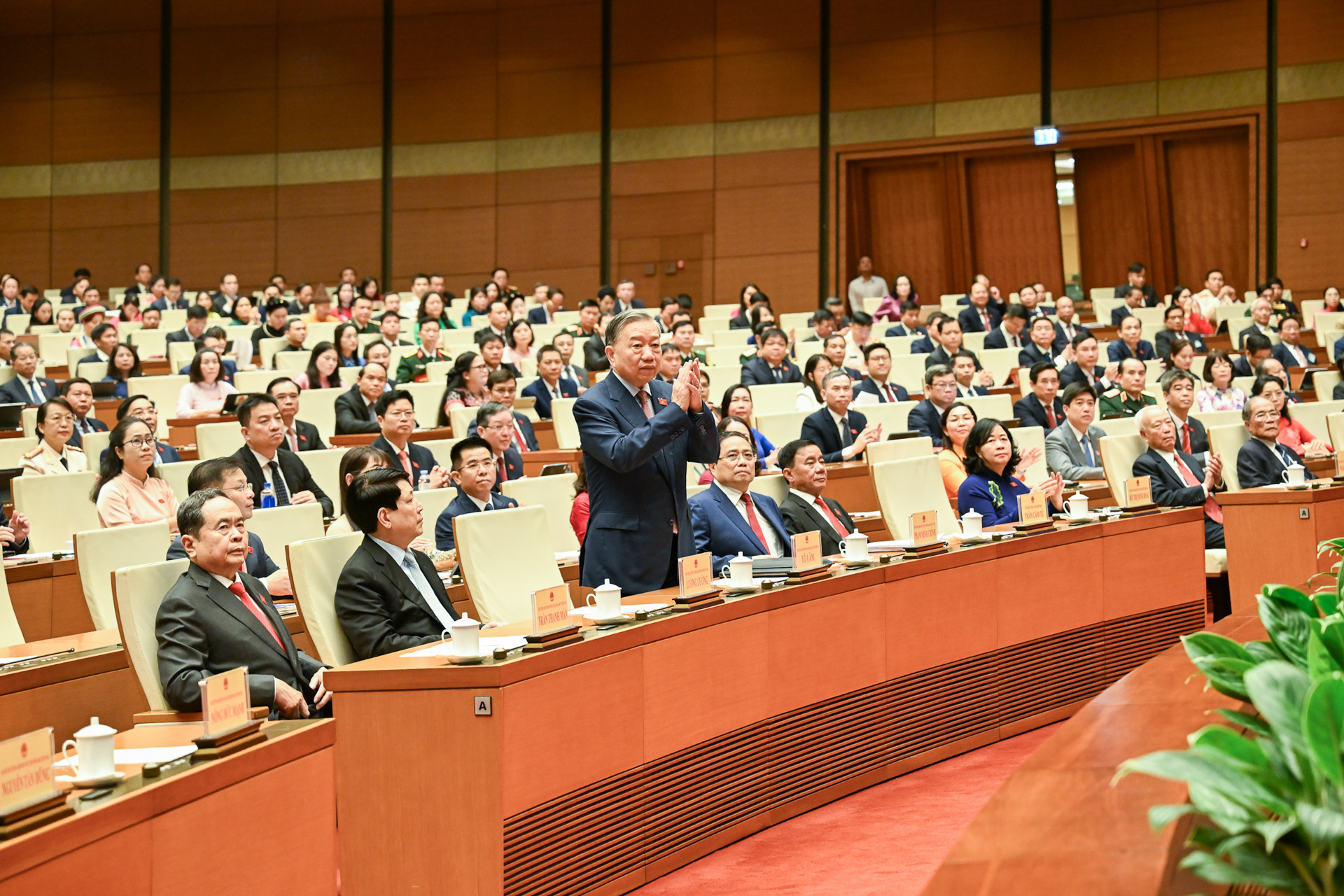

Former and current leaders of the Party and State join delegates at this morning’s opening session.
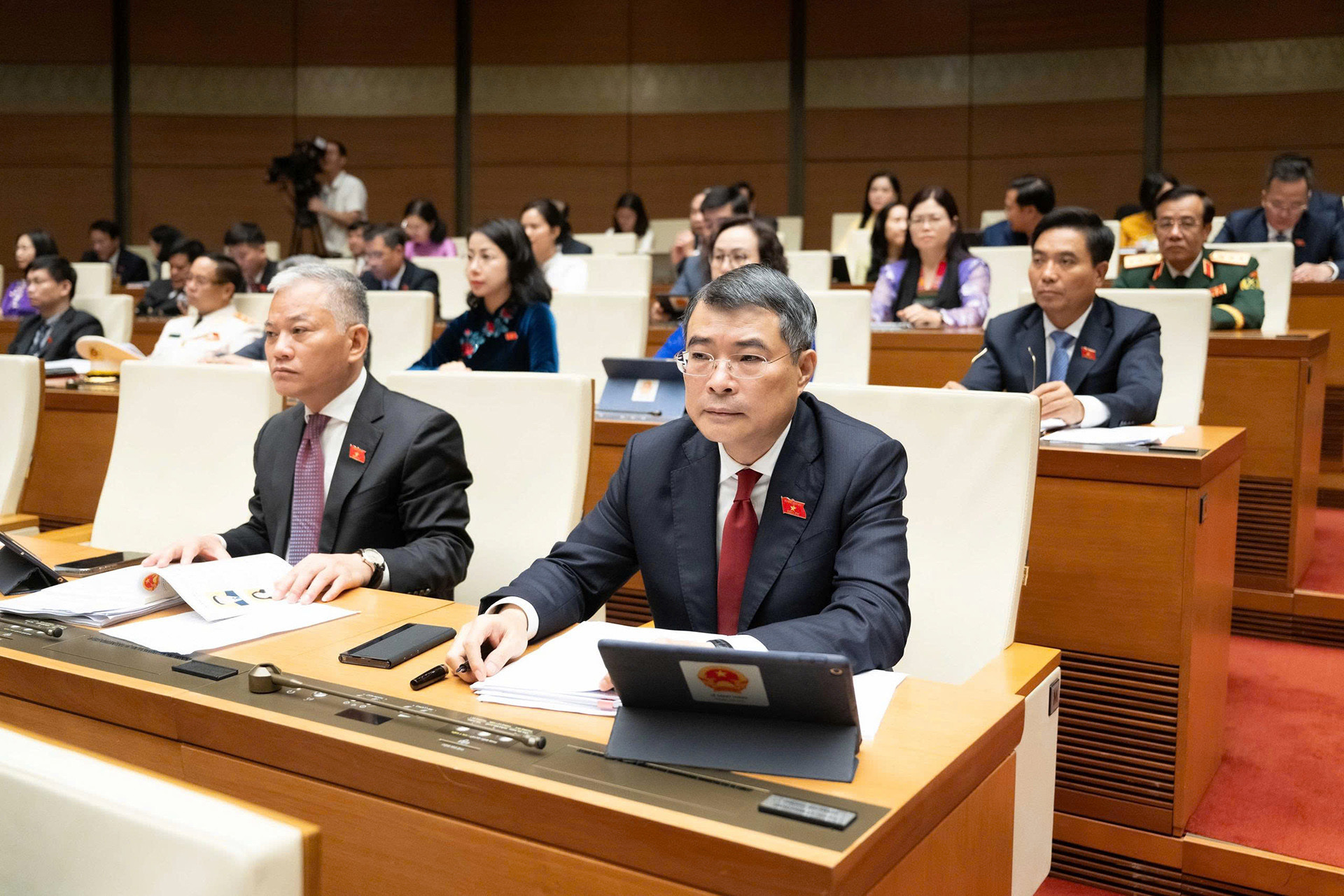
Head of the Central Organization Commission Le Minh Hung.

.svg)
