 Vietnamnet.vn

 Podcast



For nearly 45 years since the launch of Doi Moi (renovation), Vietnam has advanced on the strength of advantages such as a young workforce, competitive labor costs, foreign direct investment (FDI), and an increasingly open international economic environment.
It was a successful model that helped lift Vietnam from a low-income economy into an important link in global manufacturing and supply chains.
But no competitive advantage lasts forever.
The low-hanging fruit has been picked
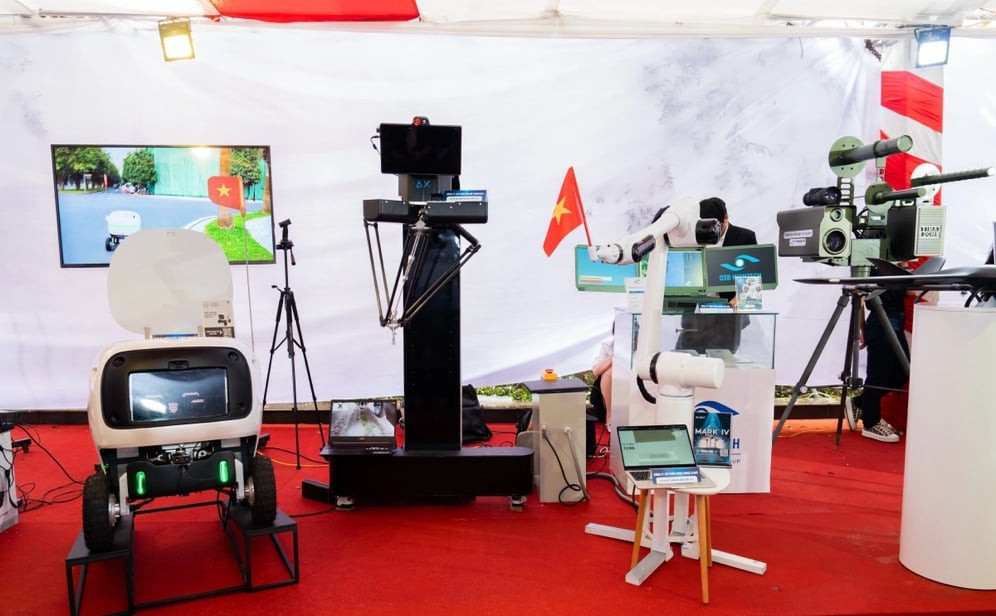
At the 2026 Strategic Dialogue Forum, jointly organized by Vietnam's Ministry of Foreign Affairs, the Weatherhead East Asian Institute at Columbia University, the US-ASEAN Business Council (USABC), and the Organisation for Economic Co-operation and Development (OECD) on June 25, a more fundamental question was raised: As Vietnam's traditional advantages gradually lose their effectiveness, what will the country compete on next?
The world Vietnam is integrating into today is vastly different from the one it entered during the early years of Doi Moi.
The OECD warned that the global economy is facing slower growth, weak productivity, rising uncertainty in trade and investment, and a sharp decline in new global FDI compared with the previous two decades. Competition for investment is also becoming increasingly intense.
Today's competition is no longer simply about who offers cheaper land, lower labor costs or more generous incentives. New investment flows increasingly favor countries capable of combining openness with strong institutions, a skilled workforce, modern infrastructure and a clear long-term vision.
Professor Merit Janow of Columbia University described this not as a world of deglobalization, but one of fragmentation. Global supply chains are not disappearing, but they are being redistributed. Economic efficiency is no longer the sole factor shaping investment decisions. Economic security, national security and technological sovereignty have become equally important considerations.
In this context, Vietnam can no longer rely solely on the competitive advantages that once fueled its rapid growth.
Low-cost labor still has value, but it cannot remain a permanent advantage. Natural resources are finite. Investment incentives may attract businesses, but they do not automatically create technological capability. Exports may continue to grow, but if domestic value added remains limited, the economy will continue to occupy the lower tiers of global value chains.
The growth engine that once propelled Vietnam forward now requires a different kind of fuel - knowledge, technology, talent, strong domestic enterprises and high-quality institutions.
Vietnam is not starting from scratch. After 45 years of Doi Moi, the economy has established important foundations. Scientific and technological capabilities, along with innovation, have improved. The country's startup ecosystem and domestic technology companies have begun participating more deeply in international production networks.
Yet these very achievements have also made existing limitations more apparent.
Science, technology and innovation have yet to become the primary drivers of growth. Investment in research and development remains modest. High-quality human resources, mastery of core technologies and the commercialization of research outcomes have yet to meet expectations. Vietnam has also not fully leveraged international resources to accelerate technology transfer and strengthen connections with global innovation networks.
Vietnam cannot enter a new growth model simply by purchasing technology, importing technology or attracting major technology corporations.
No economy can truly master technology without the ability to learn independently, absorb knowledge, improve existing technologies and gradually create its own.
Minister of Science and Technology Vu Hai Quan outlined three major transformations Vietnam must pursue: moving from technology adoption to technology mastery; shifting from growth driven by low-cost labor to growth driven by talent and innovation; and replacing cost-based advantages with technology-based competitiveness.
These three transitions extend far beyond the science and technology sector. They represent a fundamental shift in how Vietnam creates competitive advantage.
Under the new model, competitiveness must be built on knowledge, talent, technologically capable domestic enterprises, the commercialization of research and institutions that are flexible enough to encourage innovation while remaining transparent enough to foster trust.
Strategic technologies therefore become a test of the country's development capacity.
Technology only becomes strategic when it is mastered, applied and commercialized into products, services, productivity gains and higher value creation. Vietnam has begun establishing the policy framework for this new phase, from the National Steering Committee for Science, Technology and Innovation Development, to a priority list of strategic technologies, and the goal of nurturing strategic technology enterprises.
The greatest challenge now is turning these policy directions into businesses, technologies, products and higher productivity.
That challenge is perhaps most evident in the story of FDI.
The two sides of FDI
For many years, FDI has been one of Vietnam's greatest strengths. But in the next stage of development, FDI can no longer be measured only by capital inflows, employment and exports. What Vietnam needs is to transform FDI into capabilities for Vietnamese businesses.
A key message from the OECD is that Vietnam's challenge is no longer simply attracting more investment, but attracting higher-quality investment.
FDI is more than capital. It should serve as a channel for technology transfer, skills development, innovation and stronger domestic business capabilities. However, these benefits do not occur automatically. They require effective policies that connect foreign-invested firms with domestic companies, develop local suppliers, upgrade workforce skills and align foreign investment with national development goals.
The OECD's FDI Qualities Review poses a fundamental question: How can Vietnam move from an export-oriented, labor-intensive FDI model toward one that generates greater spillover effects in innovation, knowledge, skills and domestic value creation?
That is also the central question of Vietnam's new growth model.
FDI has played an enormous role in Vietnam's economic success. But yesterday's success is no longer sufficient for tomorrow's challenges. Linkages between foreign-invested and domestic enterprises remain limited. Investment in R&D and workforce development is still relatively low. Many activities remain concentrated in lower-value segments of production.
There is encouraging news. According to the OECD, nearly half of recently approved FDI has been directed toward green and digital sectors. Vietnam has an opportunity to attract a new generation of investment. But if policy continues to focus primarily on investment promotion, that opportunity may once again follow a familiar pattern: investment enters Vietnam, production takes place in Vietnam, exports leave Vietnam, yet the technological capability of Vietnamese businesses fails to grow proportionately.
The new benchmark for FDI therefore cannot simply be the number of projects, registered capital or export turnover.
Instead, success should be measured by how widely technology spreads, how deeply Vietnamese enterprises participate in supply chains and how much value remains within the domestic economy.
The technology lesson
Technology is not a product that can simply be purchased and immediately put to use. Its real value lies in the ability to master it.
Professor Merit Janow used artificial intelligence as an example. AI is not merely a software model. It is an ecosystem that includes computing infrastructure, energy, data, data centers, human resources, governance, standards and investment policies. Viewed from this perspective, the question is no longer how Vietnam uses AI, but which parts of that value chain Vietnam can genuinely master.
The same applies to semiconductors, advanced materials and clean energy. To build a new growth model, Vietnam cannot simply prioritize a handful of industries. It must develop the capacity to absorb, master and commercialize technology.
This also requires a new role for the state. Whereas previous priorities focused on maintaining a stable investment environment and attracting foreign capital, the government must now build institutions that foster innovation. This includes establishing regulatory sandboxes, strengthening collaboration between businesses, universities and research institutes, and creating trust through a transparent legal framework and consistent enforcement.
The challenge is to safeguard public interests without allowing fear of risk to become an obstacle to innovation.
Minister Vu Hai Quan raised a particularly important question: How can Vietnam design policy frameworks and regulatory sandboxes that are flexible enough to support emerging technologies while still ensuring effective oversight, instead of tightening regulation simply because of concerns over risk?
That is the essence of the sandbox challenge - maintaining oversight without suffocating innovation through excessive caution.
Trust is also a cornerstone of any innovation ecosystem. Without trust, there can be no collaboration. Without collaboration, there can be no innovation. A thriving technology ecosystem requires not only capital, talent and laboratories, but also stable rules that encourage stakeholders to share risks and create value together.
Against this backdrop, technology diplomacy is emerging as a new strategic tool. While economic diplomacy helps expand markets and attract investment, technology diplomacy connects Vietnam with global innovation networks, knowledge resources, investment funds, technology companies and international standards, helping the country strengthen its position in global value chains.
Ultimately, the most important question is not which technologies Vietnam chooses, but how it measures the success of its new growth model. Has productivity improved? Has FDI generated meaningful technology spillovers? Have Vietnamese enterprises moved further up global supply chains? Has R&D been transformed into products and economic value?
As the OECD noted, technology alone does not drive development. People, institutions and sound policies do.
After nearly four decades of growth powered by integration and inherited advantages, Vietnam is entering a new stage where it must create its own competitive strengths through knowledge, innovation and technological mastery.
Deputy Minister of Foreign Affairs Dang Hoang Giang said that after nearly 45 years of Doi Moi, Vietnam has come a long way and established a solid foundation in science, technology and innovation.
Yet those achievements have also exposed the country's remaining limitations. Science and technology have not yet become the primary engines of economic growth, while investment in R&D, high-quality human resources, mastery of core technologies and the commercialization of research have not kept pace with the demands of the country's next stage of development.
According to Dang Hoang Giang, to prepare for this new phase, the Party and the State have introduced a series of major policy initiatives, including the establishment of the National Steering Committee for Science, Technology and Innovation Development, the identification of priority strategic technologies and the goal of building strategic technology enterprises.
However, the greatest challenge is no longer introducing additional policies. It is turning those strategic directions into technologies, businesses and genuine competitive capabilities.
Suggested keywords: Vietnam, Doi Moi, growth model, competitiveness, innovation, technology, OECD, FDI, strategic technologies, research and development, AI, semiconductors, technology transfer, productivity, domestic enterprises, science and technology, technology diplomacy, supply chains, industrial policy, economic development
Tu Giang - Lan Anh
.svg)
