 Vietnamnet.vn

 Podcast


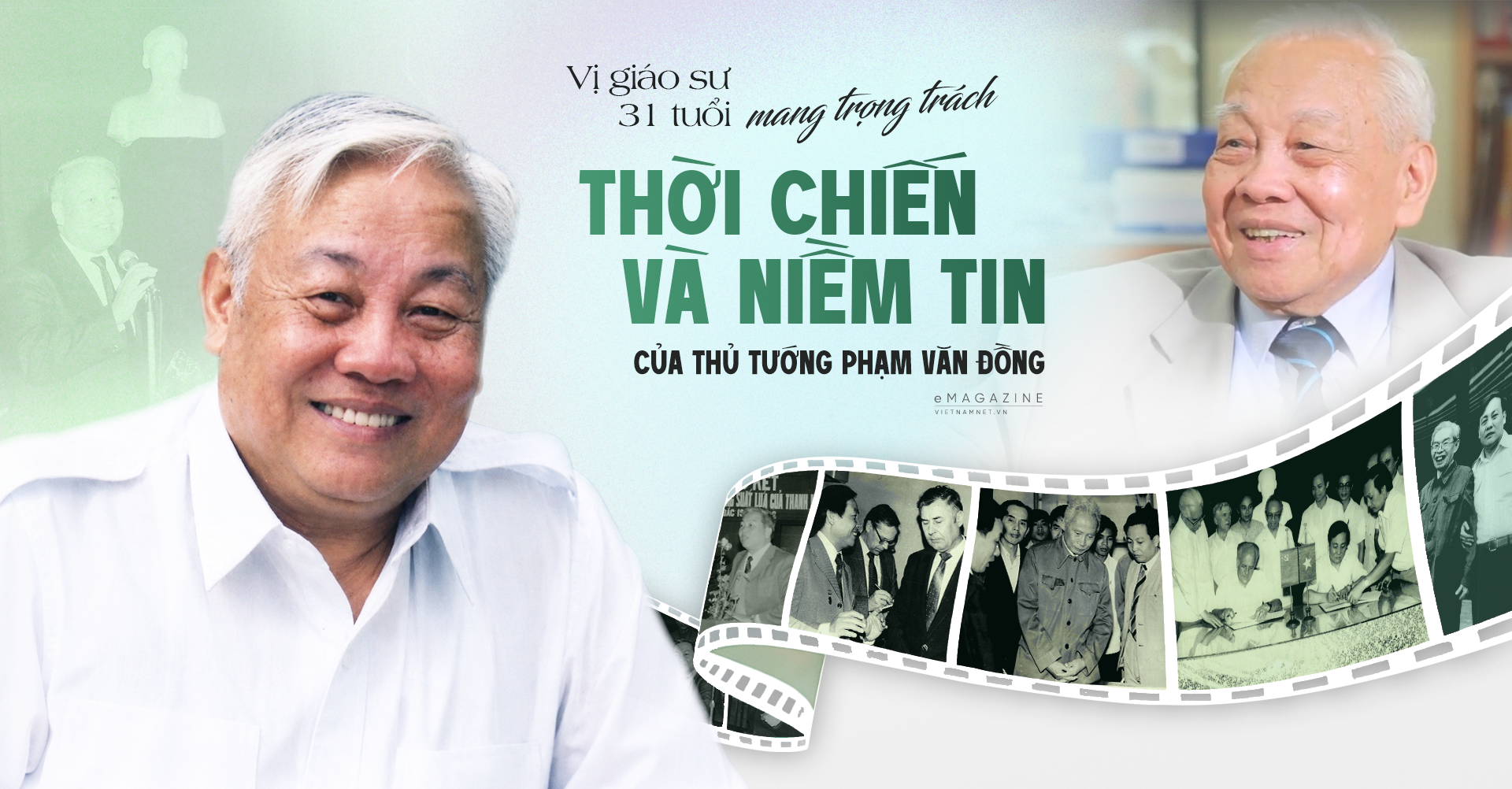
Editor's note: In 1946, engineer Pham Quang Le gave up his career in France and returned to serve his homeland at the call of President Ho Chi Minh. More than two decades later, scientist Nguyen Van Hieu returned from the Soviet Union and, at just 31, was entrusted by Prime Minister Pham Van Dong with the task of building Vietnam's Institute of Physics.
Their stories reflect not only the determination of Vietnamese intellectuals to contribute to their country but also the foresight of national leaders in identifying, bringing together and making the most of exceptional talent.
Today, as science, technology and innovation become increasingly important drivers of development, those lessons carry renewed relevance. Resolution No. 57-NQ/TW, issued by the Politburo to promote breakthroughs in science, technology, innovation and national digital transformation, calls for stronger efforts to develop and retain talent while creating an environment in which intellectuals can realize their potential and contribute to the country.
From the pioneers who laid the foundations of Vietnamese science to today's researchers pushing into new fields, one question remains: How can Vietnam attract and empower talented people, turning their aspirations to serve the country into scientific achievements that benefit society?
Through the stories of successive generations of Vietnamese intellectuals, VietNamNet's five-part series revisits lessons in recognizing and utilizing talent while examining the policies and institutional changes needed to make Vietnamese knowledge and expertise a genuine force for national development in a new era.
Nguyen Van Hieu's return from the Soviet Union
When Nguyen Van Hieu returned to Vietnam in 1969 from the Joint Institute for Nuclear Research in Dubna, Soviet Union, he had already established an international reputation as a theoretical physicist. He was just 31 years old.
Vietnam was still at war, and research conditions were extraordinarily difficult. According to the recollections of Professor and Academician Dang Vu Minh, one of his students, the Institute of Physics initially lacked even a proper headquarters.
Researchers worked in makeshift rooms, some housed in thatched buildings. The scientist who had just returned from Dubna personally helped his colleagues run cables and connect electricity to their workplaces.
It was an unlikely scene for someone who had conducted research at one of the world's leading physics centers.
Before returning home, Nguyen Van Hieu had a scientific career that many could only dream of.
Born in 1938 in Cau Do, Ha Dong, he graduated with distinction in physics in 1956, at the age of 18, and was retained as a lecturer at Hanoi General University.
In 1960, he was sent to Dubna, where prominent physicists from around the world gathered to conduct pioneering research into the structure of matter and interactions among elementary particles.
Within approximately two and a half years, he had published 12 research papers on neutrino physics. He successfully defended his doctoral dissertation in 1963, followed by a higher doctorate in science in 1964.
By 1968, he had been awarded the title of professor in theoretical and mathematical physics.
At 30, the Vietnamese scientist had secured a place in an international research community, with favorable conditions to continue pursuing advanced scientific work.
Yet in 1969, he chose to return to Vietnam.
A young scientist entrusted with a national mission
What makes Nguyen Van Hieu's decision remarkable is not simply that he returned, but how his country recognized and put his abilities to use.
Prime Minister Pham Van Dong personally entrusted him with establishing and leading the Institute of Physics.
At 31, he became one of the youngest institute directors in the history of Vietnamese science.
This was far more than a routine appointment.
At a time when Vietnam was at war, its scientific workforce was small and research facilities were severely limited, entrusting such responsibility to a young scientist reflected a particular approach to recognizing talent.
Ability, expertise and the capacity to shoulder responsibility mattered more than age or seniority alone.
That confidence came with a clear mission: to assemble a research team, organize scientific work and gradually build an institution capable of engaging with advanced fields of international research.
In 1970, at an international physics conference in Kyiv, research findings by Nguyen Van Hieu and Academician A.A. Logunov attracted further attention.
According to biographical accounts, Academician N.N. Bogoliubov advised him to return to the Soviet Union for several more years, believing their work had the potential to win the Lenin Prize.
The young Professor Nguyen Van Hieu nevertheless chose to continue his work in Vietnam.
Sixteen years later, in 1986, he and his colleagues received the Lenin Prize for Science and Technology.
The recognition demonstrated that returning home did not mean abandoning research at the highest international level.
He maintained international scientific cooperation while devoting much of his energy to building Vietnam's domestic research capabilities.
Developing the next generation of Vietnamese scientists
If entrusting Nguyen Van Hieu with a research institute at 31 demonstrated confidence in young talent, his subsequent efforts to identify, train and empower younger scientists showed how lasting the benefits of that confidence could be.
In his recollections of his mentor, Professor and Academician Dang Vu Minh, former President of the Vietnam Academy of Science and Technology, remembered not only the early days of building the Institute of Physics but also the opportunities for education and research that Nguyen Van Hieu had given him.
In 1969, while still a young researcher, Dang Vu Minh was selected by the institute's director to pursue postgraduate training.
He subsequently earned a doctorate and a higher doctorate in science, eventually becoming one of Vietnam's leading scientists.
Dang Vu Minh once acknowledged that his scientific development was closely connected to the attention, encouragement and opportunities provided by Professor Nguyen Van Hieu.
He was far from the only beneficiary.
Many other young researchers were sent to Dubna and institutes under the Soviet Academy of Sciences for advanced training and research.
Nguyen Van Hieu did not focus exclusively on scientists who had already established their reputations.
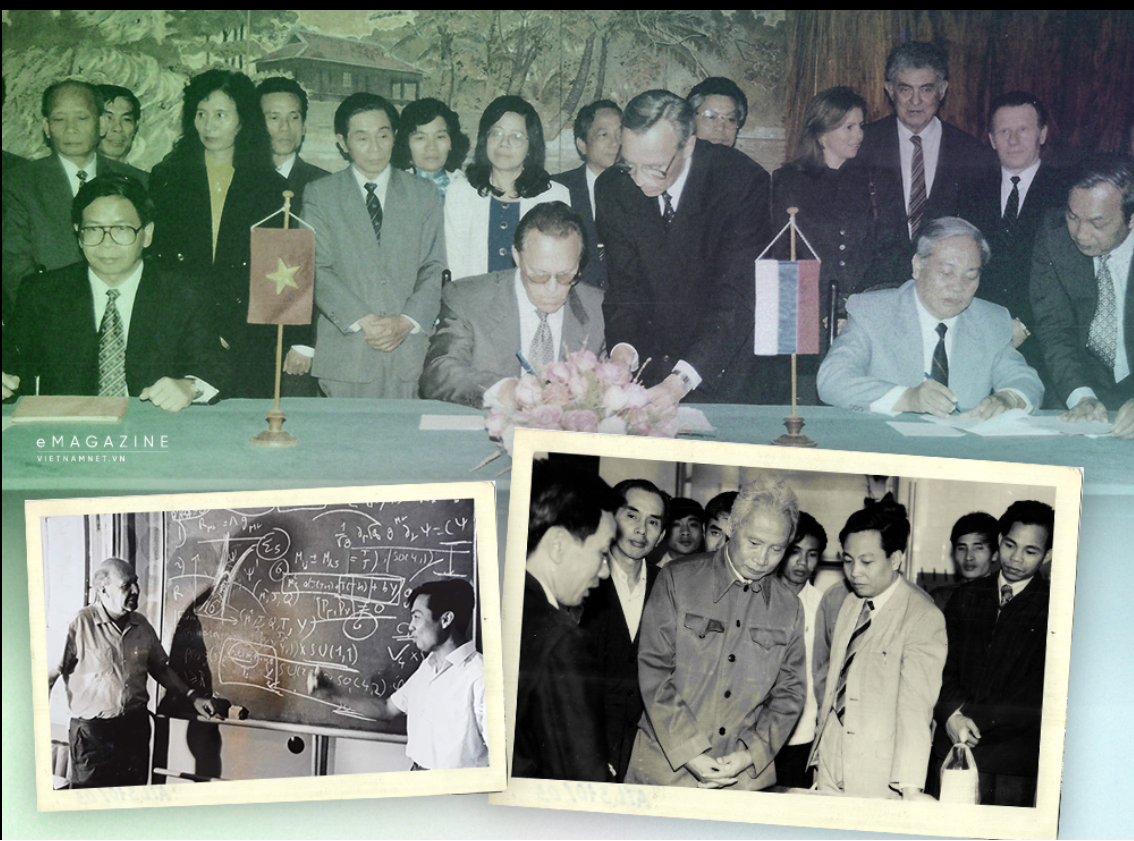
He sought out promising young people, helped them gain access to advanced international knowledge and created opportunities for them to return and assume responsibilities at Vietnamese research institutions.
Another example was Professor Nong Van Hai, former Deputy Director of the Institute of Biotechnology and founding Director of the Institute of Genome Research.
According to Hai's recollections, Nguyen Van Hieu supported his decision to pursue postgraduate research in molecular biology in Germany.
After Hai returned to Vietnam, his mentor continued to provide opportunities for professional development.
Later, when nanotechnology opened new directions in biological research, Nguyen Van Hieu again encouraged his former student to explore the emerging field.
An outstanding scientist may produce exceptional research. But a scientist who can recognize potential, nurture talent and create opportunities for others can help shape an entire generation.
That is also how a country builds and strengthens its intellectual resources over time.
From fundamental physics to practical national challenges
Nguyen Van Hieu's influence extended far beyond the Institute of Physics.
Following Vietnam's reunification in 1975, he was assigned to help organize the Southern Institute of Science and Technology.
In subsequent years, he assumed major responsibilities at the Vietnam Institute of Science and the National Center for Natural Science and Technology, contributing to the development of several new research fields.
Under the Vietnam-Soviet space cooperation program, he served as Standing Vice Chairman of Vietnam's Space Research Committee.
Working alongside Professor and Academician Tran Dai Nghia and other scientists, he helped organize scientific research supporting Vietnamese astronaut Pham Tuan's historic spaceflight in 1980.
Behind that milestone were Vietnamese research teams preparing scientific experiments to be conducted in orbit.
Another field seemingly far removed from theoretical physics was flood research in the Mekong Delta.
Following field surveys in southern Vietnam after 1975, Nguyen Van Hieu participated in research activities in the Dong Thap Muoi and Long Xuyen Quadrangle regions.
These studies addressed issues including acid sulfate soils, flood management and local livelihoods.
He also took part in scientific discussions with Prime Minister Vo Van Kiet on approaches to managing floods proactively and harnessing their benefits rather than simply trying to prevent them.
From fundamental particle physics to scientific programs addressing everyday challenges, a common thread ran through his career: the determination to apply knowledge to the problems facing his country.
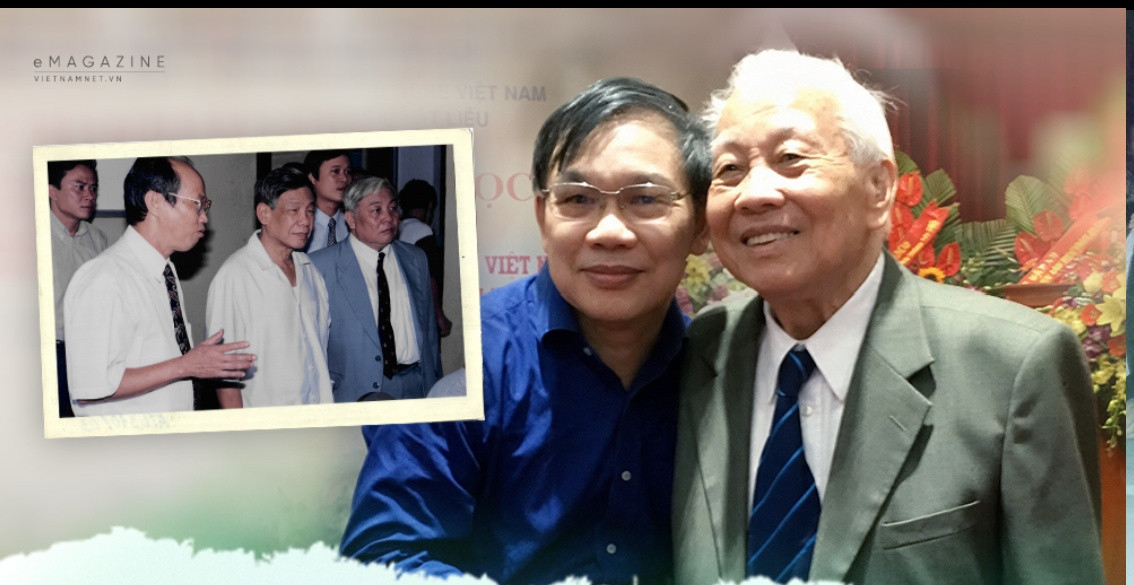
Even in his later years, Nguyen Van Hieu continued to devote his energy to developing higher education institutions and advancing new research areas, particularly materials science and nanotechnology.
He was the founding rector of the University of Engineering and Technology under Vietnam National University, Hanoi, and made significant contributions to the establishment and development of the University of Science and Technology of Hanoi.
His legacy therefore extends beyond scientific publications and international awards.
It lives on in the research institutes, universities and generations of scientists who have continued the work he helped begin.
Lessons in recognizing and empowering scientific talent
Professor and Academician Nguyen Van Hieu also served as a member of the Communist Party of Vietnam's Central Committee and as a National Assembly deputy for several terms.
Yet his legacy as an intellectual and Party member is perhaps most clearly reflected in the choices he made and the work he undertook.
Trained abroad, he returned when his country needed him.
Entrusted with major responsibilities at a young age, he worked with colleagues to establish research institutions.
Once in a position to organize scientific activities, he continued identifying promising young researchers and opening doors for them.
His story offers lessons for Party building, particularly personnel management and policies aimed at developing the country's intellectual workforce.
Those lessons have become even more relevant as Vietnam places science, technology and innovation at the center of its development strategy.
Politburo Resolution No. 57-NQ/TW identifies breakthroughs in science, technology, innovation and national digital transformation as strategically important priorities.
More specifically, Conclusion No. 105-KL/TW, issued on October 15, 2026, by the 14th Party Central Committee on attracting and utilizing talent, emphasizes the need to assign people to positions that match their strengths, entrust them with major responsibilities, grant meaningful autonomy and evaluate them according to their results and contributions.
In September 2026, at a ceremony marking 70 years of Vietnam's participation in the Joint Institute for Nuclear Research in Dubna, figures released showed that 48 Vietnamese researchers were working at the institute as of April 2026, with an average age of 33.8.
More than six decades after Nguyen Van Hieu arrived in Dubna as a 22-year-old scientist, young Vietnamese researchers continue to travel abroad to engage with the world's scientific knowledge.
But the central question is no longer simply what they will learn or how many papers they will publish.
What responsibilities will Vietnam entrust to them? What conditions will it create for them to realize their potential and nurture future generations of scientists?
In 1969, an answer began with an extraordinary act of confidence: entrusting the creation of a research institute to a professor who was only 31.
From that trust, generations of Vietnamese scientists went on to grow and flourish.
Thai An - Van Nga

