 Vietnamnet.vn

 Podcast


Editor's note:
In 1946, engineer Pham Quang Le left his career in France to return to Vietnam and serve his homeland at the call of President Ho Chi Minh. More than two decades later, scientist Nguyen Van Hieu returned from the Soviet Union and, at just 31, was entrusted by Prime Minister Pham Van Dong with establishing the Institute of Physics.
Their stories reflect not only the desire of Vietnamese intellectuals to contribute to their country but also the importance of recognizing, bringing together and making effective use of scientific talent.
Today, as science, technology and innovation become increasingly important drivers of development, those lessons carry renewed relevance.
Resolution 57-NQ/TW of the Communist Party of Vietnam's Politburo, which calls for breakthroughs in science, technology, innovation and national digital transformation, emphasizes talent development, the effective use of skilled professionals and the creation of conditions in which intellectuals can realize their potential.
From the pioneers who laid the foundations of Vietnamese science to younger generations exploring new research frontiers, one question remains: How can Vietnam attract and empower talented scientists, turning their ambitions into scientific achievements that benefit the country?
Through the experiences of different generations of Vietnamese intellectuals, VietNamNet's five-part series revisits lessons in talent development and examines the policies and institutional reforms needed to make Vietnamese expertise a genuine force for national development.
VietNamNet spoke with Professor Phung Ho Hai, Doctor of Science, who returned to Vietnam after many years conducting research overseas.
He served as Director of the Institute of Mathematics from 2017 to 2022 and was exceptionally appointed to the rank of professor in 2012.
His scientific honors include the Baedeker Prize in 2005, the Von Kaven Award in 2006 and, most recently, Germany's Humboldt Research Award.
You had a favorable research environment in Germany. What made you decide to return to Vietnam? Was it a difficult decision at the time?
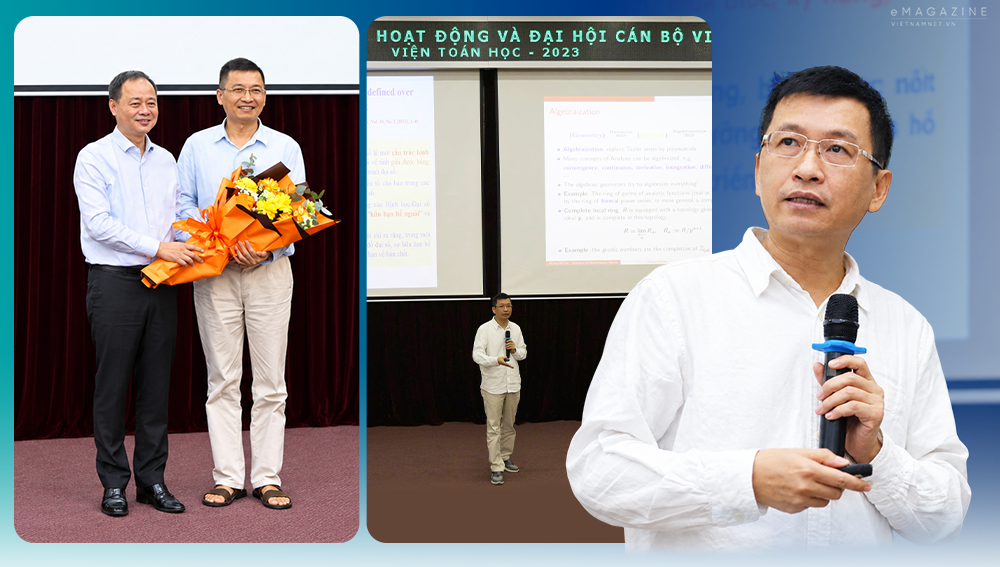
I never intended to settle permanently into a career abroad. So I would describe my decision as choosing not to leave again, rather than deciding to return.
After defending my doctoral dissertation, I joined the Institute of Mathematics. In the years that followed, I spent considerable time working overseas, but I always maintained close ties with the institute.
I returned to Vietnam every year, and each time I visited the institute to exchange ideas and work with colleagues.
As a result, coming home after several years abroad did not disrupt my research.
Compared with many other scientists who return to Vietnam, I was probably fortunate because I had found a workplace suited to my aspirations from the beginning.
Looking back, what was the most important factor that convinced you Vietnam was a place where you could continue pursuing science?
I decided to return because I believed I would have greater freedom in my research in Vietnam. Looking back, I can say that has indeed been the case.
Research conditions in Vietnam are not as good as those abroad, and remuneration is lower.
But I feel a sense of ownership in my own country. More importantly, I feel I can be more useful here.
I also benefited from favorable circumstances when I returned.
At the time, the government had introduced significant changes to scientific research funding.
I returned in 2008, and the National Foundation for Science and Technology Development (NAFOSTED) officially began operating in 2009.
The subsequent establishment of the Vietnam Institute for Advanced Study in Mathematics also brought fresh energy to the country's mathematical research community.
Over the past two decades, Vietnamese mathematics has made remarkable progress, producing a new generation of outstanding young mathematicians.
Domestic working conditions have gradually improved, making mathematical research easier. The development of the internet, in particular, has helped narrow the gap in research opportunities between countries.
I also received considerable encouragement and support from colleagues at the Institute of Mathematics and elsewhere.
When you first returned, how different was Vietnam's research environment from what you had expected? What are the biggest difficulties facing scientists returning from abroad?
As I mentioned, I was fortunate to return to an institution with which I had maintained close ties throughout my years overseas.
I therefore had little difficulty reintegrating into Vietnam's mathematical research community.
Nevertheless, change has not happened as quickly as I had hoped.
Vietnamese science in general, and mathematics in particular, still faces many challenges.
What worries me most is the decline in scientific integrity.
To put it plainly, I am not satisfied.
The problem is not a lack of attention from the country's leadership. It is the lack of coordination in developing institutions, establishing mechanisms and implementing policies.
Although substantial funding is allocated to research, financial procedures and management mechanisms remain heavily bureaucratic.
Serious scientists must spend considerable time dealing with administrative requirements, distracting them from their work, leaving them exhausted and reducing their effectiveness.
In many cases, these pressures can even encourage violations of scientific integrity.
For example, researchers may be required to publish results very quickly to meet project acceptance requirements.
To do so, some choose to submit their work to questionable journals, including publications showing signs of predatory practices.
Still, looking back, I believe the advantages outweigh the difficulties.
The emergence of an outstanding new generation of researchers, even stronger than previous generations, is evidence of that progress.
As for the broader challenges facing returning scientists, my experience has taught me that being talented is important, but it is not enough.
What matters more is being useful.
When you contribute something valuable to others, you gain their support, and that support creates opportunities for your own development.
The greatest difficulty for a scientist returning home, or entering any new environment, is the ability to integrate.
To do that, you must set aside your ego and be willing to learn.
Only by integrating can you make a meaningful contribution.
How do you assess changes in Vietnam's scientific research environment over the years, particularly its ability to support researchers and international integration?
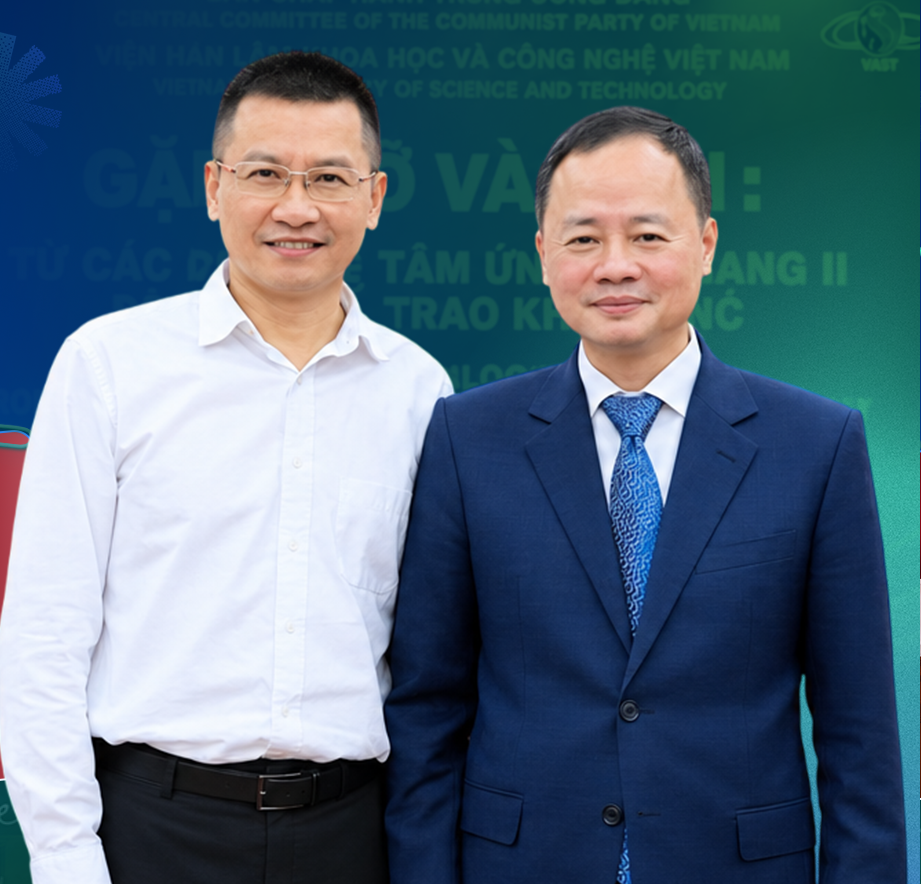
International integration in science is not simply about publishing in journals that carry an international label.
Science should be viewed much like sport, football for example.
Teams progress from domestic competitions to regional, continental and international tournaments.
Scientific integration follows a similar principle. It means competing with countries whose scientific capabilities are more advanced than ours.
If we want our scientific output to compete with theirs, the conditions under which that research is produced must also be competitive.
Otherwise, international integration remains little more than a policy aspiration.
Resolution 57 of the Party Central Committee provides an important foundation, but it must be implemented decisively and comprehensively in actual scientific practice.
As someone currently leading several research projects and collaborating extensively with international colleagues, I can say that many recently introduced mechanisms and policies still run counter to the spirit of Resolution 57.
Research project management is one example.
During project implementation, we are required to produce far too many reports.
On the surface, management authorities appear to be involved so deeply that their intervention becomes counterproductive to scientific research.
In reality, however, the reports we spend so much time preparing are hardly read by anyone.
Research in the natural sciences, especially basic research, is highly specialized. People without sufficient expertise in a particular field cannot readily understand it.
Managing science through excessive reporting requirements holds research back.
If a scientist has two hours to think, but must spend half an hour preparing reports, that is time taken directly away from scientific work.
Yet Resolution 57 explicitly calls for reducing administrative procedures, granting scientists greater autonomy and creating the legal and institutional conditions necessary for them to concentrate on research.
Some argue that attracting talent is not simply about bringing accomplished scientists home, but about creating an environment where they can fully develop their abilities. From your experience, what matters most in persuading scientists to build long-term careers in Vietnam?
For a professional scientist, the fundamental desire is to be able to work.
I do not particularly like using words such as "sacrifice," "devotion" or "nobility" to describe scientific activity.
Research may simply be the pursuit of a passion or a job that someone genuinely enjoys.
Ultimately, scientific work must produce achievements and meaningful results.
To retain outstanding scientists, we must create conditions that allow them to work effectively and achieve something worthwhile.
Suppose a scientist's level of success abroad is ten. If returning to Vietnam reduces that to seven, the decision might still be acceptable.
But if it falls to three, returning would have been a mistake.
By professional scientists, I mean people who want to concentrate on research and teaching.
They have no particular ambition to become administrators or institutional leaders.
At most, they may wish to lead their own research group or laboratory, while devoting the rest of their time to science.
I believe Vietnam needs many more people like that.
What these scientists need in return is security in their everyday lives.
I deliberately say security, rather than preferential treatment.
They need salaries that allow them to work without financial anxiety, and without having to endure remarks such as, "He's supposed to be brilliant, so why is his salary so low?"
They also need support for their research activities, enabling them to develop research groups and laboratories, contribute to scientific progress and train the next generation.
We must acknowledge that the research project funding mechanism used over the past several decades is no longer appropriate.
In essence, the mechanism was introduced to compensate for low salaries.
At a time when scientists were poorly paid and the government could not raise salaries across the entire research workforce, project funding became a way to supplement the incomes of scientists who remained active and capable of conducting research.
Such a model does not exist in countries with advanced scientific systems.
In those countries, research grants support scientific activities rather than serving as a substitute for researchers' salaries, because scientists already receive adequate pay.
That is also the case in China and South Korea.
Reforming scientists' salaries is therefore a crucial issue for Vietnam's scientific development today.
We need an environment where researchers are driven by their natural curiosity and desire to discover something new, with professional reputation and recognition serving as rewards, rather than the financial benefits they can obtain from research projects.
In short, scientists must first be able to live comfortably.
Once that basic condition is met, their scientific instincts will encourage them to pursue high-quality research.
Based on your own experience, how should Vietnam approach the effective use of talent? What do scientists need most from their country: institutional mechanisms, resources, trust or opportunities to undertake major national assignments?
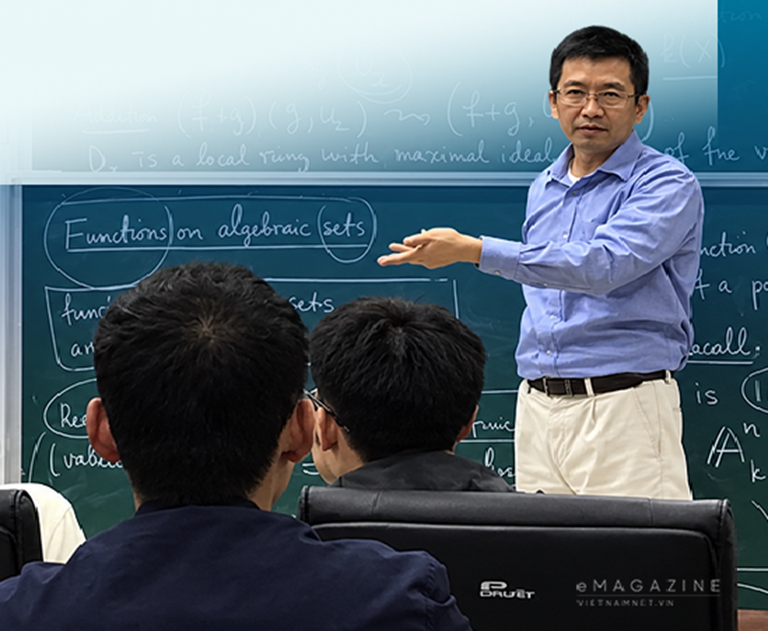
All of those things are necessary.
However, scientific research also follows the principles of supply and demand.
If a country sets low expectations, it only needs to meet low requirements. If it sets high expectations, it must provide the conditions needed to achieve them.
If the only requirement is the quantity of scientific output, funding alone may be enough.
But if research quality also matters, appropriate institutional mechanisms are needed to organize scientific activities according to proper standards.
And if we want scientists to make meaningful contributions, we must trust and respect them.
This resembles Maslow's hierarchy of needs, which I would call a "scientific Maslow hierarchy."
At present, Vietnam has largely satisfied the lowest level: quantity.
That is the result of channeling money into science through the existing research project funding mechanism.
Quantity can sometimes produce quality. Among the many papers published by Vietnamese researchers, some are genuinely good.
But to improve research quality in a substantive way, we must move to the next level of this scientific hierarchy: building a research environment that is itself organized scientifically.
Different disciplines require different scientific ecosystems.
We do not need to invent entirely new management methods.
What we need is for policymakers and administrators to be open to learning how countries with advanced scientific systems operate.
China and South Korea offer particularly relevant examples because their circumstances are relatively close to Vietnam's.
At the highest level of this hierarchy is the principle of choosing the right task and assigning it to the right person.
The tasks are scientific missions of national importance, and the people are scientists of international standing.
But we cannot meaningfully discuss that third level before establishing the second.
Earlier generations, including Professors Tran Dai Nghia and Nguyen Van Hieu, were entrusted with major responsibilities while still young. What should Vietnam do today to identify talented young scientists and give them opportunities?

Circumstances create heroes.
In the 1950s, Vietnam did not yet have an established scientific system.
There were only a handful of genuine scientists, and they had to undertake the enormous task of building the country's scientific foundations.
That was not necessarily what they had been trained to do.
Today, Vietnam already has a scientific system.
The responsibility of capable young scientists is to conduct scientific research.
Around the world, scientists continue their research even after winning Nobel Prizes or Fields Medals.
At most, they may lead a specialized research institute.
Moving an outstanding scientist into an administrative position can be an enormous waste of talent. Often, they are not particularly good at management.
What matters is having leaders and administrators who are competent in their own fields and know how to listen.
As science becomes increasingly global, how should Vietnam approach its overseas intellectual community? Is it necessary to bring scientists home for full-time positions, or should more flexible forms of engagement be considered?
Human resources are the most important factor in scientific development.
Vietnam's greatest shortage today is precisely in human resources.
We cannot skip stages in developing scientific talent.
There is currently a serious shortage of highly qualified personnel, particularly scientists capable of leading research groups and, more broadly, individuals who can serve as chief architects of major projects.
Attracting outstanding scientists from overseas is therefore extremely important.
It will certainly be easier to attract scientists of Vietnamese origin because of their linguistic, cultural and family connections.
However, the time has come to change how we think about recruitment.
We must recruit people who are suited to the work and capable of meeting actual needs.
From that perspective, overseas Vietnamese intellectuals may be more likely to fit certain positions, but they should not be regarded as the only candidates.
We need to approach recruitment fairly and professionally, rather than assuming that a candidate's Vietnamese heritage automatically gives us an advantage in attracting them.
Having worked in both international and domestic research environments, how do you assess the role of Vietnamese science in addressing the country's major challenges today?
There is an old saying: "Know yourself and know your enemy, and you will win a hundred battles."
If we do not understand our own capabilities and instead set grand objectives based on unrealistic assumptions, we are bound to fail.
Vietnamese science remains fragmented.
In my view, the government should not yet assign excessively ambitious national challenges to the scientific community.
Science needs to be guided and stimulated by technology.
A strong technological sector creates problems and demands that help direct scientific development.
For decades, Vietnam has developed its scientific system with relatively little direction or connection to industry and technology.
Our scientific community has not been adequately prepared or trained to participate in technological development.
We cannot expect it to reach internationally competitive levels in a short period.
The gap between Vietnam and the world remains substantial in science, and even greater in technology.
That is why selecting strategic priorities for the coming period is so important.
A good assignment is one that is highly feasible and has a positive impact on long-term development.
If a Vietnamese doctoral student studying at a major international research center asked whether they should return to Vietnam, what would you tell them?
I must admit that my answer would not be entirely objective.
I would naturally be inclined to encourage that person to return.
Vietnam is no longer a poor country, and the government is paying considerable attention to investment in science and technology.
The country's demand for scientific and technological talent is therefore very high.
Capable and determined young people will find many good opportunities in Vietnam.
With the exception of a few extraordinarily talented individuals, I believe highly qualified scientists and technology professionals may achieve greater success by returning home.
Go abroad to learn, then return.
Young people should gain knowledge, develop their skills and broaden their experience overseas. When they feel ready, they should consider coming back.
Thai An - Van Nga

