 Vietnamnet.vn

 Podcast



From November 17 to 19, the Vietnam National Authority of Tourism (VNAT) and the Ministry of Culture, Sports and Tourism hosted the 56th Meeting of the Greater Mekong Subregion Tourism Working Group (GMS TWG-56) and the International Conference on Sustainable Tourism in the GMS.
On the morning of November 17 in Ninh Binh, the GMS TWG-56 convened with around 70 international delegates, including representatives from national tourism agencies of GMS countries, the Mekong Tourism Coordinating Office (MTCO), the Asian Development Bank (ADB), and international partners such as the Pacific Asia Travel Association (PATA), the ASEAN Secretariat, and prospective travel enterprises including AirAsia Move.

In her opening remarks, Nguyen Thi Hoa Mai, Deputy Director General of VNAT, emphasized the significance of this meeting at a pivotal time for GMS tourism cooperation, marked by the full recovery of international tourism in the region and the adoption of the GMS Tourism Strategy 2030.
“Our shared priority now is to develop and implement a practical, data-driven, and collaborative GMS Tourism Marketing Action Plan for 2026–2030,” she said.
Looking toward 2026 and beyond, she stressed that successful implementation of the strategy would require close coordination among all GMS member countries, with MTCO serving as a central hub and coordinating body.
Since the region’s marketing activities are primarily funded and executed at the national level, regional collaboration must be rooted in mutual consensus, shared priorities, and common benefits.
Vietnam’s villages named among the best in the world
At the meeting, Suvimol Thanasarakij, representative of the MTCO, congratulated Vietnam for having two villages - Quynh Son (Lang Son) and Lo Lo Chai (Tuyen Quang) - named among the “World’s Best Tourism Villages 2025.”
“This recognition highlights Vietnam’s strong commitment to preserving local culture, protecting natural resources, and promoting sustainable community-based tourism,” she said.
She also noted that GMS countries have made significant progress in developing craft village tourism and sustainable community-based models. Across Cambodia, China, Laos, Myanmar, Thailand, and Vietnam, rural communities are increasingly investing in cultural heritage, environmental conservation, and livelihood improvement through tourism.
Despite facing challenges such as climate change, pollution, shifting market trends, and capacity gaps, Thanasarakij called this a major collective achievement for the region.
She affirmed that stronger collaboration among member countries would generate mutual benefits and support dynamic, sustainable growth in the Greater Mekong tourism landscape.
Toward a strategic and cooperative tourism future
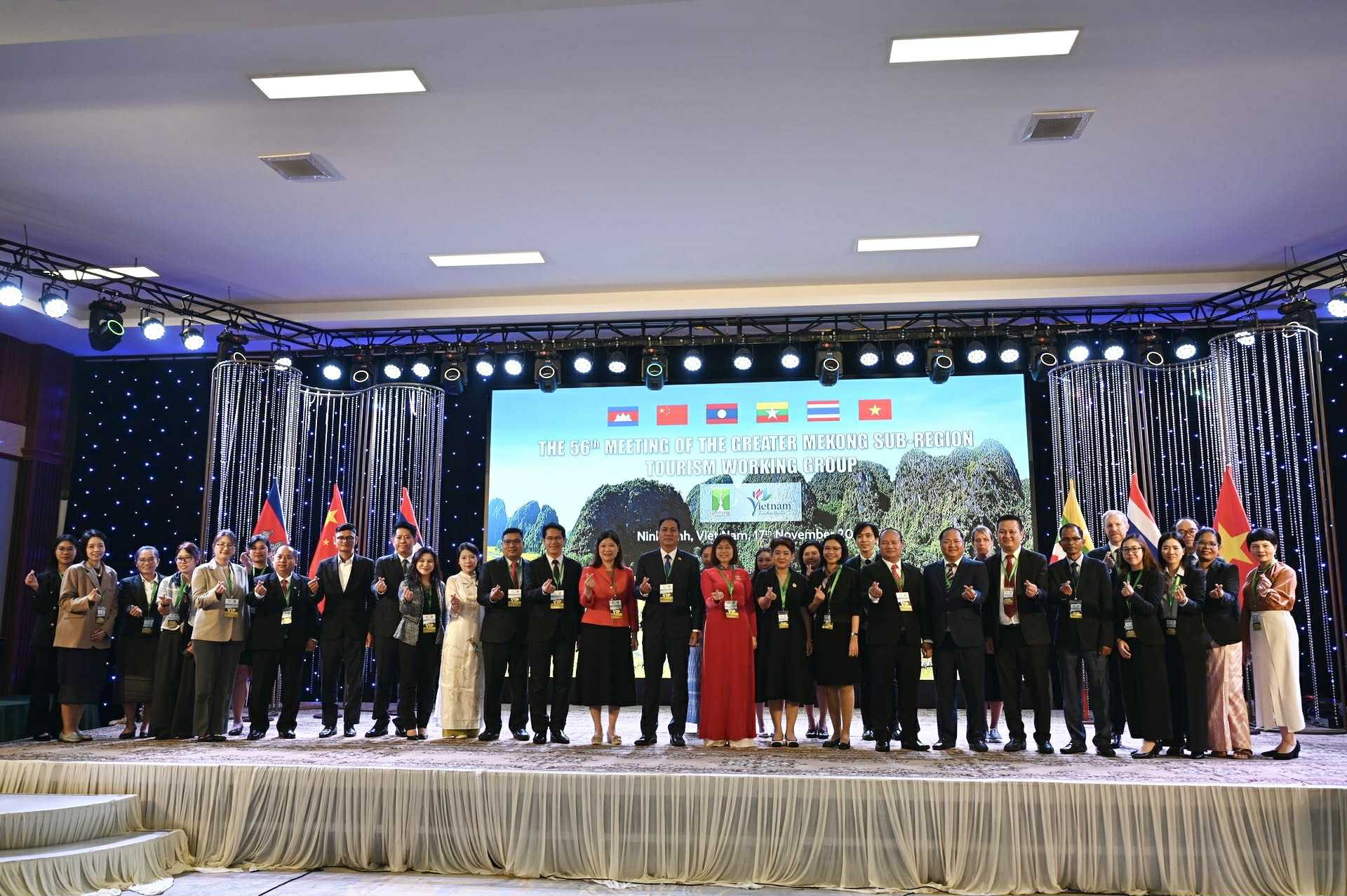
During the session, delegates exchanged insights on tourism performance in 2025 and market forecasts for 2026, reviewed MTCO activities, and shared national reports on tourism recovery, market dynamics, and sector support policies.
A major portion of the meeting focused on the progress of the GMS Tourism Marketing Action Plan for 2026–2030 - a key framework for implementing the GMS Tourism Strategy 2030 and guiding multi-country promotional collaboration.
The plan centers on four key areas: developing and promoting cross-border tourism routes, encouraging sustainable and responsible travel experiences, enhancing data sharing and market intelligence, and elevating the Mekong Tourism Forum (MTF) as a platform for public-private collaboration.
In the afternoon, GMS member states participated in a closed-door session to provide feedback on target markets, product themes, joint promotional initiatives, private sector cooperation, and funding mechanisms. These inputs will be instrumental in finalizing the action plan, expected to be approved at the Mekong Tourism Forum in 2026.
Deputy Director General Hoa Mai emphasized that Vietnam’s hosting of GMS TWG-56 marks an essential preparatory step toward building a comprehensive, timely marketing plan aligned with the region’s robust recovery.
She expressed hope that the outcomes would enhance joint promotion, attract international visitors, strengthen regional connectivity, and drive inclusive and sustainable tourism development.
Founded in 1992, the GMS comprises six countries: Vietnam, Laos, Cambodia, Myanmar, Thailand, and China.
Vietnam has previously hosted three Mekong Tourism Forums and numerous GMS tourism working group meetings.
Linh Trang
.svg)
