 Vietnamnet.vn

 Podcast



These insights were shared by Tran Ngoc Linh, a representative of the Urban Development Agency under the Ministry of Construction, at the Vietnam–Asia Smart City Summit 2025 on December 23.
Seven years, many obstacles
According to the Ministry of Construction, smart city development began nationwide around seven years ago, following Prime Minister Decision 950 approving the Sustainable Smart City Development Plan for 2018–2025.
Since then, 37 localities (prior to administrative mergers) have issued and implemented their own smart city strategies or action plans.
Various ministries have issued relevant guidelines and developed 45 related technical standards.

Smart applications have been introduced in transportation, healthcare, and education. Yet, according to Linh, four main barriers have prevented the initiative from meeting expectations:
Lack of consistency, resulting in fragmented implementation.
Absence of standard frameworks for interoperability, cost management, and operations.
No special procurement mechanisms tailored for smart city development.
Inadequate investment resources, with little success in mobilizing private capital.
“Even in conventional urban development, funding is always short. Smart city development is even more complex and expensive,” Linh emphasized.

Hoang Huu Hanh, Deputy Director of the National Digital Transformation Agency (Ministry of Science and Technology), added that smart city challenges are, in fact, “pain points” of digital transformation itself.
According to Hanh, five major issues must be addressed:
Disjointed implementation mindset
Lack of institutional coordination
Insufficient data and urban intelligence
Scattered and budget-dependent funding
Weak organizational capacity in data and AI management
Data, in particular, was highlighted as the critical bottleneck. “The heart of a smart city is no longer about showcasing technology - it’s about enabling better decisions,” Hanh said. Yet, many operational centers still focus more on performance demonstrations than on data-driven governance.
Da Nang’s strategic lesson
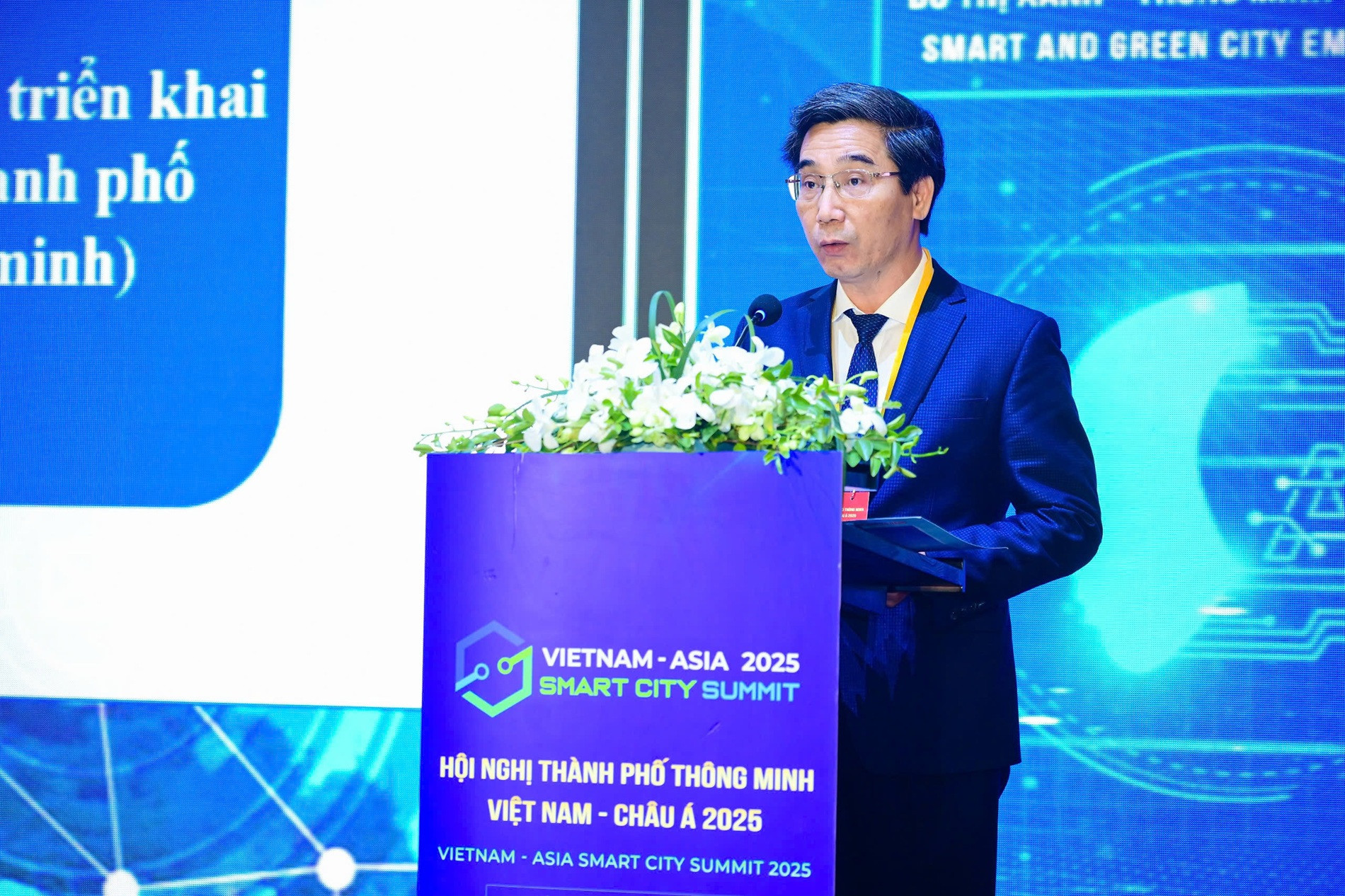
Despite national challenges, Da Nang stands out as a rare example of methodical smart city planning, aligned with sustainable urban development.
According to Tran Chi Cuong, Vice Chairman of Da Nang People’s Committee, smart city building in Da Nang was never treated as a short-term trend but as a long-term strategic direction.
“The global smart city trend was clearly recognized by the City Party Committee and government, who committed to turning it into an integral part of Da Nang’s sustainable development,” he said.
A core lesson from Da Nang’s journey is integrating smart city goals into the Party Committee’s resolutions, mobilizing the full force of the political system.
Cuong emphasized that citizens and businesses are the true owners and beneficiaries of smart city initiatives.
Da Nang also identified data as its lifeblood. “Data is the lifeline of a smart city,” Cuong said, outlining the city’s focus on foundational data systems, data integration platforms, and a gradual rollout of a GIS-based urban spatial database.
The city’s oversight mechanisms include regular reviews by the People’s Council, mid- and long-term assessments by the Party’s Standing Committee, and three- and five-year evaluations of progress by the Party Executive Committee.
This strategic approach has helped Da Nang avoid wasteful spending and the trap of “tech for show” without meaningful results.
Breaking the bottleneck

Experts at the summit agreed that smart cities should not be viewed as standalone tech projects, but as modern urban development models grounded in data, digital infrastructure, and good governance.
The Ministry of Construction has identified Decree 269 as the overarching legal framework for the next phase.
According to Linh, “Smart cities are not just about technology - they are a development model based on data, digital platforms, and modern governance, centered around the citizen.”
Key priorities include reviewing existing local plans, setting up cross-sector coordination mechanisms, standardizing technical criteria, developing human resources, and fostering public–private and international partnerships.
Nguyen Thi Tuyet Nhung, Deputy Secretary-General of the National Data Association, warned that the biggest risk is not technological shortage, but weak data governance.
She argued that data must be treated as a form of critical infrastructure, not as a proprietary asset.
Transparent data governance frameworks should be established before launching large-scale smart city projects.
She noted that many global cities have abundant data, but siloed, fragmented datasets often hinder effective decision-making.
Top priorities, according to Nhung, are connecting, standardizing, and opening up data.
Quoting the OECD, she added, “Without data, we’re blind. But without people who can analyze it, we’re just as blind. Technology is a tool. People are the key to success.”
From an international perspective, Hong Sin Kwek, Chairwoman of the ASEAN CXO Association, said a smart or “digitally livable” city must revolve around people.
“If we don’t empower every citizen to participate and take ownership, the city-building process will fail,” she said, stressing the role of hybrid financial models and public–private partnerships in securing long-term resources.
Ultimately, the success of smart cities doesn’t lie in the number of tech solutions deployed, but in the ability to use data for better decision-making, improve public services, and deliver meaningful impact - underpinned by clear regulations, unified standards, and capable human capital.
Du Lam
.svg)
