 Vietnamnet.vn

 Podcast



On the morning of October 16, the Politburo and Secretariat convened a nationwide conference to study, discuss and implement the resolution adopted at the fourth plenum of the 14th Communist Party of Vietnam Central Committee.
Following presentations on six major policy topics, To Lam said the Central Committee's decisions require fundamental changes in thinking, alongside coordinated reforms in Party building, leadership methods and personnel management.
He stressed that implementing the resolution requires every Party committee and member to seriously examine why sound policies sometimes produce slow results, why available resources remain underutilized and why responsibilities are not always fully discharged.
Identifying the underlying causes, he said, is essential to improving leadership practices, the quality of policy advice, personnel assignments and implementation.
Replace underperforming officials without waiting for disciplinary violations
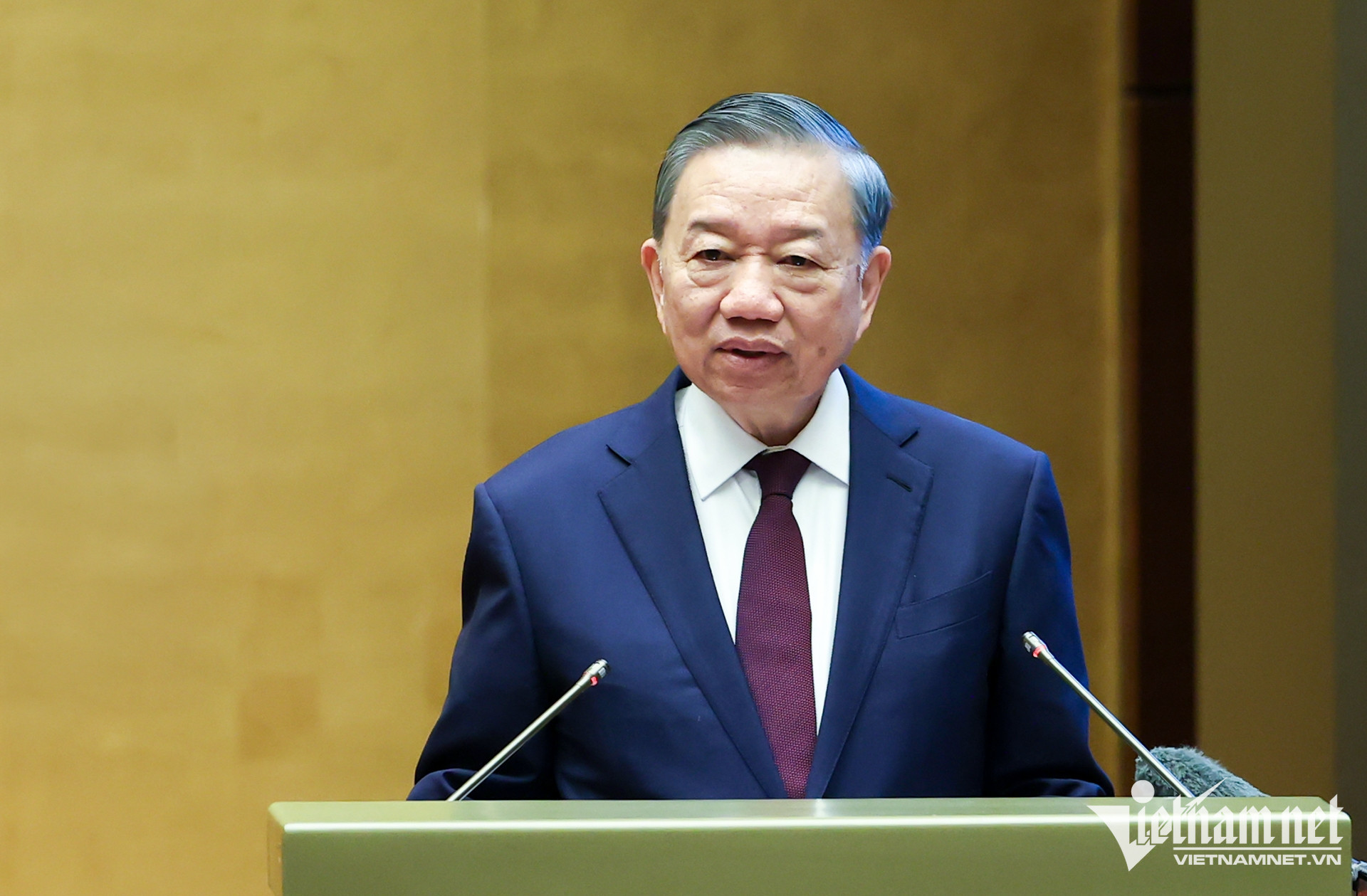
To Lam called for closer integration between Party building and rectification efforts, reforms to leadership and governance methods, and improvements in the capacity to implement decisions.
He said changes in leadership practices must be accompanied by efforts to develop officials with the necessary competence and sense of responsibility.
When work stagnates or progress falls short, authorities must examine the effectiveness of Party organizations, their leadership approaches and the performance of officials in charge.
To Lam welcomed recent personnel reviews involving officials under central management, noting that some units had not received the highest performance ratings because numerous assigned tasks remained unfinished.
"We must be that rigorous and examine whether those Party organizations are truly strong, united and capable of carrying out their responsibilities," he said.
Performance reviews must clearly identify unfinished work, underlying causes, individual responsibilities and corrective measures.
Leaders should take responsibility, listen to criticism and address shortcomings rather than allowing the same problems to reappear in subsequent annual reviews.
To Lam noted that in several ministries, sectors and localities, senior officials had recognized numerous weaknesses only after inspection teams from Party inspection commissions began examining their operations.
He stressed that identifying what needs to be done is crucial to determining priorities, mobilizing resources and organizing implementation effectively.
Simply listing completed activities without examining why expected results have not been achieved is insufficient, he said.
At the grassroots level, Party cell meetings should address issues directly related to assigned duties and people's daily lives.
When complaints arise about irresponsible officials, administrative harassment or prolonged unresolved petitions, Party organizations must examine the cases and require responsible members to report on and remedy the problems.
Turning to personnel development, deployment and the effective use of talent, To Lam called on Party committees to review their workforce against actual job requirements.
Recruitment pipelines and training must be closely linked to performance evaluation, personnel deployment and the screening of officials.
Evaluations should be conducted regularly, taking into account political qualities, ethics, public credibility and substantive contributions, as well as the circumstances and difficulty of assigned tasks.
The results must be used promptly to assign responsibilities, provide further training or reassign personnel.
Any reassignment must be evidence-based and comply with regulations. Authorities should neither wait until the end of an official's term nor make arbitrary changes that disrupt organizational stability.
To Lam said officials who cannot meet job requirements should be considered for replacement without waiting for misconduct serious enough to warrant disciplinary action.
Reassignment, however, must not be used as a substitute for addressing violations.
Those responsible for evaluating, recommending and appointing officials must also be accountable for their assessments and proposals.
He called for determined action against the buying and selling of official positions, abuse of appointment powers, vested interests and improper interference in personnel decisions.
Under Vietnam's two-tier local government model, the quality of commune-level officials directly affects the implementation of Party resolutions and public confidence.
When grassroots administration performs poorly, responsibility must be clarified not only for those carrying out the work but also for the authorities responsible for personnel deployment and support.
Administrative shortcomings must not leave residents waiting unnecessarily for public services.
Regarding the implementation of Vietnam's talent development strategy, To Lam cautioned against focusing merely on recruitment numbers.
Instead, authorities should assess what talented individuals can actually accomplish and how they contribute to building highly skilled teams capable of mastering technology.
People judge leadership through the daily performance of public institutions
On translating major policy decisions into practical regulations, clearly defining responsibilities and ensuring implementation resources, To Lam said cross-sectoral and interregional issues must be addressed through coordinated policymaking.
Responsibilities should be clearly assigned so that agencies and localities can work together to resolve problems effectively.
Party committees must also proactively identify how development bottlenecks change over time.
When institutional or regulatory obstacles have been removed but progress remains slow, authorities should examine implementation capacity, interagency coordination and individual accountability.
To Lam warned that development opportunities would diminish if every administrative level introduced additional conditions or required further rounds of approval.
Addressing regulations governing Party members' investment and business activities, he said legitimate wealth creation, job creation and contributions to society should be encouraged while maintaining the standards expected of Communist Party members.
Conflict-of-interest controls must identify who actually exercises control over businesses and who ultimately benefits from their activities.
Authorities must prevent Party members from using official positions, privileged information or public resources for personal benefit, or from obtaining special advantages through their Party membership.
Party members engaged in business must set an example in complying with the law and protecting employees' legitimate rights and interests.
Turning to the goal of achieving the highest possible fulfillment of socioeconomic targets for 2026 and preparing for the 2027 development plan, To Lam called for resources already mobilized to be put to effective use.
He urged faster disbursement of public investment capital while maintaining construction quality and ensuring that projects deliver measurable benefits.
Long-delayed or stalled projects that waste resources must be addressed by the competent authorities.
Localities should also coordinate efforts to resolve infrastructure, market and production supply chain issues that extend beyond their administrative boundaries.
To Lam emphasized that every investment must be assessed in terms of its effectiveness, operating costs and management responsibilities, with strict financial discipline maintained throughout implementation.
Vietnam's target of achieving GDP growth of at least 10% in 2027 requires every sector and locality to prepare realistic plans supported by credible assessments of available resources and implementation capacity.
On maintaining discipline, controlling power and strengthening public participation in implementing Party resolutions, To Lam said inspection and supervision must closely follow priority tasks.
Oversight mechanisms should identify risks of delays and violations early enough for corrective action to be taken.
Leaders must visit grassroots institutions, understand how work is being carried out and assess the conditions affecting implementation.
When results fall short, authorities must determine whether the causes lie in policy decisions, resource allocation or the responsibilities of those assigned to carry out the work.
Inspection conclusions must clearly establish accountability, corrective measures and deadlines for addressing shortcomings and violations.
To Lam stressed that people experience the quality of leadership through the everyday conduct and performance of government institutions and public officials.
When assessing the implementation of Party resolutions, Party committees should therefore compare official reports with feedback from residents and businesses, as well as conditions observed at the grassroots level.
Public communication should help people understand policies, recognize their rights and responsibilities, and have meaningful opportunities to participate in implementation.
Agencies responsible for policies must proactively explain their decisions, receive feedback and address problems that arise.
To Lam called for continuous monitoring of implementation, verification of actual results and the closure of loopholes in management and power controls to prevent repeated violations.
New regulations on Party inspection, supervision, disciplinary action and the handling of disciplinary complaints must be implemented within the proper scope of authority, through established procedures and with objectivity and fairness.
Power exercised in personnel management, resource allocation and inspection activities must all be subject to effective oversight.
At the same time, To Lam emphasized the importance of protecting officials who pursue innovation in the public interest in accordance with regulations.
When determining accountability, authorities must fully consider an official's motives, methods, available information and actual circumstances at the time a decision was made.
He also called for strict action against those who exploit innovation initiatives for personal gain or to conceal wrongdoing, while addressing the tendency among some officials to avoid responsibility.
Tran Thuong
.svg)
