 Vietnamnet.vn

 Podcast



"We must not sacrifice security and safety for development, but neither should concerns about risk slow innovation."
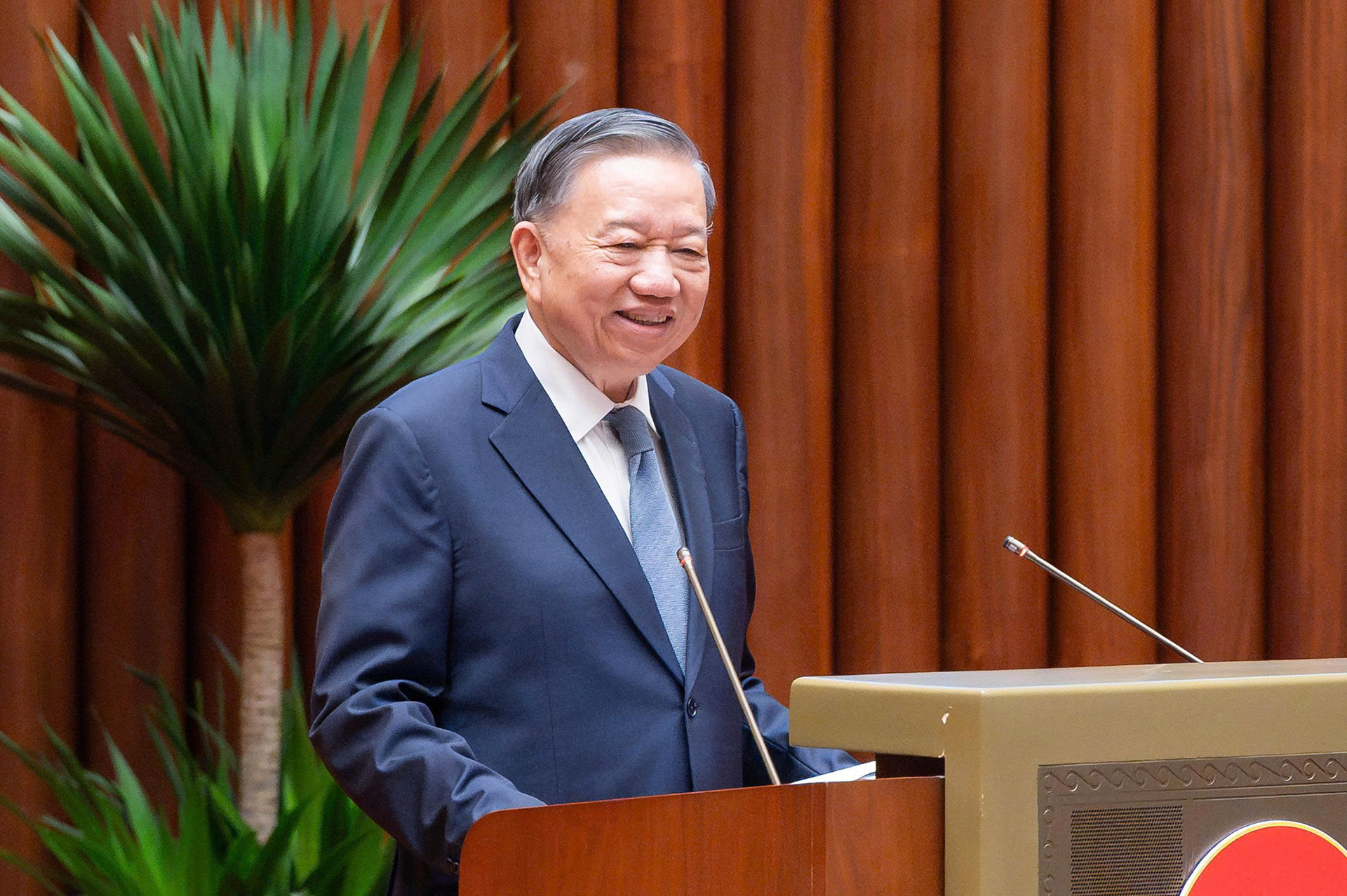
That was the key message delivered by General Secretary and President To Lam at a national conference reviewing the first 18 months of implementing Politburo Resolution 57 on science, technology, innovation and digital transformation.
According to a conclusion recently issued by the Standing Office of the Central Steering Committee for Science, Technology, Innovation and Digital Transformation, To Lam identified implementation - not policymaking - as the weakest link in carrying out the resolution.
Implementation remains the biggest challenge
The conclusion notes that, under similar conditions, localities where leaders have taken direct responsibility and acted decisively have delivered tangible outcomes.
By contrast, places where implementation has been slow or largely procedural - and where leaders have not fully exercised their responsibilities - have made only limited progress.
To address these shortcomings, To Lam outlined four key priorities.
1. Deepen implementation of Resolution 57
The first priority is to continue implementing Resolution 57 in close alignment with preparations for the 14th National Party Congress.
Amid intensifying global technological competition, To Lam said the resolution is not only intended to prevent Vietnam from falling behind but also to strengthen the country's strategic autonomy while safeguarding national defense, security and sovereignty.
He called for coordinated and decisive implementation throughout the political system - from central authorities to local governments - while creating favorable conditions for businesses and citizens to participate actively.
2. Deliver measurable results
The second priority is to shift from policy formulation toward generating concrete products, outcomes and value that directly contribute to Vietnam's goal of achieving double-digit economic growth.
To Lam said authorities should establish clear one-year, three-year, five-year and ten-year milestones covering technologies mastered, products developed, export capabilities and contributions to economic growth, national defense, security and strategic self-reliance.
He identified several strategic technologies that should receive concentrated investment and be transformed into practical products, including:
Artificial intelligence (AI)
Big data
Robotics and automation
Biotechnology and biomedicine
Advanced materials and energy
Semiconductor chips
Cybersecurity
Quantum technology
Unmanned aerial vehicles (UAVs)
He also stressed that cybersecurity, information security, data security and national digital sovereignty must remain top priorities. "We must not sacrifice security and safety for development, but neither should concerns about risk slow innovation," he said.
Party Chief and President To Lam said all digital systems, databases and digital platforms should be designed, built and operated with security and safety integrated from the outset.
3. Promote nationwide transformation
The third priority is to ensure synchronized implementation from central agencies to local governments and throughout society.
He also called for increasing the proportion of Party committee members with science and technology expertise to 10-15%.
4. Strengthen leadership and accountability
The fourth priority focuses on improving leadership, supervision, inspection and performance evaluation.
According to the conclusion, leaders at every level must take direct responsibility for implementing Resolution 57 within their respective organizations.
"Matters within their authority must be resolved proactively, while issues beyond their authority should be promptly reported to higher levels for consideration and decision," To Lam said.
"They must not wait, shift responsibility or avoid accountability."
Resolution 57 performance to become a key evaluation criterion
The conclusion states that implementation of Resolution 57 will become an important benchmark for evaluating officials, leadership teams and agency heads.
Alongside recognizing and rewarding organizations and individuals that achieve concrete results, authorities will also review and take appropriate action against cases where implementation is merely symbolic, delayed or marked by a lack of responsibility.
To Lam also emphasized the need to encourage and protect officials who are willing to innovate, take responsibility and act in the public interest.
Party organizations at both central and local levels were instructed to develop training and succession plans while implementing the policy of increasing the proportion of officials with science and technology backgrounds in Party committees from 5% to 10-15%.
Notably, To Lam called for strict implementation of the Politburo's quarterly performance evaluation system for officials.
Those who fail to meet job requirements should be promptly replaced or reassigned.
The Central Inspection Commission and inspection bodies at all levels have been tasked with strengthening oversight of Resolution 57's implementation, promptly identifying and correcting formalistic approaches, delays and failures of responsibility to ensure that policies are carried out effectively and produce tangible results.
Concluding the meeting, Party Chief and President To Lam stressed that implementation of Resolution 57 must not be delayed.
Vietnam, he said, must demonstrate greater determination, stronger action and a sustained focus on delivering practical, measurable outcomes.
Tran Thuong
.svg)
