 Vietnamnet.vn

 Podcast


Voi Re Shrine stands on Tho Cuong Hill in Thuy Xuan Ward, approximately 5km from the center of Hue City. Built in 1817, the complex covers an area of around 2,000 square meters.
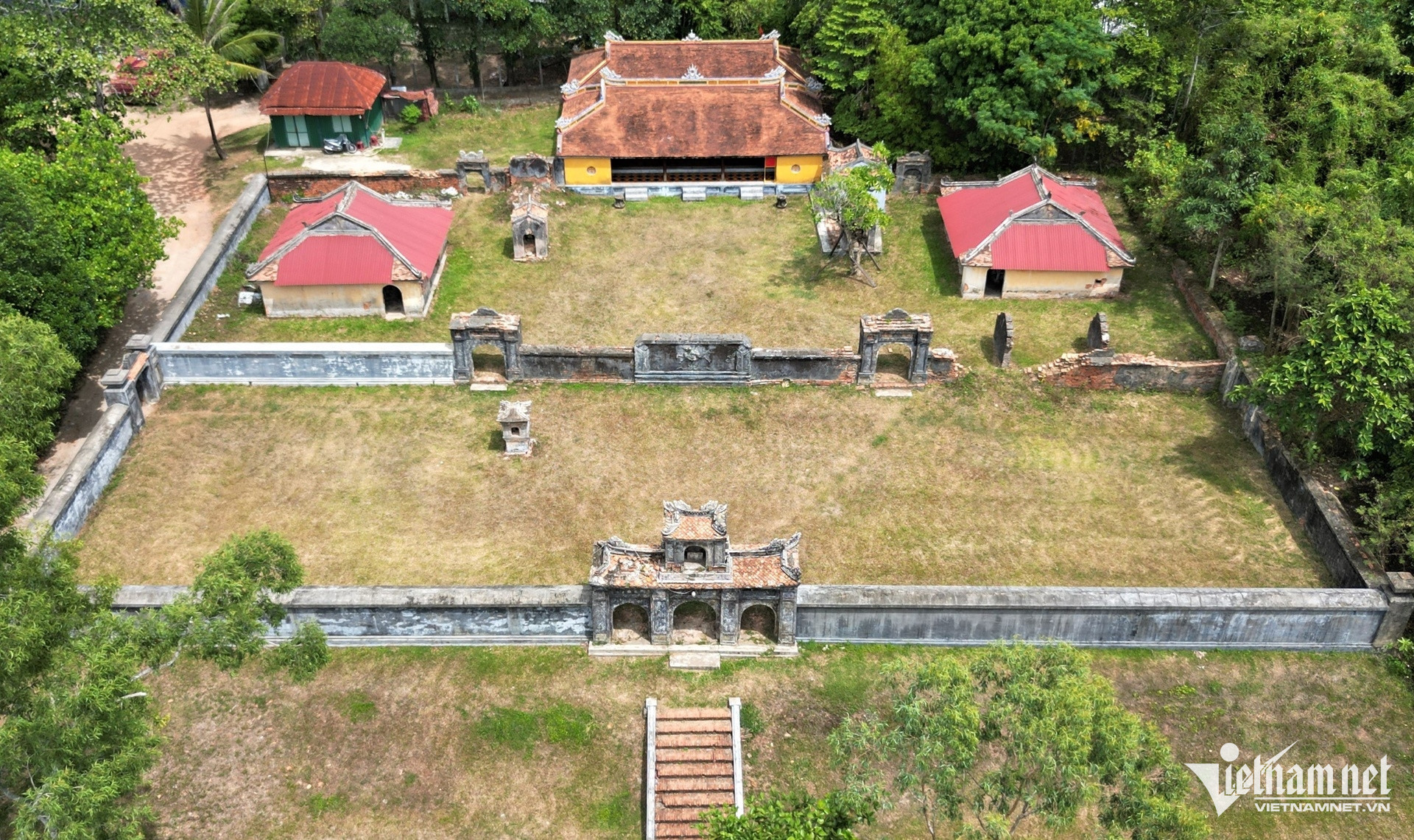
According to the Hue Department of Culture, Sports and Tourism, the shrine is a historical reminder of the Nguyen Dynasty's royal elephant corps and a distinctive monument within the Complex of Hue Monuments, a UNESCO World Cultural Heritage Site.
Voi Re Shrine was recognized as a national historical relic in 1998.
The shrine's name is associated with a legend dating back to the period of conflict between the Trinh and Nguyen lords.
According to historical accounts presented at the site, a courageous commander fighting for the southern Nguyen lords was killed in battle against forces from the north.
His elephant then traveled hundreds of miles from the battlefield to Phu Xuan, the southern capital.
Upon reaching the eastern side of Tho Cuong Hill, the elephant let out a thunderous cry, seemingly overcome with grief and anguish, before collapsing and dying.
Moved by the animal's loyalty, local residents held a funeral, built a tomb and named it Voi Re, meaning the Roaring Elephant.
After ascending the throne, Emperor Gia Long ordered a shrine built beside the elephant's grave to honor protective deities and war elephants that had served the Nguyen Dynasty.
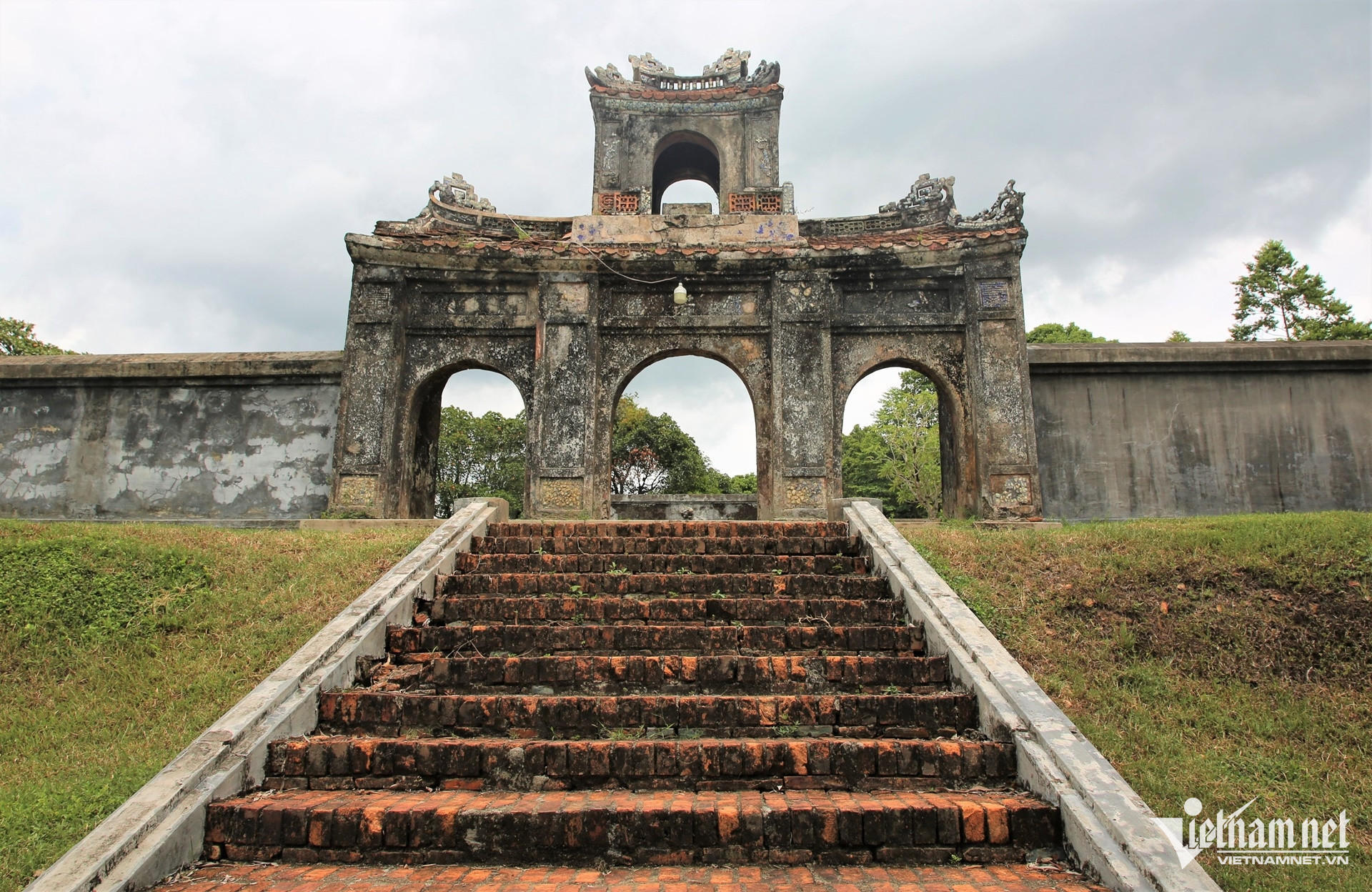
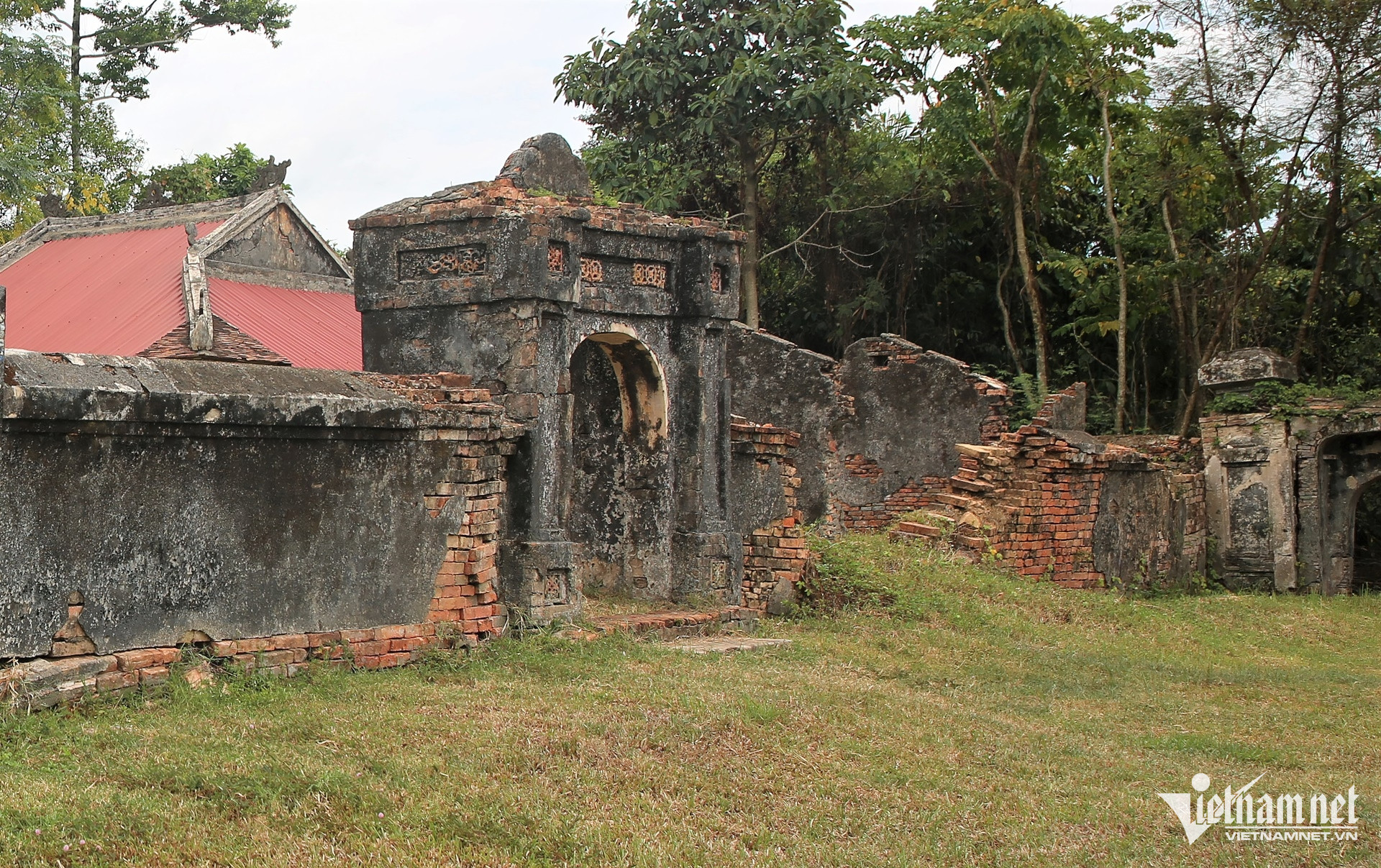
The shrine's three-entrance gate was constructed from traditional large bricks and covered with flat roof tiles. A staircase of 17 steps leads from the entrance to the grounds.
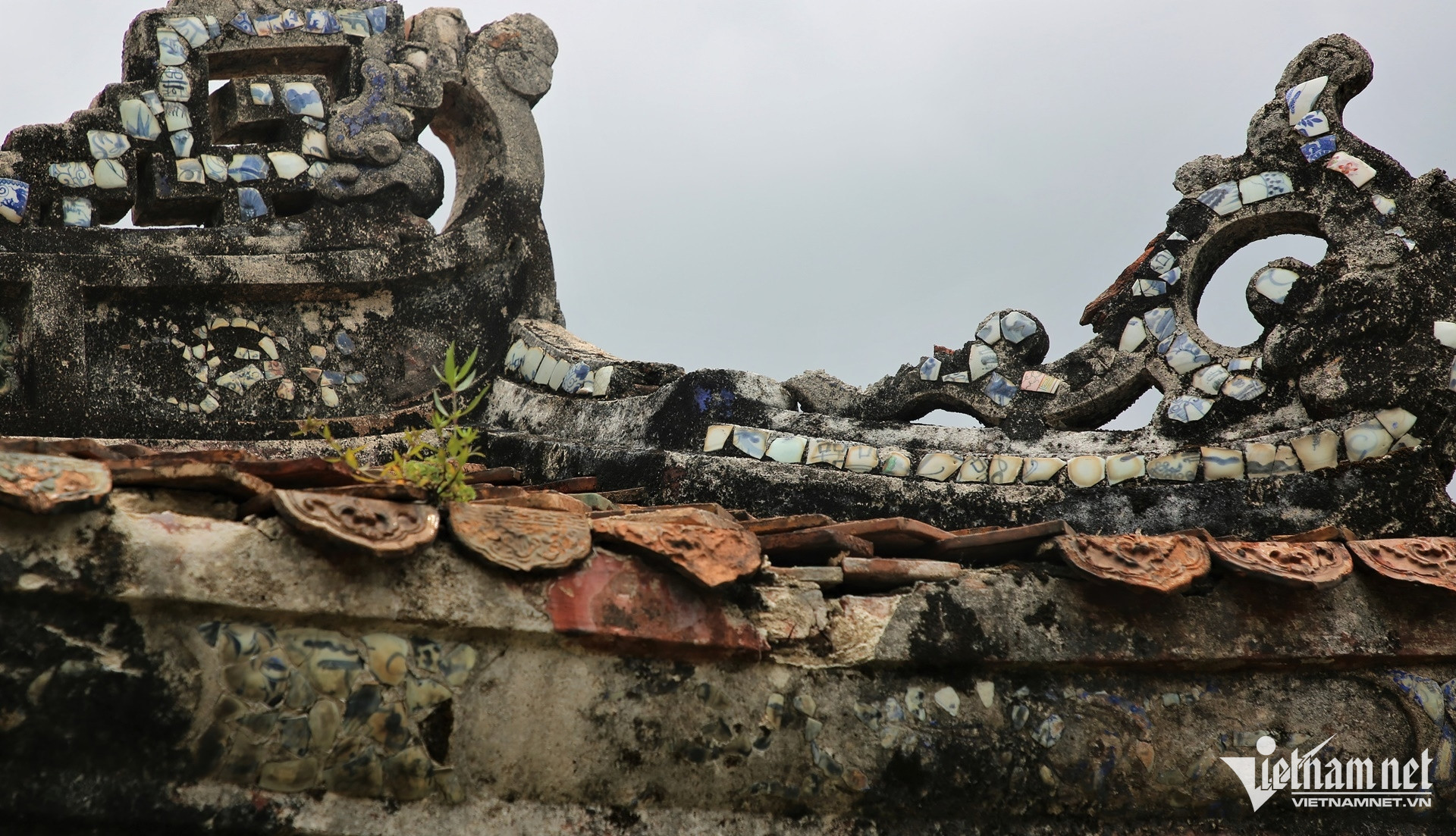
Decorative details and ceramic mosaics adorn the gate. After more than two centuries, some sections have become chipped, cracked or detached.
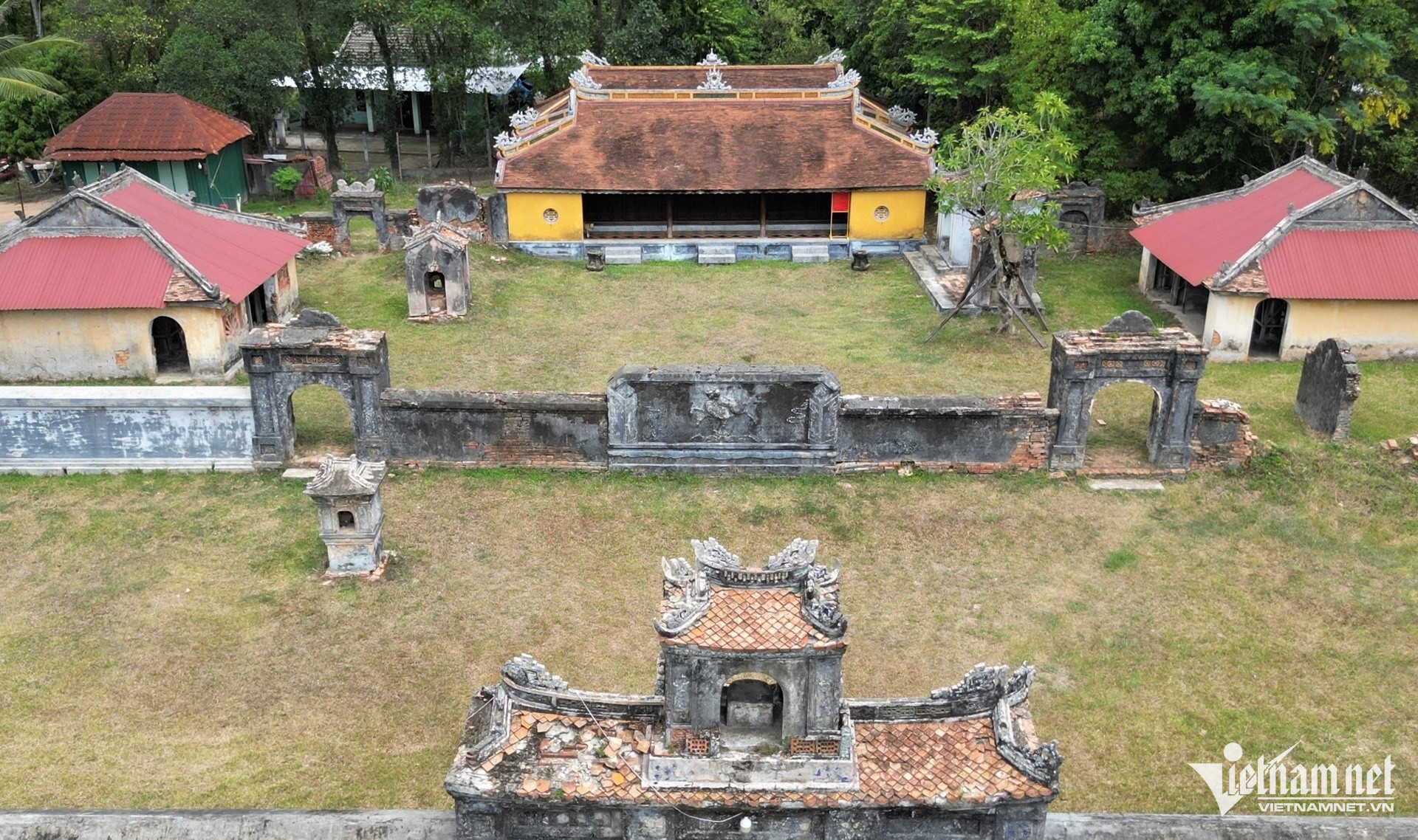
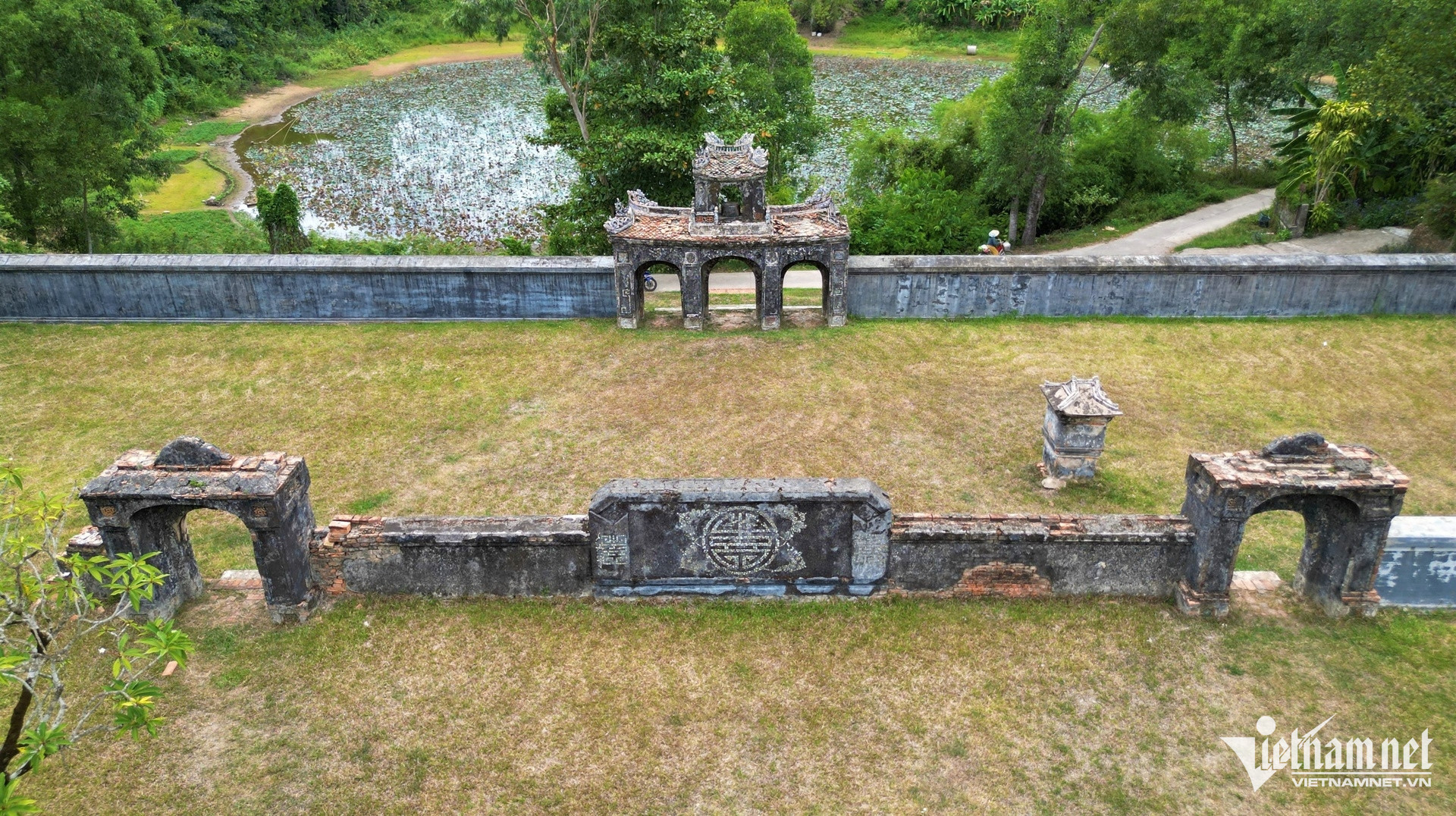
In front of Voi Re Shrine lies Dien Lake, once a watering place for elephants participating in fights against tigers at Ho Quyen, the Nguyen Dynasty's elephant-and-tiger arena, located approximately 400 meters away.
The complex follows a central axis extending from the three-entrance gate through a spacious courtyard and decorative screen to the inner worship area.
Its layout resembles the Chinese character Mon, meaning gate, and is enclosed by a brick perimeter wall.
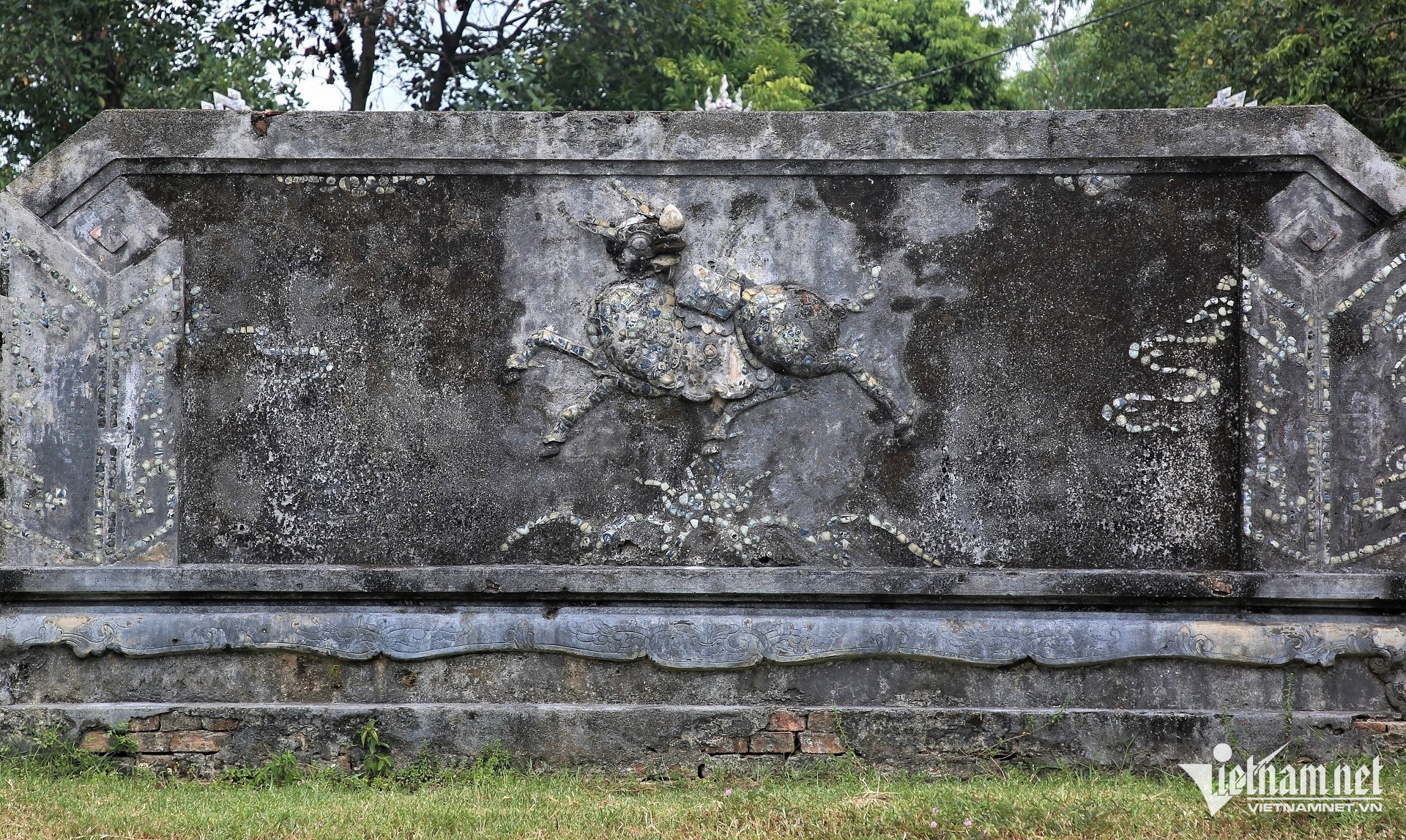
Within the courtyard stands a decorative screen featuring the Long Ma, a mythical dragon-horse, embellished with ceramic mosaics.
Long Chau Temple is the central structure of Voi Re Shrine.
Built in the traditional trung thiem diep oc architectural style, with overlapping roofs, it comprises five main compartments and two side wings, covering approximately 156 square meters.
Inside, a wooden decorative framework contains 104 panels, most featuring the stylized Chinese character for longevity alongside floral and bird motifs.
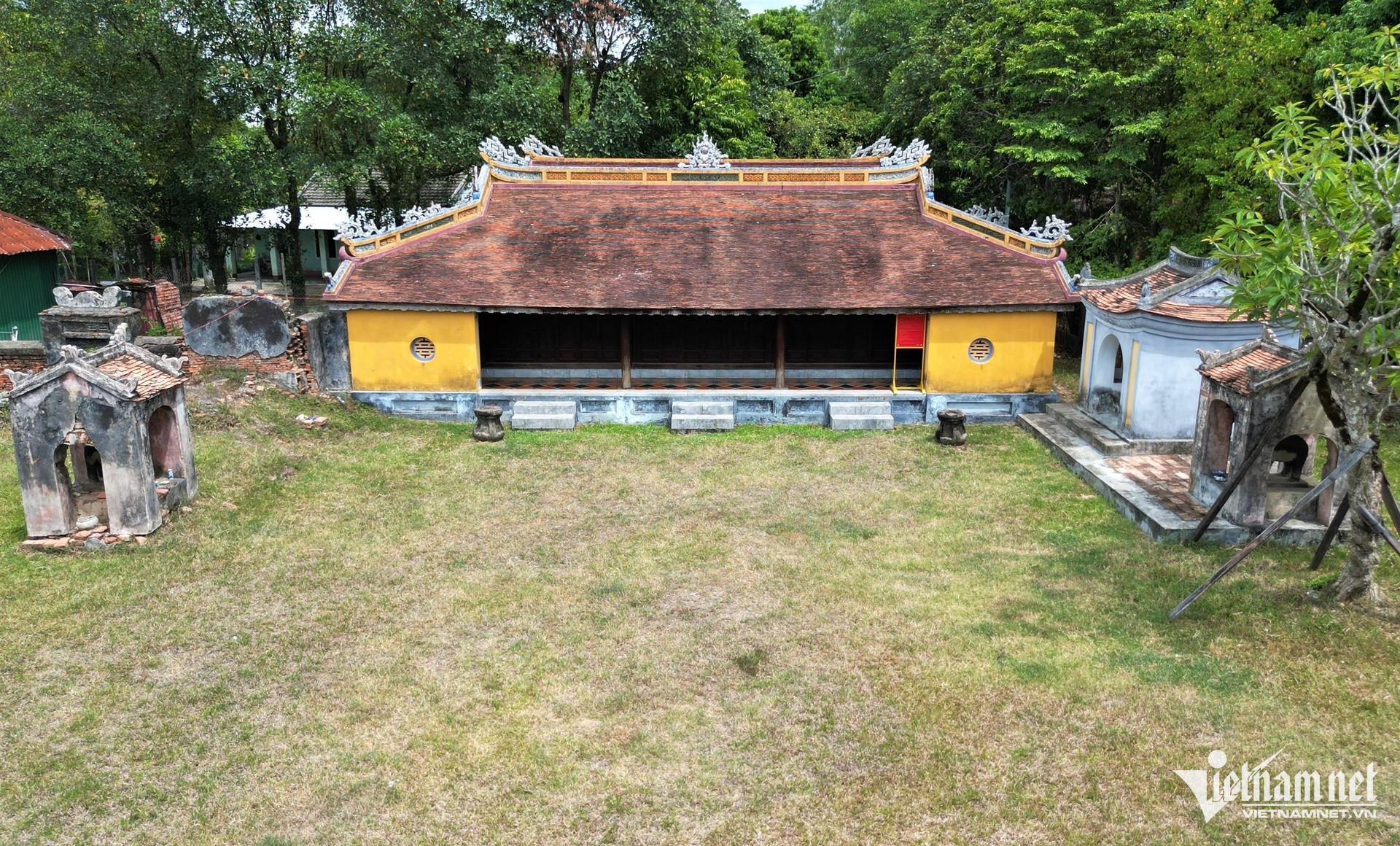
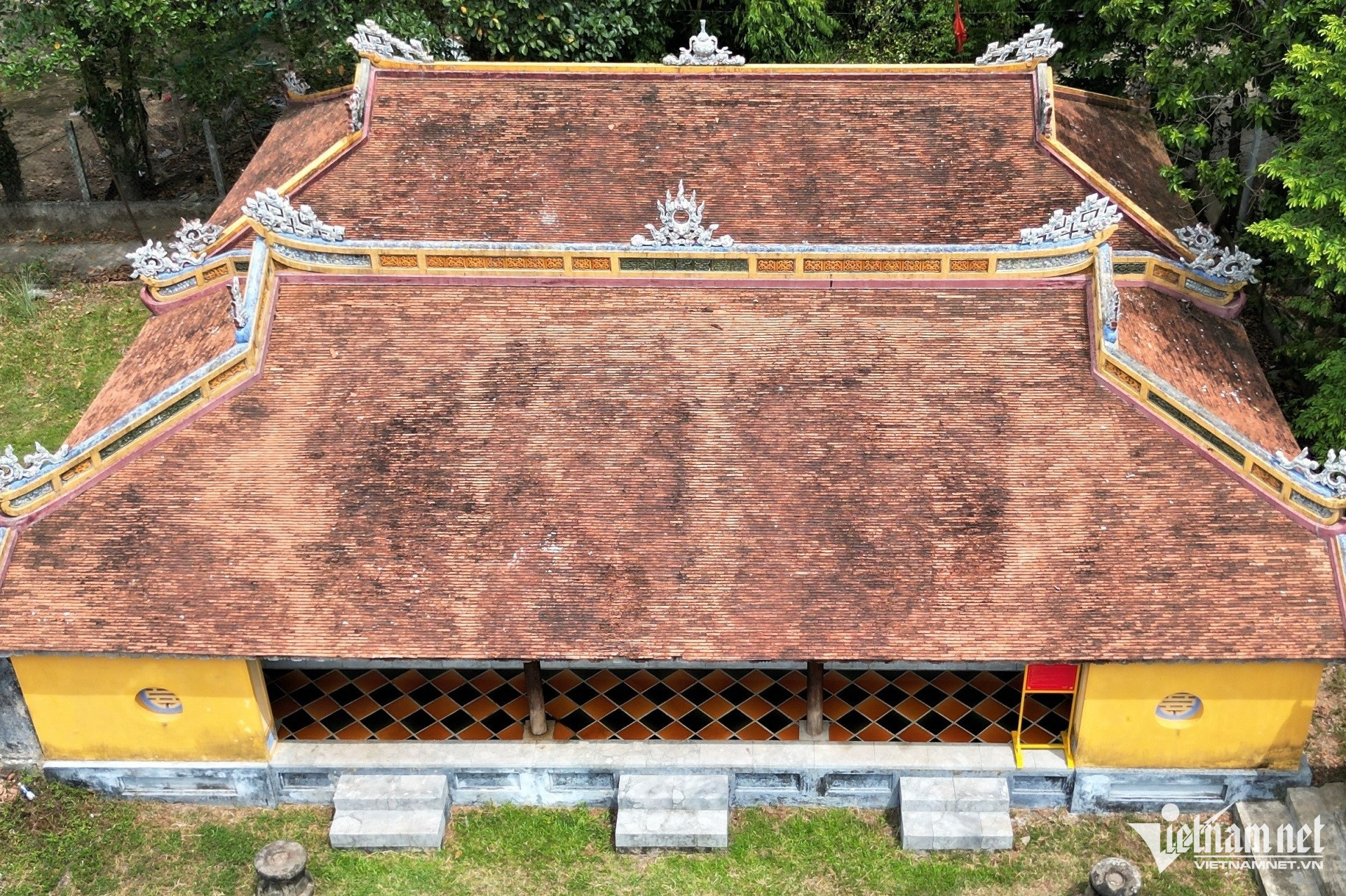
Long Chau Temple and sections of the surrounding walls underwent restoration between 2017 and 2019.
The temple currently houses ancestral tablets honoring four deities: Thien Su, Chua Dong, Hong Nuong and Tien Hau Khai Khan.
Flanking Long Chau Temple are the Eastern and Western Auxiliary Halls, which commemorate elephants that died in battle during the establishment of the Nguyen Dynasty.
The two buildings were also used to receive guests during ceremonial occasions.
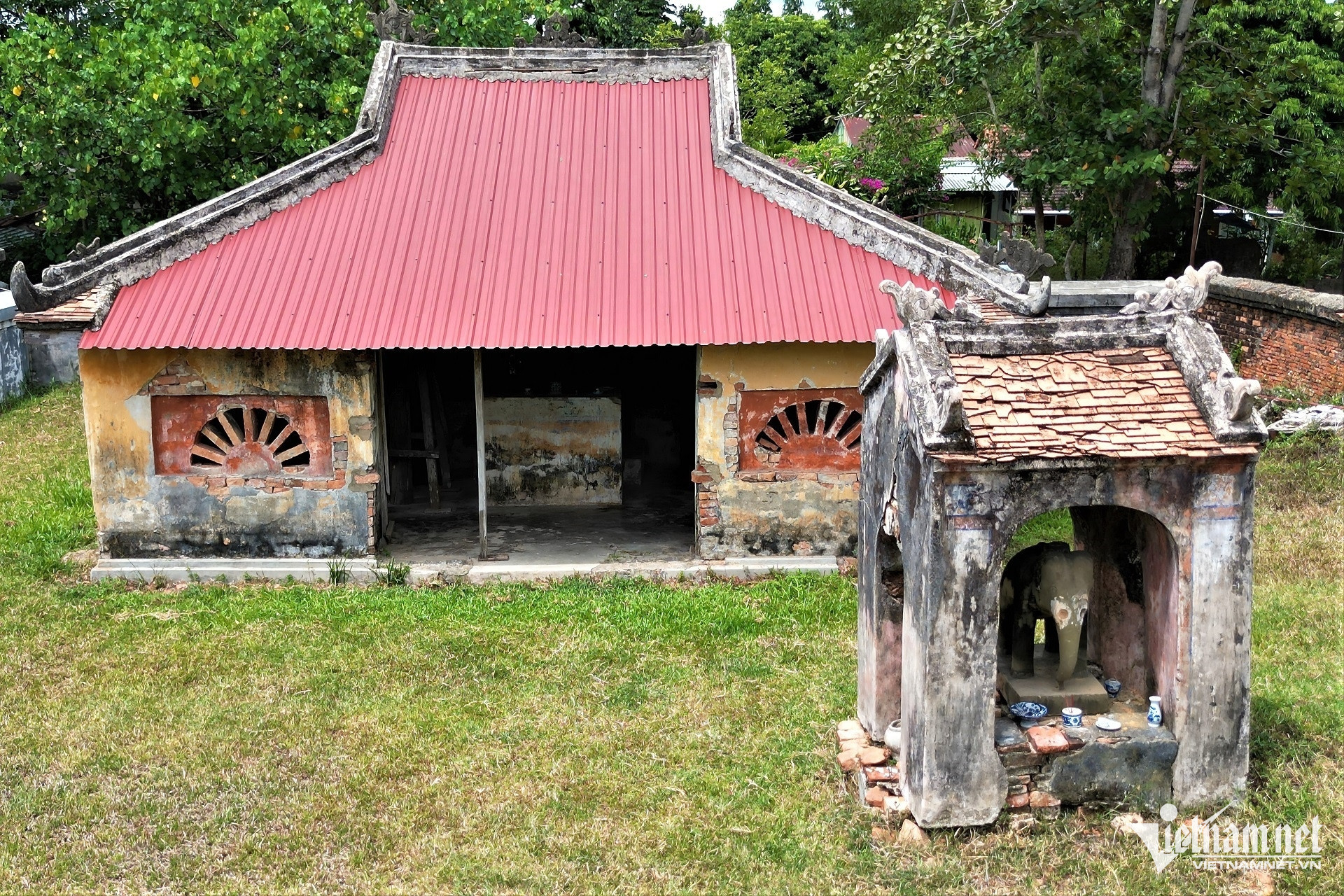
Originally roofed with traditional flat tiles, the halls were later fitted with temporary metal roofing after their original roofs deteriorated, helping protect the wooden structures inside.
In front of the auxiliary halls stand smaller elephant shrines that once housed memorial tablets dedicated to four distinguished war elephants.
Each was honored with an admiral title: Do Doc Hung Tuong Re, Do Doc Hung Tuong Bich, Do Doc Hung Tuong Nhi and Do Doc Hung Tuong Bon.
The establishment of shrines, memorial tablets and honorary military titles for elephants is what makes Voi Re Shrine particularly unusual.
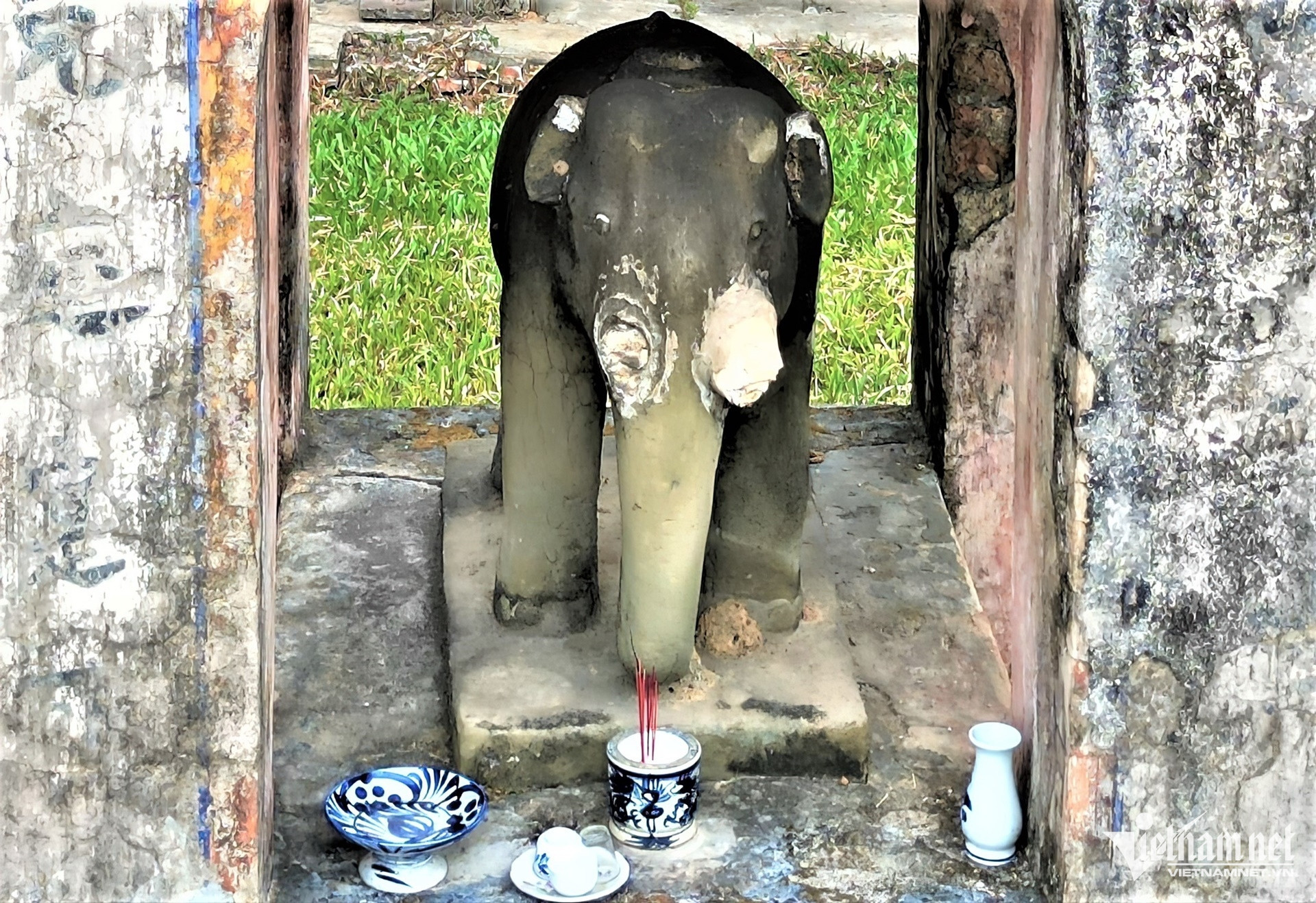
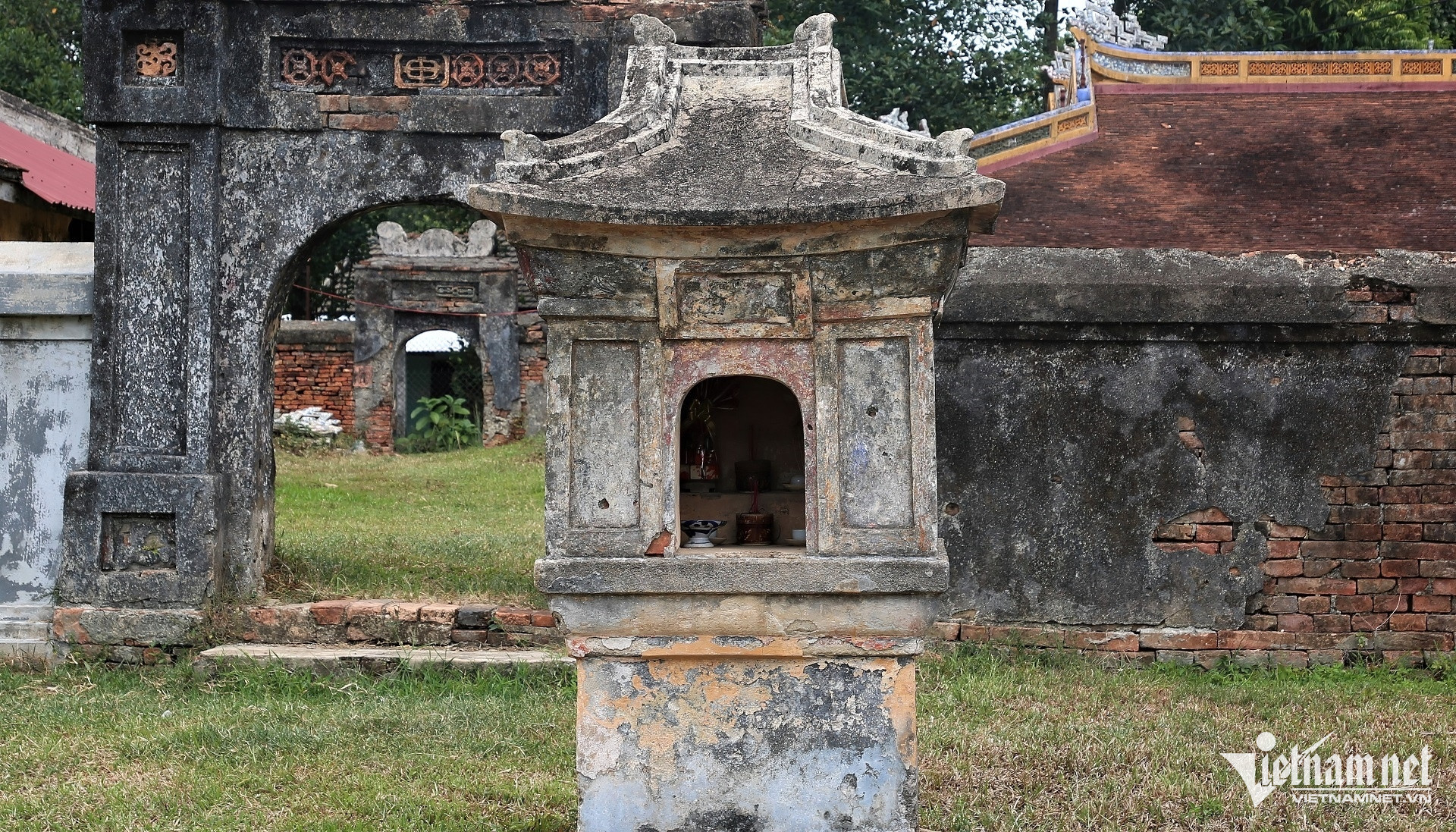
These honors reflect the high regard in which war elephants were held for their contributions to the Nguyen Dynasty's military campaigns.
Beyond its historical significance, the shrine embodies traditional values of loyalty, gratitude and respect for bonds between humans and animals.
More than 200 years after its construction, several walls, gates and architectural features have deteriorated, with cracks, peeling surfaces and exposed brickwork visible in parts of the complex.
Today, Voi Re Shrine remains a destination for visitors seeking to explore an unusual place of worship associated with the royal elephant corps and the animal warriors that once served Vietnam's Nguyen Dynasty.
Ha Nam

