 Vietnamnet.vn

 Podcast



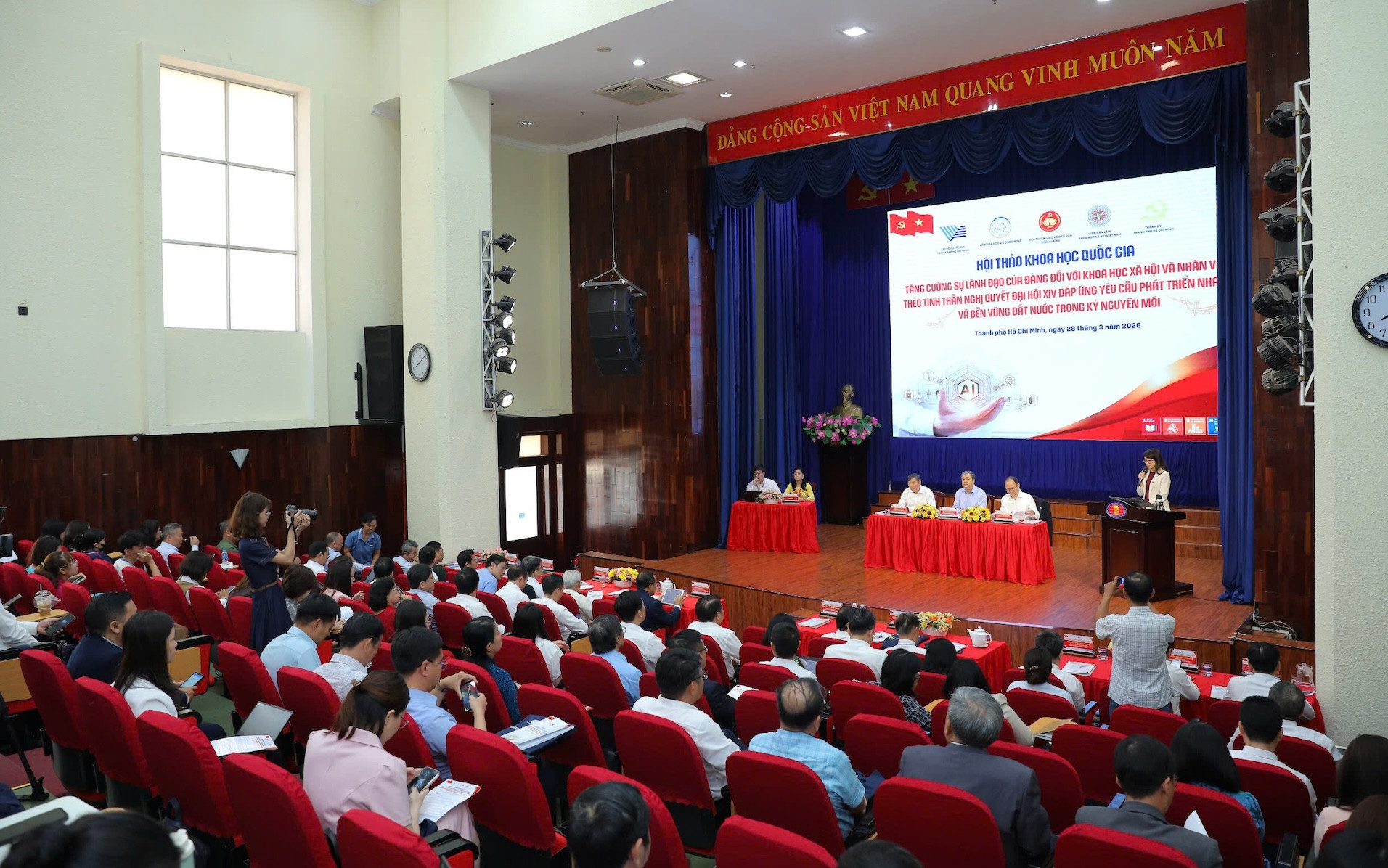
Vietnam’s higher education system has grown steadily in recent years, with more than 95,300 university lecturers nationwide. Yet fewer than one-third hold doctoral degrees or higher, highlighting an ongoing gap between expansion and academic depth.
The data were presented by Vietnam National University Ho Chi Minh City at a national scientific conference held on March 28 in Ho Chi Minh City, focusing on strengthening leadership in social sciences and humanities in line with the country’s long-term development goals.
Growth in numbers, uneven in quality
According to the Ministry of Science and Technology, Vietnam’s total science and technology workforce reached 207,838 people in 2024. Of these, 173,041 are directly engaged in research, accounting for more than 83%.
A significant share of this workforce is concentrated in universities and colleges. The number of research personnel in these institutions rose from 80,666 in 2022 to 95,394 in 2024, reinforcing the role of universities as central hubs for research activity.
However, the proportion of lecturers with doctoral degrees or higher stands at just over 33%, while the number of professors and associate professors remains modest. This suggests that while academic standardization has improved, progress has been uneven.
Social sciences face structural imbalance
In terms of discipline distribution, social sciences and humanities account for roughly 31% of the total research workforce, including 26.2% in social sciences and 5.1% in humanities.
Yet within this field, academic qualifications are heavily skewed. Most lecturers hold master’s degrees and focus primarily on teaching, while the pool of senior researchers capable of leading major research initiatives remains limited. This imbalance has hindered the formation of strong research groups.
Although domestic academic publications in social sciences and humanities have grown steadily - particularly in areas tied to social development such as education, sociology and linguistics - their international presence remains modest.
Globally indexed publications from these fields account for only about 8-10% of total output, reflecting ongoing challenges in academic integration, including limited participation in international research networks and difficulties meeting global publishing standards.
A stronger benchmark within leading institutions
At Vietnam National University Ho Chi Minh City, the picture is somewhat more encouraging. By 2025, the proportion of lecturers holding doctoral degrees across the system reached approximately 53.57%, with social sciences and humanities at around 52.2% - significantly higher than the national average.
Between 2020 and 2025, the university system published more than 15,000 international research papers, more than doubling its output compared to the beginning of the period. In social sciences and humanities alone, publications increased from 108 to around 320.
During the same period, 267 research projects in these fields were carried out at various levels.
Bridging gaps in a changing academic landscape
Despite these gains, institutional leaders acknowledge that challenges remain. Academic stratification, limited depth in specialized research and relatively low levels of international integration continue to constrain progress, particularly as digital transformation accelerates and global academic competition intensifies.
Professor Nguyen Thi Thanh Mai, director of the university system, emphasized that developing social sciences and humanities is a strategic priority within the broader framework of science, technology and innovation.
Efforts are underway to promote interdisciplinary research, linking these fields with areas such as creative urban development, the digital economy, green transition, cultural preservation and human development.
At the same time, the university is investing in digital data systems on culture and society, applying artificial intelligence to trend analysis, and expanding open learning platforms to connect with global academic resources.
A question of depth, not just scale
Vietnam’s higher education system is clearly expanding, both in size and ambition. But the data suggest that growth alone is not enough.
The real challenge lies in cultivating a generation of scholars capable of leading research, shaping knowledge and positioning Vietnam more firmly within the global academic landscape.
For now, the numbers tell a dual story - one of momentum, and one of unfinished transformation.
Le Huyen
.svg)
