 Vietnamnet.vn

 Podcast



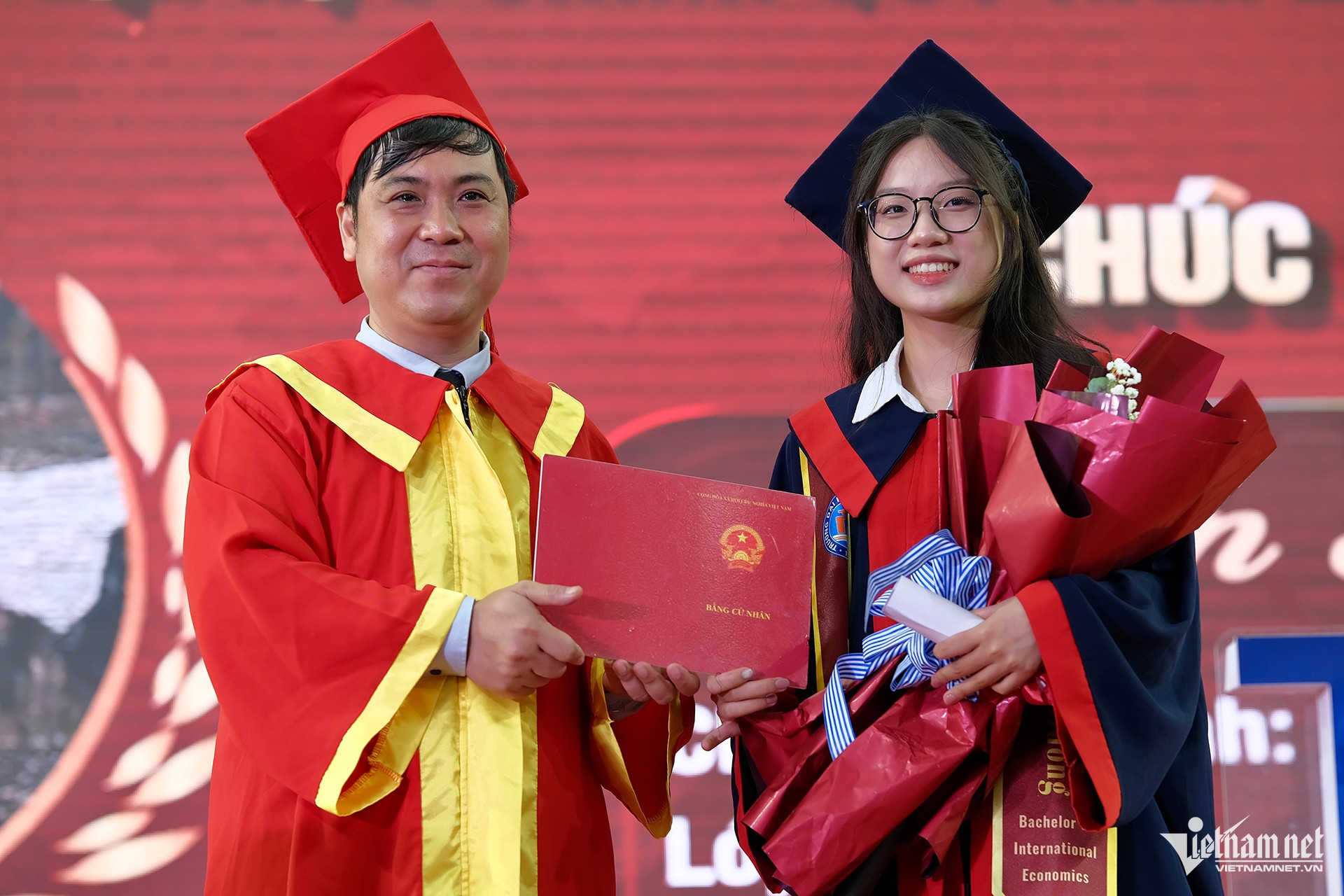
Initial support can reach half a billion dong, with annual income climbing into the billions.
The University of Economics Ho Chi Minh City (UEH) recently introduced a new policy aimed at attracting and retaining highly qualified academic staff, offering support of up to VND500 million (US$20,000) per person and monthly income that can reach VND120 million (US$4,800).
According to Bui Quang Hung, Vice President in charge of UEH, the policy aligns with Resolution 71-NQ/TW on breakthrough development in education and training, as well as the university’s goal of entering the Top 250 universities in Asia for the 2025-2030 period. Investment in academic staff is seen as a decisive factor in improving training quality, research output, and international standing.
Specifically, professors, associate professors, and PhD holders recruited as lecturers or staff will receive one-time support of VND500 million (US$20,000), VND300 million (US$12,000), and VND150 million (US$6,000), respectively. These levels may vary depending on years of service, contract type, and adjustments from previous policies.
UEH is prioritizing talent attraction for campuses outside Ho Chi Minh City, such as UEH Mekong in Vinh Long and UEH Nexus, where support levels may be equal to or higher depending on specific cases.
Beyond external recruitment, the university is also strengthening internal incentives. Existing faculty members who are newly appointed to higher academic ranks receive bonuses of VND150 million (approximately US$6,000) for professors, VND100 million (US$4,000) for associate professors, and VND50 million (US$2,000) for PhD holders.
To retain staff, UEH has introduced monthly income supplements, adding VND20 million (US$800) for full-time professors and associate professors, and VND10 million (US$400) for contract lecturers. As a result, total monthly income for professors and associate professors ranges from VND52 million to VND120 million (US$2,100–4,800), excluding additional earnings from extra teaching hours, research activities, and performance-based bonuses.
The policy is expected to enhance UEH’s competitiveness in the academic labor market while improving the quality of education and research amid intensifying competition among higher education institutions.
Similarly, the University of Finance - Marketing offers one-time attraction incentives for professors, associate professors, and PhD holders, regardless of specialization. Professors under 50 years old receive VND500 million (US$20,000), while those aged 50 to under 55 receive VND400 million (US$16,000). Associate professors under 50 receive VND300 million (approximately US$12,000), and those aged 50 to under 55 receive VND200 million (US$8,000). PhD holders trained abroad receive VND100 million (US$4,000), while those trained domestically receive VND60 million (US$2,400).
Recipients are required to commit to at least five years of service at the institution. In addition to salaries, monthly supplements include VND5 million (US$200) for professors, VND4 million (US$160) for associate professors, and VND3 million (US$120) for PhD holders. The university is focusing on attracting talent in fields such as public management, economic law, accounting, and economic management.
Ho Chi Minh City University of Industry has also introduced policies offering VND300-500 million (US$12,000–20,000) for professors, VND350 million (US$14,000) for associate professors, and VND200-250 million (US$8,000–10,000) for PhD holders, depending on individual capabilities.
Many institutions are offering immediate bonuses ranging from VND200 million to VND300 million (US$8,000–12,000).
Under the policy of the University of Economics and Law (Vietnam National University, Ho Chi Minh City), professors receive VND350 million (US$14,000), associate professors VND250 million (US$10,000), and PhD holders VND150 million (US$6,000). Additional bonuses include VND150 million (approximately US$6,000) for achieving professor status and VND100 million (US$4,000) for associate professor status.
At the University of Social Sciences and Humanities (Vietnam National University, Ho Chi Minh City), newly recruited professors receive VND200 million ( US$8,000), associate professors VND150 million (US$6,000), and PhD holders VND100 million (US$4,000).
The Ho Chi Minh City University of Industry and Trade provides financial support of VND100 million (US$4,000) for PhD holders, VND150 million (US$6,000) for associate professors, and VND200 million (US$8,000) for professors, with age limits applied.
These incentives are available to candidates whose academic qualifications align with recruitment needs, and recipients must commit to at least five years of service.
At Nguyen Tat Thanh University, PhD holders receive VND100 million (US$4,000), associate professors VND150 million (US$6,000), and professors VND200 million (US$8,000) upon joining.
The University of Information Technology offers a base salary of around VND21 million (US$840) per month for lecturers. Under its talent attraction program, initial support includes VND300 million (US$12,000) for professors, VND200 million (US$8,000) for associate professors, and VND150 million (US$6,000) for PhD holders. Lecturers with ISI/Scopus-indexed publications may receive additional support of up to VND200 million (US$8,000), along with research funding of VND34 million (US$1,300) in the first year. Bonuses include VND100 million (US$4,000) for professors and VND70 million (US$2,800) for associate professors.
These aggressive incentive policies reflect a growing competition among universities to attract and retain high-quality academic talent, signaling a broader shift toward stronger investment in human capital within Vietnam’s higher education system.
Le Huyen
.svg)
