 Vietnamnet.vn

 Podcast



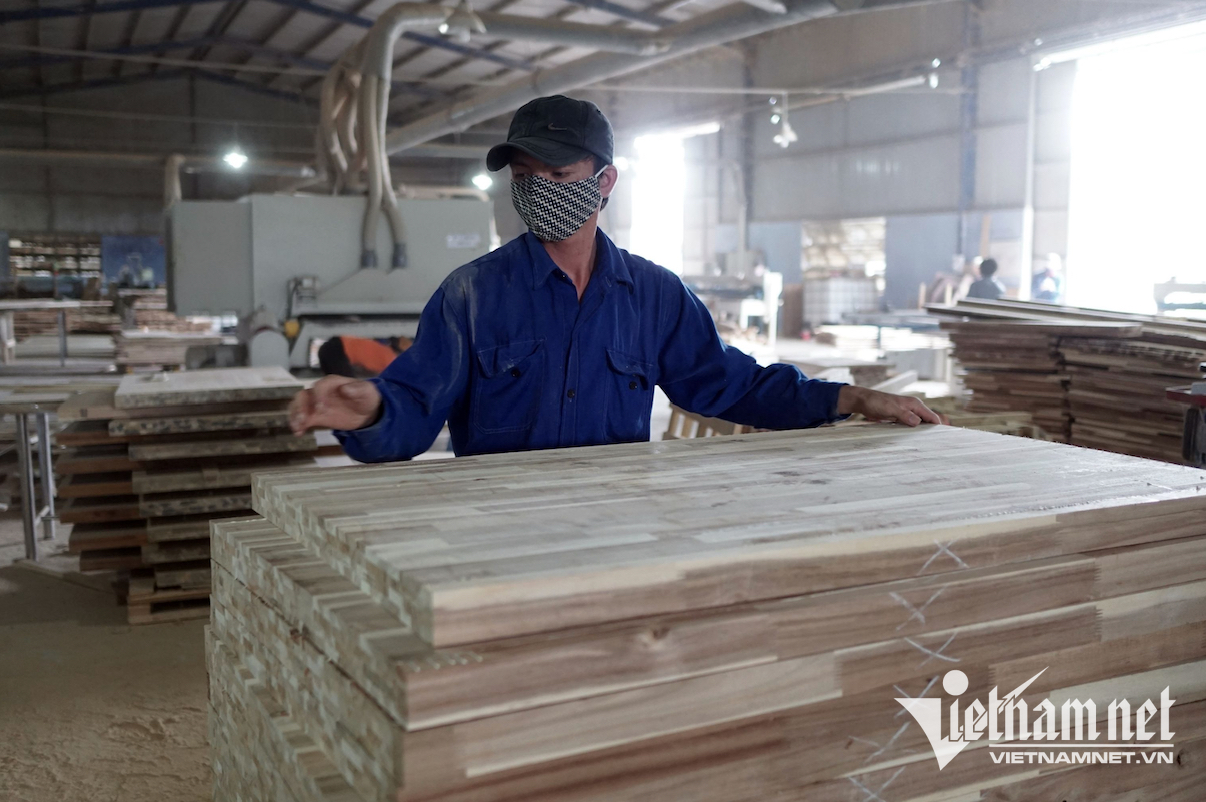
Closing out a turbulent 2025, Vietnam’s wood industry - a pillar of its agricultural economy - is on track to reach $17.3 billion in export value, marking the highest figure in its history and a full recovery from the post-Covid downturn.
Export records rewritten
According to industry data, Vietnamese wood and wood products are now present in over 160 countries and territories. The United States, Japan, China, South Korea, and the European Union remain the top five markets, accounting for more than 90% of the sector’s total export value.
Despite challenges such as traceability issues, illegal timber concerns, anti-dumping investigations, and U.S. countervailing tax policies, the industry still earned $16.3 billion by mid-December - a figure that secures its top position in agriculture and places it among Vietnam’s seven largest export sectors overall.
Vietnam has also climbed to 5th place globally in total wood export value and ranks 2nd worldwide, behind only China, in exporting high-value wood products such as indoor and outdoor furniture.
According to the Department of Forestry and Forest Protection (Ministry of Agriculture and Environment), Vietnam’s wood industry has posted continuous growth over the past 24 years, often breaking its own records. From just $219 million in 2000, wood exports surged to $16 billion in 2022.
After a steep drop to $13.5 billion in 2023 due to post-pandemic impacts, the industry bounced back strongly in 2024 and is poised to achieve an all-time high in 2025.
Forecasts from the Handicraft and Wood Industry Association of Ho Chi Minh City (HAWA) project a year-end export value of $17.3 billion for the sector.
In addition, the trade surplus remains high. In 2023, wood products generated a $11.33 billion surplus; in 2024, this figure rose to $13.55 billion, accounting for 75.7% of the agricultural sector’s trade surplus. As of December 15, 2025, the wood industry’s trade surplus had reached $13.3 billion.
Strategic transformation fuels resilience
Experts attribute this success to the industry’s complete and efficient value chain. Unlike other agricultural sectors focused on raw exports, Vietnam’s wood industry emphasizes deep processing, exporting fully finished products.
There has also been a notable shift in sourcing strategy: domestically grown plantation wood now dominates production, reducing dependency on imported wood and strictly prohibiting the harvesting of natural forests.
Vietnamese wood companies have also demonstrated high adaptability, especially in the face of global uncertainties such as U.S. countervailing taxes. Many firms have opted to sacrifice margins to retain orders, while actively pursuing international e-commerce platforms to diversify revenue.
Huynh Le Dai Thang, Director of Nghia Son Wood Co., Ltd., shared that four years ago, his company began exploring interior sales via major platforms like Amazon, Walmart, and Wayfair. This shift quickly expanded their market and boosted sales.
In 2025, Nghia Son’s export revenue grew by 40%, with a sharp increase in U.S. orders. The company shipped over 1,000 containers this year, with bookings already placed through May 2026.
According to Thang, most Vietnamese wood firms operate under the B2B wholesale model. However, in tight markets, international buyers pressure producers on price, reducing them to mere manufacturers without brand value.
“If businesses invest seriously in e-commerce, they can scale quickly and make breakthroughs,” Thang said, citing a Chinese wood firm that grew online revenues from zero to $400 million in just four years.
Nguyen Chanh Phuong, Vice President of HAWA, emphasized that branding and design are essential for online success. In the e-commerce space, distinctive, original products are a must - not copied designs or contract manufacturing.
In the long term, he added, enterprises should unite to build strong global distribution systems. This could include dedicated e-commerce firms supporting local manufacturers in managing and optimizing international sales.
Future-proofing with policy, innovation, and sustainability
Deputy Minister of Agriculture and Environment Nguyen Quoc Tri stressed that to meet new global standards, especially on legal timber and technical barriers regarding origin and emissions, the industry must renew its mindset and operating models.
For the 2025–2030 period, he urged trade associations to help businesses resolve obstacles, participate in policymaking, and expand into new markets. He also called on them to develop high-value products and shape a wood-processing sector that is transparent, environmentally friendly, and aligned with increasing global demands.
Ha Giang
.svg)
