 Vietnamnet.vn

 Podcast



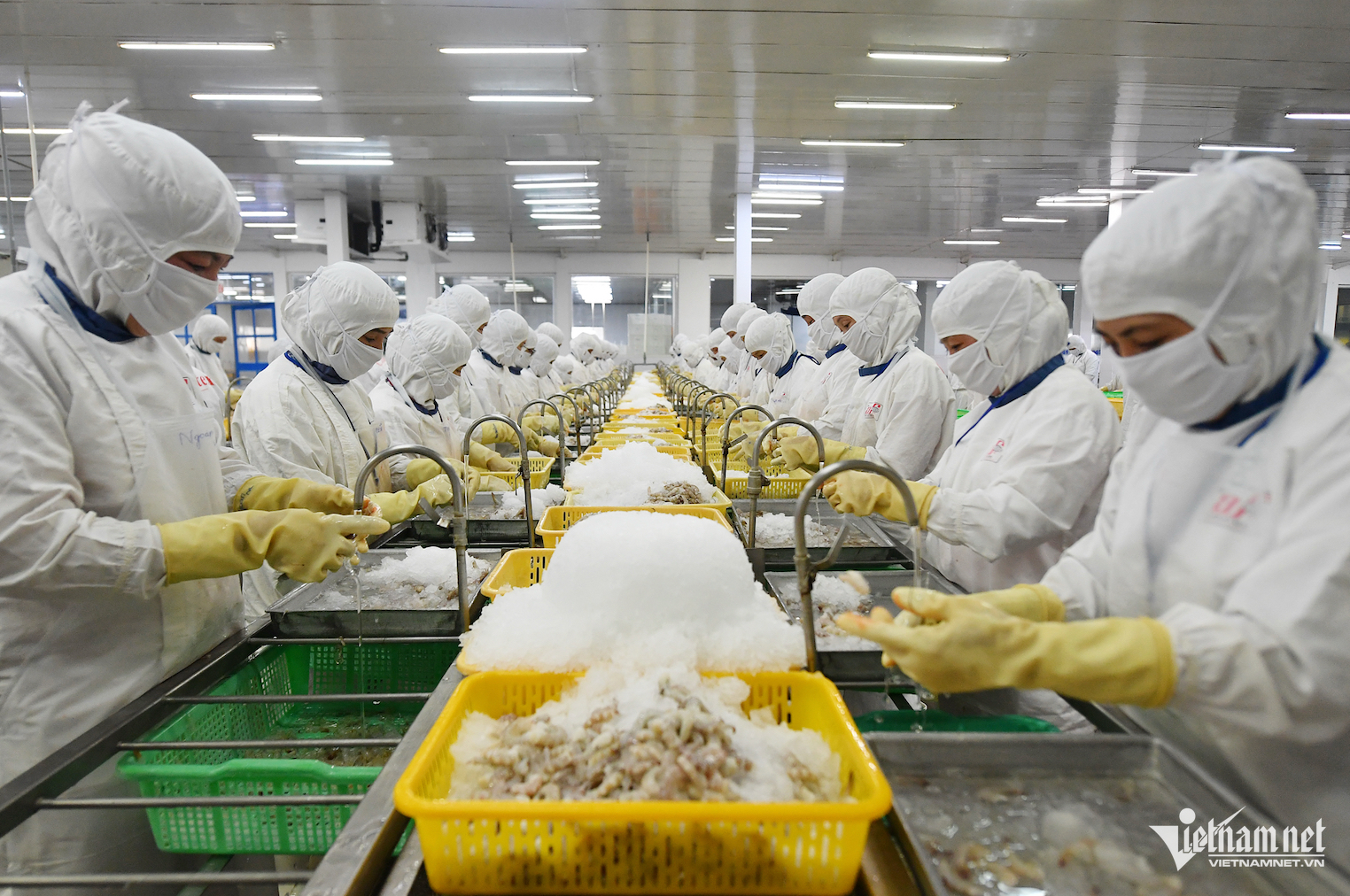
This is the third time Vietnam’s seafood exports have exceeded the $1 billion mark in a single month, following $1 billion in June 2022 and $1.02 billion in October 2024. It is also the highest monthly export value ever recorded in the history of Vietnam’s seafood industry.
The data underscores how Vietnamese enterprises are effectively leveraging the global seafood market’s recovery as it enters the year-end "golden season" of consumer demand.
In the first ten months of 2025, Vietnam’s total seafood exports reached $9.31 billion, a 12.9% increase over the same period in 2024.
The Ministry of Agriculture and Environment reported that China, the United States, and Japan are Vietnam’s top three seafood export markets, accounting for 20%, 17.4%, and 15.1% of total export value respectively.
Compared to the same period in 2024, export value to China surged 34.6%, to the U.S. increased 6.2%, and to Japan rose 11.2%.
Among the top 15 export markets, Brazil recorded the highest growth with a 43.1% increase.
Strong growth despite global headwinds
Vu Tuan Cuong, Director of the 3K Center (Department of Fisheries and Surveillance, Ministry of Agriculture and Environment), said the seafood sector has grown positively despite global economic volatility and unfavorable weather.
From January to October 2025, Vietnam’s aquaculture production reached 4.88 million tons, up 5.1% year-on-year. This includes 3.19 million tons of fish (up 4.7%) and 1.14 million tons of shrimp (up 6.3%).
Meanwhile, wild-caught seafood production reached 3.12 million tons, a slight 0.4% increase compared to the same period last year.
Notably, the shrimp market in October 2025 showed a strong recovery. Shrimp prices remained stable and improved due to a slight decline in harvest volumes and consistent purchasing by processing plants to meet festive season export orders.
Pangasius also showed signs of recovery in the fourth quarter of 2025. The main driving force is the rising domestic demand for raw materials, leading to higher input prices and optimistic export expectations from major markets.
“It is completely feasible to achieve the $10.5 to $11 billion export target,” Mr. Cuong stated at the VietShrimp Asia 2026 and Aquaculture Vietnam 2026 press briefing.
Positive momentum from key markets
The Vietnam Association of Seafood Exporters and Producers (VASEP) reported continued positive signals from major international markets.
Vietnam’s pangasius exports to Japan rose by 14% year-on-year, reflecting increasing demand, especially as natural fish supplies such as pollock and cod decline due to stricter fishing quotas.
This growth is partly driven by the CPTPP agreement, which grants Vietnamese pangasius favorable tariff treatment, allowing for more competitive pricing. Additionally, amid Japan’s economic slowdown, consumers are turning to affordable, reliable, and easy-to-cook products.
Today, Vietnamese pangasius is not only sold in supermarkets but also appears on the menu of Kura Sushi, a renowned Japanese restaurant chain. This confirms that Vietnam’s "billion-dollar fish" meets strict standards for food safety, farming, and processing.
In the U.S., Vietnamese crab exporters received encouraging news as the U.S. Court of International Trade officially suspended a lawsuit filed by the National Fisheries Institute (NFI), the National Restaurant Association (NRA), and several American seafood companies against the U.S. government over enforcement of the Marine Mammal Protection Act (MMPA).
The temporary halt of the import ban is a positive signal for Vietnam’s crab sector, helping maintain access to a vital export market.
Likewise, Vietnamese tuna exports to the U.S. are expected to benefit from a potential 0% tariff following Vietnam’s alignment with the U.S. on a reciprocal and balanced trade framework announced during the ASEAN Summit 2025 in Malaysia.
According to VASEP, a key element of the Joint Declaration was the identification of eligible products listed in Annex 3 of Executive Order 14346, issued on September 5, 2025, to benefit from tariff adjustments for countries with aligned trade policies.
Among those products are fresh or chilled albacore tuna (HS03023100), frozen tuna loins/fillets (HS03048700), and processed tuna (non-canned, non-oil packed, over 6.8kg - HS16041440).
If these categories are granted duty-free status, it would significantly boost Vietnam’s tuna competitiveness in the U.S., one of the world’s largest tuna-consuming markets.
Tam An
.svg)
