 Vietnamnet.vn

 Podcast


The Ministry of Construction's priority list includes projects to widen sections of the eastern North-South Expressway, complete ring road networks and develop new routes connecting major economic regions.
Among the largest proposals are the expansion of the Mai Son-Cam Lo and Quang Ngai-Dau Giay sections of the eastern North-South Expressway, with preliminary investment estimates of VND72.185 trillion and VND78.224 trillion, respectively.
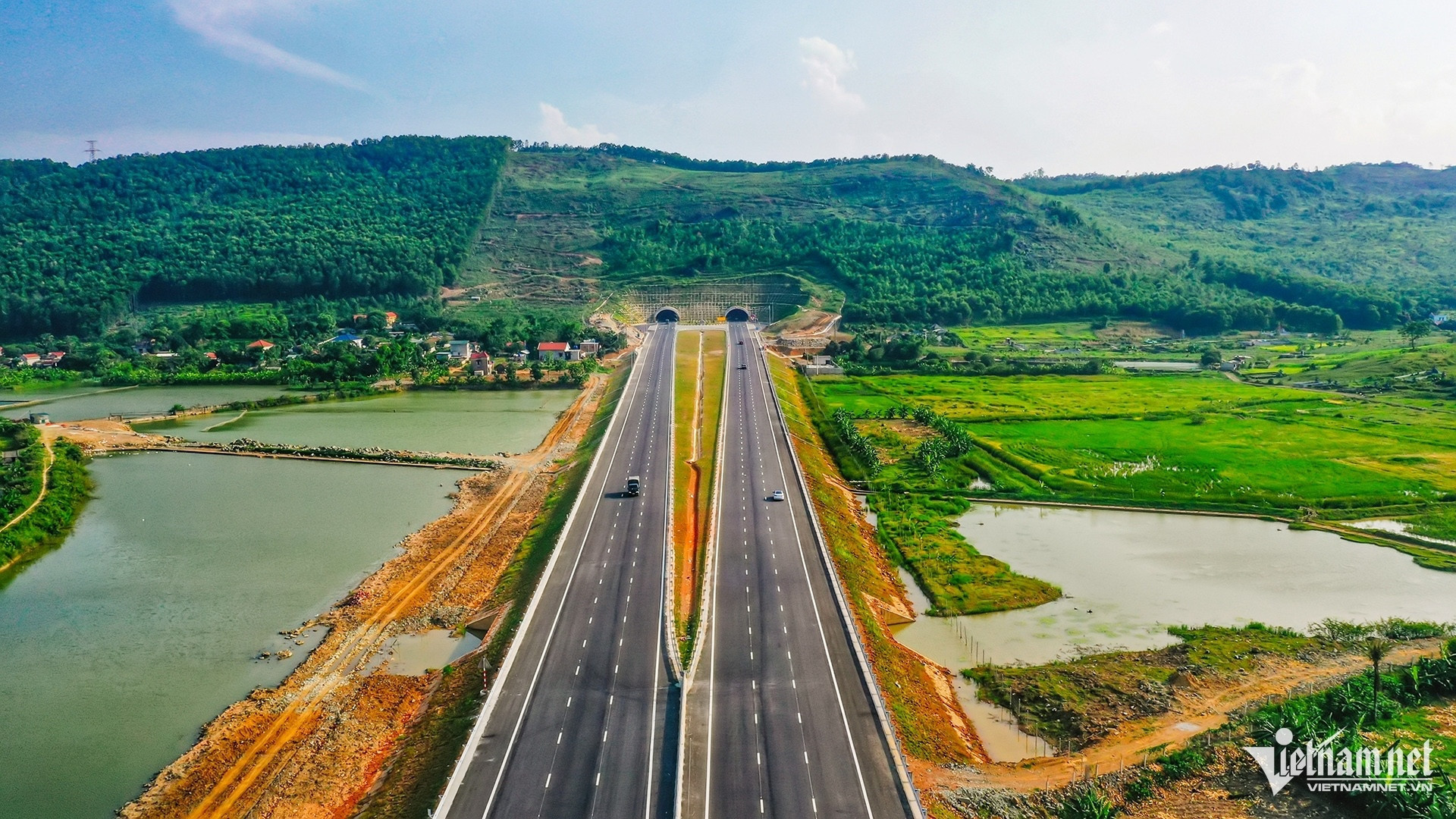
Both sections are planned to be upgraded from four limited-standard lanes to full six-lane expressways.
In northern Vietnam, Ring Road 5 in the Hanoi Capital Region is proposed as a six-lane expressway with parallel service roads, passing through Hanoi, Ninh Binh, Bac Ninh, Thai Nguyen and Phu Tho.
The route is expected to strengthen connectivity among localities, divert long-distance traffic away from the capital and expand opportunities for urban and industrial development around Hanoi.
In the Central Highlands, the proposed Pleiku-Buon Ma Thuot, Buon Ma Thuot-Gia Nghia and Ngoc Hoi-Pleiku expressways are intended to gradually complete the region's expressway network.
These routes would improve connections between economic centers and major production areas.
Meanwhile, the Nha Trang-Da Lat and Phan Thiet-Bao Loc expressways are expected to shorten travel times between the Central Highlands and the south-central coastal region.
The projects would facilitate freight transportation, tourism and access to seaports.
In the Mekong Delta, the priority list includes the Ha Tien-Rach Gia, HCM City-Vinh Long-Can Tho-Ca Mau and Hong Ngu-Tra Vinh expressways.
These projects aim to improve connections among economic centers, production areas, border crossings and seaports while strengthening links with Vietnam's southern economic growth region.
Alongside new expressways, the list includes a project to widen the 76-kilometer HCM City Ring Road 3.
The road is expected to be upgraded from four limited-standard lanes to eight lanes, requiring preliminary investment of approximately VND38 trillion.
Expanding existing expressways and adding new transport corridors are expected to increase transportation capacity, ease pressure on the road network and attract investment to local economies.
The challenge of mobilizing nearly VND923 trillion
With total preliminary investment estimated at nearly VND923 trillion, implementing the 29-project portfolio will require substantial private-sector financing.
It will also demand financially viable project structures and effective risk-sharing arrangements between the State and investors.
Several projects have already attracted investor interest, received investment proposals or been assigned for preliminary studies.
However, inclusion on the priority investment list does not mean that investor selection procedures have been completed or that the projects are guaranteed to proceed under the PPP model.
Commenting on PPP expressway development, Le Huyen, Vice Chairman of the Khanh Hoa Provincial People's Committee, said expressways play an important role in expanding development opportunities, improving regional connectivity, supporting tourism and logistics, and attracting investment.
The Nha Trang-Cam Lam and Cam Lam-Vinh Hao expressway sections, developed under build-operate-transfer (BOT) and PPP arrangements, have already helped improve transportation links.
These projects demonstrate the potential contribution of private investment to road infrastructure development.
However, Huyen acknowledged that PPP projects continue to face significant challenges, particularly in securing medium- and long-term financing, clearing land and implementing risk-sharing mechanisms.
Expressways crossing mountainous terrain and steep passes generally require higher investment per kilometer and longer capital recovery periods.
At the same time, access to bank financing remains limited.
Land clearance can also be prolonged by the large scale of affected areas, complicated administrative procedures and fluctuations in compensation costs, placing additional pressure on local government budgets.
Another major risk is that actual traffic volumes may fall below forecasts, resulting in toll revenues that fail to meet the assumptions of the original financial plan.
Determining project revenues, conducting audits and allocating funds for revenue-sharing mechanisms can also delay efforts to resolve financial difficulties.
A representative of the Ministry of Finance emphasized the need to carefully assess financial efficiency, revenue-generating potential and capital recovery arrangements before deciding to implement projects through PPP contracts.
For projects considered necessary but unable to demonstrate financial viability, authorities should consider public investment instead.
After construction, the State could grant concessions for commercial operation, management or toll collection under an appropriate arrangement.
Ultimately, the feasibility of each project will depend not only on identifying financing sources but also on budget availability, capital recovery plans, risk-sharing mechanisms and land clearance progress.
These factors will determine whether Vietnam can turn its proposed portfolio of 29 expressway projects into reality during the 2026-2030 period.
Vu Diep

