 Vietnamnet.vn

 Podcast



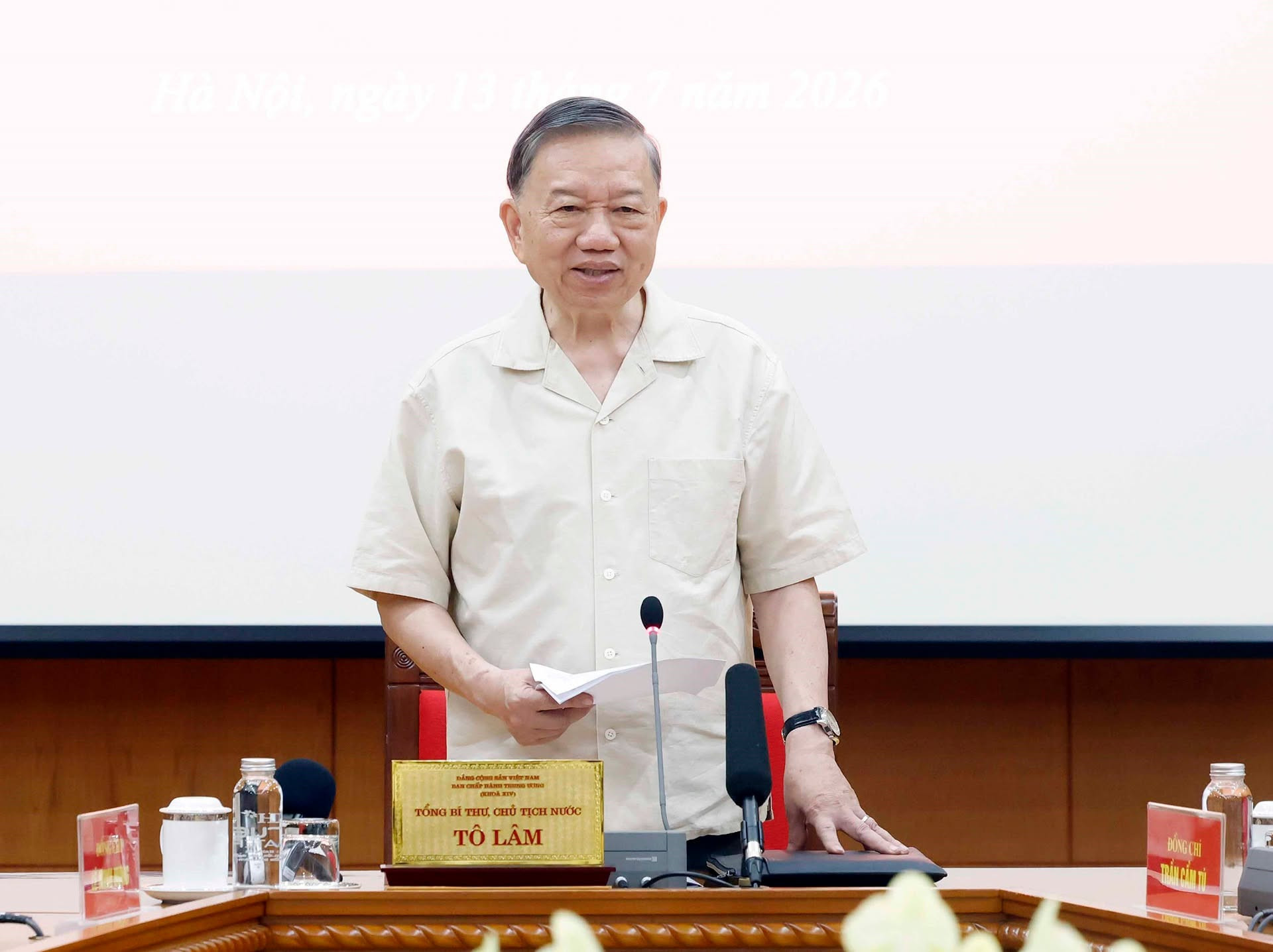
“Accelerating the building of cultural sovereignty in the digital space” - that was the message emphasized by General Secretary and President To Lam at the second meeting of the Steering Committee for the Development of Vietnamese Culture.
This is more than the introduction of a new concept into the discourse on cultural development. It reflects a new level of strategic thinking about safeguarding national interests amid the profound transformations of the digital age.
In the past, national sovereignty was viewed primarily through the lenses of territory, borders, the economy and security. Today, culture has also become a “front” that must be protected through entirely new ways of thinking and new approaches.
That shift stems from the reality that the digital space has become a vast cultural environment. Every day, billions of pieces of content are created, shared and circulated at unprecedented speed. Culture therefore no longer evolves over long cycles; it changes by the minute and by the second.
Cyberspace offers unprecedented opportunities to promote the country’s image and bring Vietnamese values to the world. At the same time, it creates the risk that local values could be submerged in a global “ocean” of information if they lack the strength to compete.
What is particularly significant is that this competition is driven largely by the appeal of content, technology and data. Global digital platforms with billions of users now wield enormous influence over which content is amplified, which is pushed out of view and which trends become mainstream. Algorithms are gradually becoming the new “gatekeepers” of cultural life.
As artificial intelligence (AI) advances rapidly, the ability to create, modify and distribute content is being elevated to an entirely different level. Without technological autonomy and a sufficiently strong digital content ecosystem, a country can easily become a passive recipient rather than an active force in shaping its own cultural space.
Cultural strength that wins over audiences at home and abroad
This is also why cultural sovereignty in the digital space cannot simply be understood as controlling information or blocking harmful content. A culture can only be truly sovereign when it has sufficient creative capacity, competitive strength and the ability to spread its values across the global digital environment.
In other words, sovereignty is not protected by a “shield” alone; it must also be asserted through “strength.” That strength comes from people, technology, data, digital platforms under our own control, and the capacity to produce high-quality cultural products with a distinctive identity and the power to win over audiences both at home and internationally.
Vietnam has made considerable progress in digital transformation. Many forms of heritage have been digitized, while a number of cultural products have begun to make their mark online. Yet overall, Vietnam’s digital cultural ecosystem has still not developed in proportion to either its potential or the pace of technological advancement.
These gaps demand a new and more comprehensive approach if the digital space is to become an environment that nurtures and spreads Vietnamese identity, rather than merely a place where values created by others are received and consumed. This is also the starting point for major shifts in the country’s thinking on cultural development - shifts that Vietnam cannot afford to delay.
A national-level strategy

Building cultural sovereignty in the digital space is not a task for the cultural sector alone. It is a national-level strategy requiring coordinated participation from the State, businesses, artists and cultural practitioners, educational institutions and society as a whole.
In an era when data has become a new resource, technology a new driver and creativity a core competitive capability, culture cannot remain outside the country’s digital transformation. On the contrary, culture itself must become the soul of digital transformation, ensuring that modernization always goes hand in hand with preserving and promoting national identity.
That principle also connects the drive to build cultural sovereignty in the digital space with the major directions set out in Resolution No. 57 on breakthroughs in science and technology development, innovation and national digital transformation. If Resolution 57 aims to make science, technology and innovation key drivers of growth, culture is what gives that development its identity.
A country can import technology, learn from governance models or absorb knowledge from around the world, but it cannot import its cultural identity. That identity is shaped by history, nurtured across generations and must continue to be recreated in a new context.
The rapid development of AI, in particular, is creating both unprecedented opportunities and challenges. AI can support heritage digitization, automated translation, artifact restoration, artistic creation and personalized cultural experiences, while bringing Vietnam’s cultural treasures closer to global audiences. But AI can also generate fake content, distort history, misrepresent cultural values, copy creative works and even produce a “sea” of anonymous content in which authentic values are drowned out. The question, therefore, is no longer whether AI should be used, but how it should be used so that technology becomes a driving force for culture rather than something that dilutes cultural identity.
To achieve this, investment in people must be treated as a top priority alongside investment in digital infrastructure. A generation of digital citizens equipped with knowledge, creative capacity, cultural confidence and the ability to master technology will form the strongest “fortress” for protecting cultural sovereignty.
Education, communications and cultural activities should help everyone, particularly younger generations, not only to receive information but also to select, critically assess, create and spread positive values. Cultural sovereignty cannot be sustained through regulatory measures alone; it must be cultivated through the awareness, pride and responsibility of every citizen in the digital space.
At the same time, Vietnam needs to build a sufficiently strong creative ecosystem in which cultural practitioners, cultural industry businesses and technology companies can grow together. Films, video games, educational platforms, digital museums, music, digital publishing and AI applications bearing a distinctly Vietnamese imprint can generate economic value while helping shape the country’s image in the eyes of international audiences. As more Vietnamese cultural products gain popularity on global digital platforms, the country’s soft power will also grow in a natural, sustainable and compelling way.
History has shown that a nation can endure only when it knows how to preserve its cultural roots. In the past, sovereignty was defended along borders, at sea and in the skies. Today, it is also asserted on every digital platform, through every stream of data, every creative product and every cultural value shared with the international community. The digital space has therefore become part of the nation’s development space.
Building cultural sovereignty in the digital space, as called for by General Secretary and President To Lam, is an urgent requirement for the country’s development. It means achieving a harmonious balance between tradition and modernity, identity and innovation, and cultural strength and the power of science and technology.
When heritage is “awakened” by technology, Vietnamese values are told in the language of the times, and every citizen becomes a responsible creative participant in cyberspace, culture will become a powerful endogenous resource for national development.
Cultural sovereignty goes beyond preserving heritage. It also affirms a nation’s capacity to create new values and contribute to the broader currents of human civilization. Only on that foundation can we enter a new era of development with a modern cultural confidence and a capacity to exert influence far beyond our borders.
Associate Professor, PhD Do Chi Nghia
.svg)
