 Vietnamnet.vn

 Podcast



Chairing a meeting on Sunday with the Standing Committee of the Central Steering Committee for Science, Technology, Innovation and Digital Transformation Development, Mr. To Lam reviewed the state of Vietnam’s basic scientific research and outlined long-term priorities for national development in the field.
He stressed that scientific research must undergo comprehensive reform in mindset, institutions, investment mechanisms, implementation methods and operational models to meet the country’s development demands in the new era.
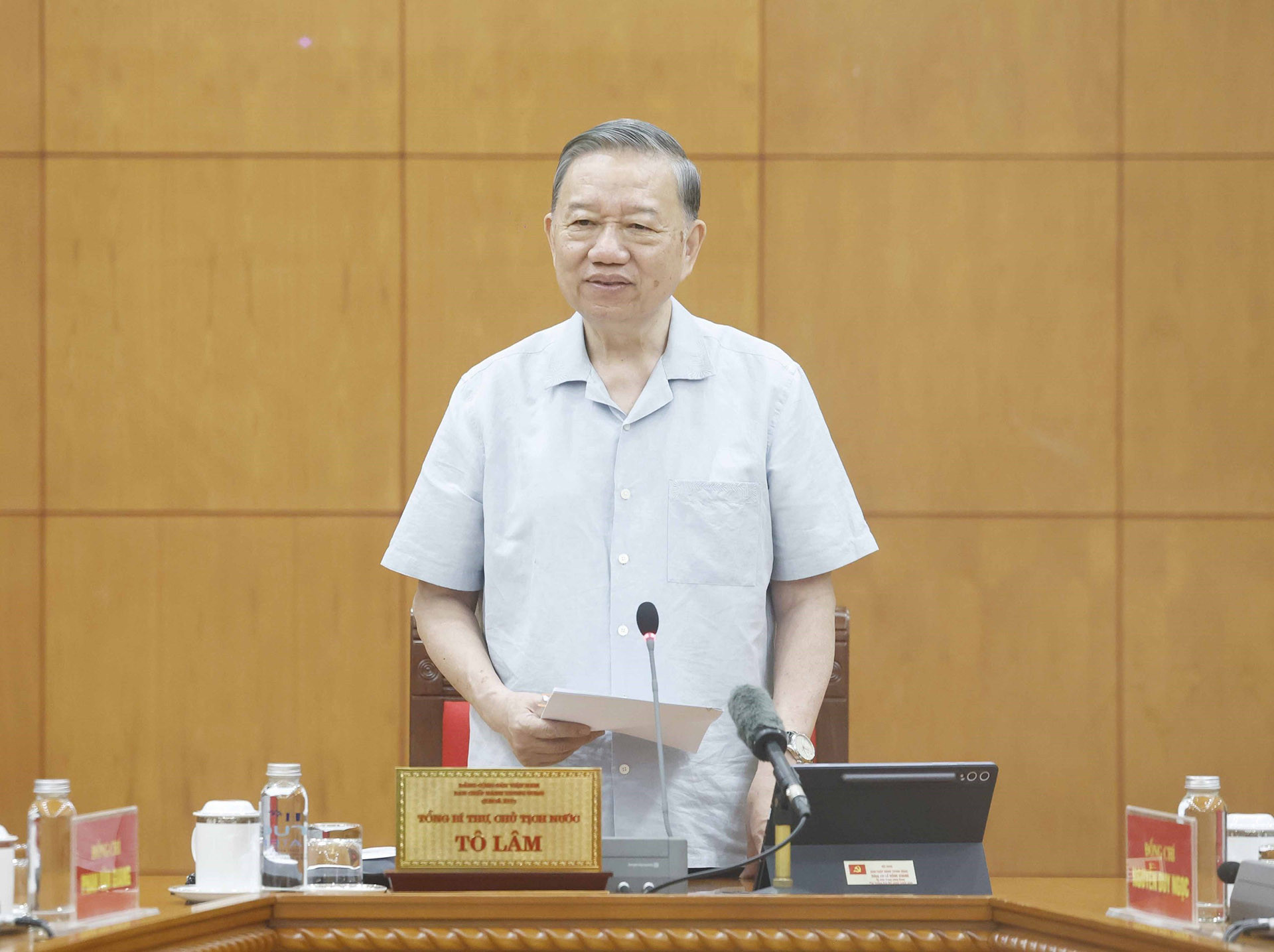
According to Mr. To Lam, Vietnam’s current basic research system still faces many shortcomings and has yet to match the country’s strategic development ambitions.
“We need to build a modern, autonomous and internationally integrated foundation for basic scientific research, capable of generating new knowledge, training elite human resources, providing strategic policy foundations and serving as the basis for strategic technological development,” he said.
The Vietnamese leader set a target of removing all major bottlenecks and institutional barriers by June 2027 while establishing a relatively synchronized national ecosystem for basic research.
The plan includes developing leading research centers, strong research groups, large scientific databases and shared research infrastructure capable of competing regionally.
Mr. To Lam also called for special financial mechanisms tailored to scientific research, including long-term funding models spanning five, 10 and 15 years for outstanding research groups and centers of excellence.
He emphasized the need for post-audit mechanisms, acceptance of scientific risk-taking and separate policy frameworks suitable for social sciences and humanities.
Vietnam’s long-term vision toward 2045 includes building internationally competitive strengths in several core scientific fields while gradually establishing Vietnamese scientific schools and improving self-reliance in strategic technologies.
The country also aims to strengthen social sciences and humanities research to provide policy foundations for modern governance and national development.
Early talent identification and elite training
To achieve those goals, Party chief and President To Lam said Vietnam must fundamentally reform the governance of scientific research, shifting away from rigid administrative management toward creative governance models focused on outcomes, quality and long-term impact.
He stressed that management systems must reduce bureaucracy, protect academic freedom and uphold scientific integrity and accountability.
Alongside financial reforms, To Lam identified the development of scientific talent ecosystems as a strategic priority.
He said the process should be organized systematically, from early talent identification and elite education to doctoral training, postdoctoral development, young research group leaders, senior experts and overseas Vietnamese intellectuals.
“The focus must be on creating an open, honest and creative academic environment with worthy treatment and opportunities to entrust major responsibilities to talented individuals,” he said.
Mr. To Lam also urged selective international cooperation, including attracting foreign scientists and overseas Vietnamese experts while strengthening partnerships with leading global scientific institutions.
According to him, such cooperation would help raise research standards, train future generations of scientists and shorten Vietnam’s knowledge gap with advanced countries, while still protecting data security, intellectual property and national interests.
The Vietnamese leader also outlined nine priority tasks to realize the country’s scientific ambitions, including a national program for scientific talent development aimed at identifying and nurturing elite researchers from an early stage.
He additionally called for the establishment of national standards on scientific integrity and mechanisms to commission research directly supporting policymaking, legislation, strategic planning and national development strategies.
“The overall spirit is that we must act more decisively, innovate more strongly and adopt a longer-term vision for basic scientific research,” Mr. To Lam said. “We are not only solving the challenges facing science today but also laying the intellectual foundation for the country’s development over the coming decades.”
Tran Thuong
.svg)
