 Vietnamnet.vn

 Podcast



In the age of artificial intelligence and strategic technologies, universities can no longer focus solely on training human resources. They must become pioneering spaces for experimentation, innovation and opening new development pathways for the nation.
VietNamNet introduces an article by Associate Professor, Dr. Do Chi Nghia, full-time member of the National Assembly’s Committee for Culture and Society, on the mission of universities to “lead the way” in the technological era.
Two breakthrough expectations carrying national ambition
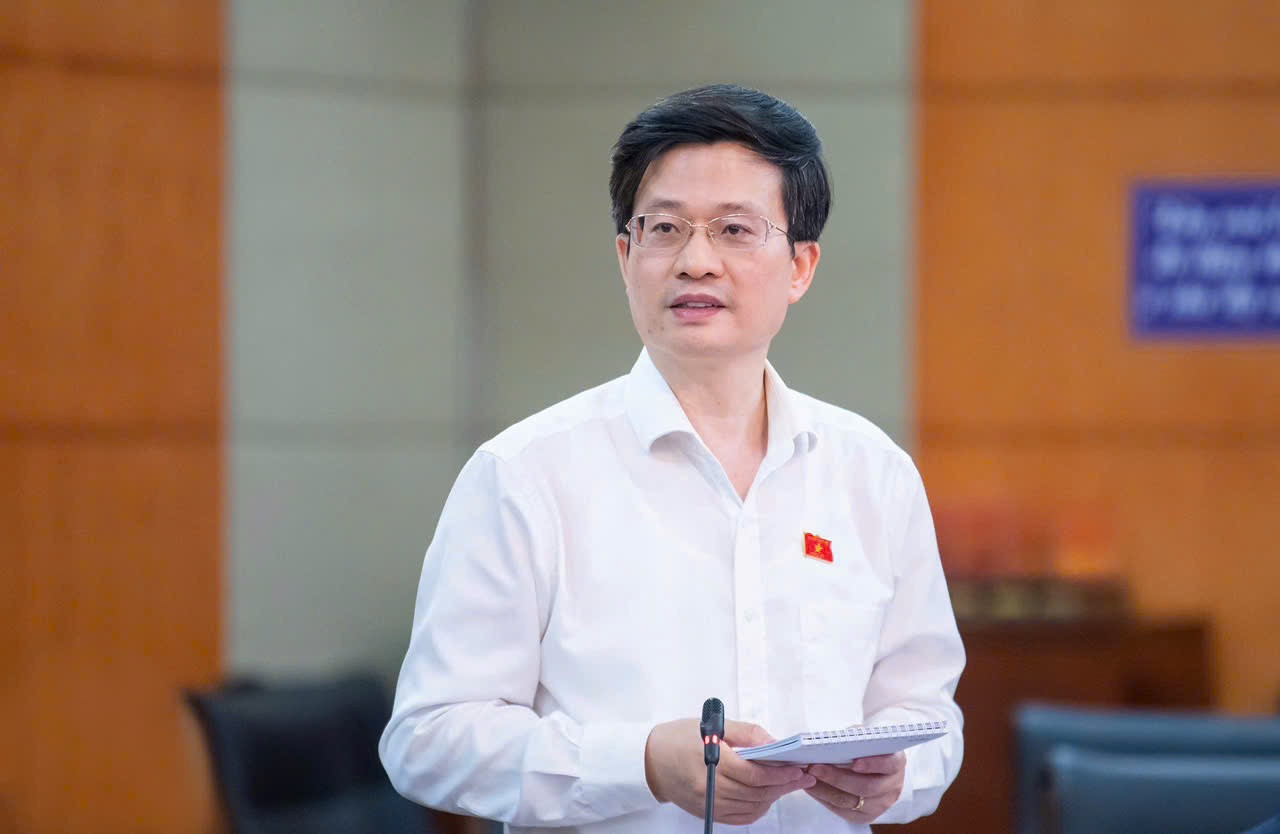
Associate Professor, Dr. Do Chi Nghia, full-time member of the National Assembly’s Committee for Culture and Society.
The recent speech by General Secretary and President To Lam at Vietnam National University, Hanoi raised profound questions about the future of higher education in Vietnam. Among the seven missions assigned to the university, two stood out as particularly ambitious and transformative.
First, universities must become places that “dare to go first, dare to experiment and pave the way” for new models in education, science and technology, innovation and digital transformation. Second, universities are expected to pioneer the implementation of the Party’s strategic resolutions by focusing on solving major national challenges, particularly in strategic technologies, core technologies and foundational technologies.
These are not simply directives for one university. They reflect a broader message about the evolving role of Vietnamese higher education in the knowledge era.
Universities are therefore no longer viewed primarily as institutions that train human resources. Instead, they are being positioned as forces that must “lead the way.”
Under traditional development models, universities trained students based on existing social demands. But in today’s world, if universities only respond to immediate labour market needs, they will always lag behind reality. Artificial intelligence, semiconductors and big data are reshaping the global economy and labour structure at unprecedented speed.
In this context, universities cannot merely transfer existing knowledge. They must recognise the future before society fully sees it, prepare capabilities for that future and create entirely new directions for national development. That is the true meaning of “leading the way.”
To lead means having the courage to step into new territories, experimenting with educational, governance and research models before society fully understands their value. The history of the world’s leading universities shows that major academic institutions have always been testing grounds for new ideas long before those ideas became mainstream.
In reality, in a rapidly changing world, not every development model remains suitable forever. Certain old governance mindsets are becoming barriers. Some outdated mechanisms are slowing innovation. Traditional educational approaches are increasingly unable to keep pace with the movement of the era.
When General Secretary and President To Lam called on Vietnam National University, Hanoi to provide practical foundations for the Party and the State to continue refining development policies, it also implied that universities are not only responsible for scientific research. They must also help “repair the road” for national development.
Universities should become places capable of identifying emerging institutional bottlenecks, exposing the limitations of outdated models and proposing new directions for the future.
A nation seeking rapid development requires not only resources but also the ability to constantly adjust and renew itself. As development progresses, entirely new issues inevitably emerge, from AI and digital data to green transformation. These challenges demand new governance thinking and policy frameworks.
And there may be no institution better suited than universities to experiment with, debate and propose those pathways.
Excessive bureaucracy and a “safe mindset” cannot create breakthroughs
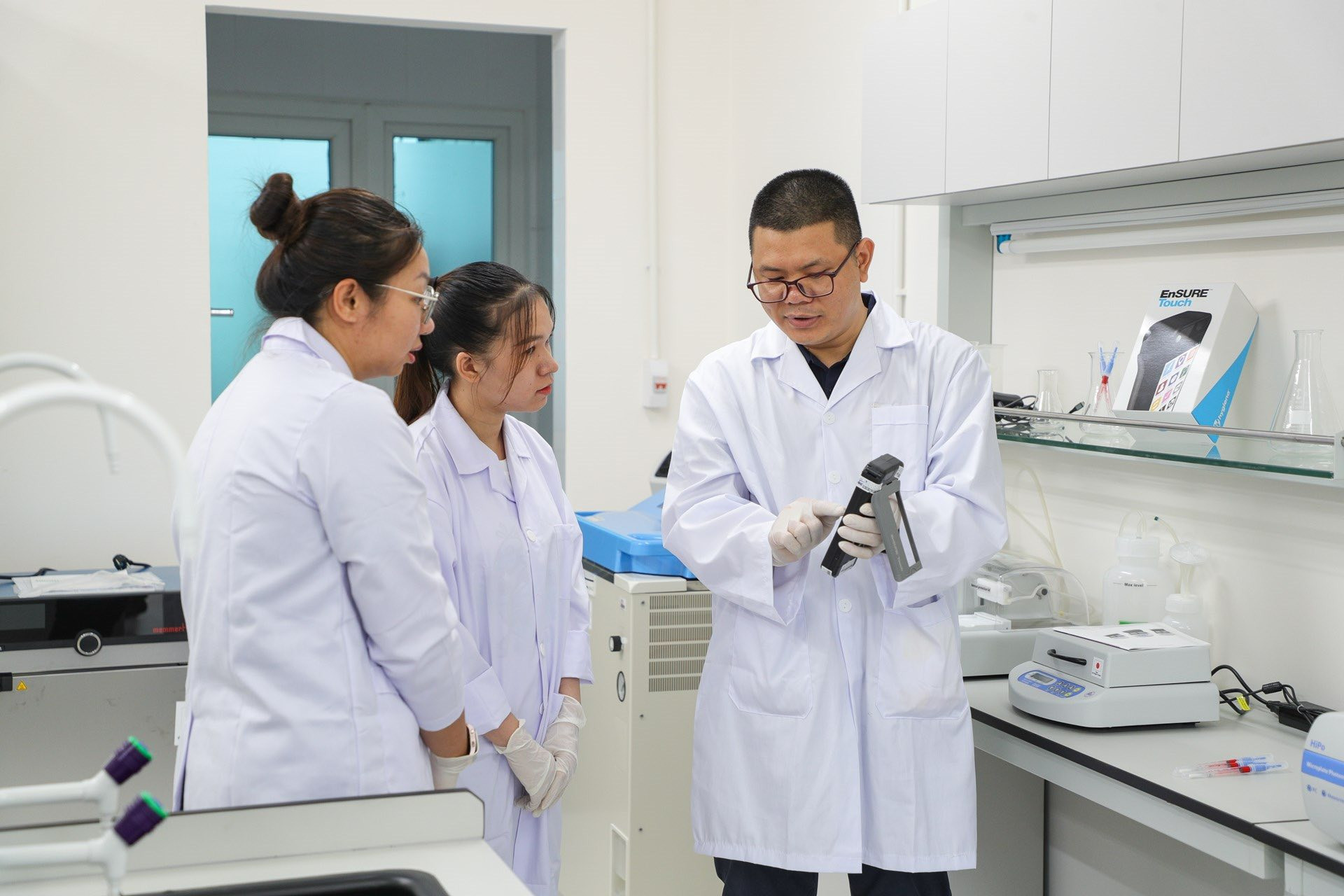
Vietnam National University, Hanoi has reaffirmed its mission to train high-quality human resources and strengthen fundamental research. Photo: VNU
For that reason, the call for bold reform in university governance is not merely about changing one institution. It is about building a national “development laboratory.”
Within such an environment, new educational models can be tested, autonomous governance mechanisms can operate, partnerships between universities, businesses and the State can be implemented earlier, while emerging technologies can be researched and applied ahead of wider adoption.
However, before universities can “lead the way,” they themselves must first be “untied.”
It is impossible to expect universities to innovate boldly if they continue to be governed by administrative thinking centred on control and fear of risk. Innovation always involves experimentation, and experimentation does not guarantee immediate success.
An environment weighed down by procedures, rigid processes and an obsession with “safety” will struggle to generate major ideas.
That is why expanding autonomy alongside accountability is a foundational condition for universities to fulfil their pioneering role. Universities need genuine autonomy in academic affairs, organisational structures, personnel, finance and long-term strategy.
It is unrealistic to expect universities to compete internationally and master core technologies while still operating under cumbersome “ask-and-grant” administrative systems with multiple approval layers.
At the same time, autonomy must be accompanied by strong accountability. Universities should be evaluated based on educational quality, research capabilities, innovation outcomes and tangible contributions to the nation - not by the number of reports submitted or bureaucratic procedures completed.
When General Secretary and President To Lam called on Vietnam National University, Hanoi to lead in strategic technologies, it also signalled that higher education is now being placed at the centre of Vietnam’s national self-reliance strategy.
For many years, Vietnam has participated in the global value chain largely in lower-value segments. While that contributed to economic growth, it also created substantial dependence on foreign technologies.
Without strengthening domestic research capabilities and mastering technology independently, achieving sustainable long-term development will remain difficult.
No nation can become a true technological power if it permanently depends on purchasing technology from others. And no institution other than universities can create the intellectual foundations necessary to change that reality.
The laboratories of today may determine a nation’s technological position for decades to come. The research groups being built today could create the strategic industries of the future.
However, achieving that vision requires a fundamental shift in the way science and technology are funded. Core technologies cannot emerge from fragmented, short-term investment strategies.
Fields such as semiconductors, AI and biotechnology require massive resources, long-term commitment and a willingness to accept high levels of risk.
More importantly, universities must foster a genuine culture of creativity. A university that seeks to lead the way must encourage independent thinking, scientific debate and the ambition to push beyond old limits.
Young people need opportunities to experiment. Scientists need trust. New ideas need respect. That is the true spirit of a pioneering university.
Ultimately, the two breakthrough missions assigned to Vietnam National University, Hanoi also represent broader expectations for Vietnamese higher education in a new era of national development.
In many cases, universities themselves must possess enough courage and intellectual capacity to propose new models and new approaches when old systems are no longer suitable.
That is not simply the role of an educational institution. It is the mission of a national intellectual centre in a new era.
Do Chi Nghia
.svg)
