 Vietnamnet.vn

 Podcast


On November 7, the National Assembly adopted the resolution on Vietnam's 2027 socioeconomic development plan, with 467 of the 469 deputies participating in the vote supporting its passage.
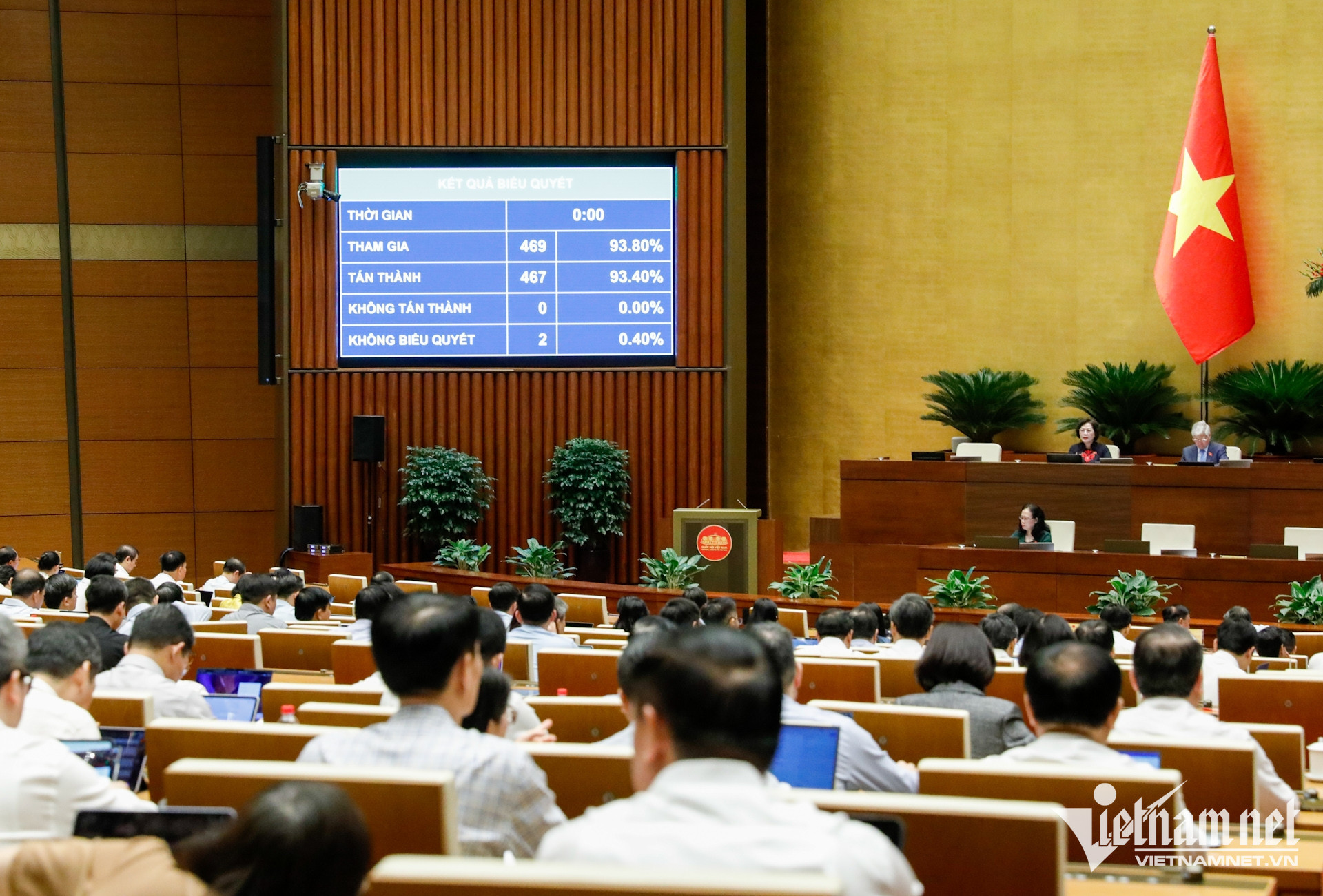
Before the vote, Minister of Finance Ngo Van Tuan presented a summary report explaining how lawmakers' comments had been incorporated into the revised draft resolution.
The resolution sets a national economic growth target of at least 10% in 2027, while maintaining macroeconomic stability, controlling inflation and safeguarding major economic balances.
It also identifies tangible results, productivity and improvements in people's living standards as key measures of development.
Vietnam targets GDP growth of at least 10% in 2027
The National Assembly called for continued prioritisation of economic growth alongside macroeconomic stability, inflation control and the maintenance of major economic balances.
Traditional growth drivers are to be revitalised, while resources and financing channels for the economy must be expanded and diversified.
The resolution calls for the national GDP growth target of at least 10% to be translated into specific scenarios, indicators, tasks and deliverables for individual sectors, industries and localities.
These plans must be regularly updated, with timely and appropriate measures introduced as conditions change.
Close coordination between fiscal policy, monetary policy and other macroeconomic policies is also required.
Another major objective is to improve institutions and legislation, strengthen implementation and ensure the effective operation of Vietnam's two-tier local government system.
The National Assembly also emphasised economic restructuring, modernisation, industrialisation and the transformation of the country's development model.
It called for stronger development across all economic sectors, alongside improvements in productivity, quality, efficiency, economic self-reliance and competitiveness.
Strategic infrastructure and technology development prioritised
A fourth major objective focuses on investment in modern, coordinated strategic infrastructure, stronger regional connectivity and the effective development of new economic spaces.
The National Assembly called for accelerated investment in the planned expressway network, particularly the eastern and western North-South expressways and major East-West transport corridors.
Priority is also being given to nationally significant railway projects, including the Lao Cai-Hanoi-Hai Phong railway, the North-South high-speed railway, international rail connections and urban railway systems.
Construction of Long Thanh and Gia Binh airports must also be accelerated.
At the same time, lawmakers warned against wasteful investment driven by local competition or development trends.
The resolution specifically calls for an end to the practice of localities pursuing airports, seaports, data centres and free trade zones without sufficient consideration of their practical effectiveness.
Another priority is achieving substantive breakthroughs in science, technology, innovation and digital transformation.
Vietnam aims to strengthen its ability to master strategic technologies, core technologies and strategically important technology products.
The resolution also calls for significant improvements in education and training, the development of highly skilled human resources and coordinated progress in culture, society and healthcare.
Other objectives include strengthening social security, improving living standards and public health, and developing a modern labour market.
The National Assembly further emphasised the effective management and use of land, natural resources and minerals, alongside stronger environmental protection, climate change adaptation and disaster prevention.
Sustainable development of the marine economy is another priority.
On national defence and security, the resolution calls for stronger capabilities to protect the country proactively, respond to security challenges and develop a modern, self-reliant defence and security industry with both civilian and military applications.
Hai Phong leads 30 localities assigned double-digit growth targets
The National Assembly also approved a series of national socioeconomic indicators for 2027.
In addition to the national targets, the National Assembly assigned specific gross regional domestic product (GRDP) growth targets to individual provinces and cities.
Hai Phong has been given the highest target, at 13%, followed by Quang Ninh at 12% and Hanoi at 11.1%.
Dong Nai, Da Nang, Lam Dong, Phu Tho and Thanh Hoa have each been assigned growth targets of 11%.
Can Tho is expected to achieve 10.6%, Bac Ninh 10.5%, Ho Chi Minh City 10.4% and Hue 10%.
Other localities assigned double-digit growth targets include Lai Chau, Dien Bien, Lao Cai, Tuyen Quang, Cao Bang, Thai Nguyen, Lang Son, Ninh Binh, Hung Yen, Nghe An, Ha Tinh, Gia Lai, Dak Lak, Khanh Hoa, Tay Ninh, Vinh Long, An Giang and Ca Mau.
The four remaining localities, Son La, Quang Tri, Quang Ngai and Dong Thap, have been assigned growth targets below 10%.
Tran Thuong

