 Vietnamnet.vn

 Podcast



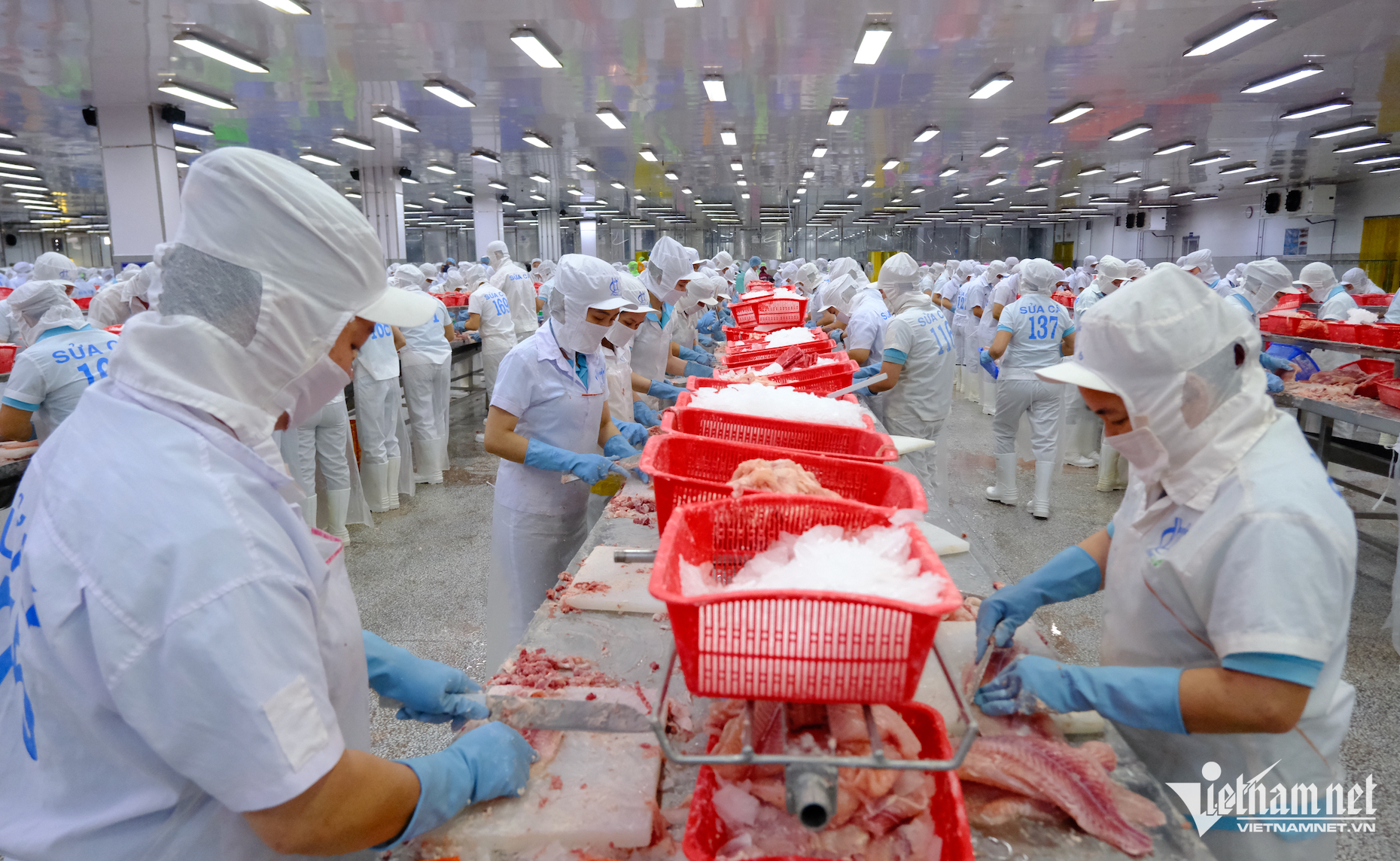
After a period of disruption due to the Covid-19 pandemic, Vietnam's seafood exports to China have rebounded dramatically, setting historical records. China has now overtaken Japan and the United States to become Vietnam's top seafood export market.
For many years, China - Vietnam’s neighbor - has been among the top three key destinations for Vietnamese seafood. However, the outbreak of Covid-19 dealt a heavy blow to the industry, breaking supply chains and causing exports to China to plummet, even freezing at times.
Nguyen Hoai Nam, General Secretary of the Vietnam Association of Seafood Exporters and Producers (VASEP), recalled the first months of 2021 when production and export activities stalled. At the time, inventories of raw and processed seafood surged, yet enterprises continued buying from farmers and fishers to freeze and preserve the products.
VASEP then petitioned the Government and relevant ministries to reduce electricity fees for seafood businesses, as they had to significantly increase cold storage capacity.
According to the General Department of Customs, seafood exports to China (including Hong Kong) stood at $1.37 billion in 2020, but dropped to $1.14 billion in 2021. Despite the downturn, China remained one of the top three markets for Vietnamese seafood, behind only the US and Japan.
In 2022, exports to China recovered strongly, reaching a record $1.57 billion.
However, in 2023, the figure fell again to $1.34 billion due to post-pandemic impacts, consumer belt-tightening, and high inventory levels in China.
By 2024, Vietnamese companies seized the opportunity to boost seafood shipments as China fully reopened its economy. With positive economic signals and rising demand, seafood exports to China surged to $1.9 billion.
In the first 11 months of 2025, Vietnamese seafood exporters earned $2.26 billion from China - a staggering 36% increase over the same period in 2024 - setting a new all-time high. China officially surpassed Japan and the US to become Vietnam’s largest seafood market.
One standout driver of this success is lobster. In just 10 months, lobster exports to China reached $702 million, up 135% year-on-year and accounting for 98.6% of Vietnam’s total lobster export value.
According to VASEP, tariffs have given Vietnamese lobster a price advantage over Canadian and American products. Geographical proximity also benefits Vietnam in live seafood transport - reducing costs and spoilage.
Moreover, Chinese consumer preferences have shifted sharply toward green lobster, a segment where Vietnam has abundant supply. This trend has contributed significantly to the spike in lobster exports and overall seafood growth.
China was also the fastest-recovering market in 2025, thanks to strong purchasing power and more flexible import policies. These conditions helped push Vietnam’s total seafood export turnover past $11 billion.
However, looming challenges remain. Chinese authorities have issued warnings about stricter inspection protocols and heightened traceability requirements. If these regulations are enforced rigorously, longer inspection times and increased costs could immediately affect Vietnam’s lobster exports.
The growing reliance on the Chinese market also highlights the urgent need for Vietnam to diversify its export destinations and standardize its supply chain to mitigate risk.
Ha Giang
.svg)
