 Vietnamnet.vn

 Podcast


The first Global Craft Village Conservation and Development Festival 2026 opened on November 13 at the Thang Long Imperial Citadel, a UNESCO World Heritage Site in Hanoi.
Held under the theme "Converging Craft Village Identity - Connecting Global Excellence", the festival's main programme ran until November 16, with accompanying activities taking place from November 12 to 17.
Organised by the Hanoi People's Committee in coordination with the Ministry of Agriculture and Environment under Joint Plan No. 395/KHLT-UBND-BNNMT, the festival is the first event of its kind and scale in Vietnam.
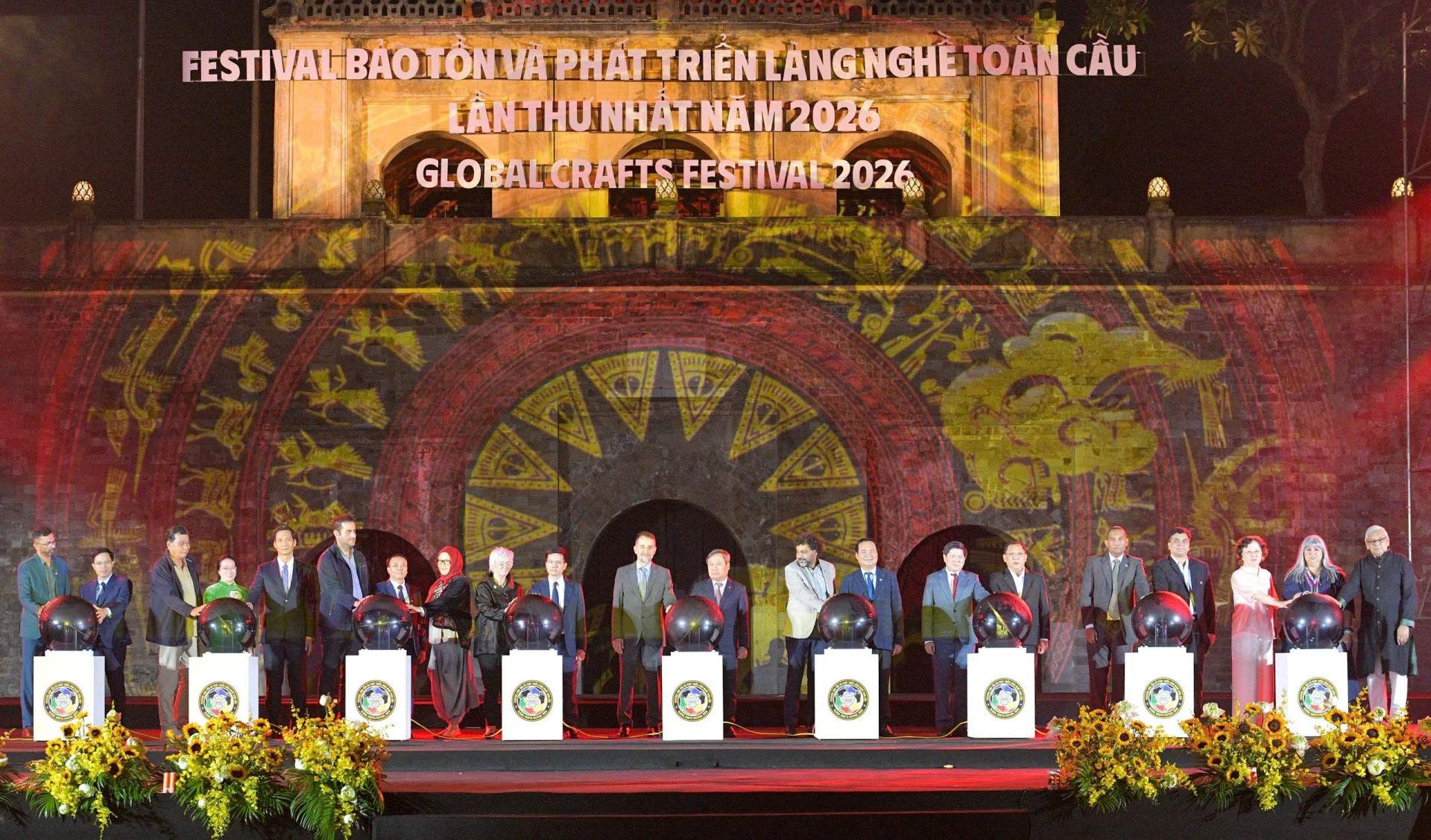
It brings together leaders of the World Crafts Council (WCC), ambassadors, international organisations and around 200 artisans and designers.
Beyond celebrating traditional craftsmanship, the event reflects Vietnam's ambition to turn its craft villages into internationally recognised centres of creativity, cultural exchange and sustainable economic development.
Hanoi's craft villages gain international recognition
Hanoi is home to one of Vietnam's richest concentrations of traditional craftsmanship, with approximately 1,350 villages engaged in craft production.
Of these, 337 are officially recognised as craft villages or traditional craft villages, preserving 47 of the country's traditional crafts. Handicraft products from Hanoi are already exported to 89 countries and territories.
The capital's craftsmanship is also gaining international recognition.
Four villages - Bat Trang, known for ceramics; Van Phuc, famous for silk weaving; Son Dong, specialising in sculpture and lacquerware; and Chuyen My, renowned for mother-of-pearl inlay - have joined the WCC's World Craft Cities network.
Son Dong and Chuyen My received recognition earlier in 2026, further strengthening Hanoi's position within the international craft community.
Vietnam now ranks second globally in the number of members in the network, while Hanoi plans to nominate additional craft villages for international recognition.
The achievements demonstrate how traditional craftsmanship can retain its cultural identity while finding new opportunities in global markets.
Strengthening partnerships for craft village development
The festival's international programme began on November 12, when leaders of the Hanoi Department of Agriculture and Environment welcomed WCC delegations and representatives of Bat Trang, Ha Dong, Son Dong and Chuyen My.
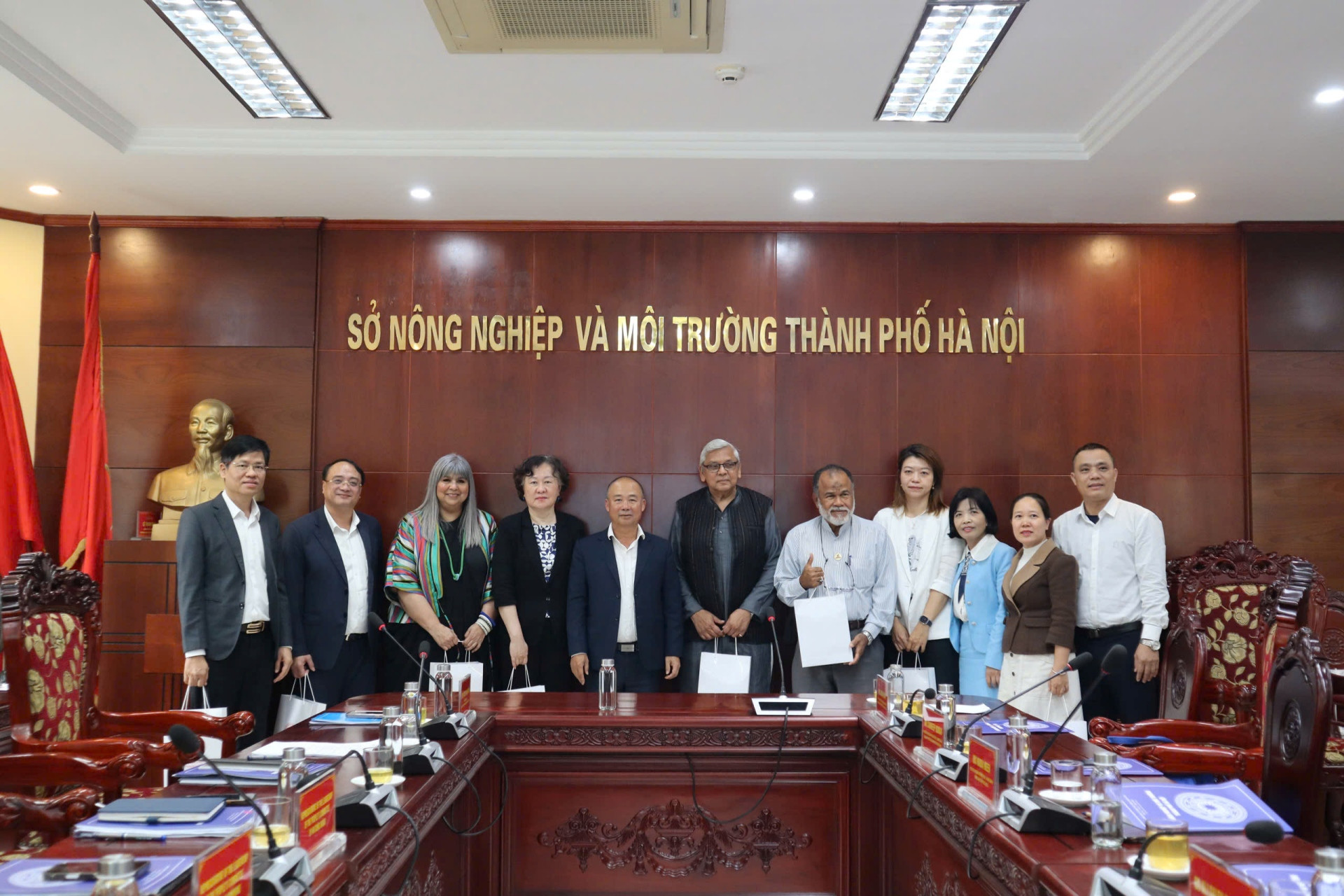
The meeting reviewed the progress made by Hanoi's four internationally recognised craft villages, discussed preparations for the WCC's upcoming periodic assessments and explored the possibility of establishing a long-term cooperation framework.
A proposed memorandum of understanding (MoU) between Hanoi and the WCC was among the main topics of discussion.
The initiative is intended to strengthen cooperation in preserving traditional skills, improving product design, supporting artisans and expanding international market access.
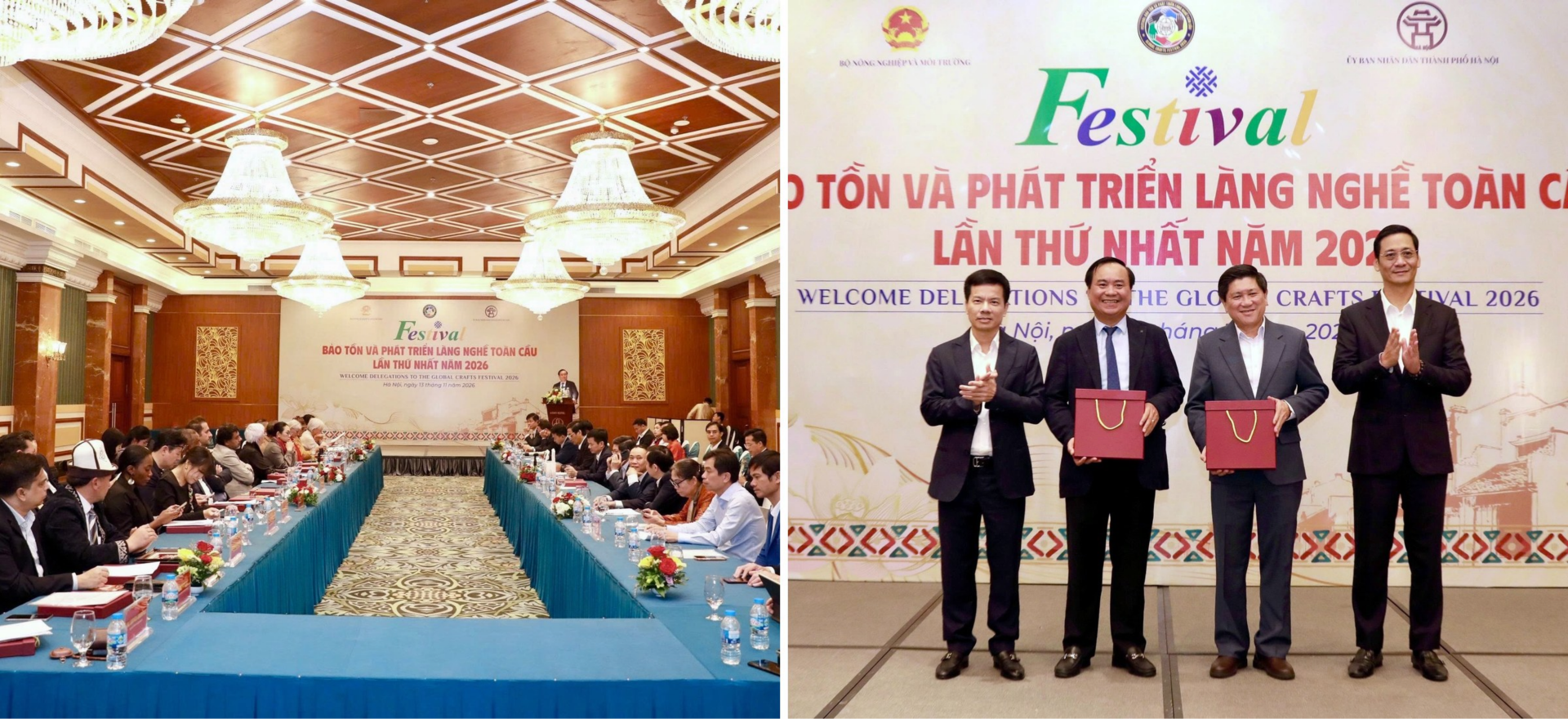
On November 13, the Ministry of Agriculture and Environment and the Hanoi People's Committee formally welcomed international delegations attending the festival.
The reception, which included exchanges of greetings and gifts between Vietnamese officials and international guests, highlighted the role of traditional crafts in fostering friendship and cultural understanding between countries.
Opening ceremony highlights Hanoi's global ambitions
The festival officially opened on the evening of November 13 against the historic backdrop of Doan Mon Gate at the Thang Long Imperial Citadel.
Among those attending were Vu Dai Thang, member of the Party Central Committee, Deputy Secretary of the Hanoi Party Committee and Chairman of the Hanoi People's Committee; Vo Van Hung, Deputy Minister of Agriculture and Environment; and Bui Duy Cuong, Vice Chairman of the Hanoi People's Committee.
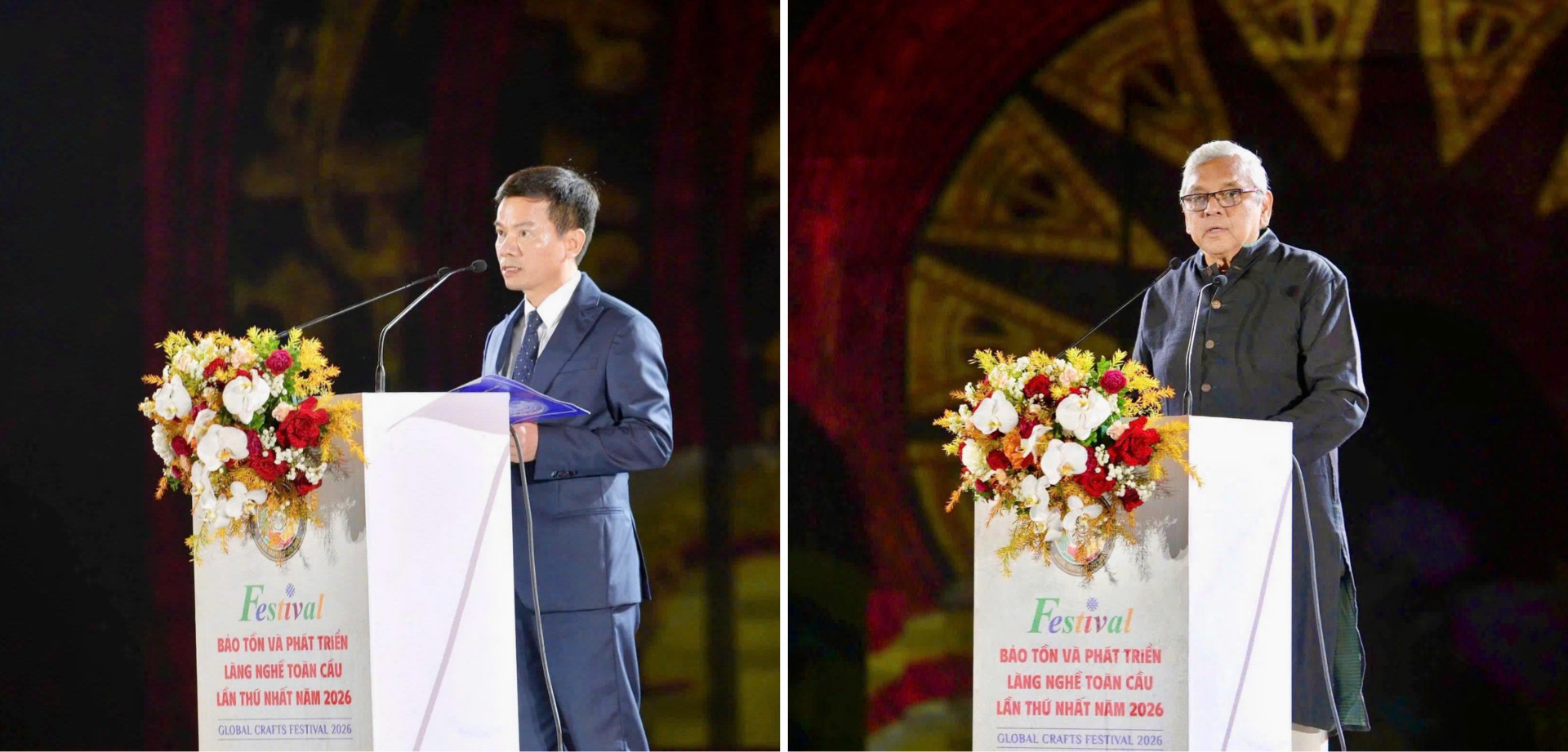
Sundeep Kumar, WCC Vice President for Asia-Pacific Region and co-chair of its World Craft Cities subcommittee, also attended alongside representatives of international organisations, ambassadors, experts and craft associations.
The participation of senior Vietnamese officials and international craft leaders underscored the importance Hanoi attaches to preserving traditional craftsmanship while developing the sector's economic potential.
Speaking at the opening ceremony, Vice Chairman Bui Duy Cuong emphasised the contribution of craft villages to employment, local livelihoods and the cultural identity of Thang Long-Hanoi.
He said preserving traditional crafts involves more than protecting finished products. It also requires safeguarding generations of accumulated knowledge, production techniques and the cultural spaces in which these traditions have developed.
Passing those skills on to younger generations is essential to ensuring that traditional crafts remain part of contemporary life.
Cuong outlined Hanoi's priorities for developing craft villages in connection with the green and circular economy, tourism and cultural industries.
He called for improvements in product design, quality and environmental protection while maintaining the distinctive identities of individual craft villages.
International cooperation in training, technology and design, he added, would help Vietnamese artisans strengthen their competitiveness and expand into export markets.
The WCC expressed strong support for Hanoi's ambitions.
Sundeep Kumar described Hanoi as a strategic partner of the organisation and proposed formalising cooperation through an MoU.
He also introduced two initiatives that could strengthen the capital's role in the international craft community.
The first is a World Craft Centre in Hanoi, envisioned as a platform connecting artisans, designers, researchers and businesses from different countries.
The second is a World Craft Academy, which would bring master artisans into universities and design schools to share their expertise with younger generations.
Both proposals reflect the growing importance of combining traditional craftsmanship with contemporary education, innovation and international collaboration.
Vietnamese craft villages embrace sustainable development
Following the opening ceremony, Vietnamese leaders and international delegates toured the festival's exhibition spaces, meeting artisans and exploring traditional products.
Visitors watched young potters working at the wheel, examined ceramic creations and discovered the craftsmanship behind Van Phuc silk.
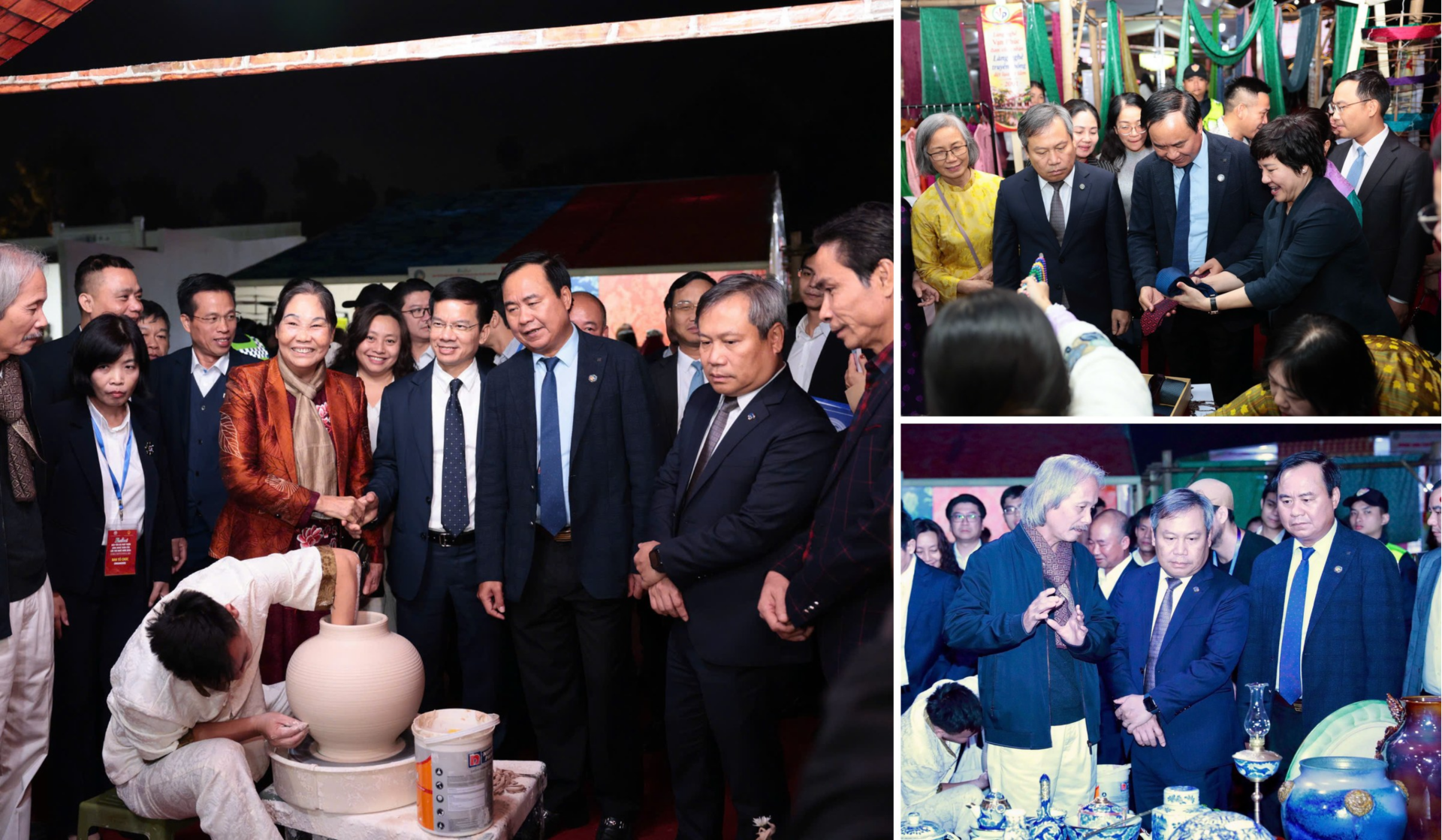
The activities offered a glimpse of how traditional production techniques continue to evolve as craft villages explore digital transformation and environmentally sustainable manufacturing.
The festival also reflects a broader national policy direction: preserving craft villages as an important part of Vietnam's cultural heritage while developing them into a modern and competitive economic sector.
For Vietnam, this involves connecting traditional craftsmanship with sustainable rural livelihoods, the green and circular economy, tourism and cultural industries.
For Hanoi, the ambitions are particularly significant.
The capital aims to increase the production value of its craft villages by approximately 10% annually during the 2025-2030 period.
Achieving that target will require stronger branding, better product design, improved market access and continued investment in training younger artisans.
It will also depend on the ability of traditional craft communities to adapt to changing consumer preferences and environmental requirements without losing the skills and identities that make their products distinctive.
The first Global Craft Village Conservation and Development Festival 2026 represents both a celebration of Vietnam's craftsmanship and a commitment to its future.
By bringing artisans, policymakers, designers and international organisations together, Hanoi is seeking to ensure that the knowledge passed down through generations continues to create cultural and economic value in an increasingly connected world.
For the artisans who have kept these traditions alive for centuries, the festival offers an opportunity to see their work recognised not only as part of Vietnam's heritage, but also as a contribution to global creativity.

