 Vietnamnet.vn

 Podcast



According to the Economic Police Department, the scale and audacity of these operations have shocked authorities and the public alike.
Snails laced with sodium silicate to boost weight and shine
One case involved a facility on Rach Cat Ben Luc Street, Binh Dong Ward, where Huynh Van Truong (born 1979) and accomplices used sodium silicate - a chemical compound also known as “liquid glass” - to soak freshwater snails before selling them. This substance helped increase weight and give the snails a glossy appearance.
Police estimate that over a five-year period, the operation supplied more than 3,000 tons of chemically-laced snails to the market, all from an unlicensed, unsanitary location.

Police raid a facility producing chemically-soaked freshwater snails with sodium silicate. (Photo: CA)
Toxic noodles: A decade of contamination
In another case, Vuong Luong Toan (born 1981), owner of Chau Phat business on Luy Ban Bich Street, confessed to producing chemically-enhanced noodles for over a decade. His process involved mixing borax (a banned substance), soda, and silicate solution to give noodles a chewy texture and appealing color.
Over just the past three years, approximately 800 tons of these toxic noodles were sold to local markets and restaurants.

Scene from the noodle production site using borax and other banned chemicals for over 10 years. (Photo: CA)
Fake meat rings selling “specialty” dishes from spoiled pork
Perhaps most alarming was the exposure of a multi-location operation that transformed spoiled or untraceable pork into “premium meats” such as ostrich, Australian goat, porcupine, or venison - using food coloring and artificial flavorings.
Police confirmed that more than 50 tons of such counterfeit meat were distributed across provinces, primarily to restaurants and pubs.
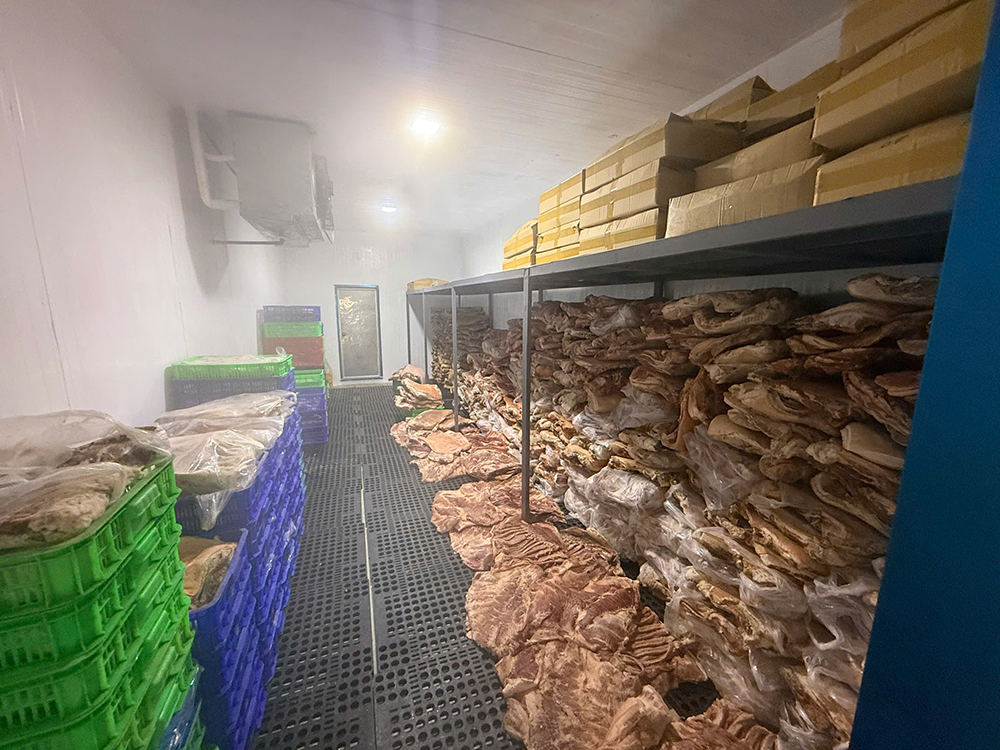

Finished batches of counterfeit meat labeled as specialty products like venison or ostrich. (Photo: CA)
Why did these operations go undetected for years?
The Economic Police Department explained that perpetrators used increasingly sophisticated tactics to evade detection. Chemicals were stored off-site and only transported in small amounts for immediate use. Production sites were often located far from residential areas to avoid drawing attention due to odors.
Most facilities employed only family members - spouses, children, or close relatives - to limit information leaks. In many cases, even when violations were detected in the past, only administrative fines were issued, allowing the same operators to rebrand and resume activities under different names and addresses.
Police now target entire supply chains
Today, authorities are pursuing more aggressive strategies. Instead of merely shutting down production sites, they are tracing the origin of chemicals, raiding stalls at wholesale markets, and investigating buyers to build criminal cases.
Offenders now face prosecution, not only for food violations but also for knowingly endangering public health. The police stressed that any producer, distributor, or supplier who understands the risks of these chemicals and still chooses to use them will be held legally accountable.
A systemic issue demands systemic response
While some business owners cited economic hardship as justification for their actions, police reject these defenses, pointing to the clear illegality and moral failure of poisoning food for profit.
Investigators stressed that rooting out food crime is not just the responsibility of law enforcement - it also requires consumer vigilance, ethical business practices, and tighter coordination across health, market surveillance, and trade departments.
Authorities urge the public to report suspicious food production or distribution practices to the nearest police station or directly to the Economic Police Department.
Dam De
.svg)
