 Vietnamnet.vn

 Podcast




Tran Cam Tu, permanent member of the Communist Party of Vietnam Central Committee's Secretariat, recently signed Conclusion No. 99 on behalf of the Politburo on the exploitation, governance and protection of low-altitude airspace to support national development in the new era.
To turn low-altitude airspace into a strategic technology sector and a new driver of socioeconomic development while safeguarding national defense and security, the Politburo called for a unified understanding of its strategic position and importance.
Under the conclusion, low-altitude airspace is regarded as a national resource, a new arena for the country's development and a special domain of national sovereignty. It is closely linked to the protection of airspace and data sovereignty, cybersecurity, critical infrastructure, borders, seas, islands and major urban areas.
The exploitation, governance and protection of low-altitude airspace must therefore be incorporated into the implementation of policies under the 14th National Party Congress and the transformation of Vietnam's development model.
It is to become an important component of the country's national development, national defense, national security, science and technology, and high-quality human resource strategies.
The Politburo called for greater emphasis on domestic capabilities and stronger technological, infrastructure and strategic data autonomy, linked to the development of the semiconductor industry, artificial intelligence and space technologies.
These capabilities should be transformed into national strengths while helping raise public awareness and build social consensus around the development of the low-altitude economy.
The conclusion sets a target of putting three national-level flight testing zones and at least one national research and testing center for unmanned aerial vehicles (UAVs) into operation by 2030.
By 2045, Vietnam aims to develop the low-altitude economy into an important economic and technological sector and one of the country's new growth engines, with strong regional competitiveness.
The sector is targeted to contribute around 1.5% of national GDP by then, supporting Vietnam's ambition to become a developed, high-income country.
The Politburo also set a target of achieving a localization rate of more than 30-40% for key UAV models used in production by 2030, rising to more than 85% by 2045.
The Politburo's second major requirement is to complete the legal framework needed for the exploitation, governance and protection of low-altitude airspace across economic, civilian, defense and security activities.
This includes studying the integration of low-altitude airspace requirements into national and urban planning, as well as identifying flight testing areas, restricted zones and no-fly zones.
The Politburo said essential infrastructure should be planned and developed in a coordinated manner based on the needs, potential and conditions of individual sectors, industries and localities.
Infrastructure should also support dual-use requirements, allowing it to serve national defense and security objectives when necessary.
Vietnam is expected to develop and complete national technical standards and regulations for infrastructure, equipment and management technologies in 2027, aligning them with international standards.
The country will also strengthen its capabilities in testing, inspection, certification and conformity assessment.
The state will play a guiding role in developing the initial market through procurement mechanisms, pilot programs and public-sector applications.
At the same time, businesses, research institutes and universities will be encouraged to participate in UAV research, development, manufacturing and commercialization.
National UAV flight testing zones to be established
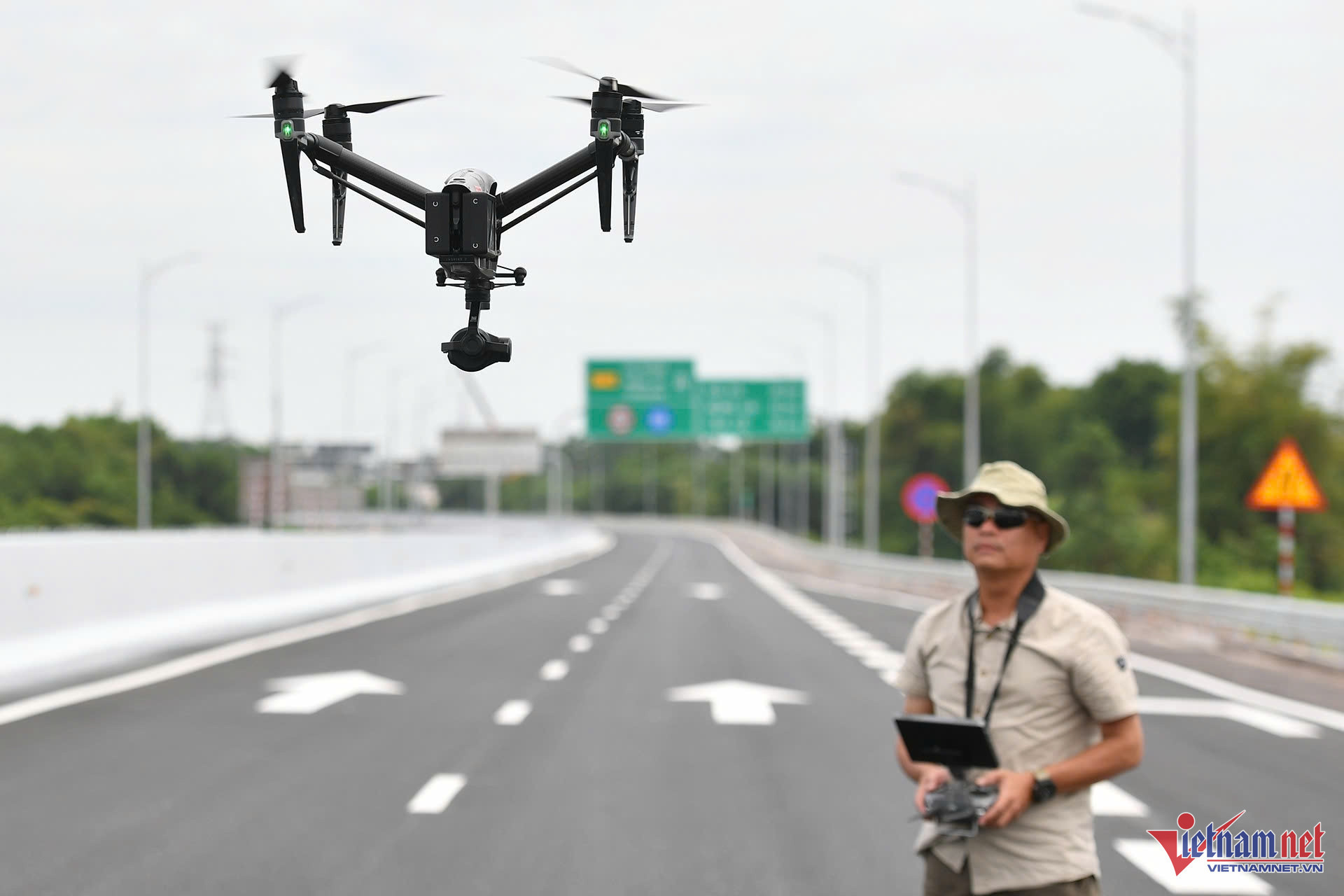
To increase infrastructure investment, scientific research and development of the low-altitude industry, the state will prioritize budget spending on essential infrastructure for the governance, exploitation and protection of low-altitude airspace.
The infrastructure is expected to be coordinated, modern and shared, with the ability to integrate and connect with airspace management systems, military and civilian flight operations, and other specialized management platforms.
Funding will also be prioritized for scientific research and the application and development of low-altitude technologies, with investment concentrated on key areas to ensure efficiency and avoid fragmentation and waste.
The Politburo aims to develop the low-altitude industry with a dual-use orientation while gradually building domestic mastery of core technologies.
Policies will also be developed to provide tax, credit and land incentives for businesses engaged in UAV research, manufacturing, testing and commercialization for both domestic demand and exports.
The Politburo also called for the establishment of technology complexes, manufacturing clusters and national-level UAV flight testing zones.
Regarding high-quality human resources and international cooperation, the Politburo called for a workforce capable of keeping pace with the development of projects and technologies related to the exploitation, governance and protection of low-altitude airspace.
Policies should be introduced to attract and make effective use of leading Vietnamese and international experts and scientists, while strengthening training and building a pipeline of strategic and other officials responsible for leadership, management and implementation in the sector.
The Politburo also proposed developing training programs covering unmanned aerial vehicles, the low-altitude economy and emerging related professions.
Universities and businesses will be encouraged to strengthen cooperation and partnerships, linking education and training more closely with actual labor market demand.
Tran Thuong
.svg)
