 Vietnamnet.vn

 Podcast



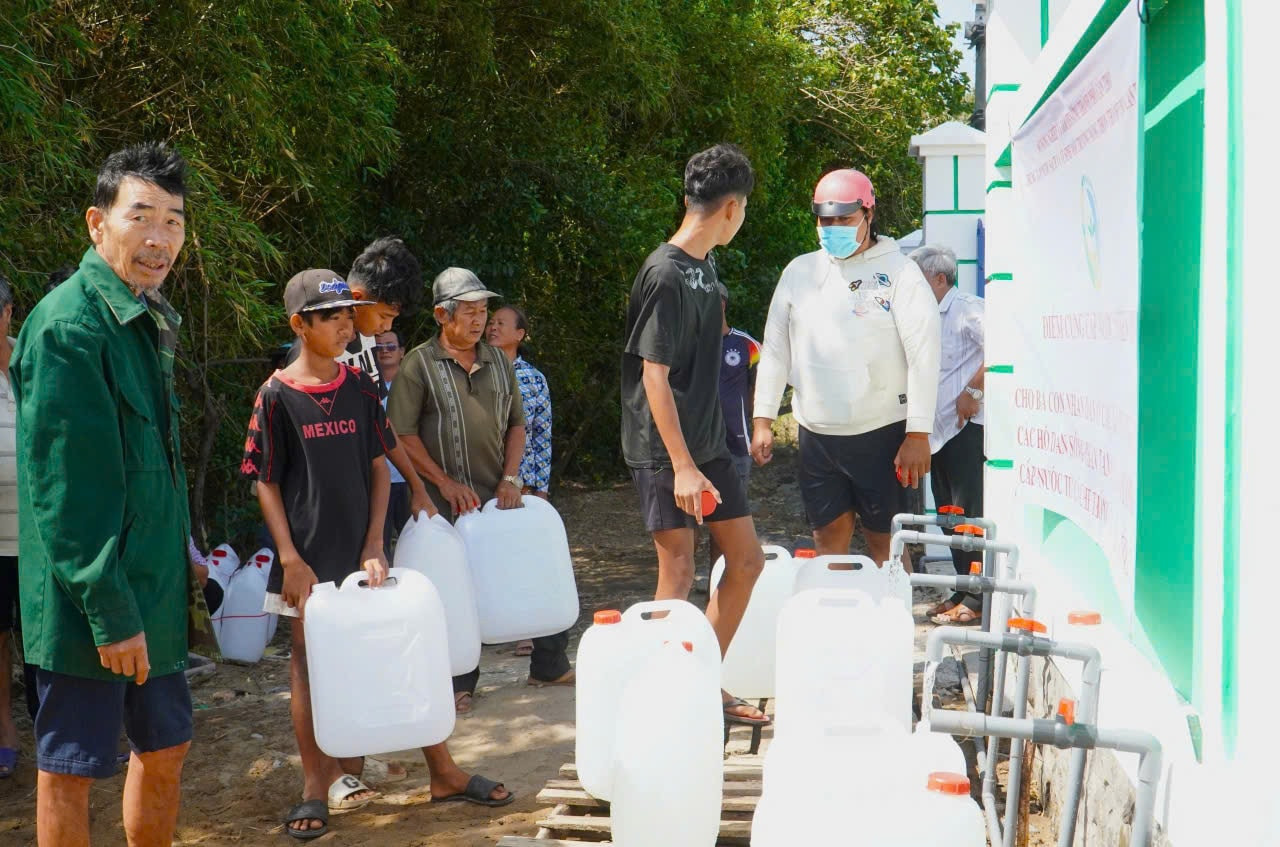
In many highland villages and hamlets, a shortage of domestic water remains a constant concern, especially during the dry season. For people in ethnic minority and mountainous regions, water is not only for drinking, bathing, and washing, but is directly tied to health, environmental sanitation, children’s education, and minimum living standards.
Therefore, domestic water must be seen as a pillar of social security in disadvantaged areas, not just an infrastructure item.
The gap between “having water” and “water meeting standards”
In recent years, Vietnam has achieved important results in rural water supply. The proportion of rural households using hygienic water has reached about 97.9 percent.
However, the proportion of households using clean water that meets standards from centralized water supply works is only about 54.4 percent, equivalent to nearly 8.9 million households.
This shows that the big challenge for the next phase is not just “having water,” but “having water that meets standards, is safe, and sustainable.”
While the Red River Delta, Southeast, and Mekong Delta have relatively high proportions of households using standard clean water from centralized works, the Northern Midlands and Mountains reach only about 25 percent; the North Central Coast 34.9 percent; the Central Coast and Central Highlands about 33.9 percent.
According to the Ministry of Agriculture and Environment (MAE), the country currently has 17,588 centralized rural water supply works. However, only about 27.04 percent operate sustainably, 27.6 percent operate relatively sustainably; while 29 percent operate poorly and 16.35 percent are not operational.
In other words, nearly half of centralized water supply works have sustainability issues. Many small-scale works managed by communes, cooperatives, or communities face difficulties in technical operation, maintenance funding, water source quality, and fee collection.
According to preliminary estimates by MAE, total investment demand for rural clean water by 2030 is about VND94,168 billion.
Of this, about VND85,760 billion is for building new, upgrading, and repairing centralized rural clean water works; about VND8,408 billion to support supply, storage, and treatment of water for 336,330 households that have not yet accessed hygienic domestic water.
Such large resource needs require that investment in clean water be focused, follow a roadmap, and set specific targets for each phase. Priority should go to ethnic minority areas, mountainous, border, and island regions, water-scarce areas, and regions heavily affected by drought, saline intrusion, and climate change.
For the Northern Midlands and Mountains, priority should be given to water storage works, gravity-fed pipelines, group-household supply, upgrading existing works, and protecting water-generating sources.
For the Central Highlands and South Central Coast, focus should be on drought adaptation solutions, community water storage tanks, controlled groundwater exploitation, solar-powered pumps, and appropriate treatment technologies.
For the Mekong Delta, the focus must be on storing fresh water in the rainy season, inter-regional supply, and treating brackish and saline water at an appropriate scale.
Not every village or hamlet is suitable for centralized water supply works. In many places with dispersed populations, distant homes, and complex terrain, household-scale or group-household water supply solutions are still essential.
Currently, about 46 percent of rural households still use household-scale works such as dug wells, drilled wells, rainwater tanks, and exposed spring water. This is a reality that needs to be standardized, rather than seen as a temporary solution.
Domestic water is an inter-sectoral field, involving technical infrastructure, water resources, irrigation, health, environment, public investment, water pricing, and social security.
Without clear assignment of responsibilities, it is easy to have works without operating units; investment capital without maintenance funding; water supply systems without regular water quality control.
In the current management system, the Ministry of Construction plays an important role in completing the overall legal framework for water supply, drainage, technical infrastructure, clean water business activities, and ensuring safe water supply.
MAE has a direct role in rural clean water supply, especially in remote areas, ethnic minority regions, and mountainous areas. This field is closely tied to irrigation, water sources, water storage works, drought, saline intrusion, protection of water-generating sources, and climate change adaptation.
Meanwhile, The Ministry of Health holds responsibility for quality standards of water used for domestic purposes.
The target by 2030 is for 80 percent of rural households to use clean water that meets standards.
Ha Viet Quan, PhD
.svg)
