 Vietnamnet.vn

 Podcast



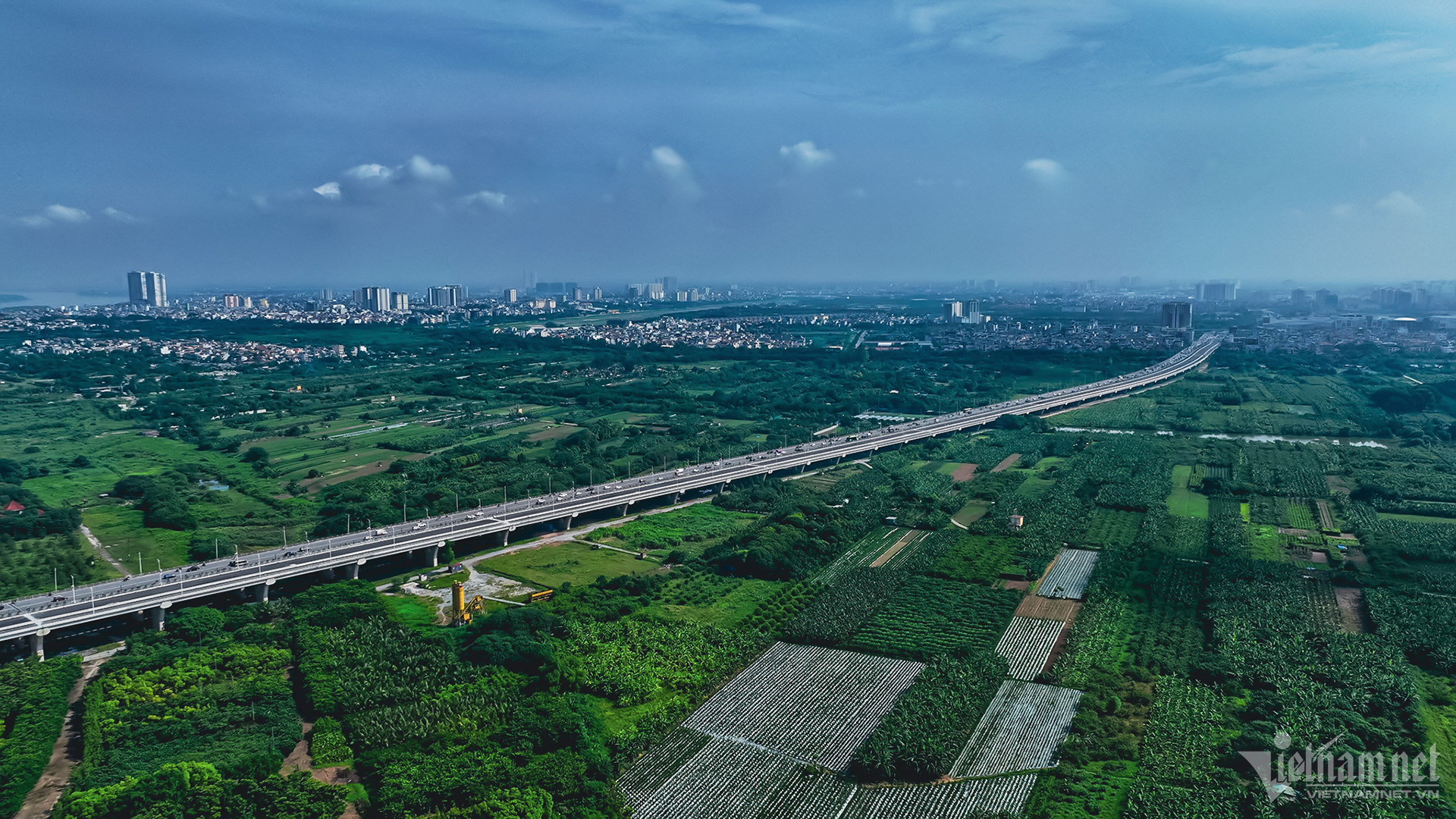
The project is expected to reshape the capital’s appearance and development philosophy.
For decades, the Red River has existed more as a geographical boundary than the heart of urban life. Despite being in the central core, both riverbanks still feature infrastructure gaps, patchwork residential areas, and forgotten spaces.
Meanwhile, many major global cities have transformed powerfully by "facing the river." Paris has the Seine, London has the Thames, Seoul revived the Cheonggyecheon stream, and Singapore regards its waterfront as a strategic landscape axis. Urban rivers in developed nations are not just hydrological features but have become cultural, economic, and identity axes.
Hanoi now faces its own historic opportunity. With methodical planning and a long-term vision, the riverbanks could form a system of parks, ecological zones, and creative spaces stretching tens of kilometers. The capital could then shift from a cramped, concentrated urban model to a "riverside city" model, placing water and green spaces at the center of sustainable development for decades to come.
The greatest challenge
The biggest challenge of this lies not in future bridges or boulevards, but in the people.
According to the policy recently approved by the Hanoi People's Council, the Red River Landscape Boulevard project will affect 200,000 residents living along the banks. Behind that figure are tens of thousands of families who have been attached to the riverside for generations, with some communities existing long before modern planning schemes.
They do not just live by the river; they live off the river, through farming, craft villages, and traditional livelihoods. So, relocating residents cannot be viewed merely as a site clearance problem; it is a story of livelihoods, community, and social trust.
A Nhat Tan peach-blossom farming family will find it difficult to continue their trade if it has to move to a resettlement area far from their arable land. A riverside craft village will lose its soul if detached from its traditional production space. Reality shows that many resettlement areas fail not due to a lack of housing, but because residents are "uprooted" from their familiar environments.
Thus, resettlement must be a solution involving jobs, schools, transport, public services, and the ability to maintain community networks after relocation.
Flood drainage
Historically, the Red River has repeatedly caused major flooding that directly affected Hanoi residents. The river itself shaped the dike system that has existed for hundreds of years. As a result, any urban development plan along the river must prioritize flood drainage capacity above all else.
Ideas such as building regulating dams, expanding waterway transport or aggressively developing riverside real estate all require careful calculation. A river that becomes overly concretized could lose its ecological self-regulation, especially as climate change grows more extreme.
International experience shows that many cities paid a heavy price for trying to “dominate” rivers through short-term development thinking. The Netherlands, for example, continuously raised dikes, reinforced riverbanks and narrowed floodway to expand urban areas. However, after severe flooding along the Rhine River system in 1993 and 1995, the country was forced to rethink its approach.
Instead of continuing to fight against water, the Dutch launched the “Room for the River” program, which restored space for rivers by expanding floodways, reviving ecological zones and limiting excessive riverside concrete development. The biggest lesson they learned was that a river can only remain safe if it is allowed to “breathe” as a natural system.
That may also be the most important limit Hanoi must preserve: not sacrificing ecological functions for short-term real estate gains. Riverside floodway areas should be treated as natural urban buffer zones rather than simply “golden land” to be exploited.
Preserving identity
Along with the opportunity comes the risk of over-commercializing the riverside identity. Hanoi talks of preserving Bat Trang, Kim Lan, or the Nhat Tan peach blossom region. But preservation cannot stop at names on a tourist map. A craft village only truly lives when its people can still make a living from their craft.
Vu Diep
.svg)
