 Vietnamnet.vn

 Podcast


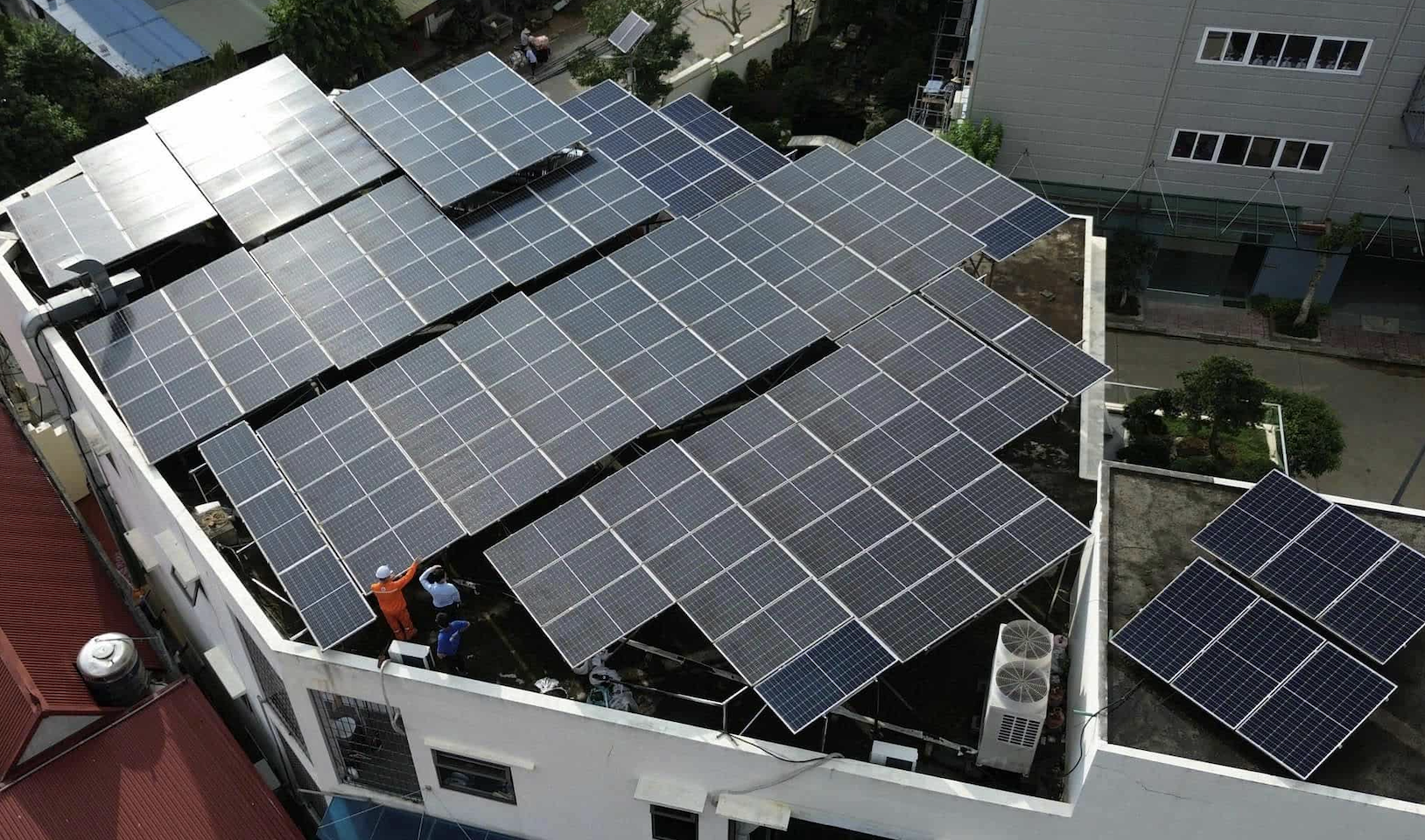
The Ministry of Industry and Trade (MoIT) held a conference on November 7 to discuss the operation of Vietnam's national power system and measures to ensure electricity supplies in 2027-2028.
The meeting was conducted both in person and online, with representatives from the People's Committees of all 34 provinces and cities participating.
According to a report by the National Power System and Market Operator (NSMO), Vietnam's electricity supply faced multiple challenges in 2026.
The Middle East crisis and the conflict in Ukraine disrupted supply chains and drove up primary energy prices, significantly affecting Vietnam, which relies on net imports for approximately 44% of its primary energy needs.
During April, May and June, the power system had to contend simultaneously with extreme heat, fuel supply disruptions, fluctuations in liquefied natural gas (LNG) prices and difficulties securing imported coal.
Peak electricity demand exceeded the previous year's record by 6.4%, while annual electricity consumption was projected to increase by more than 10%, placing the greatest pressure on northern Vietnam.
Extreme weather conditions added further strain, with prolonged heatwaves occurring throughout July, August and September.
In October, average temperatures nationwide exceeded historical norms, with northern Vietnam recording temperatures 2-3 degrees Celsius above the long-term average, the highest October levels since observations began in 1961.
El Niño conditions emerging in the second half of October reduced water inflows to hydropower reservoirs to approximately 80% of their long-term average.
As a result, annual hydropower generation was projected to fall by around 18.5 billion kWh compared with 2025.
Thermal power plants also faced considerable pressure from equipment failures and maintenance requirements, while bringing new baseload generation capacity into operation remained difficult.
Vietnam steps up measures to secure electricity supplies
Against this backdrop, the MoIT has implemented coordinated measures to maintain adequate electricity supplies while optimizing costs.
Vietnam's total electricity generation and imports in 2026 were estimated at 356.2 billion kWh, up 10.3% year on year, with peak demand reaching 57,537 MW.
Despite an expected 13% increase in electricity demand during the fourth quarter, the national power system was projected to meet consumption requirements.
According to Vietnam Electricity (EVN), commercial electricity sales rose 9.84% in the first ten months of the year.
Rooftop solar installations expanded rapidly in northern Vietnam, while several major transmission projects were successfully energized.
The Quang Trach I thermal power plant was also expected to begin commercial operations by the end of 2026.
MoIT leaders emphasized that ensuring sufficient energy supplies, particularly electricity, for economic development and people's daily lives must remain an absolute priority under all circumstances.
They called for practical, achievable measures and coordinated action across the entire power sector.
Urgent issues must be addressed with clearly defined tasks, responsibilities and implementation deadlines.
The ministry stressed that every set of tasks must be accompanied by corresponding accountability and risk-management frameworks to ensure that targets are achieved.
Power generation and transmission projects scheduled to enter operation in 2027 must have specific milestones and decision-making deadlines, with completion required on schedule.
Measures should focus on proactively preventing risks that could undermine economic growth rather than preparing to postpone projects.
Rooftop solar development targets to be assigned to provinces
Among the measures to strengthen electricity supplies, MoIT leaders called for urgent action to increase peak-load generation capacity.
The ministry also emphasized the development of battery energy storage systems (BESS) in accordance with established capacity plans and pricing frameworks.
EVN, Petrovietnam, Vietnam National Coal and Mineral Industries Holding Corporation (TKV) and other project investors were instructed to review and register their planned energy storage investments.
Provincial and municipal People's Committees were asked to coordinate with the electricity sector to accelerate rooftop solar installations at industrial parks, major electricity-consuming businesses and government offices.
The ministry also called for the allocation of specific rooftop solar development targets to local authorities.
According to MoIT estimates, Vietnam's technical potential for household rooftop solar power stands at nearly 49,300 MWp.
The southeastern region has the greatest potential, at 12,508 MWp, followed by the southwestern region with 9,940 MWp and the Red River Delta with 9,077 MWp.
However, actual rooftop solar deployment remains modest compared with the country's estimated potential.
Data compiled by electricity corporations showed that, as of the end of August 2026, Vietnam had 134,410 self-generation and self-consumption rooftop solar systems, with a combined installed capacity exceeding 11,450 MWp.
Of these, approximately 113,210 systems belonged to households and household businesses, representing a combined capacity of 4,910 MWp.
Tam An

