 Vietnamnet.vn

 Podcast



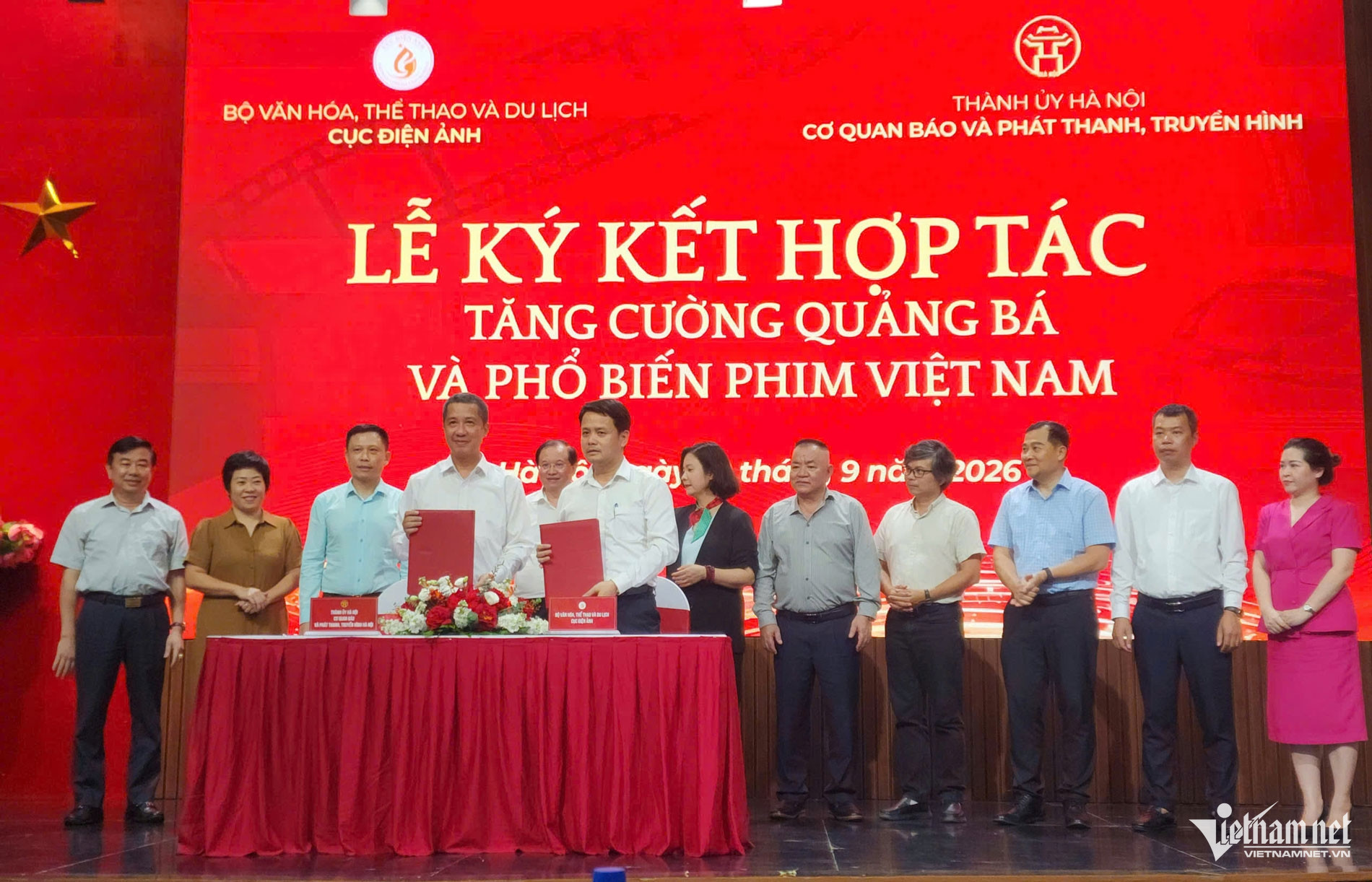
The collection covered by the partnership comprises around 1,000 films across the three genres.
The Vietnamese Film Institute alone holds 460 Vietnamese feature film titles on film stock, produced between 1959 and 2014.
The collection includes many familiar works such as Chung mot dong song (Sharing the Same River), Vo chong A Phu (A Phu Couple), Con chim vanh khuyen (The Little Bird), Em be Ha Noi (The Little Girl of Hanoi), Den hen lai len (When the Tenth Month Comes Around), Canh dong hoang (The Abandoned Field), Bao gio cho den thang Muoi (When the Tenth Month Comes), Thuong nho dong que (Nostalgia for the Countryside), Mua oi (The Guava House), Dung dot (Don't Burn) and Mui co chay (The Scent of Burning Grass).
The specific films to be broadcast will be selected and agreed upon by the two sides within the scope of their cooperation.
Through these works, audiences can revisit images of the country during war and peace, transformations in rural areas and cities, and stories of people seeking to live, love and preserve their dignity.
Some scenes may evoke memories of youth, while stories revisited at a different age may offer new perspectives. It is this ability to engage viewers across generations that gives cinema its enduring strength.
Through its partnership with the Cinema Department, the Hanoi Press, Radio and Television Authority hopes to make archived films a more familiar part of cultural life.
When a film is watched, discussed and experienced anew by younger generations, its value continues to grow. This is also a practical way to foster appreciation for Vietnamese cinema and encourage greater public interest in domestic creativity.
At the signing ceremony, Dang Tran Cuong, director of the Cinema Department, said the agreement marked a new step in efforts to bring state-commissioned films to audiences.
“Over different periods, we have accumulated a collection of works of historical, cultural and artistic value. This is a spiritual asset that needs to be further promoted, utilized, disseminated and brought more effectively to audiences in the coming period,” Cuong said.
He described the partnership to provide films to the Hanoi Press, Radio and Television Authority as a practical way to bring cinematic works closer to the public.
“The program is not simply about broadcasting films. More importantly, it is about introducing the works, the creative process and the stories behind them, helping audiences better understand and appreciate their cinematic value,” he said.
Speaking at the event, Deputy Minister of Culture, Sports and Tourism Ta Quang Dong said the agreement was significant and marked a new step in the dissemination and promotion of Vietnamese films.
Dong said efforts had been made for years to bring state-commissioned films to broader audiences, but the results had yet to meet expectations. The cooperation agreement between the two agencies was therefore an encouraging development for Vietnam’s film industry.
According to the deputy minister, the primary goal is to broaden the reach of state-commissioned films, particularly historical and revolutionary works, as well as current affairs films and documentaries.
In recent years, television viewers and the broader public have continued to show interest in valuable historical and revolutionary films, he said.
Reaffirming the Ministry of Culture, Sports and Tourism’s commitment, Dong said the ministry would continue to support the project, create favorable conditions and closely follow its implementation after the agreement.
He also called on the participating agencies to coordinate closely and proactively carry out practical activities to ensure the project achieves the greatest possible impact.
Tinh Le
.svg)
