 Vietnamnet.vn

 Podcast


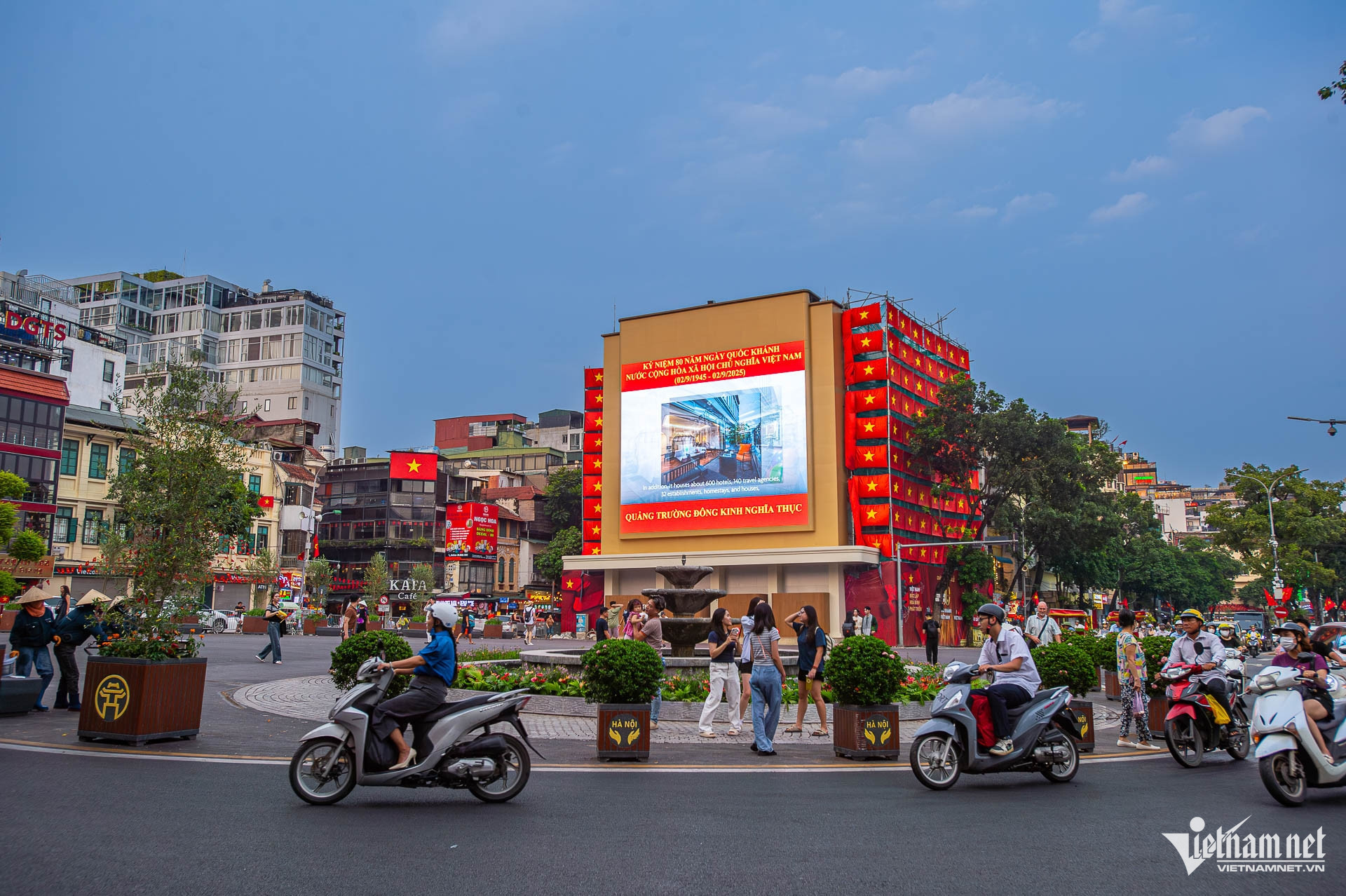
Under the amended law, one of the key principles governing low-emission zones is to prioritize controls on high-emission vehicles and those powered by fossil fuels.
Gasoline and diesel vehicles will therefore be among the primary targets of emission control measures.
The management of low-emission zones will be linked to the development of public transportation, infrastructure supporting low-emission mobility, clean energy adoption and policies supporting the transition to cleaner vehicles.
Provincial-level People's Committees will assess local conditions and submit proposals to their respective People's Councils for decisions on establishing low-emission zones and implementing emission control measures.
This provision allows localities to establish such zones according to their specific circumstances rather than imposing uniform requirements nationwide.
For special-class and Class I urban areas, provincial-level People's Committees will also be responsible for implementing traffic management and environmental pollution control measures to reduce air pollution.
The Government will establish detailed criteria for low-emission zones, management measures and policies supporting and encouraging public transportation, renewable energy-powered vehicles, fuel-efficient vehicles, and low-emission or zero-emission vehicles.
Hanoi is currently piloting low-emission zones in two areas of Hoan Kiem Ward from July 1 through the end of 2026.
The first covers the area surrounding Hoan Kiem Lake, bordered by 11 streets, while the second encompasses part of Hanoi's Old Quarter.
During the initial phase, Hanoi has not banned gasoline-powered motorcycles but encourages ride-hailing motorbike drivers to limit their operations within the designated areas.
For private vehicles, the city encourages residents to restrict the use of motorcycles manufactured or imported before 2008 and mopeds manufactured or imported before 2016, while promoting a transition to greener vehicles or public transportation.
Local authorities empowered to determine household waste classification
The previous Law on Environmental Protection required household solid waste to be classified into three categories: reusable and recyclable waste, food waste and other household waste.
Under the amended law, household solid waste classification will follow principles that prioritize reuse and recycling, minimize the volume of waste requiring treatment or landfill disposal, and align with available infrastructure for collection, transportation, recycling and treatment.
The law also encourages household solid waste to be separated into three categories: reusable and recyclable solid waste, food waste and other household solid waste.
Notably, provincial-level People's Committees will be empowered to determine specific waste classification arrangements based on local conditions.
Regarding environmental monitoring, the law encourages organizations and individuals to participate in monitoring activities and disclose environmental quality information to the public in accordance with legal regulations.
It also encourages the adoption of new measures and technologies for monitoring environmental quality and supervising waste discharges.
Organizations and individuals conducting environmental monitoring and publishing environmental quality information will be legally responsible for the accuracy of the information they provide.
Environmental monitoring service providers will be responsible for the accuracy of their results and must ensure the traceability of information concerning samples, equipment, personnel and data when required.
Tran Thuong

