 Vietnamnet.vn

 Podcast



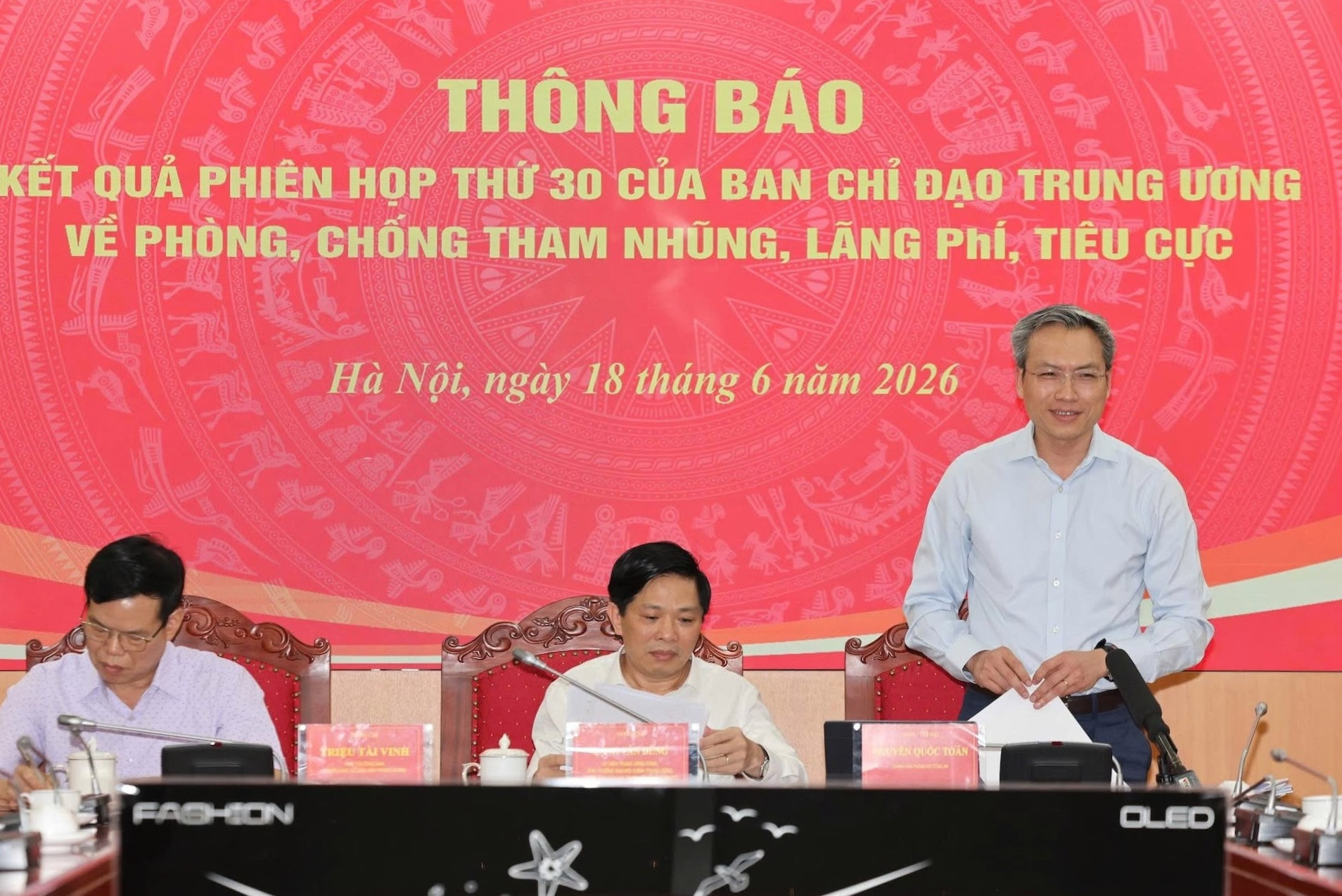
According to official figures, judicial authorities launched investigations into 1,985 new cases involving 4,671 defendants accused of corruption, economic and abuse-of-office crimes during the first six months of the year.
Toan said two major concerns had emerged.
First, corruption, wastefulness and misconduct continue to occur across multiple sectors, particularly in the implementation of nationally significant projects, social welfare programs, administrative procedures and licensing activities.
Second, corruption within joint-stock companies and private enterprises is increasing, causing losses to both state assets and private business owners.
Common offences include bribery, abuse of power in the performance of official duties, embezzlement, violations involving the management and use of state assets, breaches of public investment regulations and procurement violations.
While these offences are not new, Toan said they remain the most prevalent forms of wrongdoing detected over the past six months.
Investigators have identified five prominent methods and schemes used in recent corruption cases.
One involves close collusion between individuals inside government agencies and actors outside the public sector, creating coordinated networks that extend through every stage of a project, from investment and bidding to inspection, acceptance and final settlement.
"In many cases, criminal activity penetrates every stage of project implementation," Toan said.
Authorities have also uncovered cases involving vested-interest groups, the insertion of tailor-made technical criteria into procurement processes, inflated project cost estimates and abuse of official authority to influence contract awards.
According to Toan, some networks have used intermediary companies and interconnected business ecosystems to disguise corruption proceeds and obscure financial transactions.
Another recurring practice involves officials exploiting their authority in licensing and administrative procedures to collect unofficial fees beyond those permitted by law.
Investigators have also detected misconduct related to the management of public assets, equitization and enterprise restructuring. In some cases, state assets were intentionally undervalued, public land-use rights were transferred improperly, or assets were sold without valuation or public auction, resulting in substantial losses.
Authorities are also increasingly concerned about the misuse of digital technologies to facilitate criminal activities.
Toan said this trend reflects a broader pattern accompanying the rapid expansion of digital transformation, e-government and the digital economy. Investigators have identified cases involving encrypted messaging services, virtual assets, electronic records and online financial transactions used to conceal wrongdoing.
Another emerging concern is the exploitation of new business models and asset classes for fraud and illicit gain.
Particularly notable are schemes linked to resort real estate projects, timeshare ownership models and project-based capital mobilization.
Toan noted that Hanoi police recently initiated legal proceedings in 21 cases involving 23 companies and 187 suspects connected to such activities.
Looking ahead, the Ministry of Public Security plans to focus on early identification and prevention of criminal activities.
Toan said all forms of crime are closely linked to the environments and conditions in which they operate, making proactive monitoring and supervision essential.
The ministry also intends to strengthen preventive measures through the development of an effective and integrity-based governance system, tighter discipline within the public sector, stronger accountability mechanisms and enhanced oversight of power.
Authorities will continue investing in solutions to address technology-enabled crime, including improvements to national databases and data-sharing systems aimed at strengthening prevention and enforcement efforts, particularly in corruption, wastefulness and misconduct cases.
The ministry also plans to expand public awareness efforts and work with other agencies to promote a culture of integrity across both the political system and wider society.
Thu Hang
.svg)
