 Vietnamnet.vn

 Podcast



The Politburo and the Secretariat held a nationwide conference on the morning of September 3 to study, disseminate and implement a number of resolutions and directives.
Nguyen Thanh Nghi, head of the Party Central Committee’s Commission for Policies and Strategies, presented the key elements of Politburo Resolution No. 27 on regional development and the organization of Vietnam’s national development space in the new period.
Nghi said the Politburo had agreed on three guiding principles.
The first identifies regional development as a way to organize national growth, restructure development space, allocate resources and enhance Vietnam’s competitiveness in the new context.
The second calls for restructuring the country’s development space as an integrated whole by clearly defining the role, position, function, advantages, identity and development mission of each region within the nation’s overall development.
The third identifies the establishment of strong, substantive and effective mechanisms for regional connectivity and coordination as a breakthrough.
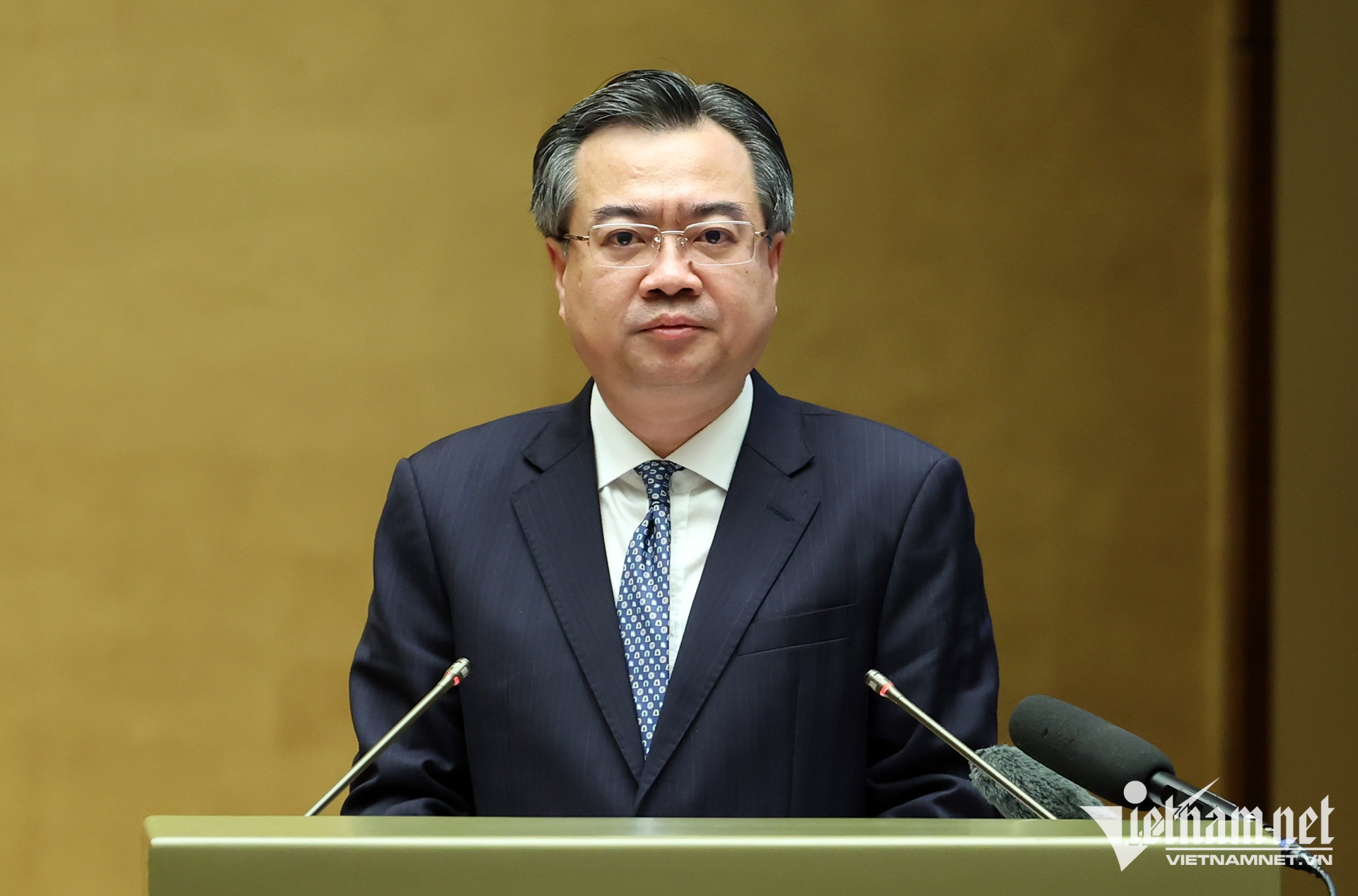
This is intended to ensure consistency and connectivity in planning, investment, infrastructure development, data and resource allocation, while clearly defining the responsibilities of agencies and local authorities and balancing the interests of localities, regions and the country as a whole.
Nghi said the resolution sets out objectives and 22 specific targets through 2030 for individual regions, reflecting their potential, comparative advantages and development conditions while enabling each region to contribute to the country’s overall development.
Looking toward 2045, Vietnam envisions its regions developing and operating around the digital economy, green economy, data economy and circular economy.
They are expected to have integrated, smart, green, safe and highly resilient infrastructure with seamless connectivity, while science and technology, innovation and digital transformation will serve as the principal engines of growth and development.
The vision also calls for stronger links among localities within individual regions and between different regions; an orderly, safe, civilized, harmonious and developed society; social governance built on a fully developed digital society; a sustainable ecological environment; modern, autonomous, resilient and strong national defense and security; and access to high-quality social services for the population.
Ten groups of tasks for regional development
The resolution sets out 10 key groups of tasks and solutions for regional development and the restructuring of Vietnam’s national development space.
For the organization of regional socio-economic development space, the goal is to create a multi-layered, multi-polar structure that seamlessly connects land, maritime, air, underground and digital spaces, as well as emerging development spaces.
On developing a comprehensive institutional framework for regional development, the resolution calls for mechanisms allowing growth poles and major urban centers to participate in coordinating regional development in certain sectors.
It also seeks mechanisms for sharing resources and benefits among the national, regional and local levels based on the principle of shared development.
Nghi also highlighted the need to improve institutions to establish a new growth model, including breakthrough and exceptional mechanisms and policies for developing new economic models, dynamic regions, growth poles, economic corridors, special economic zones, technology zones, free trade zones, international financial centers and national data centers.
Regarding fundamental reform of regional growth models, the Politburo has called for the development of the data, green, circular and digital economies, with science and technology, innovation and digital transformation serving as the principal drivers and a consistent foundation for regional development.
For modern, integrated and interregional socio-economic infrastructure, Nghi said priority would be given to investment in next-generation North-South backbone transport infrastructure and East-West corridors.
The aim is to facilitate multimodal transportation, strengthen logistics capacity, reduce transport costs and improve the economy’s competitiveness.
In developing a modern urban system and regional growth poles, Vietnam will invest in major growth centers and large cities so they can lead and spread development along urban-industrial-service corridors.
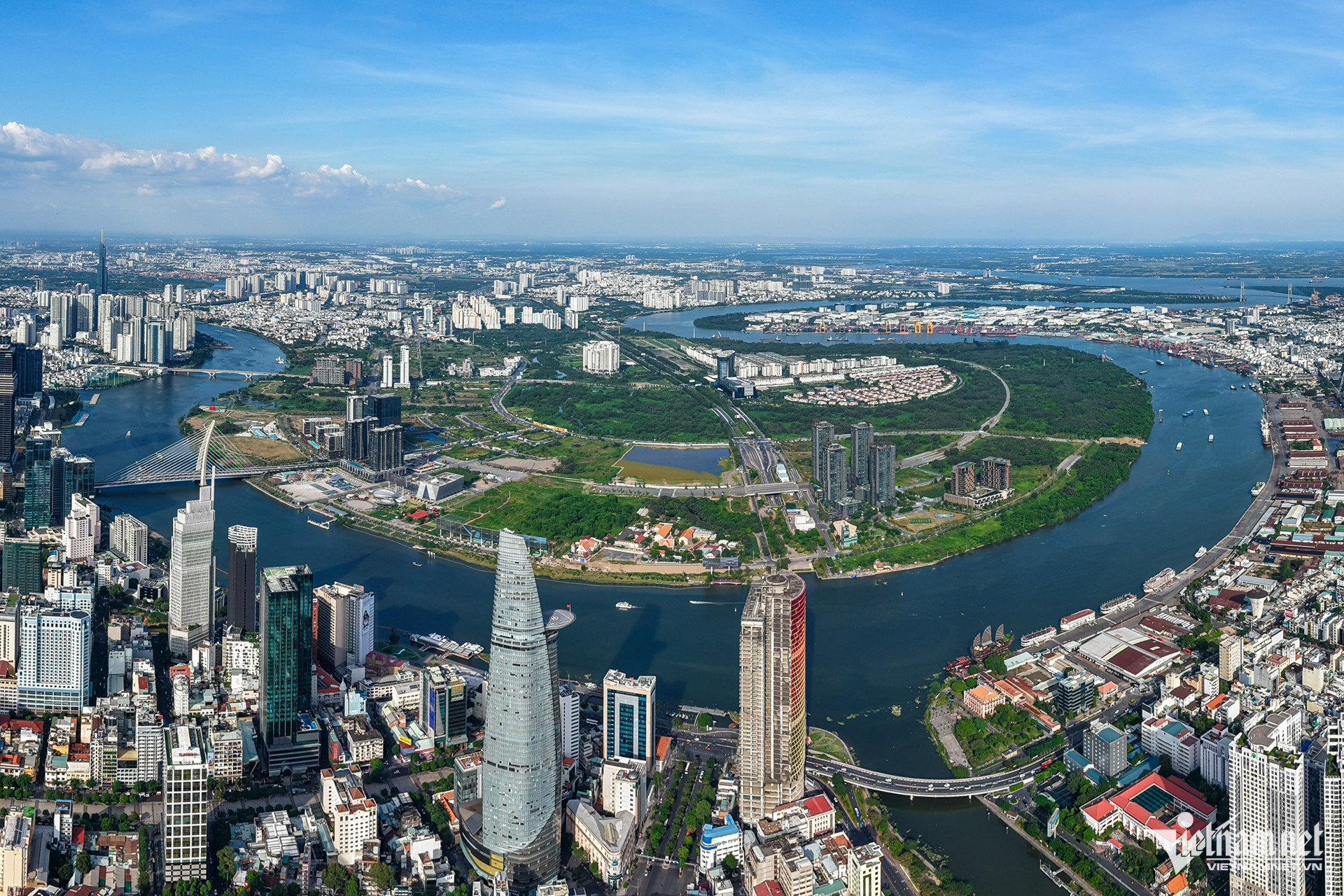
Nghi said priority would be given to developing the country’s two largest growth poles: the Hanoi metropolitan region and the Ho Chi Minh City metropolitan region.
By 2045, Vietnam aims to develop at least five cities of international stature that will serve as major hubs for connectivity and development within regional and global networks.
On developing high-quality human resources and accelerating science, technology, innovation and digital transformation, Nghi said Vietnam needs to strengthen public-private cooperation in attracting, training and effectively utilizing highly skilled scientific and technological talent.
He also emphasized ensuring equitable access to education and training services, narrowing educational disparities between regions, building a learning society and promoting lifelong learning.
For cultural and social development and comprehensive social security, the resolution calls for a coordinated and modern approach linked to the creation of spaces for cultural creativity and public enjoyment of culture, while treating regional cultural identities and traditional values as development resources.
Nghi also highlighted the need to preserve and promote the cultural and historical values, identities and human and ecological heritage of individual regions and ethnic communities, while strengthening cooperation among localities to create interregional heritage, cultural and tourism corridors.
Other major priorities include environmental protection and climate change adaptation; strengthening national defense and security; and expanding foreign relations and international integration.
The final group of tasks concerns building and rectifying the Party and political system.
Nghi said the resolution requires continued efforts to build a clean, strong and comprehensive Party and political system.
The organizational models and structures of local governments at all levels should be further improved to reflect the characteristics of each region, while decentralization and delegation of authority should be strengthened under the principle that local authorities make decisions, carry them out and take responsibility for them.
Nghi also emphasized the recruitment, training and development of officials at all levels who possess the necessary integrity, capacity and competence, with greater attention to standardization, rejuvenation and professionalization.
At the same time, Vietnam will effectively implement programs to inspect and supervise the enforcement of resolutions and policies; intensify efforts to combat corruption, wastefulness, bureaucracy and other misconduct; strictly handle violations; and maintain discipline and order throughout the Party and political system.
Tran Thuong
.svg)
