 Vietnamnet.vn

 Podcast



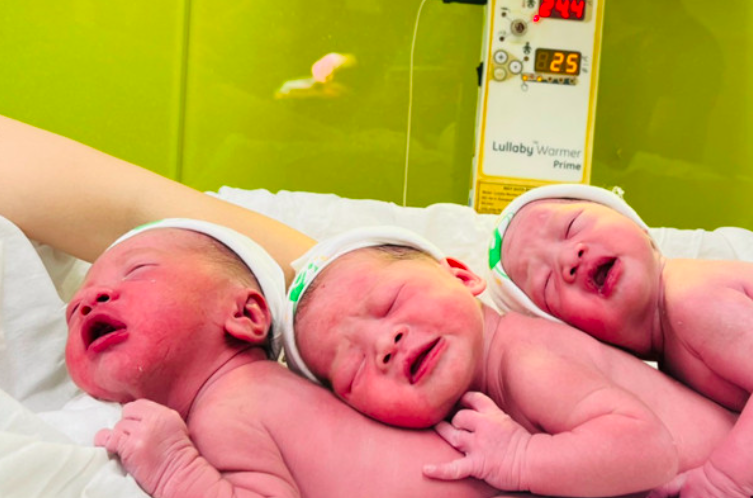
Under the Ministry of Health’s proposal, local authorities would be able to select and determine incentives and support for individuals and couples having children based on local conditions.
Possible measures include assistance with the cost of screening to help prevent infertility, cash or in-kind support for pregnant women, and financial or material assistance for children until they are at least 12 months old.
Localities could also introduce other appropriate forms of support.
The draft also proposes rewards for communities that maintain a high proportion of women having a second child.
Villages and residential groups where at least 50% of women giving birth have a second child for three consecutive years could be recommended for recognition and cash or in-kind support from commune-level authorities.
Those maintaining the achievement for five consecutive years could be recommended for rewards, recognition and financial or material support from provincial-level authorities.
At the commune level, areas where at least 50% of women giving birth have a second child for three consecutive years could be recommended for provincial-level rewards, recognition and cash or in-kind assistance.
If the achievement is maintained for five years, the cash or in-kind support would be double the three-year level.
Deputy Minister of Health Do Xuan Tuyen said an average of 2.1 children per woman of reproductive age is needed to maintain natural population replacement, while Vietnam’s fertility rate currently stands at around 1.93 children per woman.
Vietnam’s fertility decline is becoming increasingly widespread, including in areas that previously recorded high birth rates.
Fertility has remained particularly low for years in major cities, the southeastern region and the Mekong Delta.
Data from 2024 showed that 10 provinces and centrally governed cities had fertility rates below the national level: Hanoi, Khanh Hoa, Dong Nai, An Giang, Dong Thap, Vinh Long, Ca Mau, Can Tho, Tay Ninh and Ho Chi Minh City.
Ho Chi Minh City’s fertility rate stood at around 1.43 children per woman.
The financial burden of raising children, housing and employment, along with the challenge of balancing work and family life, has led many couples to delay having children or decide against doing so.
Prolonged low fertility could have serious consequences for Vietnam’s population structure, accelerating population aging and affecting the country’s workforce.
Cash incentives alone may not be enough
Several localities have already introduced financial incentives in response to low fertility.
Ho Chi Minh City provides a one-time payment of VND5 million (about $190) to women who have two children before the age of 35. Hai Phong offers VND3 million ($114), Tay Ninh VND2 million ($76), while Dong Nai and Dong Thap each provide VND1 million ($38).
Some localities also reward communes and wards where at least 60% of couples of reproductive age have two children over three or five consecutive years.
Tay Ninh offers the highest rewards, ranging from VND200 million to VND300 million ($7,600-$11,400). Ho Chi Minh City offers VND30-60 million ($1,140-$2,280), Dong Thap VND30-50 million ($1,140-$1,900), and Dong Nai VND20-40 million ($760-$1,520).
Le Thanh Dung, director general of the Population Department under the Ministry of Health, said that in some cities where living costs and the expense of raising children are high, cash payments for women who have two children before 35 remain too small to provide a strong incentive capable of changing decisions about having another child.
At the same time, some collective reward schemes have very demanding eligibility criteria.
These can be particularly difficult to meet in mountainous, remote and isolated areas where longstanding customs and practices remain influential, limiting the number of people and communities that can actually benefit from the policies.
The Ministry of Health aims to increase Vietnam’s total fertility rate by an average of 2% each year, equivalent to nearly four additional babies for every 100 women of reproductive age, with the goal of restoring replacement-level fertility by 2030.
Vo Thu
.svg)
