 Vietnamnet.vn

 Podcast


Vietnam's proposal to abolish the fuel price stabilisation fund has sparked debate among industry experts, with some supporting a transition to market-based pricing while others advocate reforming the fund to strengthen national fuel reserves.
The Government Inspectorate recently recommended studying the termination of the Fuel Price Stabilisation Fund and replacing it with a combination of national strategic reserves and tax instruments.
Nguyen Tien Thoa, chairman of the Vietnam Valuation Association, said the fund had historically served as a buffer against sharp fluctuations in global oil prices. However, its continued existence would become inappropriate if Vietnam fully adopted market-based fuel pricing.
Meanwhile, Bui Ngoc Bao, chairman of the Vietnam Petroleum Association, argued that the fund should be retained but fundamentally restructured, with its resources redirected toward purchasing fuel reserves rather than subsidising retail prices.
Fuel price fund has served as a buffer against market shocks

Established in 2009, the Fuel Price Stabilisation Fund was designed to help Vietnam limit sudden increases in domestic fuel prices and reduce their impact on the broader economy.
According to Thoa, Vietnam's fuel pricing mechanism has not operated entirely according to market principles. Instead, authorities have sought to maintain relative price stability through periodic adjustments and direct intervention using the fund.
This approach has helped mitigate the effects of global price shocks on inflation, economic growth, interest rates, exchange rates, employment and household spending.
The fund has also helped reduce input costs for industries heavily dependent on petroleum products.
Thoa cited developments in March 2026 as an example of its effectiveness.
Amid unusual volatility in international fuel markets, the Government deployed the fund to cushion domestic prices.
On March 10, authorities used the fund to provide price support of VND 4,000–5,000 per litre, depending on the petroleum product.
Further disbursements of VND 3,000 - 4,000 per litre followed on March 19.
These interventions helped prevent domestic fuel prices from rising by an additional VND 4,000–5,000 per litre, easing pressure on businesses and consumers.
However, the fund's operation has also exposed weaknesses in management and created opportunities for policy abuse.
These shortcomings were among the reasons cited by the Government Inspectorate in recommending its termination.
Thoa nevertheless maintained that the fundamental reason for ending the fund should be Vietnam's transition toward a market-based pricing mechanism rather than management deficiencies alone.
Under such a system, petroleum businesses would determine selling prices based on international market movements, while the Government would regulate the market primarily through indirect instruments such as supply-demand management, taxes and fees.
Maintaining the fund under those circumstances could undermine market pricing principles, he said.
Thoa argued that allowing domestic prices to respond more closely and promptly to international fluctuations would help eliminate situations in which authorities delay necessary adjustments, only to impose substantial increases later.
National fuel reserves and taxes proposed as alternatives
Under a market-based pricing system, eliminating the stabilisation fund would mean domestic fuel prices could more closely reflect global movements.
However, Thoa stressed that market-based pricing would not mean abandoning government intervention.
The State would continue regulating the petroleum market through measures designed to maintain supply, adjust taxes and fees, and implement other price stabilisation mechanisms permitted under the Law on Prices.
The effectiveness of this approach would depend on the Government's ability to respond quickly and flexibly to unusual international market developments.
National fuel reserves would play a particularly important role in maintaining supply and preventing shortages.
As part of overall market supply, strategic reserves could help ensure uninterrupted fuel distribution during emergencies and periods of market disruption.
Thoa noted that supply shortages could trigger sharp price increases, making adequate reserves essential to maintaining stability.
Tax instruments would provide another mechanism for influencing domestic fuel prices without directly distorting market signals.
These include value-added tax, special consumption tax and environmental protection tax, all of which form part of the final selling price of petroleum products.
Changes to these taxes would directly affect retail prices.
For example, the Government's decision to reduce the special consumption tax on gasoline to 0% from November 1, 2026, resulted in immediate price reductions of VND 1,575–1,804 per litre, according to Thoa.
He recommended rapidly increasing Vietnam's national fuel reserves to the equivalent of approximately 90 days of net imports, compared with the current level of just five to seven days.
The target was established under Politburo Resolution No. 70-NQ/TW dated August 20, 2025.
Achieving it would require appropriate mechanisms for rotating reserves and releasing fuel into the market when necessary.
Priority should be given to ensuring sufficient supplies during emergencies, including natural disasters, epidemics, fires and situations involving national defence or security.
Tax adjustments, meanwhile, should be flexible but governed by clearly defined principles and thresholds linked to market fluctuations.
Authorities would also need to assess their effects on broader macroeconomic objectives before making changes.
Although reducing petroleum taxes would lower government revenue from the sector, Thoa argued that such measures could be justified as temporary support for the economy.
Lower fuel taxes could help stimulate growth and control inflation, potentially generating additional tax revenue from increased production and business activity elsewhere in the economy.
Petroleum association proposes retaining fund for fuel purchases
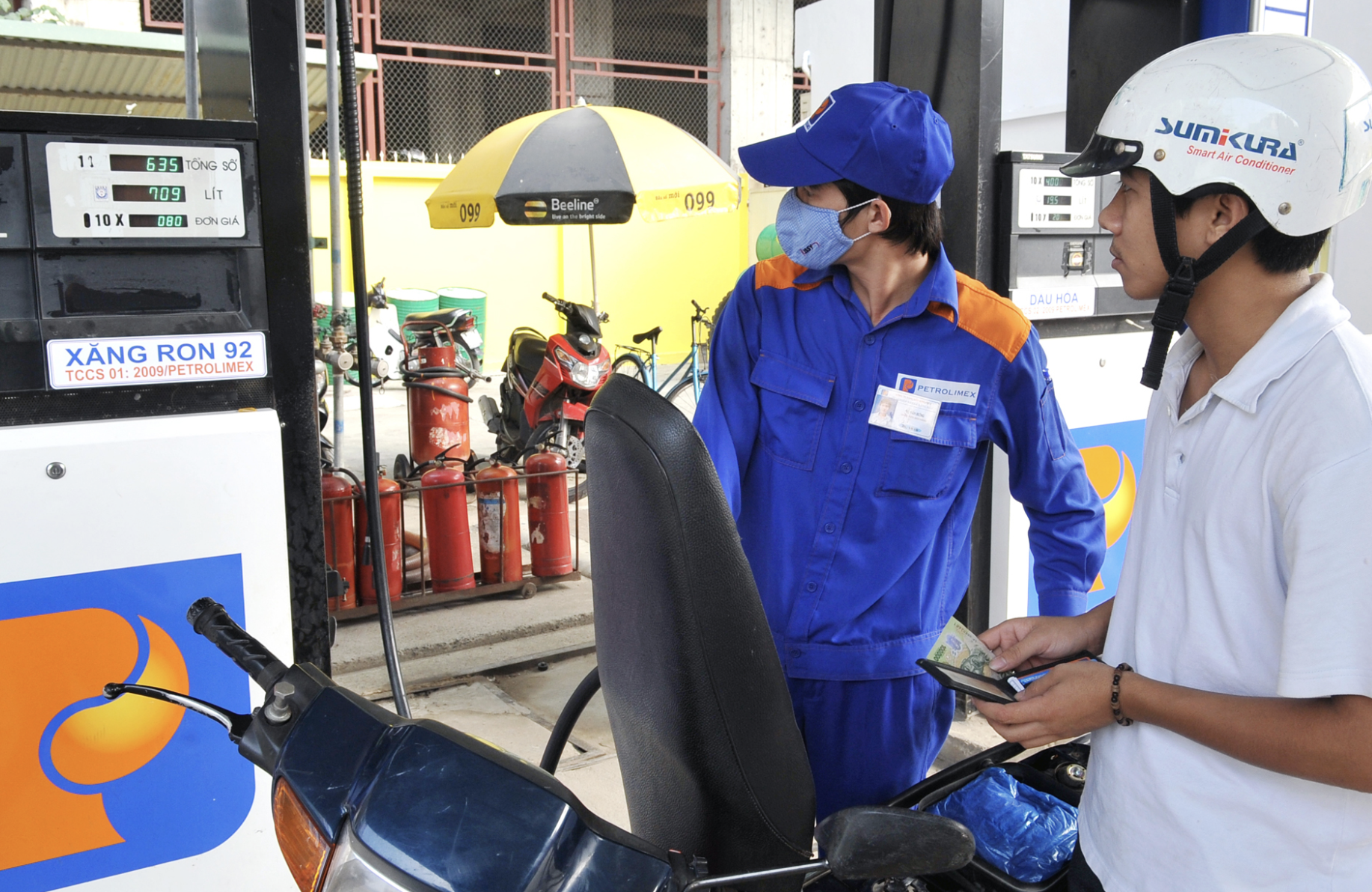
While Thoa supported ending the fund under a fully market-based pricing system, Bui Ngoc Bao, chairman of the Vietnam Petroleum Association, offered a different approach.
Bao argued that the central issue was not whether to abolish the fund but how to use it more effectively.
Since its establishment in 2009, the fund has faced criticism over its management structure, particularly the practice of assigning petroleum companies responsibility for holding and administering the money.
According to Bao, several businesses, including Petrolimex, opposed this arrangement from the beginning.
Although the fund proved effective during periods of market volatility, requiring businesses to manage its resources and disburse money under regulatory instructions created considerable oversight challenges.
These difficulties persisted despite opportunities to improve monitoring through digital technology.
The Vietnam Petroleum Association has repeatedly proposed transferring responsibility for the fund to a central government agency, such as the Ministry of Finance or the Ministry of Industry and Trade.
Such a change would improve transparency and reduce management-related problems, Bao said.
More importantly, he proposed fundamentally changing how the fund's resources are used.
Rather than directly subsidising retail fuel prices, the Government should use the money to purchase petroleum products for storage when international prices are relatively low.
Bao illustrated the proposal by comparing two market scenarios.
If global oil prices reached $150 per barrel, keeping domestic retail prices stable could require subsidies of several thousand dong per litre, placing considerable pressure on the fund.
By contrast, purchasing petroleum reserves when global prices stood at $60–70 per barrel would allow the Government to release physical supplies during subsequent market disruptions.
Bao argued that stabilising the market through fuel inventories would be more effective than relying exclusively on financial subsidies.
During severe supply disruptions, he noted, petroleum products may become difficult to obtain regardless of how much money is available.
Maintaining adequate physical reserves would therefore help address shortages while supporting price stability.
Proposal for two parallel fuel reserve systems
The Vietnam Petroleum Association has proposed establishing two parallel sources of fuel reserves.
The first would consist of national strategic reserves financed directly by the state budget.
The second would comprise centrally managed commercial reserves purchased using resources from the Fuel Price Stabilisation Fund.
Bao acknowledged that expanding national strategic reserves to the equivalent of 90 days of net imports would be challenging because of budget constraints and administrative procedures governing the purchase and release of stored petroleum.
Using the stabilisation fund to finance additional reserves could therefore provide a supplementary source of supply and strengthen the Government's ability to manage the market.
Under the proposed mechanism, the fund would continue collecting a fixed contribution from each litre of petroleum sold.
All proceeds would be transferred to a single state-managed account rather than being administered separately by petroleum businesses.
When international oil prices were low, authorities could use the accumulated resources to purchase fuel for storage.
During periods of severe volatility or supply shortages, the stored petroleum could be released into the market at reasonable prices.
Bao argued that this approach would preserve a price stabilisation instrument under the Law on Prices while simultaneously building physical reserves to respond to unexpected disruptions.
The competing proposals highlight a central question for Vietnam's petroleum market reform: whether price stability should be achieved by eliminating direct subsidies and relying on market-based instruments, or by retaining a restructured fund dedicated to strengthening fuel security.
Both approaches place greater emphasis on national reserves and flexible policy responses, although they differ fundamentally on the future of the existing stabilisation fund.
Tam An

