 Vietnamnet.vn

 Podcast



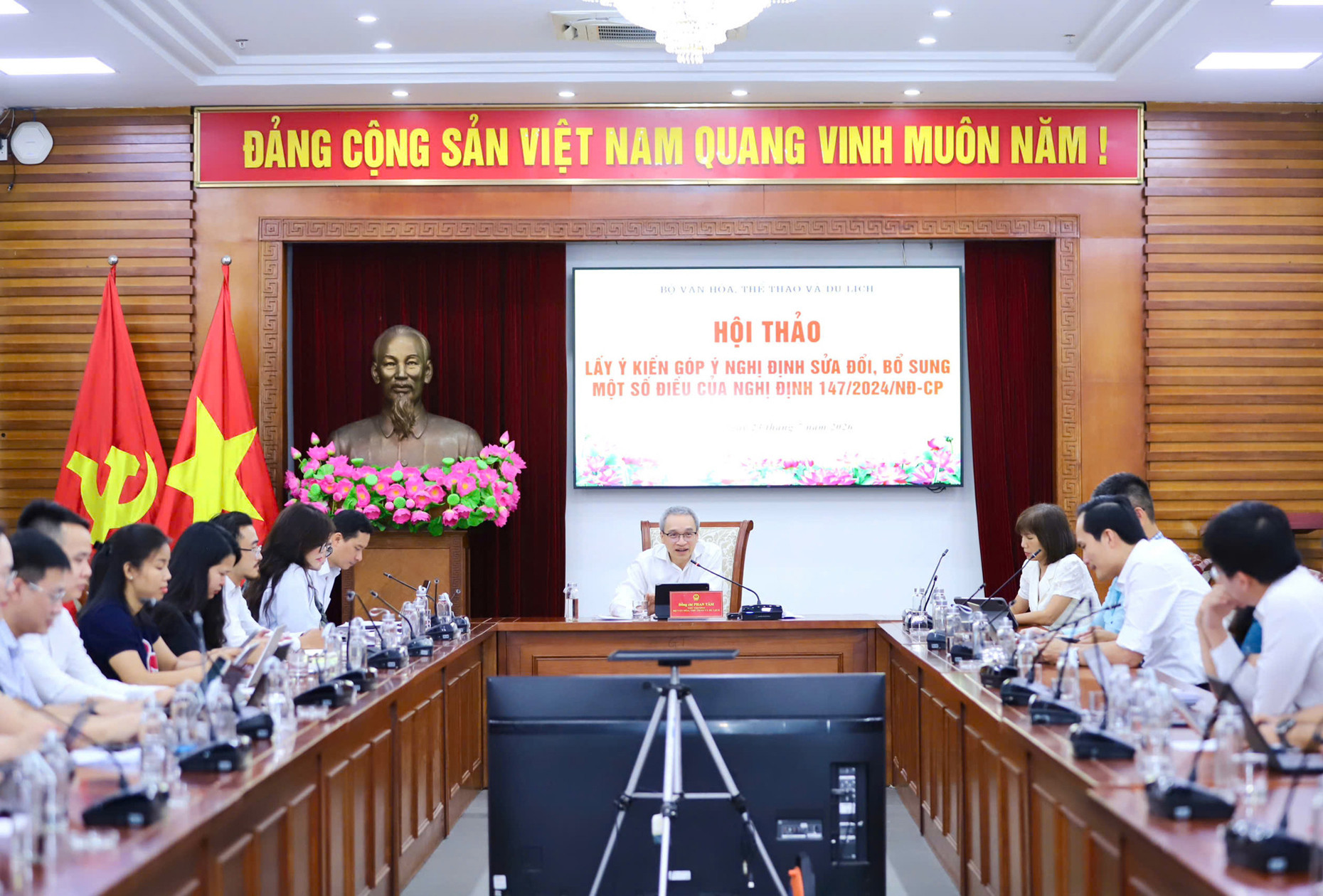
According to the Ministry of Culture, Sports and Tourism, a consultation workshop was held on July 23 to gather feedback on the draft decree amending and supplementing provisions of Government Decree No. 147/2024/ND-CP dated November 9, 2024, on the management, provision and use of Internet services and online information.
The draft also seeks to strengthen the protection of children online, further translating policies on child protection in cyberspace into more specific regulations governing accounts belonging to users under the age of 16.
Under the proposal, parents or guardians would continue to be responsible for registering and managing children’s accounts. Social media providers would also be required to apply technical solutions to identify child users, distribute age-appropriate content, strengthen privacy protection and proactively prevent harmful content.
For online gaming, the draft would also amend regulations to strengthen child protection by tightening account verification mechanisms, adjusting gaming time limits for users under 16, and refining requirements for health warnings and age-based game classification criteria.
The draft decree would further refine account verification requirements to enhance transparency in the digital environment.
Specifically, it clarifies that social media and online gaming accounts would have to be verified using either a phone number that has been authenticated in accordance with the law or a personal identification number.
The proposed requirement is intended to improve the effectiveness of state management, curb the use of fake accounts and strengthen the responsibilities of both users and service providers in the online environment.
For the first time, the draft decree also introduces policies aimed at promoting the development of Vietnamese-made games.
This is an entirely new provision that would create mechanisms to encourage video games developed by Vietnamese companies, particularly those featuring educational content or promoting Vietnamese culture and history.
Under the draft, games meeting the relevant criteria could benefit from a range of incentives, including trial releases before receiving an official license and access to preferential policies in accordance with regulations.

The Ministry of Culture, Sports and Tourism would also establish a specialized council comprising experts in culture and history to assess games seeking eligibility for these incentives.
At the same time, the draft decree seeks to refine the legal framework governing emerging digital platform models.
Amid the rapid growth of platforms that allow users to create and distribute video games themselves, the draft for the first time introduces regulations governing this type of platform through a separate licensing mechanism.
Under the proposal, platform owners and their authorized companies in Vietnam would be required to fully meet responsibilities related to content management, data storage, removal of violating content, cooperation with state authorities and compliance with other obligations prescribed by law.
Speaking at the workshop, Deputy Minister of Culture, Sports and Tourism Phan Tam stressed that the ministry’s consistent approach is not to tighten restrictions on organizations and businesses, but to establish a clear, transparent, stable and practical legal framework.
The aim, he said, is to create favorable conditions for innovation and market development while improving the effectiveness of state management and safeguarding the legitimate rights and interests of individuals and businesses.
According to the deputy minister, managing the digital environment today can no longer revolve solely around licensing or handling violations in the way authorities traditionally operate in the physical world.
The Ministry of Culture, Sports and Tourism, along with other ministries and government agencies, is working to modernize information management and make a strong shift from pre-approval mechanisms toward risk-based governance.
For electronic information services, where content management plays a significant role, the approach should combine oversight of individual pieces of content with accountability for the entities that operate and lead digital platforms.
At the same time, responses after violations occur need to be combined with prevention, early detection and timely intervention based on technology and data, with the different approaches working together in a balanced manner.
Phan Tam said the younger the child, the stronger the layers of protection should be, with closer parental supervision and more features designed to block or restrict potential risks.
At the same time, primary responsibility for protecting children should rest with the platforms.
Platforms should provide comprehensive tools and proactively develop measures to identify children’s accounts or accounts being used by children, allowing services to be automatically adjusted accordingly, including restricting contact with strangers, limiting exposure to inappropriate content and strengthening the protection of personal information.
Phan Tam emphasized that the ultimate goal is to establish a modern, transparent and stable legal framework for the digital environment.
Such a framework, he said, would allow the State to better fulfill its role in facilitating development, give businesses greater confidence to invest while fulfilling their social responsibilities, and ensure users are better protected in the digital environment.
Thai Khang
.svg)
