 Vietnamnet.vn

 Podcast



Around 2018, Le Nhat Vu, born in 1986 and living in Hoa Khanh Ward, Da Nang, and his wife Vo Thi Ngoc Thu began working with farmers to turn fibers from mature loofahs into household products.
At the time, Vu was working as an engineer, while Thu was a lecturer at a college. Both came from farming families and wanted to pursue a business connected to agriculture that could make use of locally available materials.
“We wanted to create environmentally friendly products with a Vietnamese identity that could be taken overseas, while also creating another outlet for farmers,” Vu said.
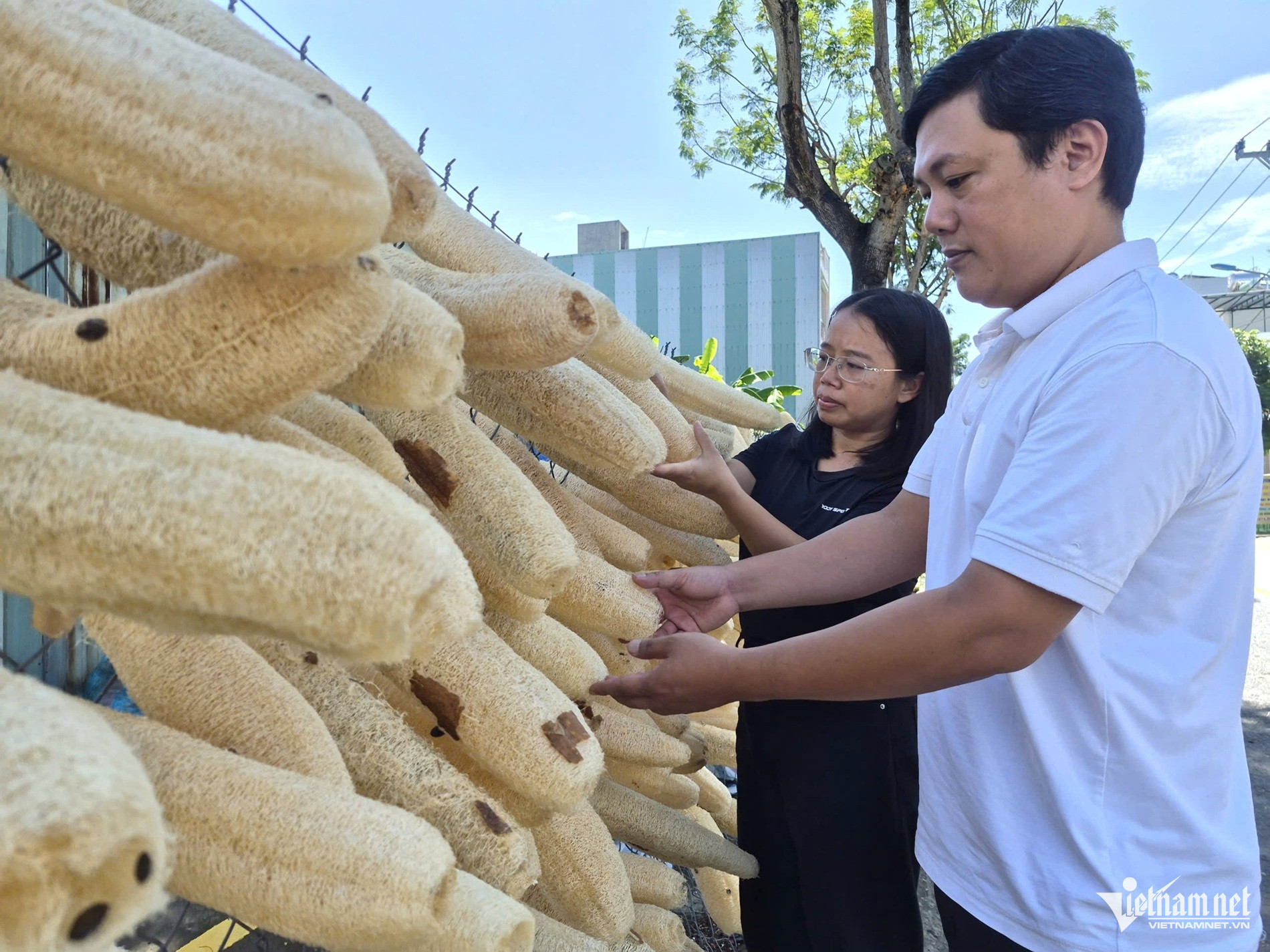
According to Vu, securing the right raw material was their first challenge. The loofah varieties they initially tested produced little fiber and inconsistent quality. The couple bought mature loofahs from farmers while searching for a variety better suited to fiber production.
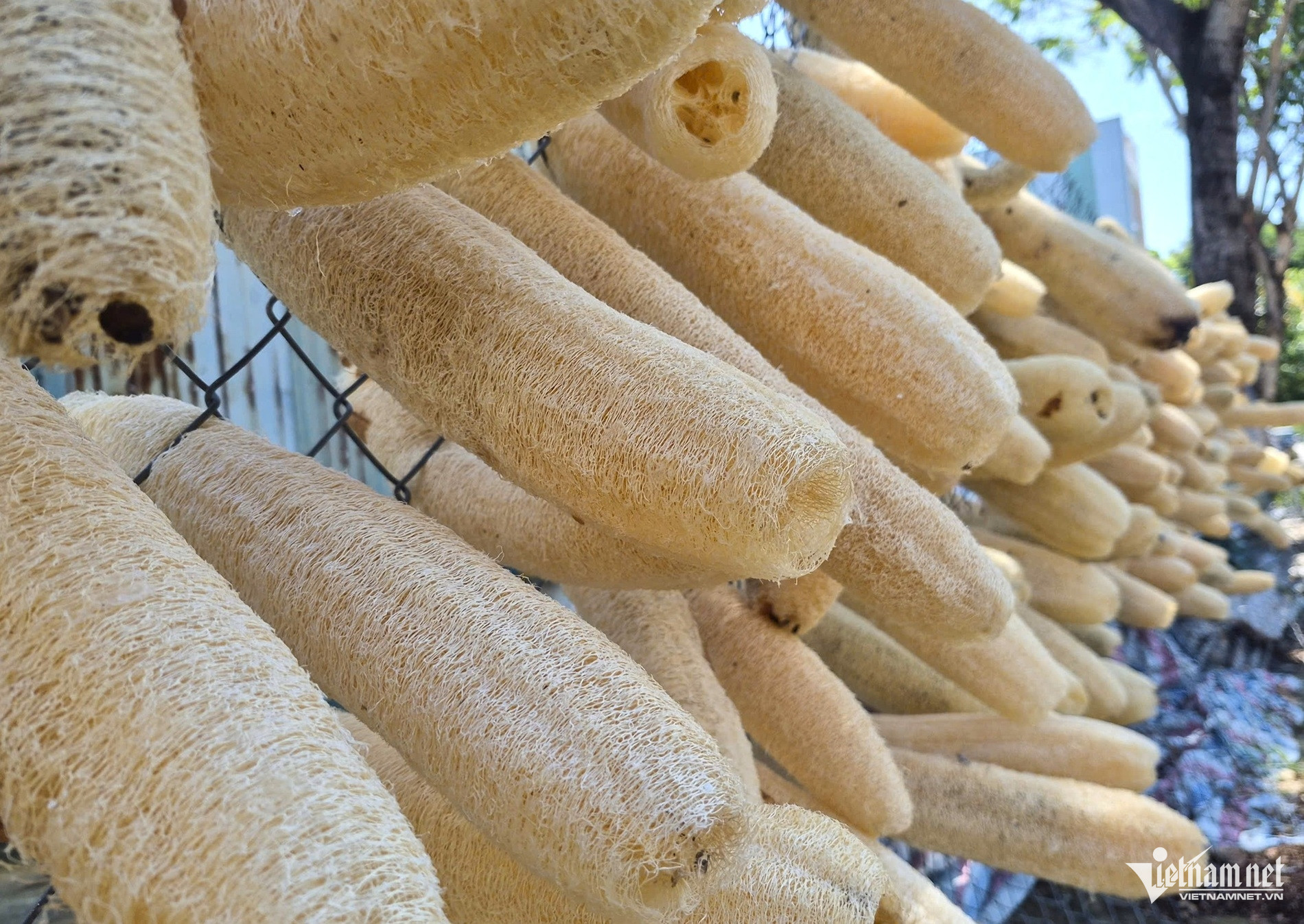
After repeated trials, Vu found a variety that yielded more fiber. The fruit is left to mature for about four months before being harvested. It is then peeled, washed and dried before the seeds are removed and the fiber is pressed, cut and sewn into finished products.
In 2022, Thu left her job to join her husband full-time in developing the business.
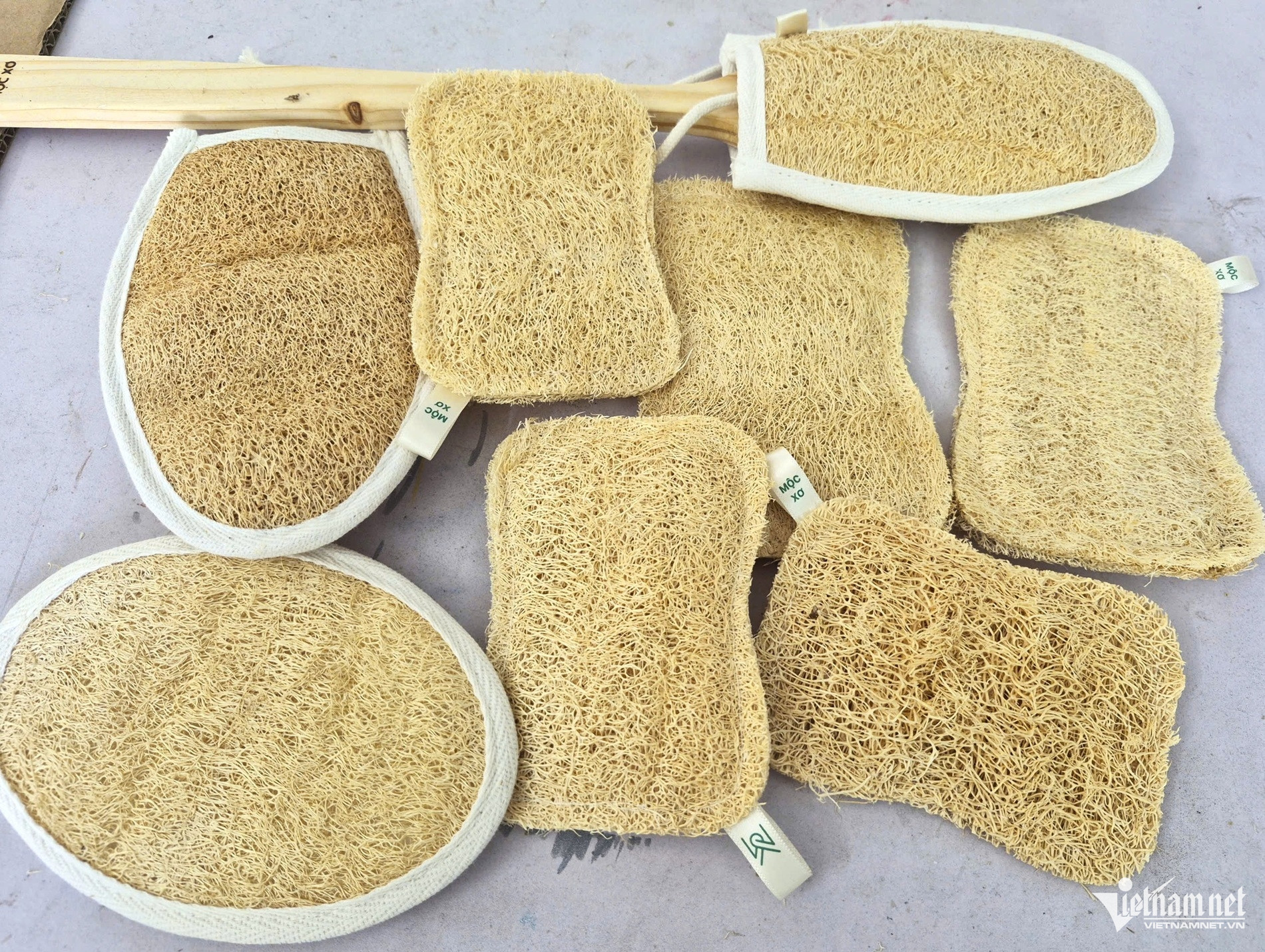
Thu said loofah fiber is durable, relatively soft, quick-drying and capable of absorbing grease, making it suitable for a range of household items used in kitchens and bathrooms.
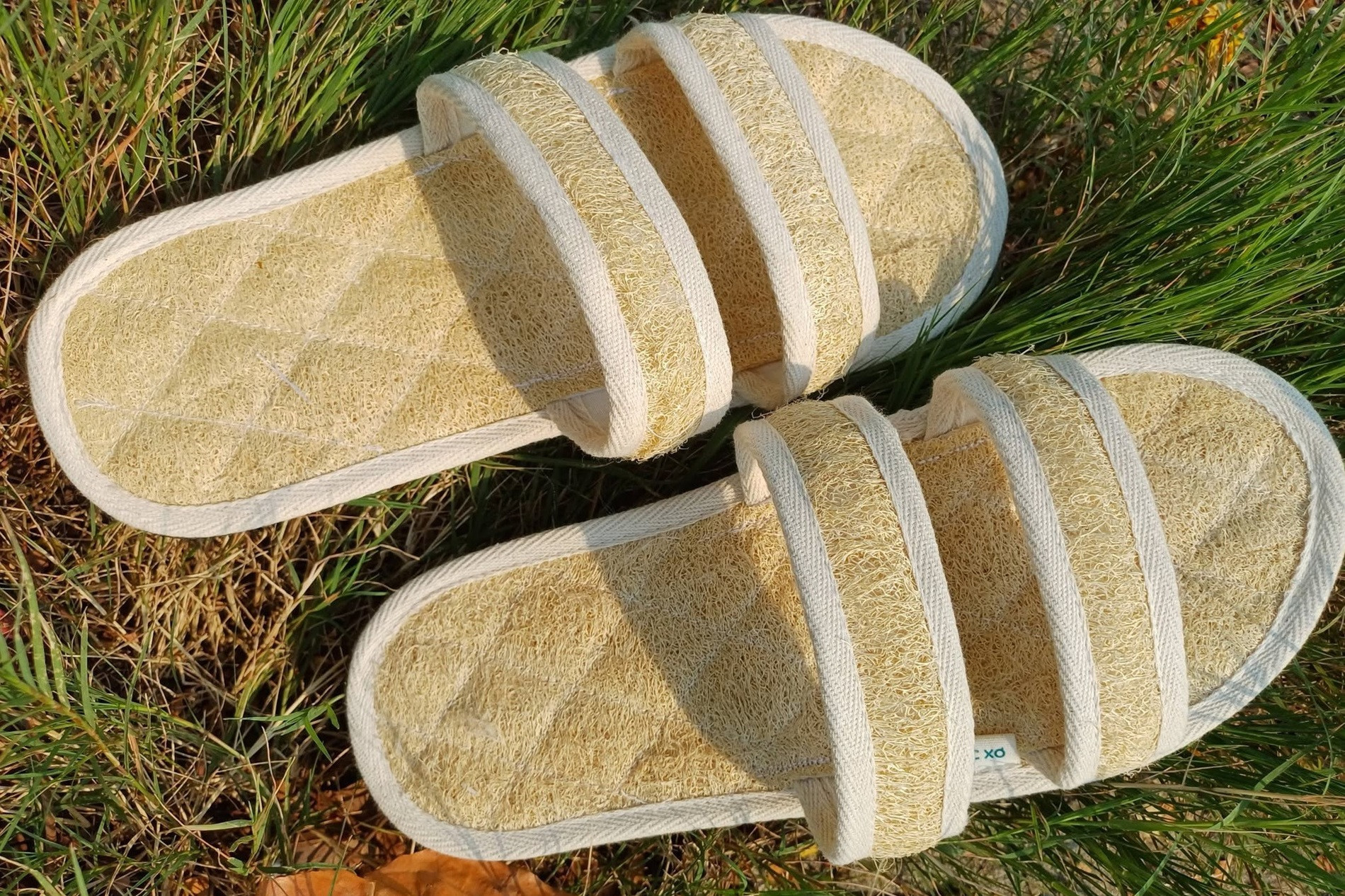
Using a material that had previously seen little commercial use, the couple has developed more than 20 product designs across four categories: kitchenware, bathroom products, fashion and home decor. Prices range from VND30,000 to VND500,000 (about $1.15-$19).
A $30 order and the challenge of expanding overseas
From the outset, Vu and Thu prioritized overseas markets before expanding their presence in Vietnam. They sought customers through international agricultural groups, social media and trade promotion programs.
Vu said their first export order to the US was worth only about $30. The couple worked out how to ship the goods themselves and ensure they reached the customer in proper condition. From that initial order, their products gradually reached more overseas customers and markets.
Today, the company’s loofah products are exported to the US, South Korea, Australia and Canada, among other markets. Its largest shipment to South Korea was worth about $2,000. In Vietnam, the products are supplied to several hotels in Da Nang and sold at gift stalls at tourist destinations.
The business is also seeking opportunities to expand into Europe.
Vu said international customers have stringent requirements for quality, finishing and packaging. Each order therefore gives the couple an opportunity to refine their products, from the quality of the loofah fiber to product design.
To secure a reliable supply of raw materials, Vu and Thu work with farmers in several localities, providing seeds and technical assistance while purchasing mature loofahs from them.
Around 50 farming households in Da Nang, Dak Lak, Yen Bai, Dong Nai and several other localities currently participate in the model, covering a combined area of more than 20 hectares.
In major growing areas, Vu provides seeds and technical support and signs agreements to purchase the harvested loofahs. Dried loofahs are bought according to size and quality for about VND2,000-12,000 each.
Vu said the model helps make full use of mature loofahs that might otherwise be discarded. Farmers can sell young loofahs as food, while those left to mature can be sold for their fiber.
“However, most of the farmers working with us choose not to sell the young loofahs, but instead sell the mature fruit to earn a stable income. We want to expand the growing areas, work with farmers to create products and share the profits. When there is a stable market for the crop, farmers also feel more secure about maintaining the raw-material growing areas,” Vu said.
The business currently provides regular employment for 10 workers, who earn about VND8 million to VND12 million ($305-$455) per person per month. When large orders arrive, it hires additional local seasonal workers.
Looking ahead, Vu and Thu plan to expand their contracted growing areas, bring more farming households into the model and develop additional products from loofah fiber. Their goal is to establish a sufficiently large raw-material supply area capable of meeting the quality and volume requirements of export orders.
Ho Giap
.svg)
