 Vietnamnet.vn

 Podcast



What was meant to be a six-month overland journey has now stretched into its ninth month, as Pham Kien, 36, from Ho Chi Minh City, and Nguyen Thi Nhu Ngoc, 36, from Lam Dong, continue their backpacking adventure across continents.
In early March, the couple arrived in Mongolia, traversing vast grasslands. It marked the 14th country they have visited since the start of their journey.
Seven years preparing for a dream
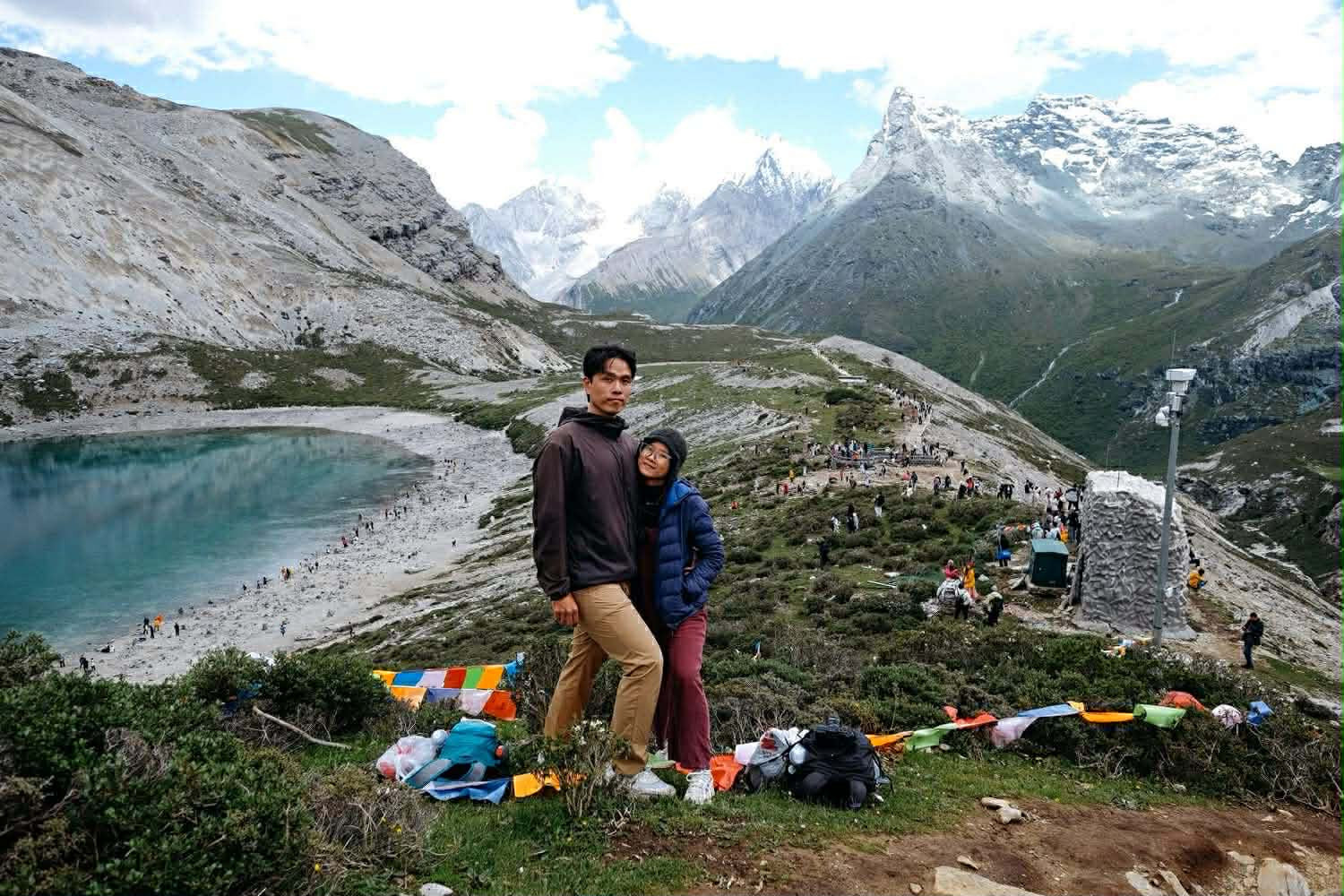
Kien and Ngoc married in 2024 after 12 years together. Alongside demanding work schedules, they shared a passion for travel and nature. Each year, they would use their annual leave to take one or two trips, recharging before returning to daily life.
“In 2018, we decided we wanted to travel overland to see more of the world. From then until 2025, we saved consistently and prepared our itinerary, health and finances for the trip,” Ngoc said.
They chose overland travel, relying mainly on public transport, partly because Kien is afraid of flying.
“On a flight to Japan, he once encountered a severe storm over Hong Kong. That experience made him anxious about long flights,” Ngoc explained.
By mid-2025, the couple decided to resign from their jobs and begin the journey, even though they had not yet reached their savings target.
“We told ourselves we would go as far as we could. If we ran out of money, we would return home. If we kept waiting for perfect conditions, we might never go,” she said.
In the years leading up to departure, they focused on building their physical endurance - maintaining a balanced diet, sleeping well and training for long-distance walking. As the departure date approached, they intensified their routine and even took up boxing for self-defence.
They also mapped out routes in detail, researched visa requirements, border procedures, transportation options, SIM cards, currency exchange, languages and cultural norms.
In July 2025, they entered China, their first time visiting the neighbouring country.
“Even without speaking Chinese, we managed smoothly thanks to translation apps. Locals were friendly and helpful, which made it easier to adapt,” Ngoc said.
One of their most memorable destinations was Yading, often described as a “paradise on earth”, with lakes such as Pearl Lake, Milk Lake and Five-Colour Lake. The couple trekked through mountainous terrain over 4,000 metres above sea level to fully experience its beauty.
“The only downside of travelling in China was the limited availability of public restrooms,” she noted.
Unforgettable moments along the way
During the first six months, the couple travelled through 10 countries, including China, Pakistan, Afghanistan, Uzbekistan, Tajikistan, Kyrgyzstan, Kazakhstan, Turkmenistan, Iran and Türkiye.
They spent the longest time in Iran, staying 43 days, while Turkmenistan was the shortest stop at just four days.
Iran left a particularly deep impression. On Hormuz Island in the Persian Gulf, often called the “rainbow island”, they were captivated by its unique geology. Layers of salt and minerals create natural patterns in vivid hues of red, orange, yellow, white, purple and blue.
They often rented bicycles to explore the island, watching sunsets, feeling the sea breeze and meeting welcoming locals. On clear days, they ventured into caves and explored valleys shaped by unusual geological formations.
Their nine-month journey has not been without challenges, but the couple say they approach every situation with optimism.
One of the most tense moments came when crossing into Afghanistan from Pakistan via the Torkham border, considered one of the most dangerous border crossings in the world. Upon arrival, they were taken into a private room, where officials checked their phones and asked questions. The windows still bore visible bullet marks.
“We held our breath while waiting. Fortunately, the officers were polite and the process was quick. We finally entered Afghanistan, a place we had never imagined visiting,” Ngoc recalled.
Just a few dozen kilometres beyond the border, they were struck by stark landscapes of dry vegetation and dusty roads. Some areas felt chaotic, others peaceful yet unfamiliar.
At times, travel in Afghanistan was particularly demanding. “There were days we travelled 17 to 18 hours just to reach the next destination. The roads were full of potholes, dust filled the vehicle, and at one point, the brakes failed,” Ngoc said.
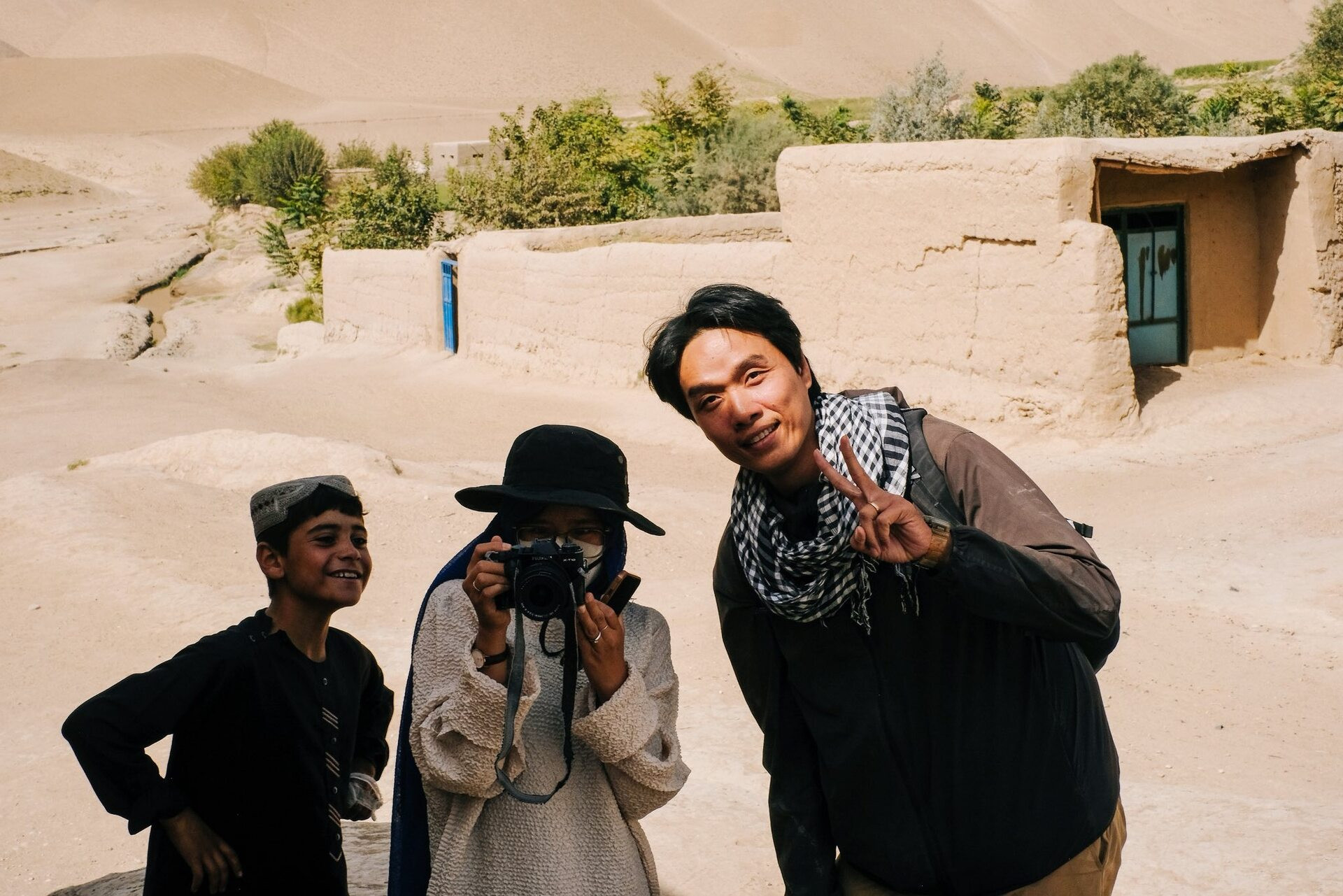
Instead of frustration, they used delays to connect with local children, who were curious about their camera and asked innocent questions, bringing moments of laughter.
They spent 14 days in Afghanistan, immersing themselves in daily life.
The most physically exhausting leg of the journey came between Türkiye and Tbilisi, Georgia, where they switched vehicles seven times, travelling from 9am to after 8pm before reaching their accommodation.
Another memorable challenge was a four-day train journey across Russia, from Moscow to Irkutsk. The ageing train shook violently, making sleep nearly impossible. “But outside the window, winter landscapes looked like something out of a fairy tale,” Ngoc said.
Originally planning to travel for six months, the couple decided to extend their journey as their savings allowed, adding Georgia, Armenia, Russia and Mongolia to their route.
After nine months and 14 countries, they say the journey has reshaped them. They have become more adaptable, more resilient and more open to whatever lies ahead.
Linh Trang
.svg)
