 Vietnamnet.vn

 Podcast


From ideas to working AI prototypes in seven hours
Sea and OpenAI held the Vietnam edition of the Sea x OpenAI Regional Codex Hackathon Series on October 31, 2026, bringing together 40 teams of developers, students, and technology builders to explore how artificial intelligence (AI) can be applied to real-world challenges.
Selected from 345 registered teams comprising more than 1,300 applicants across Vietnam, participants had just seven hours to transform their ideas into AI prototypes using Codex, OpenAI’s coding agent. Throughout the hackathon, technical experts from OpenAI were on hand to provide guidance and support as teams developed and refined their solutions.
The projects addressed a wide range of practical needs, from visualizing biological structures and supporting real estate tasks to developing tools for delivery drivers and repair technicians, as well as solutions to improve personal safety when traveling alone at night.
"The value of AI lies not just in what the technology can do, but in how people use it to solve real-world problems. This was reflected in the range of ideas and practical solutions developed by participants, addressing needs across different aspects of everyday life. We believe that making technology more accessible creates more opportunities for people to innovate and address the challenges around them," said Tran Tuan Anh, Managing Director of Shopee Vietnam.
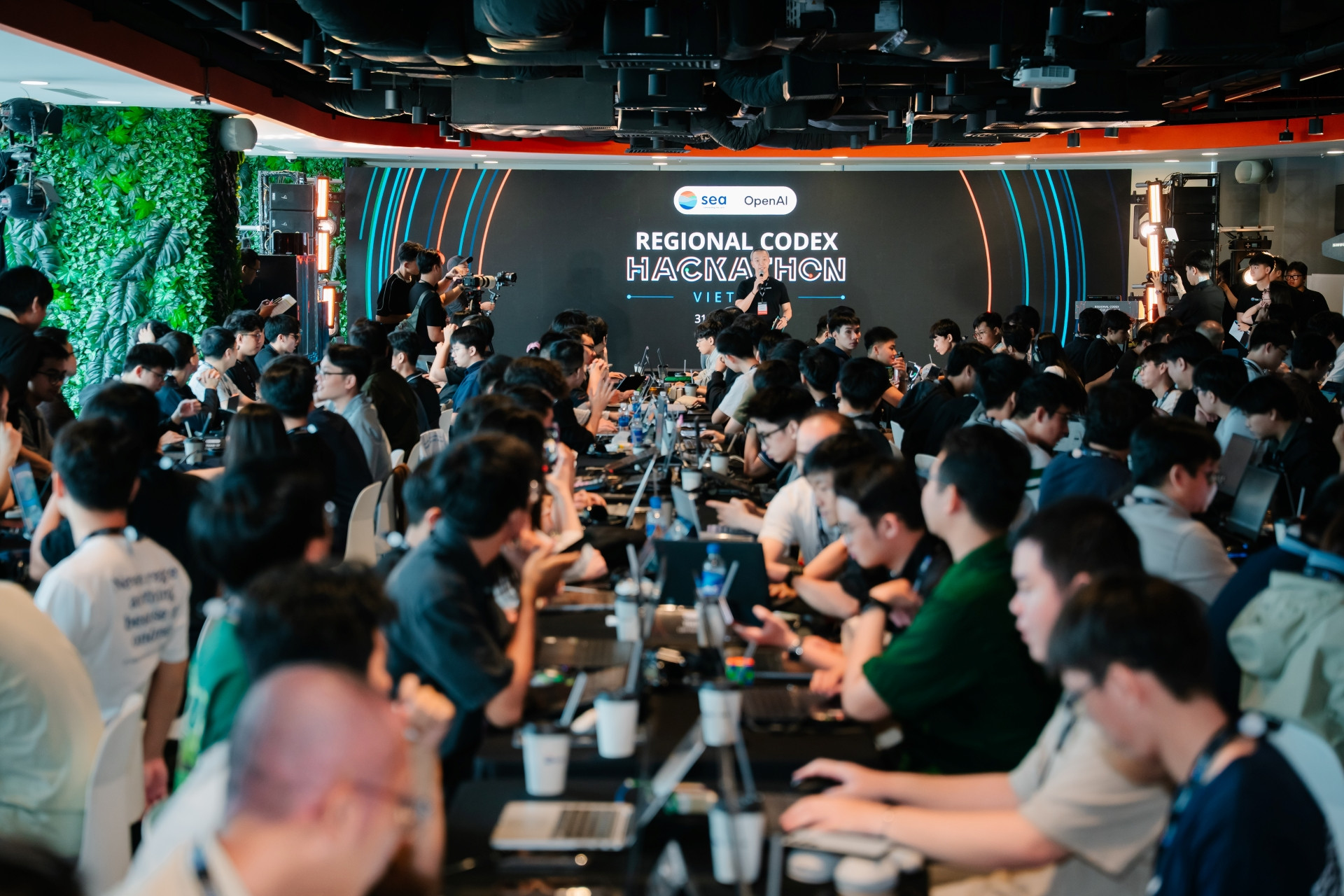
He added that Sea was pleased to partner with OpenAI to bring the hackathon to Vietnam, expressing hope that the projects would continue to evolve into solutions that make a meaningful difference in people’s lives.
Throughout the competition, participants collaborated to develop features, test approaches and refine their prototypes while exchanging ideas with technical mentors and fellow developers.
Following an initial evaluation, five teams advanced to the final round, where they presented their concepts, explained how AI was leveraged throughout the project development process and gave a live demonstration of their products to the judging panel.
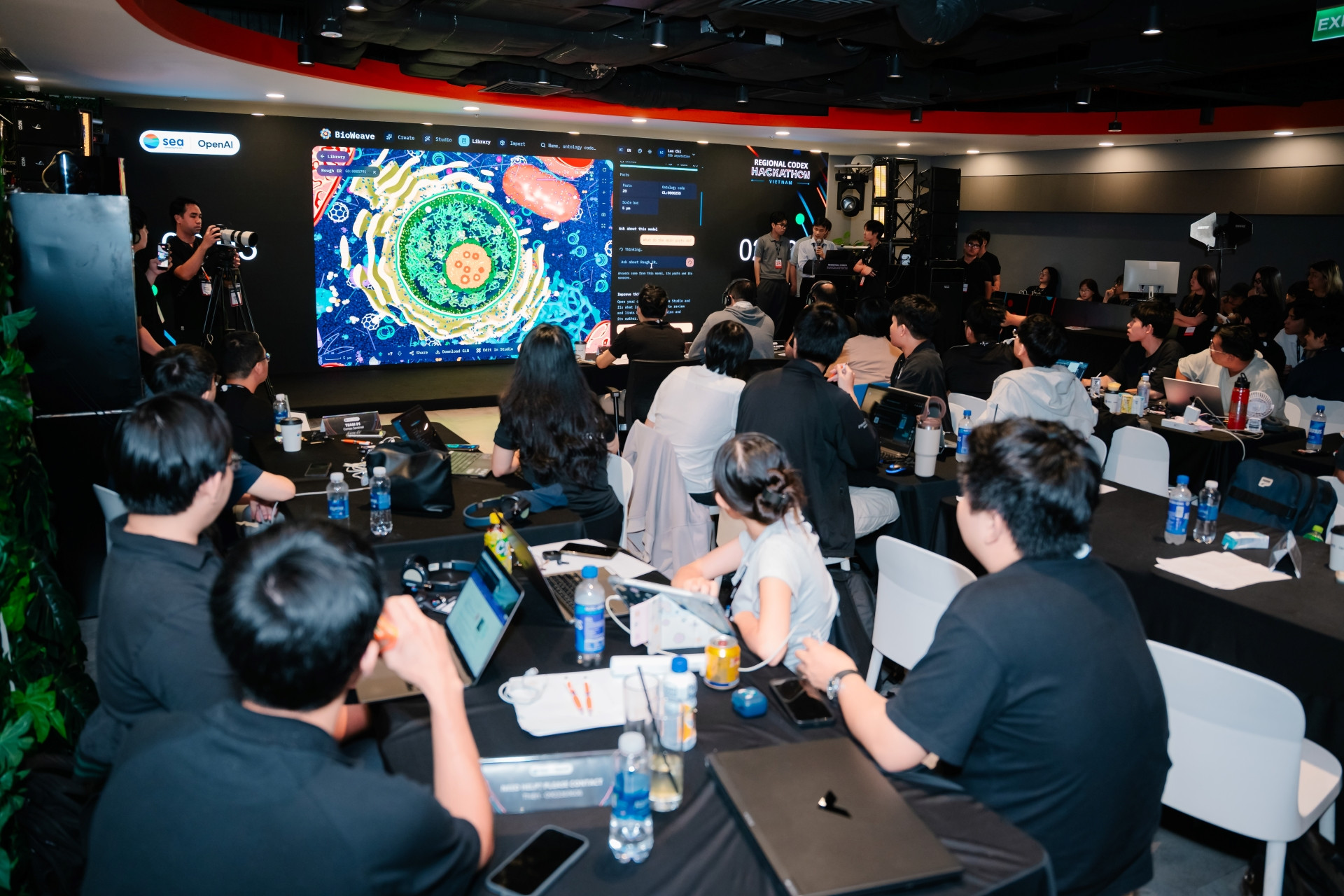
AI-powered biology visualization project takes first place
Team Vivant was named the first-place winner with its project, “Bioweave – Turns a Biology Question into a Checked 3D Model”. Using AI, Bioweave converts biology-related questions into three-dimensional models of plants, animals, and biological tissues, helping users better visualise complex structures that can be difficult to illustrate through conventional learning materials.
The project explores how AI and 3D technology can make biological concepts more accessible and engaging for learning and research. Inspired by their shared passion for science, the team developed Bioweave to explore how technology could make learning biology more engaging and accessible.
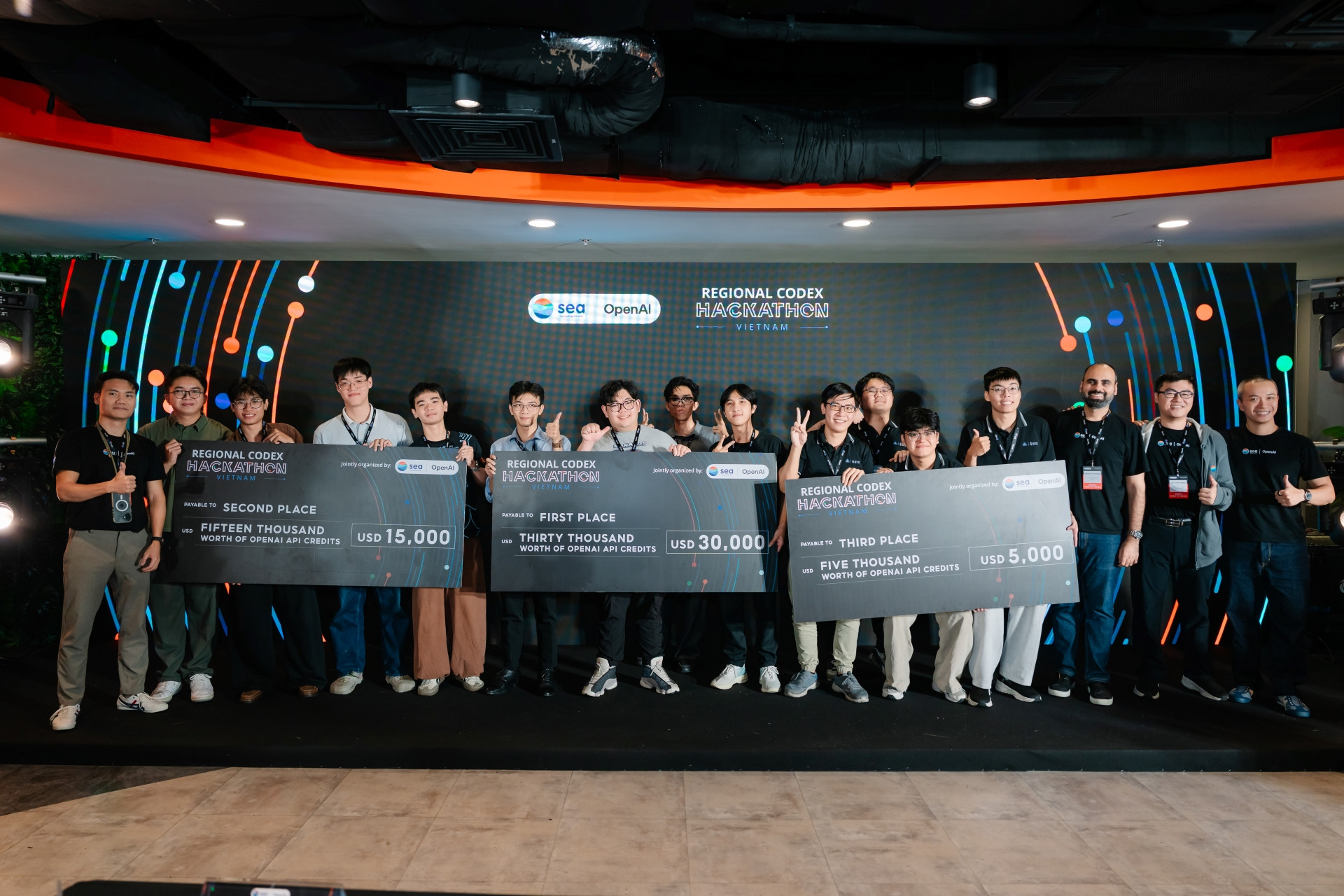
A team representative said the award provided motivation to keep building and refining Bioweave after the competition.
The developers also hope to collaborate with experts and laboratories at high schools and universities to develop the project further.
For Team Vivant, the hackathon offered more than a chance to put their technical skills to the test. It reinforced the importance of continuous learning and staying grounded in the real-world problems they set out to solve.
Members of all five finalist teams received one-year ChatGPT Pro subscriptions, enabling them to continue experimenting with AI and building on the ideas they brought to the hackathon.
Bringing Vietnam’s developer community together
Beyond the competition, the hackathon was also an opportunity for participants to connect with fellow developers, exchange ideas and learn from different approaches to using AI.
These interactions added another dimension to the event, encouraging knowledge-sharing and collaboration beyond the projects developed during the seven-hour challenge.
Sidharth Sharma, Head of Go-to-Market, ASEAN at OpenAI and a member of the judging panel, expressed his enthusiasm for bringing the Regional Codex Hackathon series to Vietnam, citing the country’s dynamic technology ecosystem and promising community of AI talent.
According to Sharma, Vietnam ranks among the top 20 countries globally for weekly active users of both ChatGPT and Codex.
He added: “At the hackathon, I got to see some of the talent behind those numbers. I was inspired by the problems the teams chose to tackle and impressed by the range of ideas they brought to life in just seven hours. That combination of technical skill and a clear sense of who they were building for is what stood out to me about Vietnam’s developer community. We’re grateful for our ongoing partnership with Sea, which gives developers in Vietnam and across Southeast Asia more opportunities to build with AI and learn from one another.”
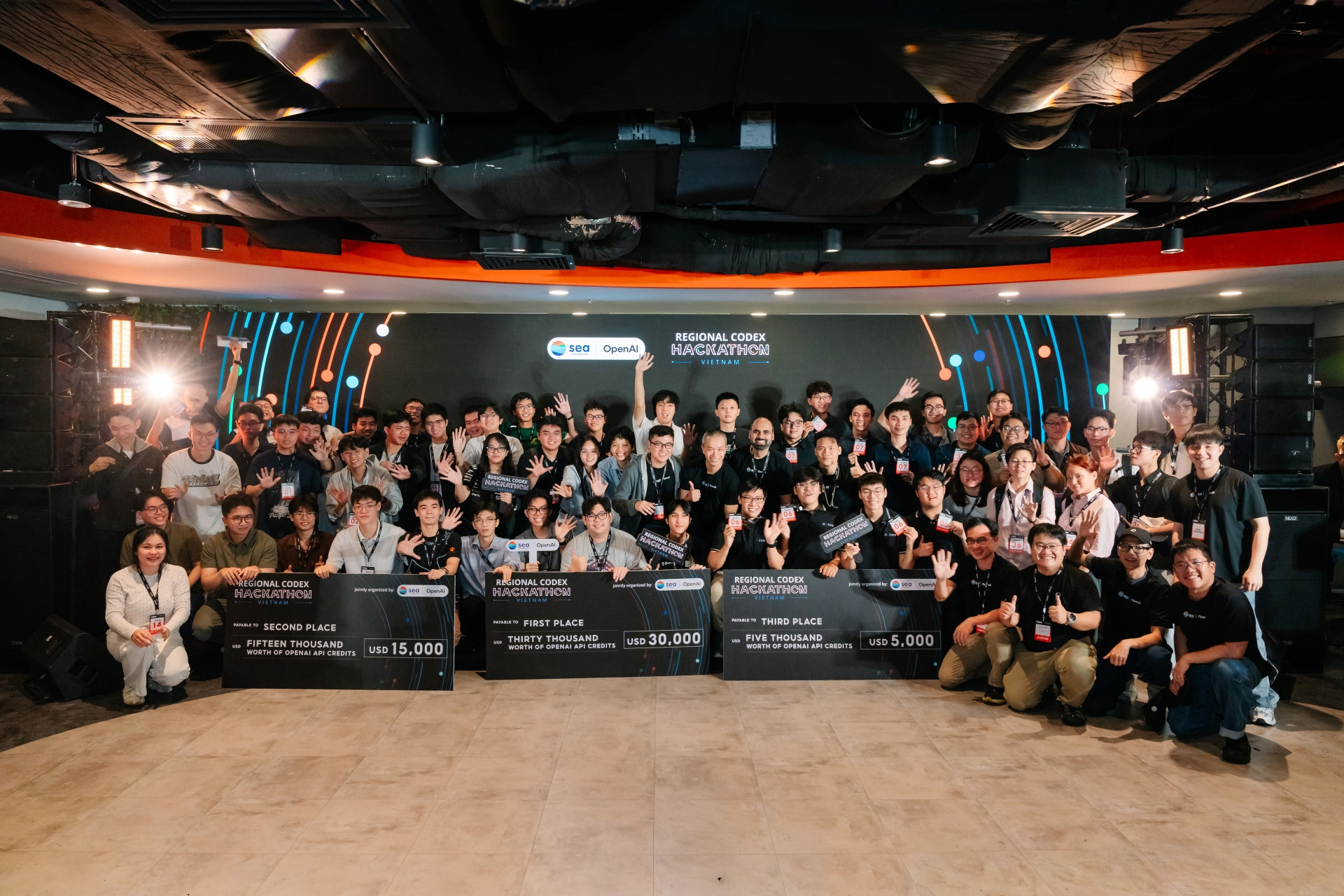
From educational applications to solutions addressing challenges in daily life, the projects developed in Vietnam reflected the diverse ways developers are putting AI to practical use, drawing on their own experiences and understanding of local needs.
The Vietnam competition formed part of the broader Sea x OpenAI Regional Codex Hackathon Series, which has also held events in Singapore, Taiwan (China) and Indonesia.
With upcoming editions planned for Thailand and Malaysia, the series will continue to create opportunities for developers across the region to exchange ideas, share knowledge and explore practical applications of AI.

