 Vietnamnet.vn

 Podcast



A Ghanaian baby developed severe haemolytic jaundice just one day after birth because of an exceptionally rare blood antibody, prompting doctors at Vietnam National Children's Hospital to make an unprecedented decision in a race to save the infant's life.
Race to find an ultra-rare blood donor
Soon after birth, the baby developed jaundice that progressed rapidly. Despite intensive phototherapy and multiple laboratory tests at a local hospital, doctors were unable to determine the cause. On May 27, the infant was transferred to Vietnam National Children's Hospital.
Doctors at the hospital's Neonatal Centre found the baby had widespread jaundice, rapidly rising bilirubin levels and haemoglobin that had fallen to 98 g/L. Although both mother and child had O Rh-positive blood, the infant was suffering severe haemolysis and required an emergency blood exchange.
Further testing at the National Institute of Hematology and Blood Transfusion revealed the baby carried the Anti-Fy3 antibody associated with the extremely rare Duffy-null blood group. While a compatible blood source was being sought, doctors maintained intensive phototherapy and administered medication to slow the destruction of red blood cells.
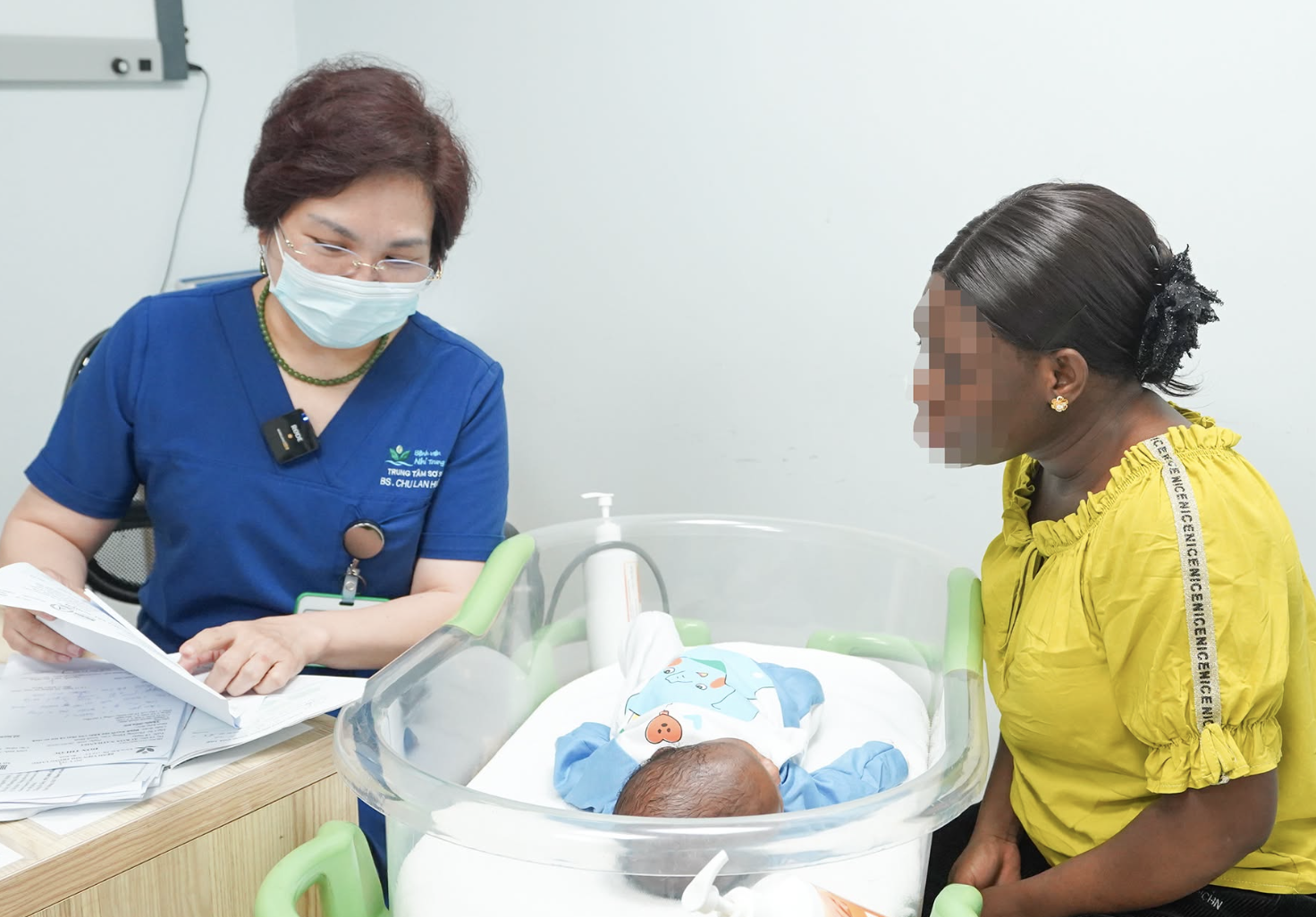
An unprecedented decision
Doctors tested both parents in search of a compatible donor. However, the father's blood was incompatible, while the mother, who had recently undergone a Caesarean section and was suffering from severe anaemia with a haemoglobin level of just 88 g/L, was unable to donate.
Meanwhile, the baby's condition continued to deteriorate, with worsening anaemia placing him at risk of heart failure, respiratory failure, apnoea and multi-organ failure.
Following multidisciplinary consultations and approval from the hospital's leadership, doctors made an unprecedented decision to appeal for blood donors with type O blood from the community, prioritising African residents in Vietnam because the Duffy-null blood group is significantly more common among people of African ancestry.
After two days of searching, doctors screened 25 volunteers, including three Vietnamese and 22 African donors, before identifying two compatible African donors.
The baby received a blood transfusion on the third day after admission. His condition improved rapidly, with jaundice subsiding, healthy skin colour returning and normal feeding restored. He was discharged after seven days of treatment.
Three weeks later, follow-up examinations showed the infant was healthy and developing well.
An exceptionally rare antibody
Dr Vu Thi Hue from the Neonatal Centre said the case was highly unusual because the haemolytic disease was not caused by the more common ABO or Rh blood group incompatibilities.
Beyond the familiar ABO and Rh systems, humans have dozens of other blood group systems, including the Duffy system. The Anti-Fy3 antibody is found only in people with the Duffy-null blood group, which is extremely rare among Asian and European populations but occurs in 68-90% of people of African descent.
If a mother carries the Anti-Fy3 antibody while the fetus inherits the Duffy antigen from the father, maternal antibodies can cross the placenta and destroy the fetus's red blood cells, causing severe jaundice and anaemia immediately after birth.
Doctors also urged parents not to overlook neonatal jaundice, warning that it may signal a range of underlying conditions, including rare but potentially life-threatening diseases. Infants who develop jaundice shortly after birth or whose jaundice progresses rapidly should receive prompt assessment and treatment at specialised medical facilities.
Vo Thu
.svg)
