 Vietnamnet.vn

 Podcast


Raising hundreds of softshell turtles in plastic tubs
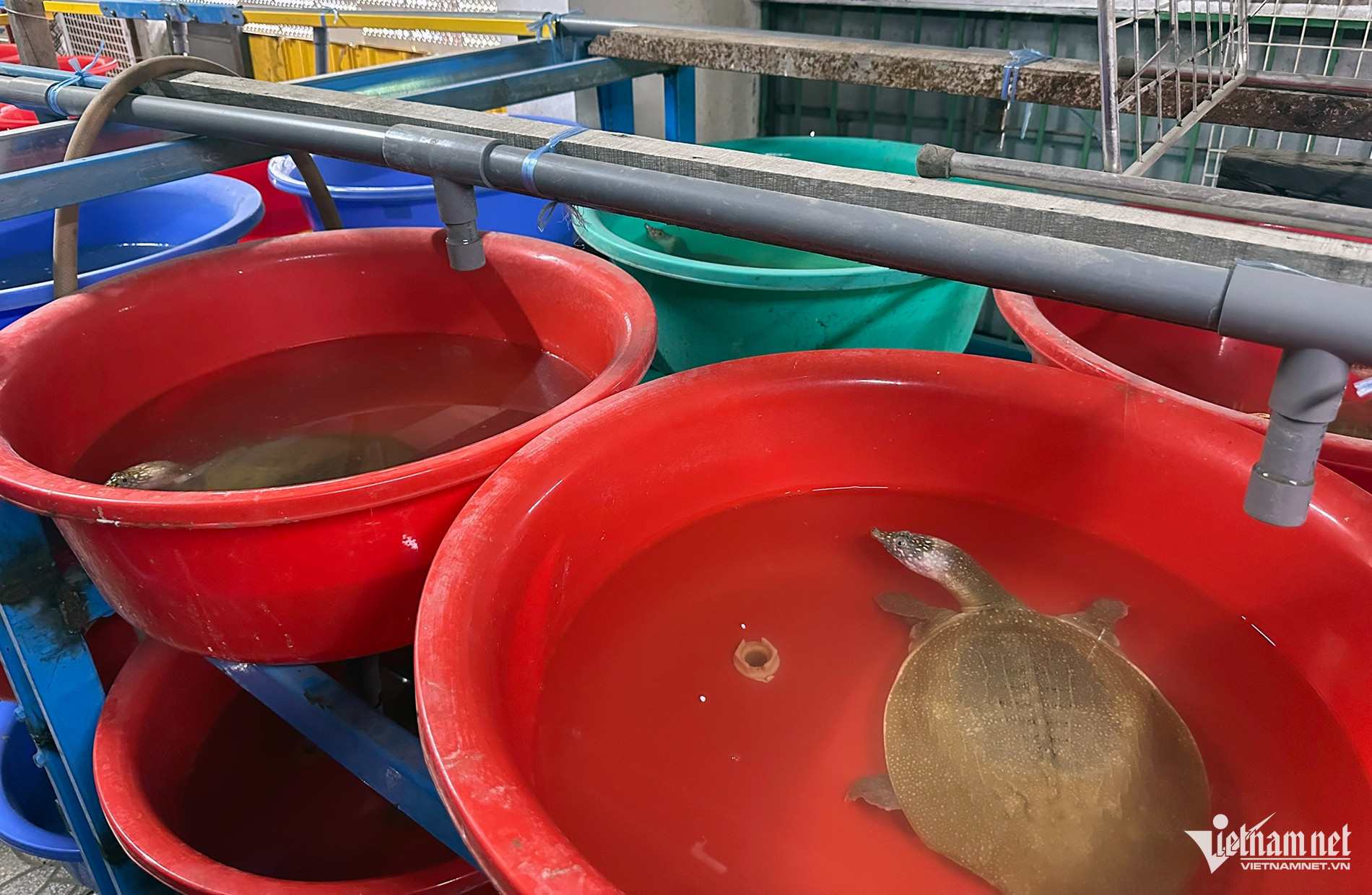
Instead of digging ponds or constructing concrete tanks, Ha Thuan Cu, 65, from Nga Bay Ward in Can Tho City, has chosen to raise giant softshell turtles, locally known as cua dinh, in individual plastic tubs.
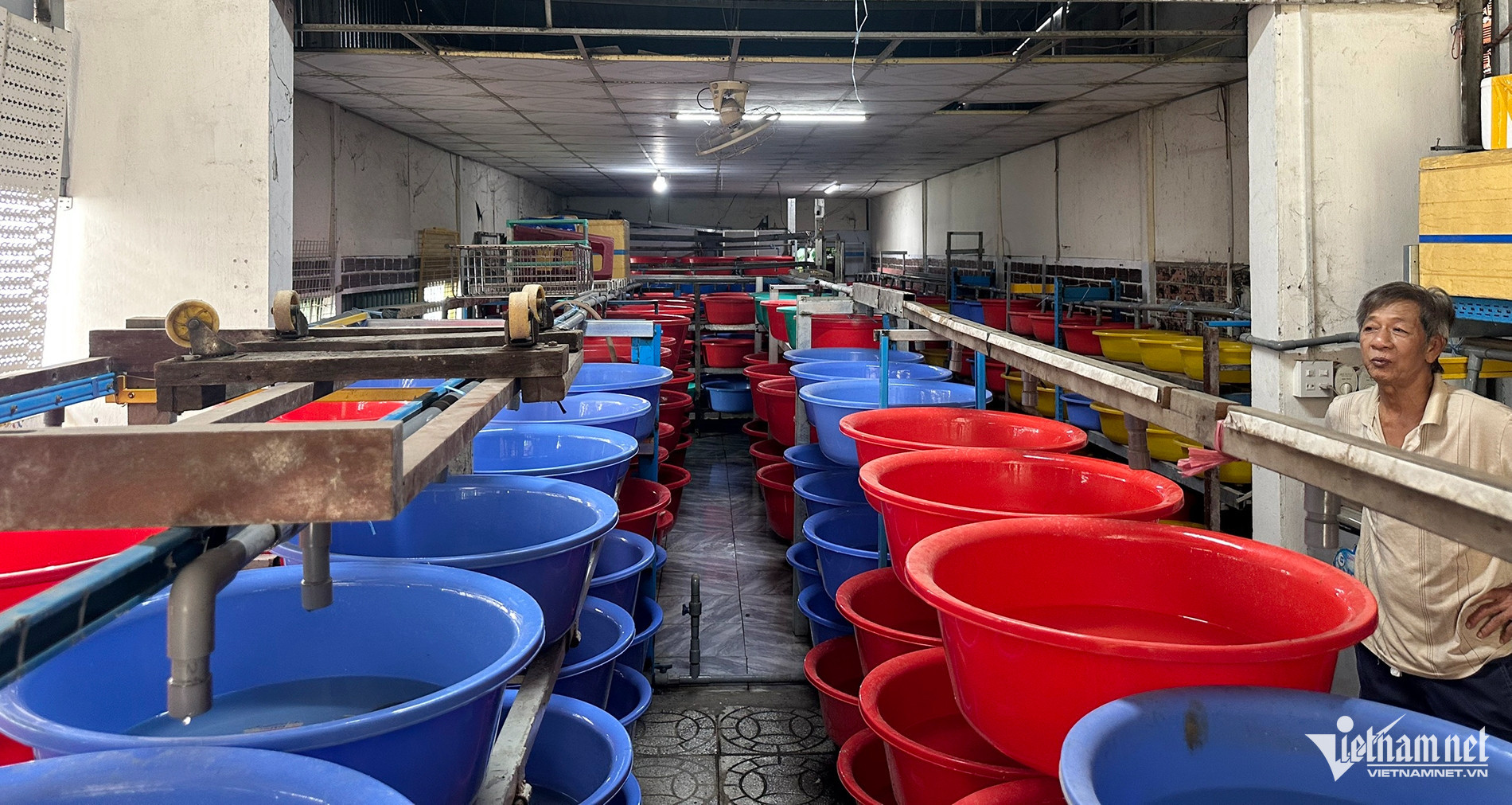
In a roughly 100-square-metre area in front of his house, hundreds of plastic tubs are neatly arranged on iron racks, forming an unusual multi-tier farming system.
According to local authorities, Cu is among the pioneers of this plastic-tub turtle farming method in the area.
Cu said he previously raised eels but eventually abandoned the business because the work was demanding and required complicated care.
About four years ago, he became interested in giant softshell turtles and purchased 30 juveniles at VND250,000 (approximately US$10) each.
Initially, he kept them in plastic tubs simply as pets, hoping the activity would provide some enjoyment during his retirement.
After discovering that the turtles grew well and suffered relatively few losses, he invested in additional tubs and iron racks to expand his operation.
His collection has since grown from a few dozen turtles to more than 200.
The distinctive feature of Cu's farming model is that each turtle is kept in a separate plastic tub.
The tubs vary in size according to the animals' development stages. Smaller turtles are housed in smaller containers and transferred to larger ones as they grow.
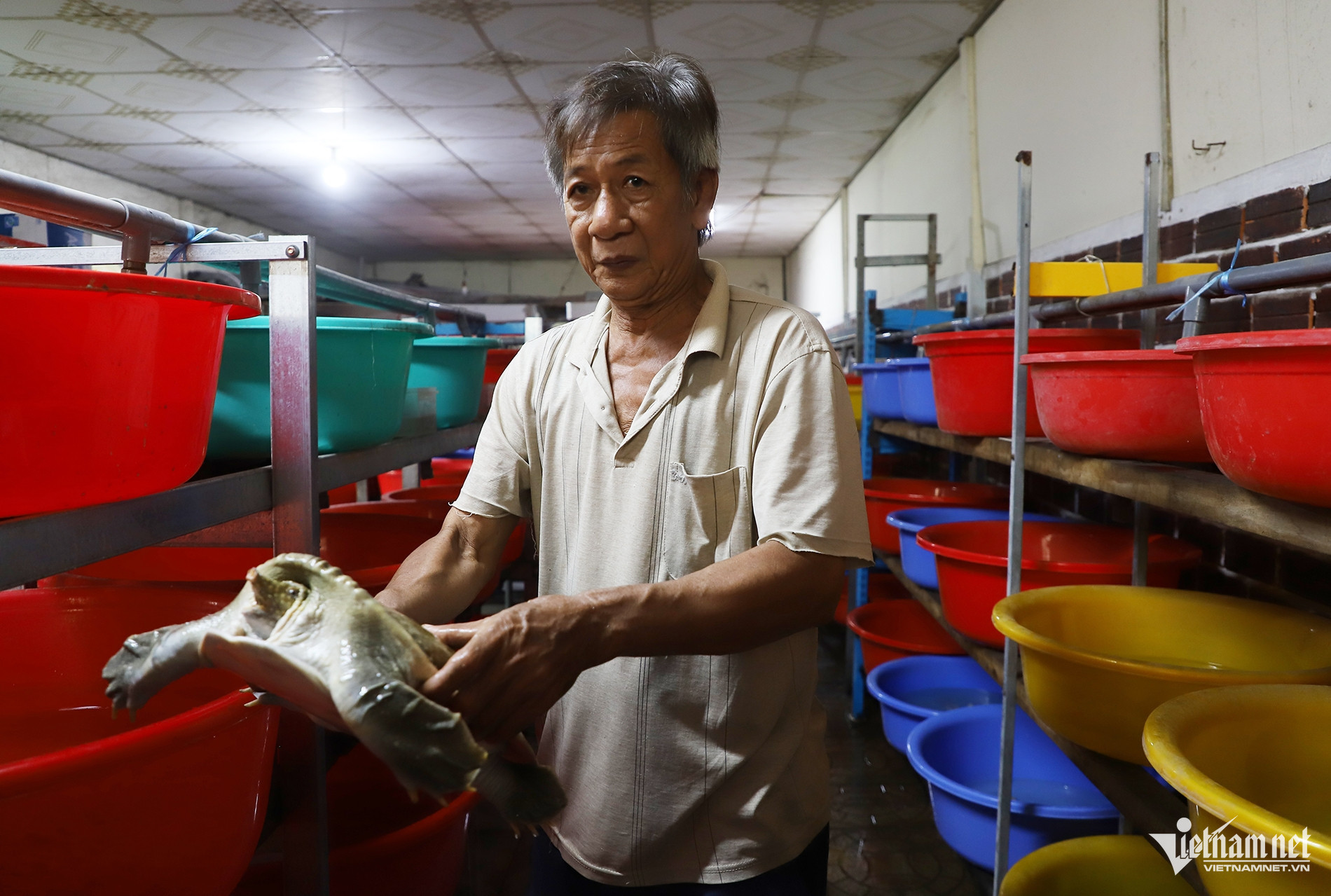
According to Cu, keeping the turtles separately prevents them from biting one another or competing for food.
It also allows him to monitor individual animals closely and quickly identify those eating poorly, growing slowly or showing unusual symptoms.
To maximise the available space, Cu designed and built his own iron rack system, arranging the tubs across three tiers.
He drilled holes in the bottom of each container and installed pipes and plugs to facilitate water supply and drainage.
This arrangement makes cleaning and water replacement relatively straightforward.
Cu changes the water approximately every four to five days, using water pumped from a well.
The water level in each tub is adjusted according to the turtle's size, with smaller animals requiring less water and larger ones kept in deeper water.
"Raising them in tubs makes it easier to control feeding and monitor each animal. If one stops eating properly or shows unusual signs, I can notice immediately. That is much harder when they are kept in earthen ponds or concrete tanks," he explained.
The turtles are fed mainly on commercial pellets and suitable agricultural or food by-products.
Beyond saving space, the system gives Cu greater flexibility in managing his daily routine.
The work is not particularly physically demanding, making it suitable for his age and family circumstances.
Mature softshell turtles sell for up to VND450,000 per kilogram
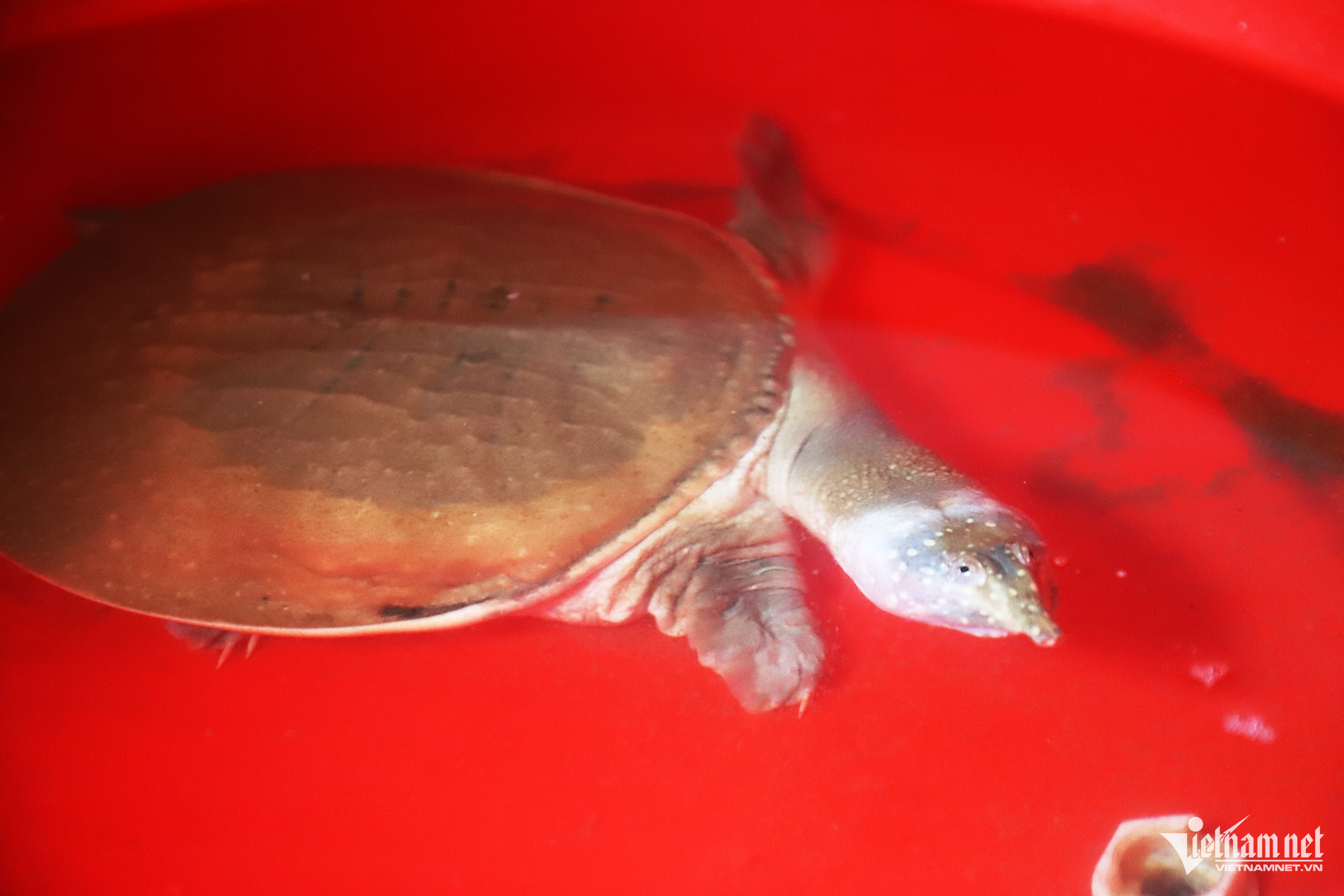
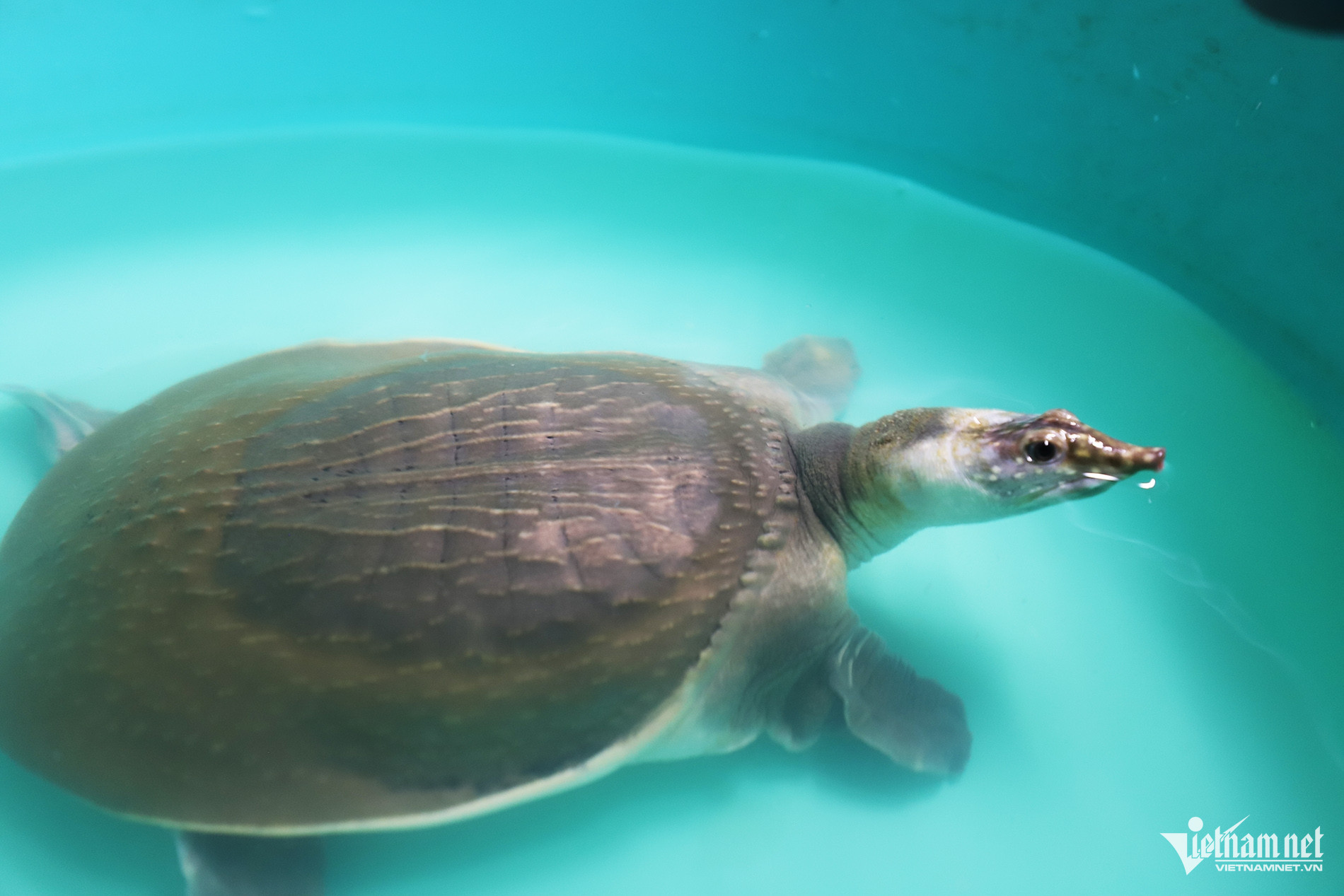
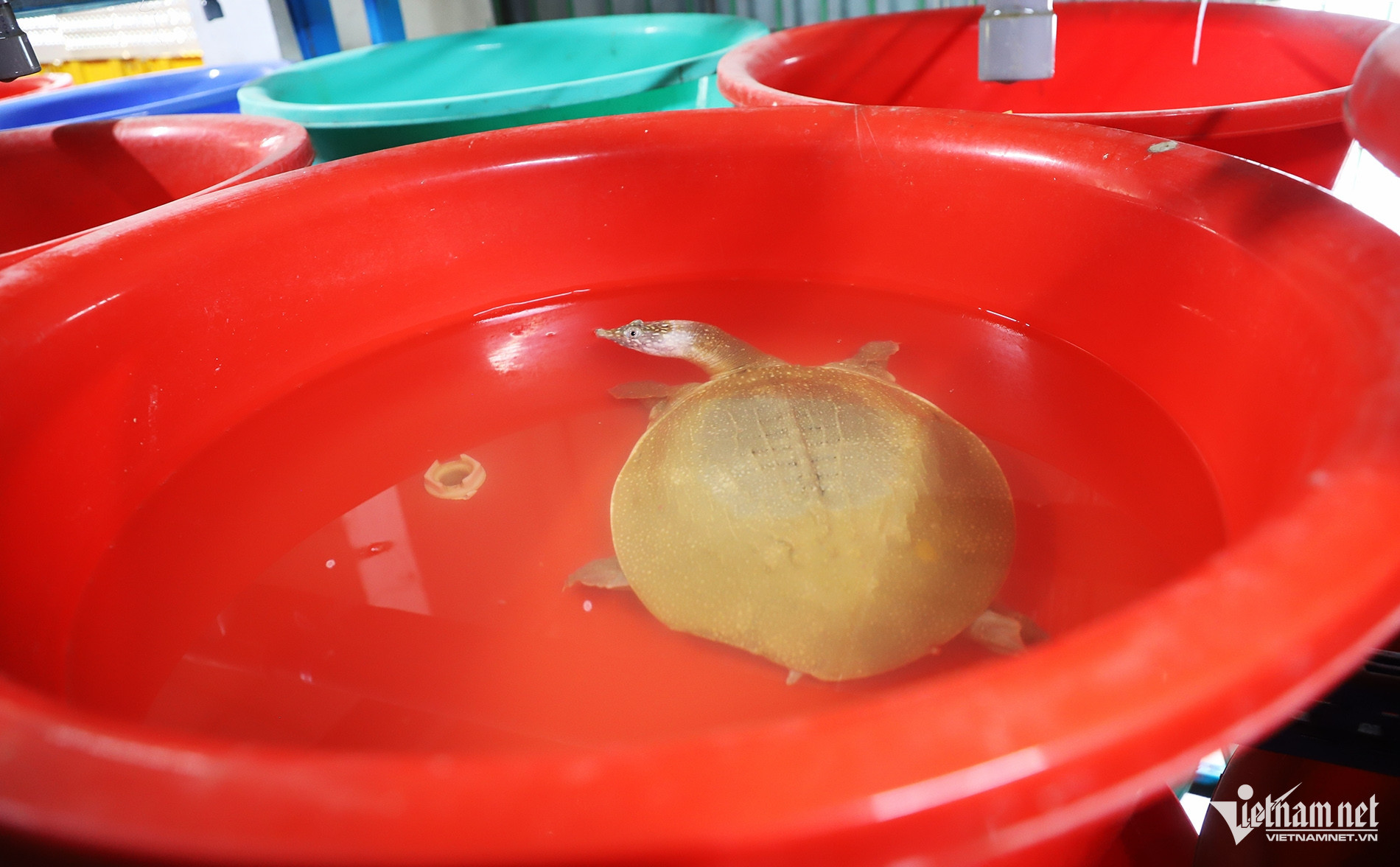
Despite the advantages of this farming method, raising giant softshell turtles requires considerable patience because the animals grow relatively slowly.
According to Cu, a turtle typically takes about three years to reach a weight of approximately 5kg.
He selects animals weighing between 5kg and 7kg for commercial sale.
Retail prices currently range from VND400,000 to VND450,000 per kilogram (approximately US$16-18).
He mainly sells directly to customers rather than through traders.
Cu said buyers often prefer larger turtles because they are suitable for preparing dishes intended to serve several people.
In addition to mature turtles, he sells juveniles for VND250,000 (approximately US$10) each.
Newly hatched turtles are raised for about one month before being offered for sale.
Cu has also succeeded in breeding the animals.
"After spending time raising the turtles, I managed to get them to reproduce. I set aside a separate breeding area, placing one male with four females in a tank to encourage reproduction," he said.
Each female lays more than 10 eggs per clutch, with incubation taking approximately three months.
However, survival rates among hatchlings were relatively low during the initial breeding attempts.
Cu gradually improved the results by adjusting his care methods and breeding techniques.
Although he has not disclosed his exact earnings, he said the operation provides his family with a stable source of additional income.
Nevertheless, Cu acknowledged that the model is unsuitable for households seeking a quick return on investment.
The lengthy growing period means farmers must commit capital for several years before harvesting their animals.
"It takes about three years before the turtles are ready for sale. At my age, I raise them to have something to do every day. It is both a hobby and a way to earn extra spending money," he said. "Anyone planning to make this their main source of income needs to calculate carefully because it takes a long time to recover the initial investment."
Local authorities support expansion and market access
Speaking to VietNamNet, Tran Van Hiep, Vice Chairman of the Farmers' Association in Nga Bay Ward, Can Tho City, said local authorities recognised several advantages of raising softshell turtles in plastic tubs.
The method reduces initial investment costs and is particularly suitable for households with limited farming space.
Hiep noted that farmers do not need to construct large concrete tanks and can instead make use of small areas by arranging individual containers.
"The advantages are that the model is easy to replicate, requires relatively little initial capital and makes disease management more convenient," he said. "Farmers can observe and interact with the turtles every day rather than waiting until scheduled inspections, as is often the case with animals raised in tanks."
According to Hiep, local authorities have helped Cu access financing from the Vietnam Bank for Social Policies to expand his farming operation.
Cu has now successfully bred and hatched softshell turtles, gradually establishing his own supply of juveniles to increase his stock.
Local authorities are also helping promote the model and connect Cu with potential buyers through information channels and e-commerce platforms.
The farming method has attracted attention from neighbouring localities, including residents from Ca Mau who have visited to learn about his experience and techniques.
Hoai Thanh

