 Vietnamnet.vn

 Podcast



In 2020, Nguyen Minh Hien, then a math-track student at Lam Son High School for the Gifted, scored 29.05 points in the B00 university admissions combination, including priority points. It was just enough to secure her a place in the Medicine program at Hanoi Medical University.
“With a score that was only just enough to get in, I felt I was lucky,” Hien recalled.
From a math student to medical school
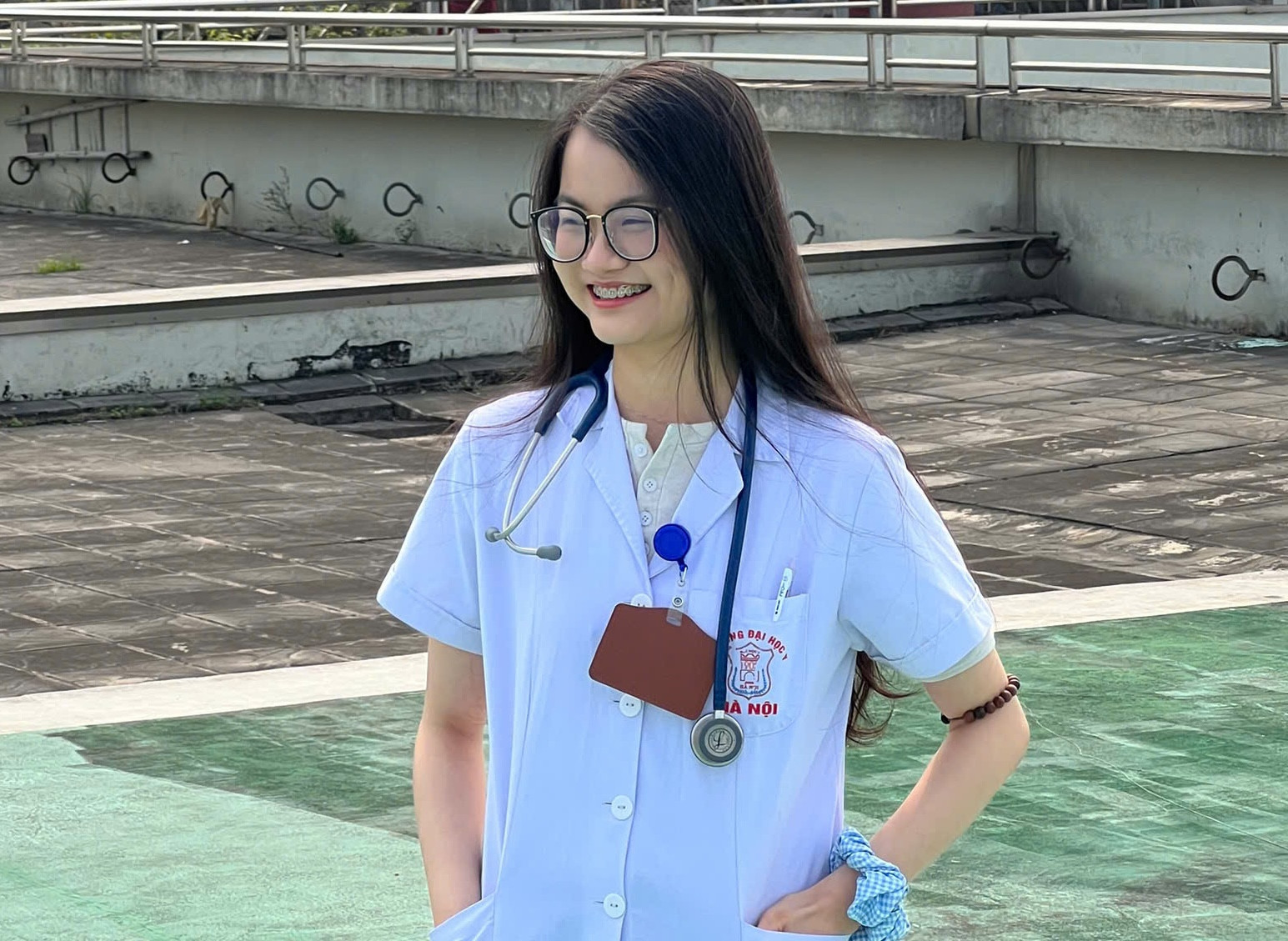
Hien had dreamed of becoming a doctor since childhood. Her father died when she was nearly three, and she grew up with her maternal grandparents. Her grandfather had also studied at Hanoi Medical University before going on to work at the Military Medical Academy.
Her ambition was reinforced by the time she spent caring for her grandmother in hospital, where watching doctors carefully examine and treat patients gradually deepened her interest in medicine.
After entering medical school, Hien initially struggled with self-doubt. Many of her classmates had gained direct admission or entered with near-perfect scores.
The academic workload was another shock.
“There were classes where lecturers covered an amount of material equivalent to half a textbook, and I simply couldn’t keep up,” Hien recalled.
But her first year also became a turning point in the way she approached learning. Realizing that the volume and complexity of medical knowledge meant textbooks alone were not enough, Hien began seeking additional material on YouTube, reading international references and exploring other medical resources.
Artificial intelligence tools were not yet widely available at the time, while Hien’s English was still limited. To work through specialized materials, she relied on Google Translate for support.
“At first, I was afraid I wouldn’t be able to read them. But because the material was difficult, I forced myself to concentrate and look up words so I could understand everything thoroughly. Before I knew it, my medical English vocabulary had steadily expanded,” she recalled.
By her second year, reading English-language materials had become considerably easier, and Hien gradually overcame the sense of being overwhelmed whenever she encountered a new medical topic.
Alongside her studies, she joined the “Active Learning” club, where members organized classes, held review sessions for younger students and supported one another academically.
The activities gave Hien another environment in which to reinforce her own knowledge while learning how to explain and share complex material with others.
Overcoming her fear of facing patients
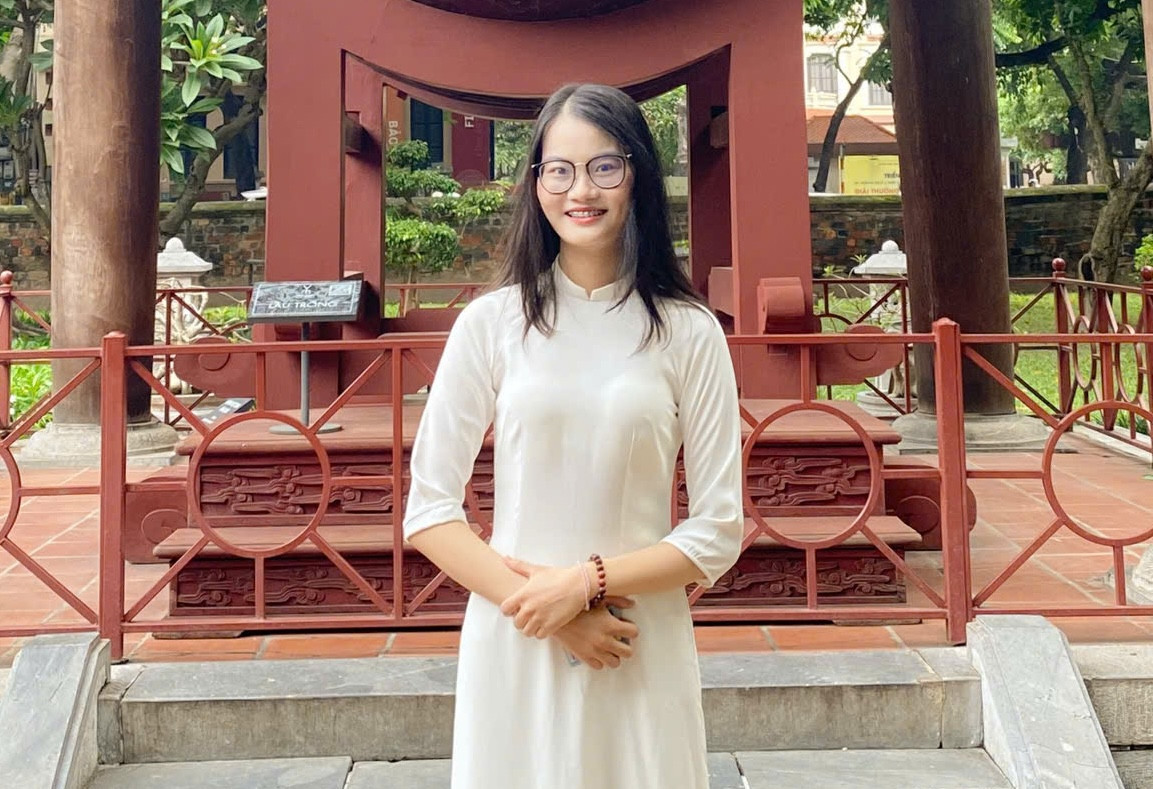
The greatest challenge of Hien’s university years came in her fourth year, when students entered a much more intensive phase of clinical training. Mornings at the hospital, theory classes in the afternoon, followed by night shifts or studying at home in the evening became part of her regular routine.
“My fourth year at university was the year I met more people than in the previous 22 years of my life combined,” Hien once wrote in her diary.
Crowded hospitals, the relentless pace of work, exhausting shifts and the sheer volume of practical knowledge often left her feeling that everything she had learned was still not enough. At the time, Hien weighed just over 40 kilograms despite being 1.6 meters tall.
Communication presented another hurdle. Hien was naturally not confident when speaking with others, yet taking an effective medical history requires more than clinical knowledge. Students must also know how to earn patients’ trust so they feel comfortable sharing information.
For a period, before every hospital session, Hien would write down in a notebook the questions she planned to ask patients, hoping to make a good impression and help conversations flow more naturally.
Over time, feedback from her lecturers and exposure to a wide range of situations in hospital helped Hien become more confident and experienced.
Now, while working shifts in the emergency department, she can take the initiative in asking about symptoms and gathering information from patients without the fear she experienced in her early clinical days.
Hien said what kept her studying through the most demanding periods was finding a reason to continue. Whenever clinical training made her feel that there was still so much she did not know, she reminded herself that the purpose of medicine was to care for patients and protect their health.
“What I fear most is reaching a point where I no longer want to learn,” Hien said. “So I have to find a reason to keep going.”
By her sixth year, Hien was preparing for Vietnam’s highly competitive residency examination. Although she began studying later than some of her peers, she chose not to cram.
Over six years at university, meeting senior students who had pursued different professional paths helped Hien realize that there is no single career route for a doctor, as long as they genuinely care about the work they choose.
“For the residency examination, I decided I would give it everything I had. But if I didn’t pass, I had also prepared myself to take another path,” Hien said.
Hien is now awaiting the results of the residency examination. In the future, she hopes to specialize in neurology.
Thuy Nga
.svg)
