 Vietnamnet.vn

 Podcast


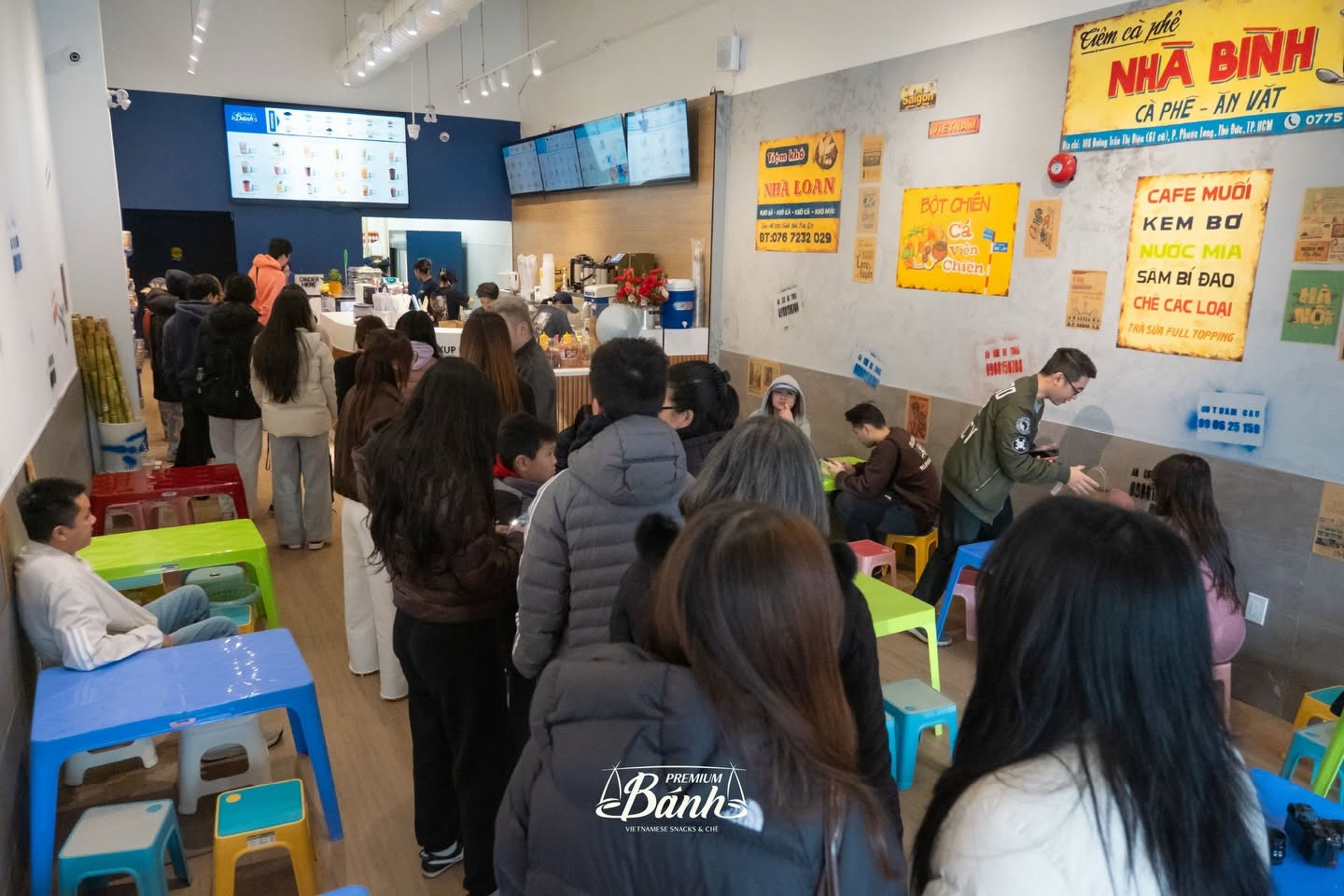
After two years, the two Vietnamese women had expanded their business to three locations, attracting large numbers of customers.
On a bustling street in Toronto, Canada’s most populous city, a food shop stands out with customers sitting on red and blue plastic stools along the sidewalk, enjoying mixed rice paper and savory sticky rice while sipping sugarcane juice, Vietnamese sweet dessert soup or iced milk coffee.
In front of the restaurant stands a street sign bearing the names of two roads, Cach Mang Thang Tam and Truong Chinh, while the interior recreates the alleys and sidewalks of HCMC. Even the faux-cement walls feature "concrete drilling and cutting" advertisements, a distinctly Vietnamese touch. At the preparation counter, the owners and staff stay busy tossing fragrant batches of rice paper salad.
"Coming here, I felt like I was at a sidewalk snack shop near a junior high or high school gate in HCMC. The familiar setting and flavors seemed to transport me back to my childhood. The first time I came, I even got teary-eyed because it felt so much like home," shared Thu Thao, an international student in Toronto.
The charming eatery is run by Kim Ngọc and Mỹ Loan, both born in 1997. They moved to Canada to study and work 10 years ago.
Quitting high-paying jobs
After graduating in Culinary Arts Management, Ngọc and Loan worked as chefs in Western restaurants. Each previously earned an income of roughly CAD80,000 per year (equivalent to VND1.5 billion per year).
"In Toronto, pho, banh mi, and broken rice (com tam) are fairly familiar. However, street snacks like mixed rice paper salad, steamed rice dumplings (banh gio), or various sweet soups are rarely sold anywhere. Sometimes, we had to bring rice paper from Vietnam just to satisfy our cravings," they said.
Eager to introduce Vietnam's diverse cuisine, in October 2024, Loan and Ngọc decided to resign and use their savings to start a business, opening their first "Premium Banh" store in Toronto.
The menu focuses on Vietnamese street food such as mixed rice paper salad, rolled rice paper (banh trang cuon), three-color sweet soup (che ba mau), savory sticky rice, crab soup, fried fermented pork rolls (nem chua ran), and broken rice.
Their experience working in restaurants provided a solid foundation in food preparation and kitchen operations, but building a brand in a foreign market posed a completely different challenge. They faced pressure due to Canada's strict business regulations and food safety standards. An even greater obstacle was securing a stable supply of ingredients and staffing.
The first year and a half proved difficult, as they derived virtually no income from the business. The two women had to rely on savings from their previous employment to maintain operations.
The turning point came when they brought their dishes to a Vietnamese food festival in Canada. Their booth attracted crowds as soon as it opened, with long lines of both Vietnamese locals and Canadians. From then on, word spread, and the eatery gradually gained more customers. By August 2026, Loan and Ngọc had opened two additional locations.
A place reminiscent of childhood
Ngoc and Loan consider the space a crucial part of the dining experience. Instead of designing it in a Western restaurant style, the shop draws inspiration from sidewalk eateries and familiar alleys in HCMC. Low plastic tables and stools are neatly arranged along both sides. Signboards and menus in Vietnamese were custom-ordered and brought over from Vietnam.
Mixed rice paper is the dish that has given the shop its distinctive identity. The combination of rice paper, mango, dried beef, dried shrimp, quail eggs, herbs, peanuts and seasonings creates layers of flavor - sour, spicy, salty and sweet. It is an affordable, familiar snack among young Vietnamese people, but it can offer a new experience to those who have never tried it.
“Our selection criteria are dishes associated with Vietnamese people’s childhood memories. Since we opened the shop, rice paper snacks have been our best-selling item,” the two women said.
They said that around 70 percent of the shop’s signature ingredients come from Vietnam. Fresh foods such as meat, vegetables and eggs can be purchased in Canada, but rice paper and distinctive seasonings still need to be sourced from their homeland.
Linh Trang

