 Vietnamnet.vn

 Podcast



In the western part of Quang Ngai province, where Co communities live closely together, village elders and respected figures are seen as “living landmarks” - both preserving traditions and guiding their people toward a better life amid change.
Leading by example
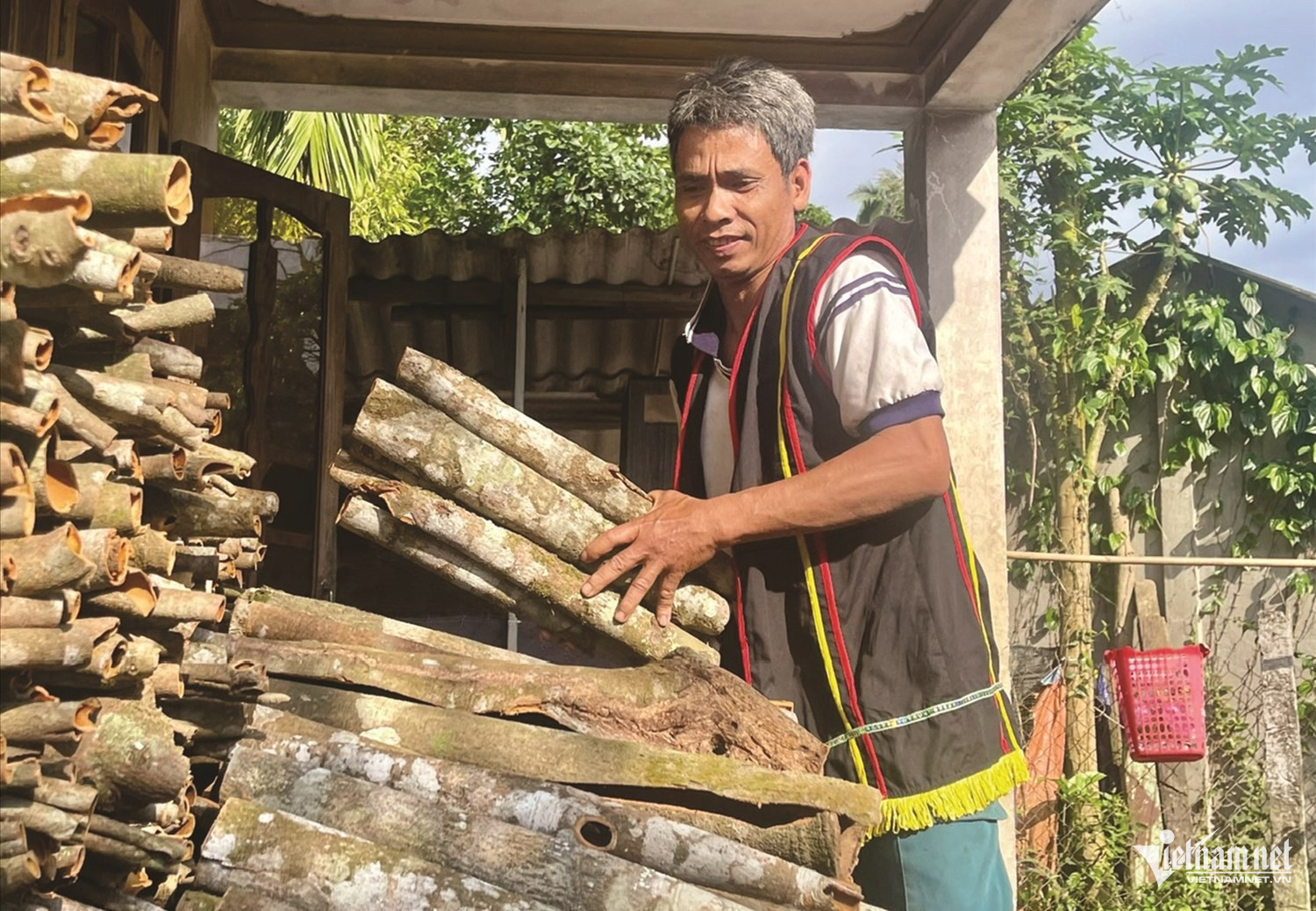
Ho Van Phi, a respected figure in Go No village. Photo: Huy Truong
In Tra Nieu village, Tay Tra commune, Ho Tien Dung, 70, has long been a familiar and trusted figure. As a respected community leader, he believes that for the Co people, who have traditionally relied on farming and forest cultivation, improving livelihoods must begin with productive labor.
“If you want people to trust and follow you, you have to take the lead in everything - from encouraging your children to study, to working harder to improve your living conditions. Only when you do it yourself can you convince others,” he shared.
To demonstrate, he invited us to visit his flourishing cinnamon plantation. Starting with more than five hectares of farmland, he boldly restructured his crops, turning cinnamon into the main source of income with over three hectares dedicated to it.
The remaining land is used for acacia, areca, pepper, and livestock farming, generating more than VND150 million annually (US$6,100) after expenses. Cinnamon alone brings in VND50-70 million per harvest (US$2,000-2,800). With hundreds of areca trees and young pepper plants, his family expects even higher income in the coming years.
Beyond his own success, Dung actively guides villagers on building livestock facilities, caring for animals, and making the most of government support programs to develop sustainable livelihoods.
Also in Tay Tra, Ho Van Phi, 56, from Go No village, is another respected figure. For him, effective community mobilization starts with personal example.
“A family must stay united and work hard, without relying on others. Only when you succeed can people believe in you,” he said.
He not only encourages economic development but also actively raises awareness about social issues. He advises villagers to avoid gambling and alcohol abuse, and urges families to ensure their children attend school.
“Education creates opportunities and makes life less difficult in the future,” he emphasized.
In recent years, as national programs have provided livestock and crops such as buffalo, cattle, and cinnamon, Phi has been at the forefront of encouraging villagers to seize these opportunities.
He consistently advises against selling supported livestock, instead viewing them as long-term assets to gradually escape poverty.
His own family sets an example, earning nearly VND200 million per year (US$8,100) from over four hectares of cinnamon and integrated farming. He openly shares his experience, provides breeding stock, and offers technical guidance to other households.
Preserving cultural identity through daily dedication
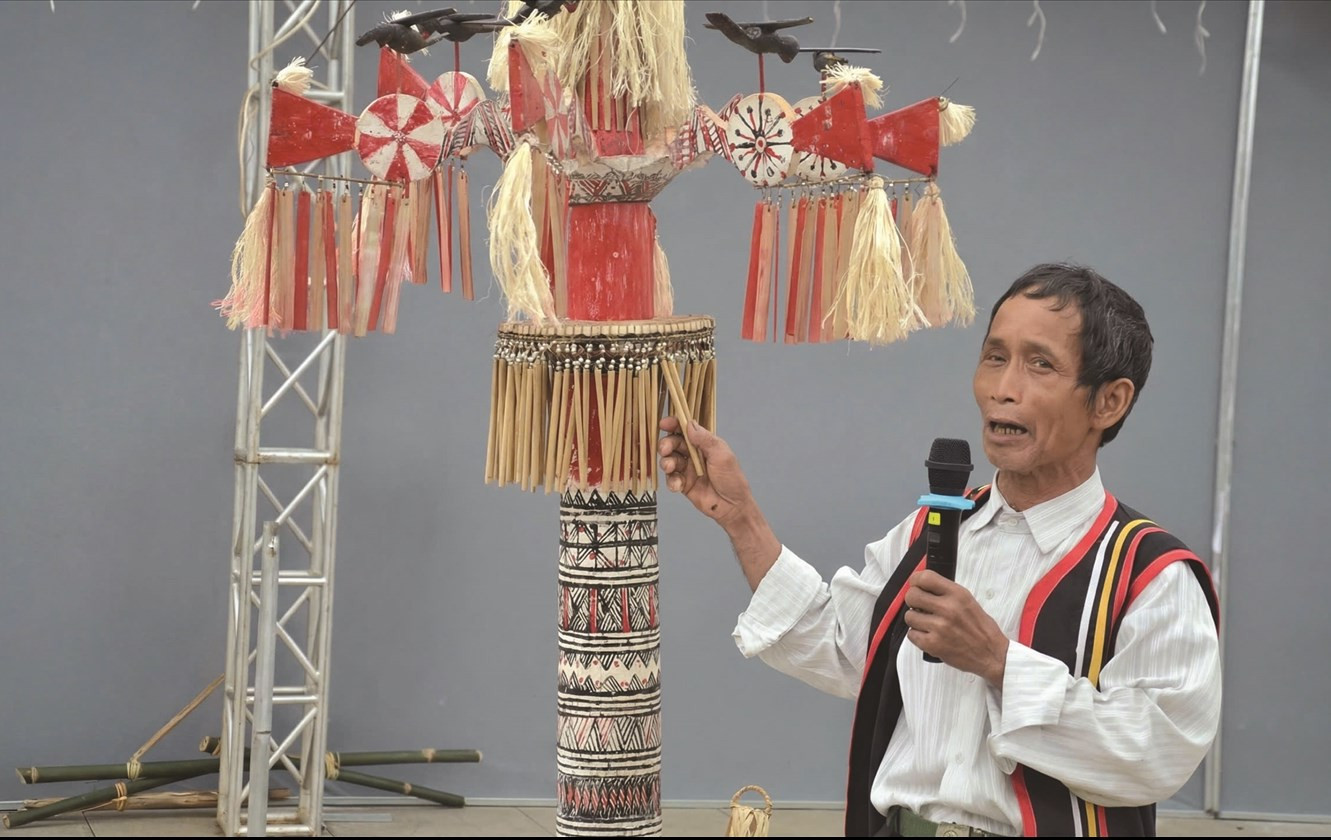
Village elder Ho Van Duong demonstrates how to decorate the ceremonial pole of the Co people in Tay Tra. Photo: Nhu Dong
Beyond economic leadership, respected elders in Tay Tra also serve as cultural custodians. A notable figure is People’s Artisan Ho Van Duong, now in his seventies, who continues to devote himself to traditional gongs and handicrafts.
From a young age, he was immersed in the sounds of gongs during festivals and learned traditional techniques from his elders. Over time, he not only mastered these skills but developed a deep understanding of their cultural significance.
Inside his stilt house, sets of gongs, drums, and horns are carefully displayed. Alongside them are dozens of woven items, from simple baskets to intricate ceremonial objects, all handcrafted by him.
Duong is also highly knowledgeable about the ceremonial pole, a sacred symbol in Co spiritual life. He carefully explains each detail, from the tall wooden pole to the decorative patterns and fiber tassels.
He regularly encourages younger generations to preserve their cultural heritage, organizing sessions to teach gong playing, weaving, and ceremonial craftsmanship.
According to Truong Cong Lam, Chairman of Tay Tra Commune People’s Committee, more than 98% of the local population belongs to ethnic minorities, primarily the Co people. The commune currently has 14 respected individuals within these communities.
In recent years, they have played a vital role in communicating government policies, encouraging community development, and preserving cultural identity. They stand as “living landmarks” - bridging tradition and progress.
Huy Truong
.svg)
