 Vietnamnet.vn

 Podcast



Once a familiar presence in the military, police, and state agencies during wartime and the subsidy era, three-wheeled sidecars such as Ural, Dnepr, and CJ750 have become distinctive mechanical memories, now preserved by vintage vehicle enthusiasts as part of history.
Sidecars in the memory of wartime and subsidy-era Vietnam
Closely associated with the war years and the centrally planned economy period, sidecar motorcycles - three-wheeled bikes fitted with a side-mounted passenger cabin - such as Ural, Dnepr, CJ750, Jawa, and MZ have left a lasting imprint on generations of Vietnamese. Today, although no longer widely permitted for road use, these classic machines are still preserved by a small community as historical artifacts.
Most sidecar models introduced to Vietnam in earlier decades originated from the Soviet Union, China, and Eastern European countries.
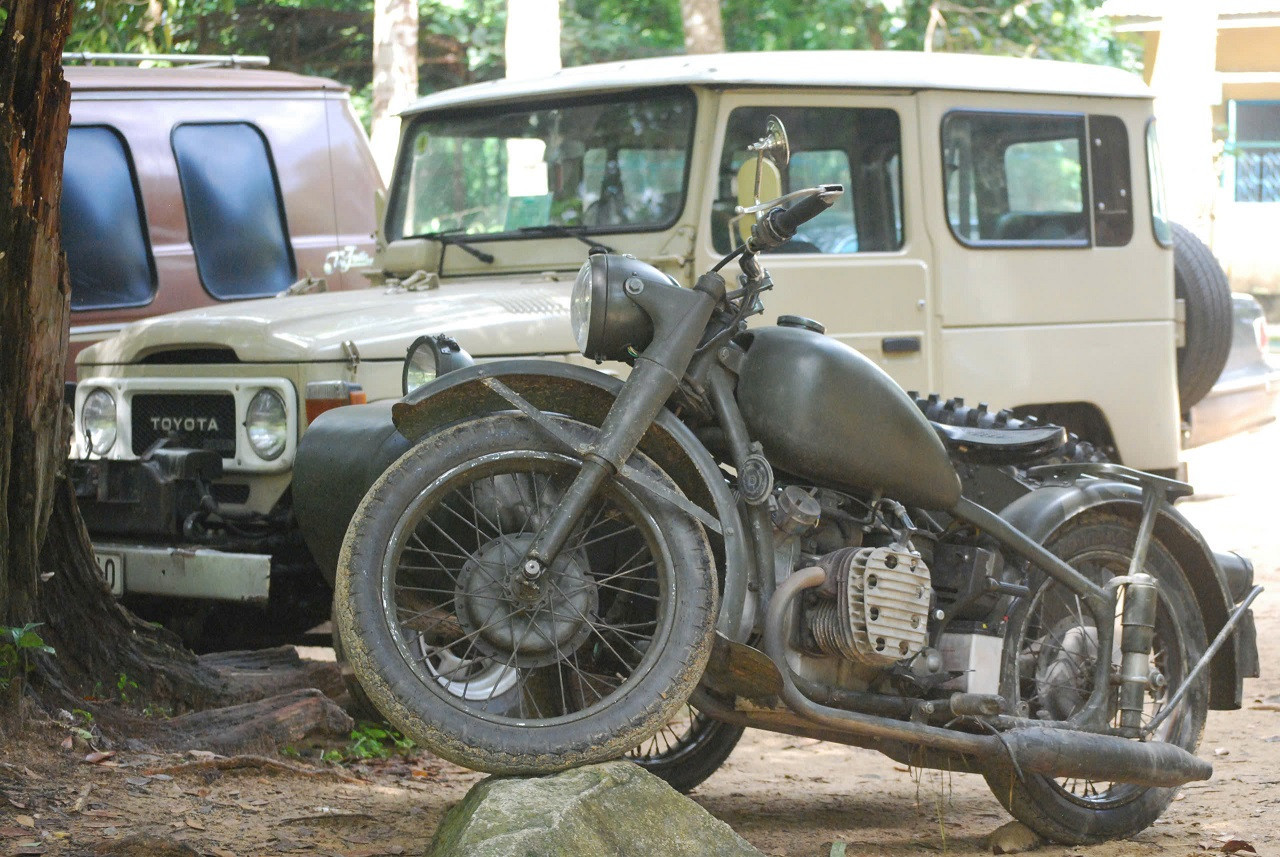
Among them, Ural stands out as the most iconic. The model traces its roots to the German BMW R71 design from before World War II, later developed by the Soviet Union into a military vehicle from the 1940s onward.
Renowned for its durability, strong traction, and ability to handle difficult terrain, many vintage Ural motorcycles have since been restored and are now considered valuable assets among collectors.
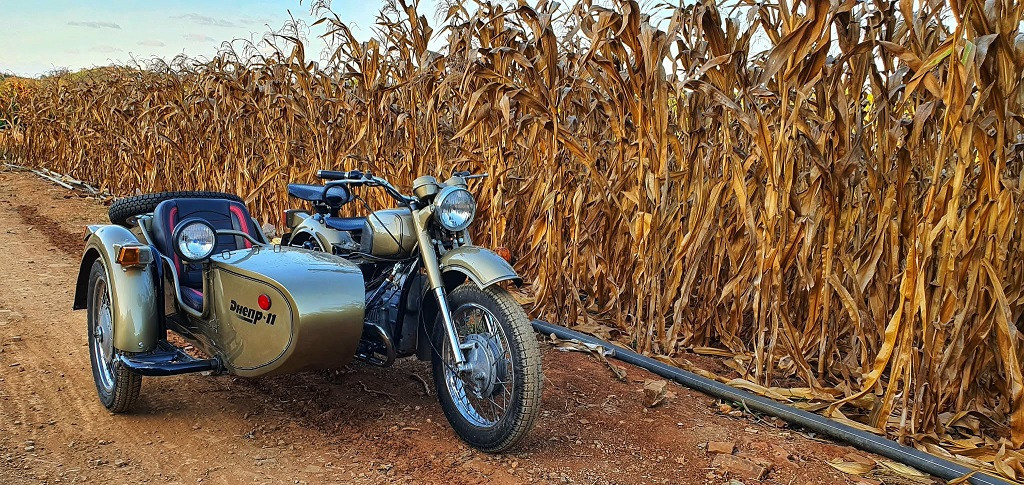
Sharing a similar technical foundation, Dnepr is a model produced in Ukraine from the 1960s. It is known for its off-road capability, with some versions featuring two-wheel drive, making it well-suited to complex terrain conditions.
Among enthusiasts, Dnepr is often regarded as more refined in design and finishing compared to Ural. While less common in Vietnam, it did appear in certain military units and is now a sought-after model in the collector market.
Another notable name is the Chang Jiang CJ750, a Chinese-made sidecar developed based on technology transferred from the Soviet Union. With its simple design, ease of maintenance, and lower cost, the CJ750 was widely used by the Chinese military and later found its way into Vietnam across different periods.
Collectors note that while the CJ750 may not match the durability or engine performance of Ural or Dnepr, its accessibility and unmistakable vintage aesthetic make it one of the most popular models among sidecar enthusiasts today.
In addition to these larger models, Vietnam also saw the presence of Eastern European motorcycle brands such as Jawa from Czechoslovakia and MZ from East Germany.
Although sidecar versions of Jawa and MZ were less common than Ural, Dnepr, or CJ750, their presence contributed to the diversity of Vietnam’s sidecar landscape during the subsidy era.
Few may realize that the design foundation of most of these iconic sidecars can be traced back to Germany’s BMW R71. From this original model, the Soviet Union developed Ural, which later influenced Ukraine’s Dnepr and China’s CJ750.
In many ways, BMW can be seen as the origin of an entire generation of military sidecars that once operated across Vietnam.
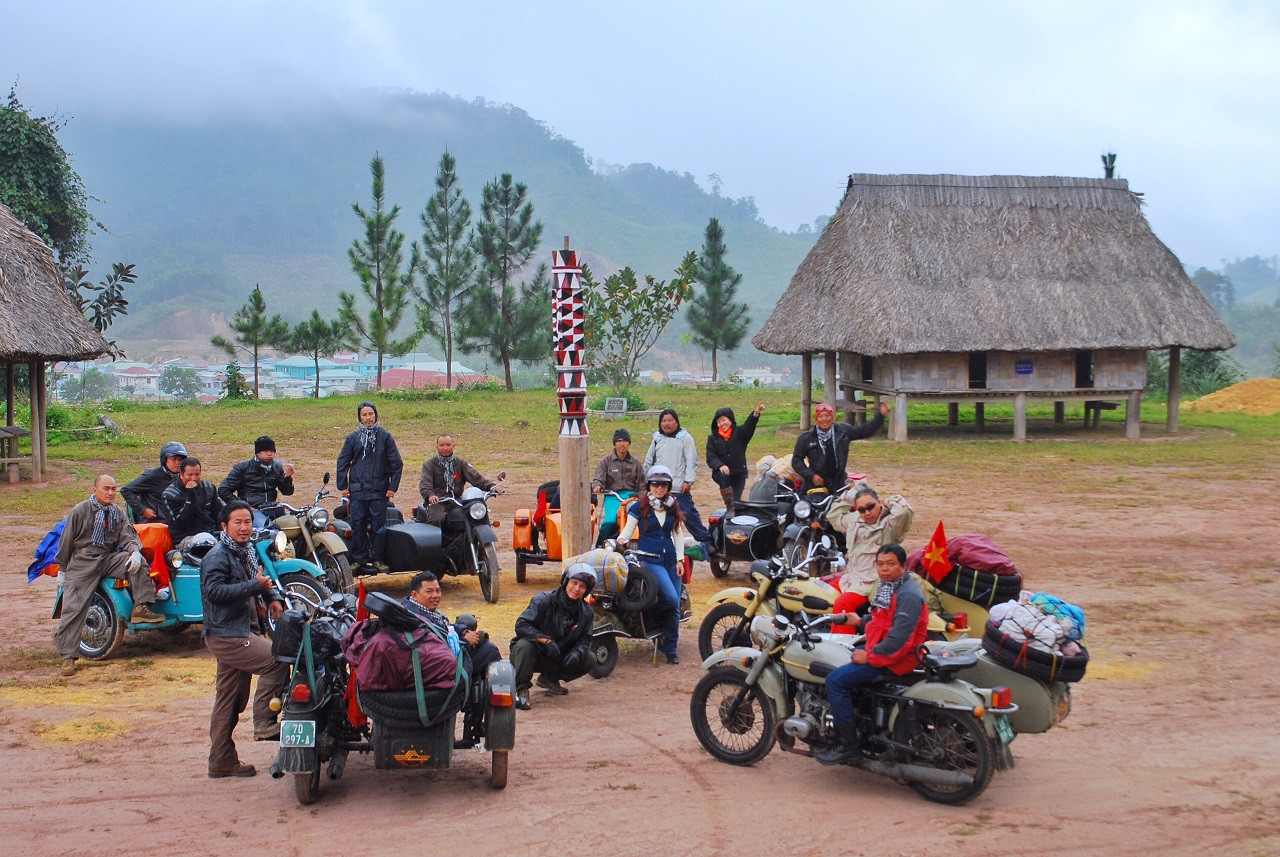
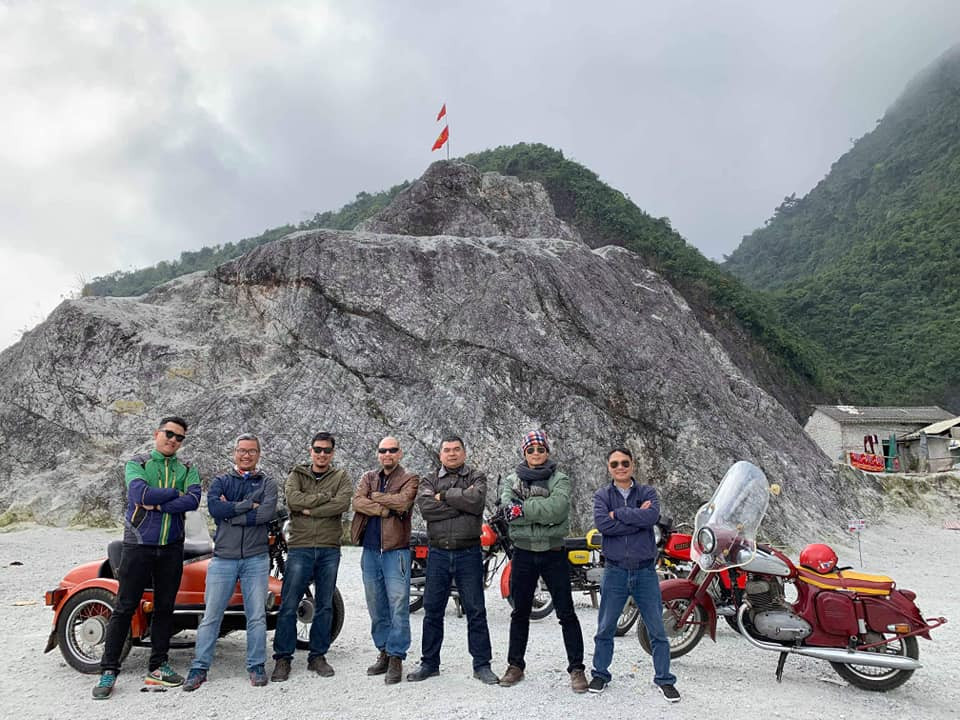
Members of the Jawa and MZ club on a sidecar journey in Moc Chau. Photo: Hieu Anh
From state vehicle to collector’s passion in modern life
Over time, as transport infrastructure evolved and regulations changed, sidecars gradually disappeared from everyday life in Vietnam.
Under current regulations, three-wheeled motorcycles are no longer widely permitted for registration and road use, except in specific cases. To legally operate such vehicles, drivers must hold an A3 driving license, specifically designated for three-wheeled motorcycles and similar vehicles, requiring specialized training and testing.
These legal barriers, along with the unique nature of the vehicles, have made sidecars nearly absent from modern urban traffic.
Yet within vintage vehicle communities, sidecars retain a special place. Models like Ural, Dnepr, CJ750, and even Jawa or MZ variants continue to be carefully restored and maintained, appearing at exhibitions, caravan journeys, and club road trips across the country.
Some collectors are willing to spend hundreds of millions of dong to acquire and restore rare sidecars, aiming to preserve intact a mechanical symbol closely tied to Vietnam’s history.
For them, a sidecar is not merely a means of transport. It is a memory - a tangible reminder of a distinctive chapter in the nation’s past.
Today, amid the rhythm of modern life, the sight of a sidecar on the street is enough to make passersby turn their heads. Not only because of its unusual design, but because behind each machine lies a story - a fragment of history still being preserved by those who are passionate about it.
Xuan Thuy
.svg)
